In Illinois, the Durable Power of Attorney (DPOA) form serves as a crucial legal document that allows individuals to appoint someone they trust to make decisions on their behalf when they are unable to do so. This form is particularly important for managing financial and healthcare matters. By designating an agent, also known as an attorney-in-fact, individuals can ensure that their wishes are honored even in situations where they may be incapacitated. The DPOA remains effective even if the person who created it becomes mentally or physically unable to make decisions. It covers a wide range of powers, including handling bank accounts, paying bills, and making medical decisions. Importantly, the form must be signed and dated by the principal, and it often requires a witness or notarization to be legally binding. Understanding the intricacies of this form is essential for anyone looking to safeguard their interests and ensure that their chosen representative can act effectively when needed.
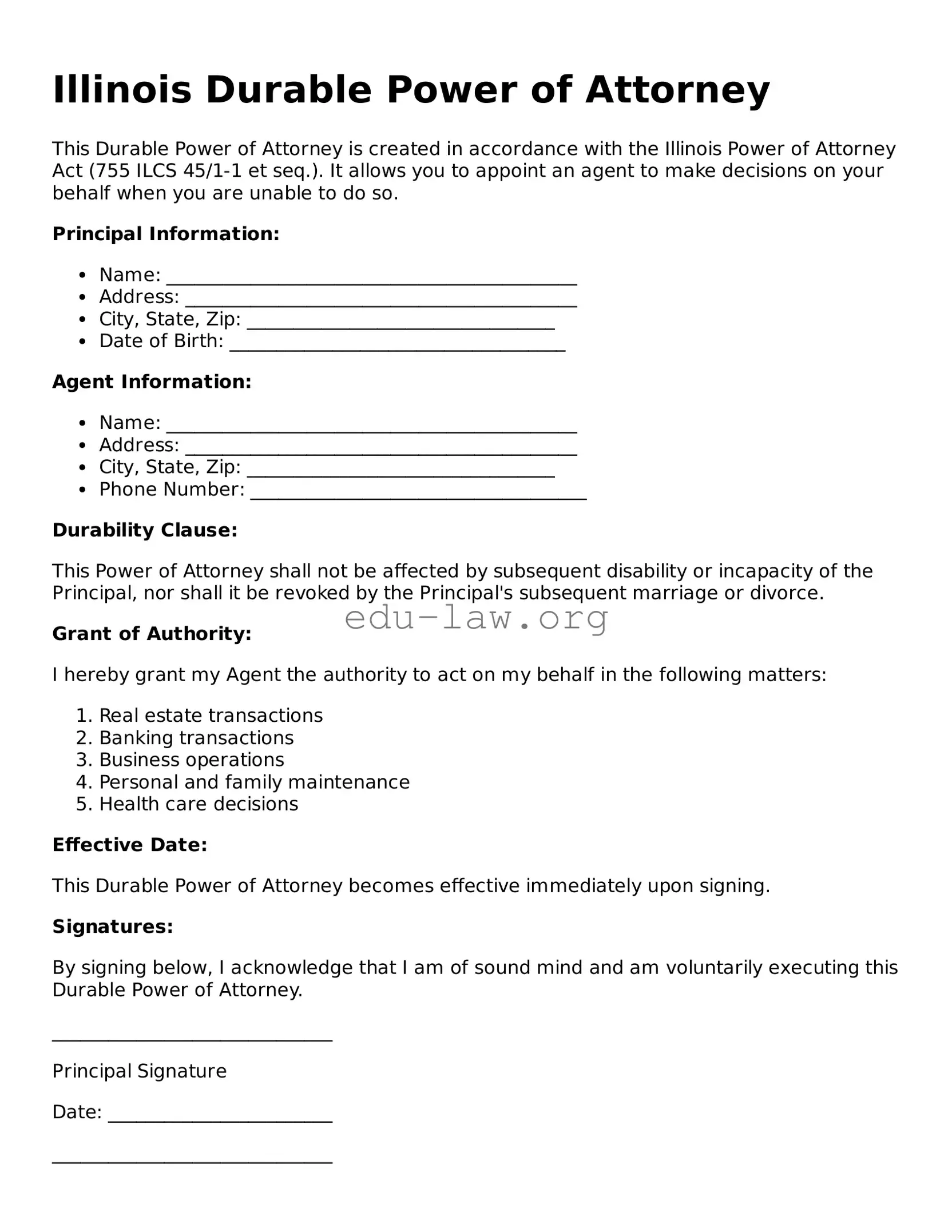
Illinois Durable Power of Attorney
This Durable Power of Attorney is created in accordance with the Illinois Power of Attorney Act (755 ILCS 45/1-1 et seq.). It allows you to appoint an agent to make decisions on your behalf when you are unable to do so.
Principal Information:
Agent Information:
Durability Clause:
This Power of Attorney shall not be affected by subsequent disability or incapacity of the Principal, nor shall it be revoked by the Principal's subsequent marriage or divorce.
Grant of Authority:
I hereby grant my Agent the authority to act on my behalf in the following matters:
Effective Date:
This Durable Power of Attorney becomes effective immediately upon signing.
Signatures:
By signing below, I acknowledge that I am of sound mind and am voluntarily executing this Durable Power of Attorney.
______________________________
Principal Signature
Date: ________________________
______________________________
Agent Signature
Date: ________________________
Witnesses:
This document must be witnessed by two individuals who are not named as agents.
Notarization:
State of Illinois, County of ____________________
Subscribed and sworn to before me this _____ day of __________, 20__.
______________________________
Notary Public Signature
My Commission Expires: ________________
| Fact Name | Description |
|---|---|
| Definition | An Illinois Durable Power of Attorney allows you to appoint someone to make decisions on your behalf, even if you become incapacitated. |
| Governing Law | The Illinois Power of Attorney Act, 755 ILCS 45/1-1 et seq., governs the use of this form. |
| Durability | This form remains effective even if you become unable to make decisions due to illness or injury. |
| Agent Authority | The agent you appoint can handle financial, legal, and healthcare decisions, depending on the powers you grant. |
| Revocation | You can revoke the Durable Power of Attorney at any time, as long as you are mentally competent. |
| Notarization | While notarization is not strictly required, having the document notarized can help ensure its validity. |
| Witness Requirement | Illinois law requires at least one witness to sign the Durable Power of Attorney document. |
| Limitations | Some powers, like making a will or certain healthcare decisions, may not be granted through this document. |
| Important Considerations | Choosing a trustworthy agent is crucial, as they will have significant control over your affairs. |
After obtaining the Illinois Durable Power of Attorney form, it is essential to fill it out accurately to ensure that your wishes are clearly communicated. Following the steps outlined below will help you complete the form correctly.
What is an Illinois Durable Power of Attorney?
An Illinois Durable Power of Attorney is a legal document that allows you to appoint someone to make decisions on your behalf if you become unable to do so. This can include decisions about your finances, medical care, and other important matters. The "durable" part means that the authority remains in effect even if you become incapacitated.
Who can be appointed as an agent in the Durable Power of Attorney?
You can choose almost anyone to be your agent, as long as they are at least 18 years old and mentally competent. Common choices include family members, close friends, or trusted advisors. It's important to select someone who you believe will act in your best interest and can handle the responsibilities involved.
How do I create an Illinois Durable Power of Attorney?
To create this document, you need to fill out the appropriate form, which can usually be found online or through legal resources. After completing the form, you must sign it in front of a witness or a notary public. This step is crucial, as it helps to verify that the document is valid and that you were in a sound state of mind when you signed it.
Can I change or revoke my Durable Power of Attorney?
Yes, you can change or revoke your Durable Power of Attorney at any time, as long as you are mentally competent. To revoke it, you should notify your agent and any institutions that may have a copy of the document. It’s a good idea to create a new document if you want to make changes, as this helps avoid confusion.
What powers does my agent have under the Durable Power of Attorney?
The powers granted to your agent can vary based on your preferences. You can give them broad authority to manage your finances and make health care decisions, or you can limit their powers to specific areas. Make sure to clearly outline what you want them to handle in the document.
Is the Durable Power of Attorney effective immediately?
Yes, typically, the Durable Power of Attorney becomes effective as soon as you sign it. However, you can specify in the document that it should only take effect under certain conditions, like your incapacity. This is known as a "springing" Durable Power of Attorney.
What happens if I do not have a Durable Power of Attorney?
If you do not have a Durable Power of Attorney and become incapacitated, your loved ones may have to go through a court process to gain the authority to make decisions for you. This can be time-consuming and costly. Having a Durable Power of Attorney in place can help avoid these complications and ensure your wishes are followed.
Not naming an alternate agent: Many people forget to name a backup agent. If the primary agent is unable to serve, having an alternate ensures your wishes are still honored.
Leaving sections blank: Incomplete forms can lead to confusion or disputes. Fill out every section carefully to avoid any potential issues.
Failing to specify powers: Be clear about what powers you are granting. Vague language can lead to misunderstandings about what the agent can or cannot do.
Not signing the document: A signature is crucial. Without it, the document may not be considered valid. Ensure you sign in the appropriate place.
Ignoring witness and notarization requirements: Some states require witnesses or notarization for the document to be valid. Check Illinois regulations and follow them closely.
Not discussing with the chosen agent: Before filling out the form, have a conversation with the person you intend to name as your agent. Make sure they understand your wishes and are willing to take on this responsibility.
When considering a Durable Power of Attorney in Illinois, it’s important to understand other documents that may complement this form. Each of these documents plays a unique role in managing your affairs and ensuring your wishes are respected.
These documents work together to provide comprehensive support for your personal and financial needs. It is advisable to consider them carefully to ensure your intentions are clearly communicated and upheld.
The Illinois Durable Power of Attorney (DPOA) form is similar to a General Power of Attorney (GPOA) in that both documents allow an individual, known as the principal, to appoint someone else, the agent, to make decisions on their behalf. However, the key difference lies in the durability aspect. A GPOA becomes ineffective if the principal becomes incapacitated, whereas a DPOA remains in effect even if the principal can no longer make decisions due to health issues. This enduring nature makes the DPOA particularly valuable for long-term planning.
A Healthcare Power of Attorney (HPOA) shares similarities with the DPOA in that both authorize someone to make decisions for the principal. The HPOA specifically focuses on medical and healthcare decisions, allowing the agent to make choices regarding treatment options, medical procedures, and end-of-life care. While the DPOA can encompass a broader range of financial and legal matters, the HPOA is tailored to address the principal's health-related needs, ensuring that their medical preferences are respected.
The Living Will is another document that aligns closely with the DPOA. A Living Will outlines an individual's wishes regarding medical treatment in situations where they cannot communicate their preferences. While the DPOA allows an agent to make decisions on behalf of the principal, a Living Will serves as a guide for those decisions, providing specific instructions about the types of medical interventions the principal does or does not want. Together, these documents can create a comprehensive plan for both health care and decision-making authority.
The Medical Proxy is akin to the Healthcare Power of Attorney and, by extension, the Durable Power of Attorney. This document appoints an individual to make medical decisions for the principal when they are unable to do so. While the HPOA can cover a broader scope of healthcare decisions, a Medical Proxy specifically focuses on appointing someone to act in medical emergencies. This ensures that the principal's healthcare wishes are honored, similar to the intent behind a DPOA for broader decision-making.
A Financial Power of Attorney (FPOA) is very much like the DPOA but is typically limited to financial matters. The FPOA allows the agent to handle financial transactions, such as paying bills, managing investments, and filing taxes on behalf of the principal. While the DPOA can include both financial and health-related decisions, the FPOA focuses solely on financial authority, making it a specialized tool for managing one’s financial affairs.
The Guardianship Agreement is another document that bears resemblance to the DPOA. In cases where an individual is deemed incapacitated and has not executed a DPOA, a court may appoint a guardian to make decisions on their behalf. This legal process can be lengthy and costly, whereas a DPOA allows individuals to designate their preferred decision-maker in advance, ensuring that their choices are respected without the need for court intervention.
Finally, the Advance Directive is similar to the Durable Power of Attorney in that it encompasses both healthcare and financial decisions. An Advance Directive is a broader term that includes various documents, such as a Living Will and Healthcare Power of Attorney. It allows individuals to express their wishes regarding medical treatment and appoint someone to make decisions for them. While the DPOA specifically focuses on the authority granted to an agent, an Advance Directive can serve as a comprehensive tool for outlining an individual’s preferences regarding both healthcare and financial matters.
When filling out the Illinois Durable Power of Attorney form, it’s important to follow specific guidelines to ensure the document is valid and effective. Here’s a list of things you should and shouldn’t do:
Many people have misunderstandings about the Illinois Durable Power of Attorney (DPOA) form. Clarifying these misconceptions can help individuals make informed decisions about their legal and financial matters. Here are four common misconceptions:
Understanding these misconceptions can empower individuals to take control of their future and ensure that their wishes are respected.
Filling out and using the Illinois Durable Power of Attorney form can be a straightforward process if you keep a few key points in mind. Here are some important takeaways to consider:
By keeping these takeaways in mind, you can effectively navigate the process of creating and using a Durable Power of Attorney in Illinois.