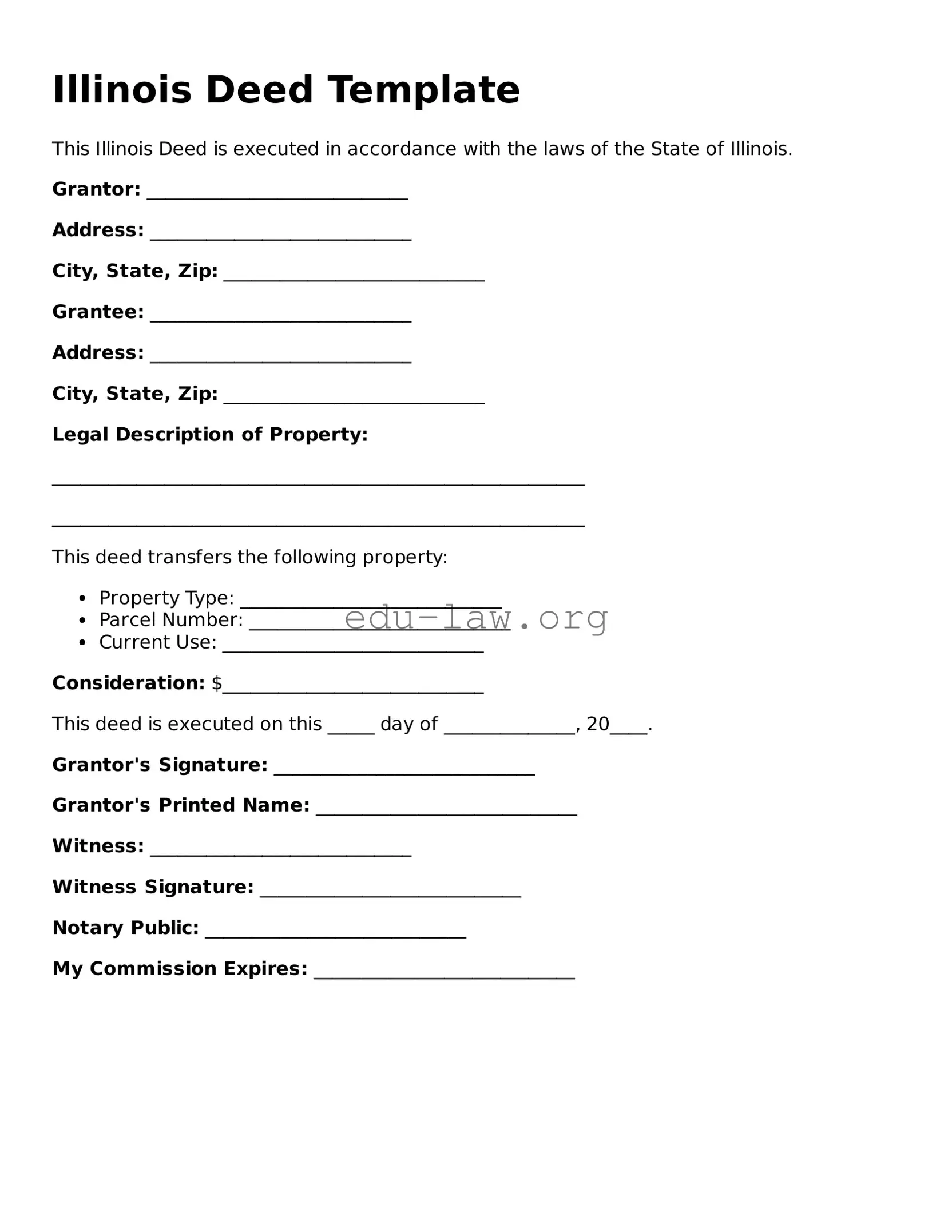
When it comes to transferring property ownership in Illinois, understanding the Illinois Deed form is essential for both buyers and sellers. This legal document serves as the official record of the transfer, providing clarity and protection for all parties involved. The form typically includes crucial information such as the names of the grantor (the person transferring the property) and the grantee (the person receiving the property), a detailed description of the property being conveyed, and any specific terms or conditions related to the transfer. Additionally, the Illinois Deed form may require notarization and witnesses to ensure its validity. By familiarizing yourself with the components and requirements of this deed, you can navigate the property transfer process with confidence, ensuring that your rights are protected and the transaction proceeds smoothly.
Illinois Deed Template
This Illinois Deed is executed in accordance with the laws of the State of Illinois.
Grantor: ____________________________
Address: ____________________________
City, State, Zip: ____________________________
Grantee: ____________________________
Address: ____________________________
City, State, Zip: ____________________________
Legal Description of Property:
_________________________________________________________
_________________________________________________________
This deed transfers the following property:
Consideration: $____________________________
This deed is executed on this _____ day of ______________, 20____.
Grantor's Signature: ____________________________
Grantor's Printed Name: ____________________________
Witness: ____________________________
Witness Signature: ____________________________
Notary Public: ____________________________
My Commission Expires: ____________________________
| Fact Name | Description |
|---|---|
| Governing Law | The Illinois Deed form is governed by the Illinois Compiled Statutes, specifically 765 ILCS 1005. |
| Types of Deeds | Common types of deeds in Illinois include warranty deeds, quitclaim deeds, and special warranty deeds. |
| Signature Requirement | All parties involved must sign the deed for it to be valid. |
| Notarization | The signatures on the deed must be notarized to ensure authenticity. |
| Property Description | A clear and accurate description of the property must be included in the deed. |
| Recording | The deed should be recorded with the county recorder’s office to provide public notice of ownership. |
| Transfer Taxes | Illinois imposes a transfer tax on real estate transactions, which may apply when the deed is recorded. |
| Grantee Information | The name and address of the grantee (the person receiving the property) must be clearly stated. |
| Effective Date | The deed is effective upon delivery to the grantee, unless otherwise specified. |
| Revocation | Once a deed is executed and delivered, it cannot be revoked unless all parties agree. |
Once you have the Illinois Deed form in hand, you will need to fill it out carefully to ensure all necessary information is accurately captured. After completing the form, it will need to be signed and notarized before being submitted to the appropriate county office for recording.
What is an Illinois Deed form?
An Illinois Deed form is a legal document used to transfer ownership of real estate in the state of Illinois. This form serves as a written record of the transaction between the seller, known as the grantor, and the buyer, referred to as the grantee. It includes essential details such as the names of the parties involved, a description of the property, and the terms of the transfer. By completing and recording this deed, the new owner officially gains legal title to the property.
What types of Deed forms are available in Illinois?
Illinois offers several types of Deed forms, each serving different purposes. The most common include the Warranty Deed, which guarantees that the grantor holds clear title to the property and has the right to sell it; the Quitclaim Deed, which transfers whatever interest the grantor has in the property without any warranties; and the Special Warranty Deed, which provides limited guarantees about the title. Each type has its own implications for the buyer's protection and the seller's liability.
How do I complete an Illinois Deed form?
Completing an Illinois Deed form involves several steps. First, you must accurately fill in the names of the grantor and grantee, along with their addresses. Next, provide a precise legal description of the property being transferred. This description can often be found in previous deeds or tax records. After filling out the form, both parties must sign it in the presence of a notary public. Finally, the completed deed should be filed with the county recorder's office to ensure it is legally recognized.
Is it necessary to have a lawyer when preparing an Illinois Deed form?
While it is not legally required to have a lawyer when preparing an Illinois Deed form, consulting with one can be beneficial. A lawyer can help ensure that the deed is completed correctly and that all legal requirements are met. They can also provide guidance on the implications of different types of deeds and help navigate any complexities that may arise during the transfer process. For individuals unfamiliar with real estate transactions, seeking legal advice may prevent future disputes or issues.
What are the tax implications of transferring property with an Illinois Deed?
Transferring property using an Illinois Deed may have tax implications, particularly concerning transfer taxes and property taxes. Illinois imposes a transfer tax on the sale of real estate, which is typically paid by the seller but can be negotiated. Additionally, the new owner may see changes in property taxes based on the assessed value of the property and its use. It is essential to consult with a tax professional or attorney to understand these implications fully and to ensure compliance with state and local tax regulations.
Incorrect Names: One of the most common mistakes is misspelling names or using incorrect legal names. Ensure that all names match the names on official identification documents.
Improper Property Description: Failing to provide a clear and accurate description of the property can lead to complications. Always use the legal description found in the property’s title or previous deeds.
Missing Signatures: All required parties must sign the deed. Forgetting to get a signature can invalidate the document.
Not Notarizing the Document: Many deeds must be notarized to be legally valid. Skipping this step can result in issues during the transfer process.
Incorrect Date: Filling in the wrong date can lead to confusion about when the transaction took place. Always double-check the date before submission.
Omitting the Consideration Amount: This refers to the amount paid for the property. Leaving this blank can raise questions about the transaction.
Failure to Use the Correct Deed Type: Different types of deeds (like warranty deeds or quitclaim deeds) serve different purposes. Using the wrong type can affect ownership rights.
Ignoring Local Requirements: Each county may have specific requirements for deeds. Not checking local regulations can lead to rejections.
Not Keeping Copies: After filing the deed, it’s crucial to keep copies for personal records. Failing to do so can lead to future complications if questions arise.
When completing a property transfer in Illinois, several documents often accompany the Illinois Deed form. Each of these documents plays a crucial role in ensuring a smooth transaction and compliance with local laws. Below is a list of commonly used forms and documents.
Each of these documents supports the property transfer process, ensuring that all parties are informed and protected. Properly preparing and reviewing these forms can help avoid potential disputes and facilitate a successful transaction.
The Illinois Deed form shares similarities with the Warranty Deed. A Warranty Deed guarantees that the seller holds clear title to the property and has the right to sell it. This document offers protection to the buyer, ensuring that no one else can claim ownership after the sale. Just like the Illinois Deed, the Warranty Deed must be signed and notarized to be legally binding, providing peace of mind to all parties involved.
Another document closely related to the Illinois Deed is the Quitclaim Deed. Unlike the Warranty Deed, a Quitclaim Deed transfers whatever interest the seller has in the property without any guarantees. If the seller has a valid claim, the buyer receives it; if not, the buyer assumes the risk. This document is often used between family members or in divorce settlements, where trust exists between the parties.
The Bargain and Sale Deed is also similar to the Illinois Deed. This type of deed implies that the seller has the right to sell the property but does not guarantee a clear title. It’s often used in transactions involving foreclosures or tax sales. While it provides less protection than a Warranty Deed, it still conveys ownership and can be a useful tool in certain situations.
In addition, the Special Purpose Deed, such as a Trustee’s Deed, is akin to the Illinois Deed. This document is typically used when property is transferred by a trustee on behalf of a trust. It serves a specific purpose and may have unique requirements, but like the Illinois Deed, it must be executed properly to ensure the transfer of ownership is valid.
The Personal Representative Deed is another document that resembles the Illinois Deed. This deed is used when an estate is settled, allowing the personal representative to transfer property to heirs or beneficiaries. Similar to the Illinois Deed, it must be executed according to legal standards to ensure that the transfer is recognized by the state.
The Executor's Deed is also comparable to the Illinois Deed. This type of deed is used when an executor of an estate sells property to settle debts or distribute assets. While it functions similarly to the Illinois Deed in transferring ownership, it is specifically tied to the probate process and carries its own set of legal requirements.
Finally, the Grant Deed is akin to the Illinois Deed in that it conveys property ownership from one party to another. It includes implied warranties that the property is free from encumbrances, but unlike the Warranty Deed, it does not guarantee the seller's title. This document is often used in real estate transactions and must also be properly executed to be valid.
When filling out the Illinois Deed form, it is essential to follow specific guidelines to ensure accuracy and compliance. Here’s a list of things to do and avoid during this process.
By adhering to these guidelines, individuals can help ensure that their Illinois Deed form is completed correctly and efficiently. Taking the time to follow these steps can prevent complications down the line.
When dealing with property transfers in Illinois, understanding the deed form is essential. However, several misconceptions can lead to confusion. Here are six common misconceptions about the Illinois Deed form:
Understanding these misconceptions can help individuals navigate property transactions more effectively and avoid potential pitfalls. Always consider consulting a professional if there are any doubts or questions regarding the deed process.
Filling out and using the Illinois Deed form is a crucial step in property transactions. Here are some key takeaways to keep in mind:
Taking these steps seriously can save time and prevent potential issues down the road. Be proactive in understanding the requirements and processes involved in using the Illinois Deed form.