When engaging in the sale or transfer of personal property in Illinois, utilizing a Bill of Sale form is a crucial step in ensuring a smooth transaction. This document serves as a legal record that outlines the details of the sale, including the names and addresses of both the buyer and seller, a description of the item being sold, and the agreed-upon purchase price. Additionally, the Bill of Sale may include information regarding the condition of the item, any warranties or guarantees provided, and the date of the transaction. While it is often associated with vehicle sales, this form can be applied to a wide range of personal property, from electronics to furniture. By properly completing and signing this form, both parties can protect their interests and establish clear ownership, thus minimizing the potential for disputes in the future. Understanding the components and significance of the Illinois Bill of Sale form is essential for anyone involved in buying or selling property in the state.
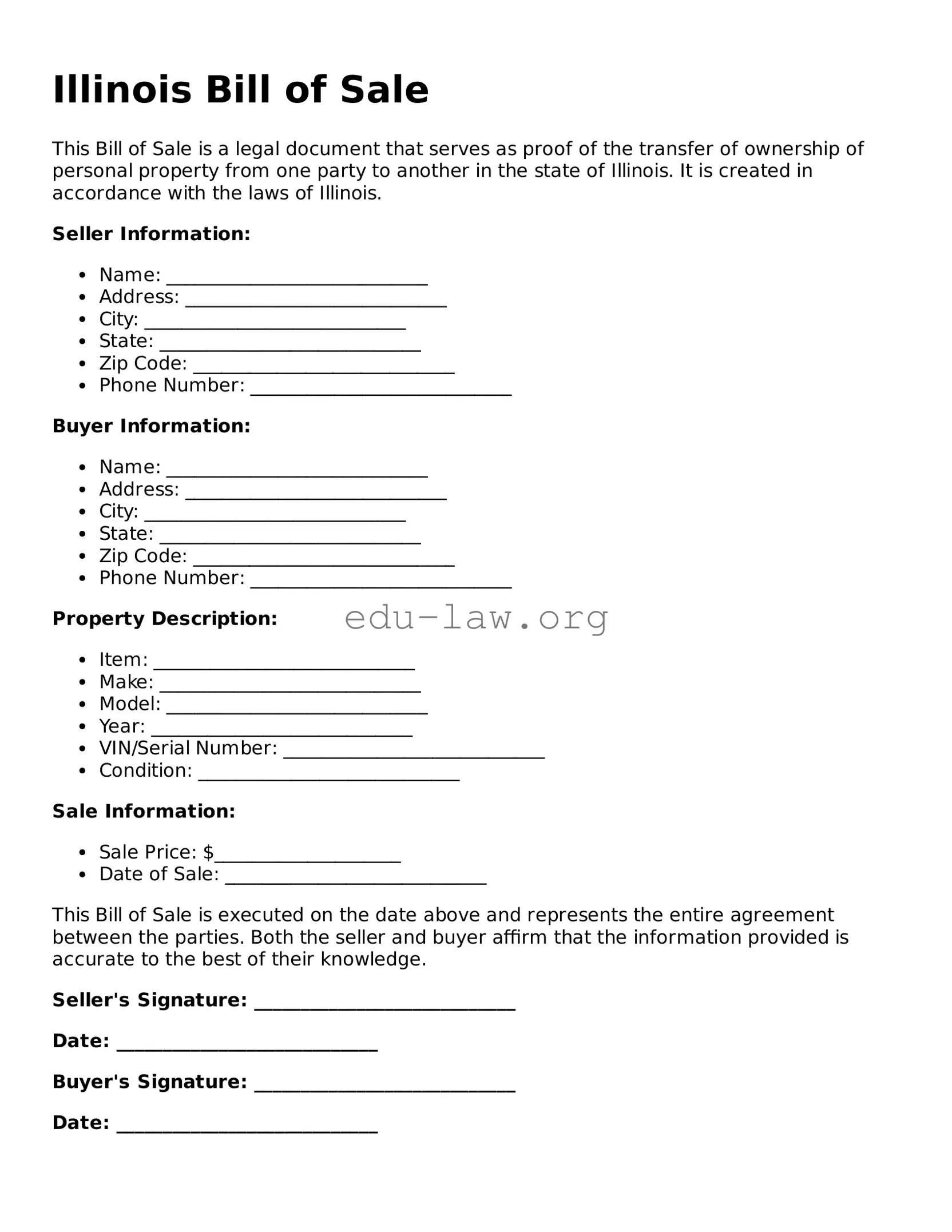
Illinois Bill of Sale
This Bill of Sale is a legal document that serves as proof of the transfer of ownership of personal property from one party to another in the state of Illinois. It is created in accordance with the laws of Illinois.
Seller Information:
Buyer Information:
Property Description:
Sale Information:
This Bill of Sale is executed on the date above and represents the entire agreement between the parties. Both the seller and buyer affirm that the information provided is accurate to the best of their knowledge.
Seller's Signature: ____________________________
Date: ____________________________
Buyer's Signature: ____________________________
Date: ____________________________
| Fact Name | Details |
|---|---|
| Definition | The Illinois Bill of Sale is a legal document that transfers ownership of personal property from one party to another. |
| Governing Law | Illinois law governs the use and validity of the Bill of Sale, particularly under the Illinois Uniform Commercial Code. |
| Types of Property | This form can be used for various types of personal property, including vehicles, boats, and equipment. |
| Required Information | Essential details include the names and addresses of the buyer and seller, a description of the property, and the sale price. |
| Witness Requirement | While not mandatory, having a witness sign the Bill of Sale can provide additional protection for both parties. |
| Notarization | Notarization is not required in Illinois but is recommended for added legal assurance. |
| Use in Vehicle Transactions | A Bill of Sale is often required for vehicle transactions to register the vehicle with the Illinois Secretary of State. |
| Record Keeping | Both the buyer and seller should keep a copy of the Bill of Sale for their records. |
| Tax Implications | Sales tax may apply depending on the nature of the transaction and the type of property sold. |
After obtaining the Illinois Bill of Sale form, you are ready to fill it out. This document serves as proof of a transaction between a buyer and a seller. It is essential to complete this form accurately to ensure a smooth transfer of ownership.
Once the form is completed, keep a copy for your records. The buyer should also receive a copy to confirm the transaction details. Proper documentation helps protect both parties in the event of future disputes.
What is an Illinois Bill of Sale form?
The Illinois Bill of Sale form is a legal document used to transfer ownership of personal property from one party to another. This form serves as proof of the transaction and outlines the details of the sale, including the buyer, seller, and a description of the item being sold. It is important for both parties to have a copy for their records.
When do I need a Bill of Sale in Illinois?
A Bill of Sale is typically required when selling or buying personal property, such as vehicles, boats, or equipment. While it is not always legally required, having a Bill of Sale can protect both the buyer and seller in case of disputes. Additionally, for vehicles, the Bill of Sale may be needed for registration purposes.
What information should be included in the Bill of Sale?
Essential information includes the names and addresses of both the buyer and seller, the date of the transaction, a detailed description of the item, the purchase price, and any warranties or conditions of the sale. Both parties should sign the document to make it valid.
Is a Bill of Sale legally binding?
Yes, a properly completed and signed Bill of Sale is a legally binding document. It can be used in court to prove ownership and the terms of the sale. However, it is crucial that all information is accurate and that both parties agree to the terms outlined in the document.
Do I need to have the Bill of Sale notarized?
In Illinois, notarization is not required for a Bill of Sale to be valid. However, having the document notarized can add an extra layer of authenticity and may be beneficial in case of future disputes. It is always a good practice to have important documents notarized when possible.
Can I create my own Bill of Sale?
Yes, you can create your own Bill of Sale as long as it includes all the necessary information. There are also templates available online that you can use. Just ensure that the document meets the requirements of Illinois law and accurately reflects the terms of your transaction.
Where can I find an Illinois Bill of Sale template?
Templates for the Illinois Bill of Sale can be found online through various legal websites or government resources. These templates often provide a structured format that includes all the essential information needed for your transaction. Make sure to choose a reputable source to ensure the template is compliant with Illinois law.
Incomplete Information: One common mistake is failing to provide all necessary details. This includes the names and addresses of both the buyer and seller, as well as a complete description of the item being sold. Omitting any of this information can lead to confusion and potential disputes.
Incorrect Item Description: Another frequent error involves inaccurately describing the item. It is essential to include specific details such as the make, model, year, and condition. A vague description may lead to misunderstandings regarding what was sold.
Failure to Sign: Not signing the document is a critical mistake. Both parties must sign the Bill of Sale for it to be valid. A missing signature can invalidate the transaction and complicate future claims.
Not Keeping Copies: Many individuals neglect to keep a copy of the completed Bill of Sale. It is important to retain a copy for personal records. This documentation can serve as proof of ownership and transaction details in the future.
The Illinois Bill of Sale form is a crucial document for transferring ownership of personal property, such as vehicles or equipment. When completing a transaction, it's often beneficial to have additional forms and documents to ensure a smooth process. Below is a list of related documents commonly used alongside the Bill of Sale in Illinois.
Utilizing these forms and documents along with the Illinois Bill of Sale can facilitate a clear and legally sound transaction. Always ensure that all parties involved understand their rights and responsibilities to avoid potential issues in the future.
The Illinois Bill of Sale form shares similarities with the Vehicle Bill of Sale. This document is specifically used for the transfer of ownership of a vehicle from one party to another. Like the Illinois Bill of Sale, it includes essential details such as the buyer's and seller's names, vehicle identification number (VIN), make, model, and year of the vehicle. Both documents serve as proof of the transaction and can be used for registration purposes with the state.
Another related document is the Personal Property Bill of Sale. This form is utilized for the sale of tangible personal property, such as furniture, electronics, or equipment. Similar to the Illinois Bill of Sale, it outlines the details of the transaction, including the item description, sale price, and the parties involved. Both documents protect the interests of the buyer and seller by providing a record of the sale.
The Equipment Bill of Sale is also comparable. This document is specifically designed for the sale of equipment, often used in business transactions. It contains detailed descriptions of the equipment being sold, including serial numbers and condition. Like the Illinois Bill of Sale, it requires signatures from both parties to validate the transaction, ensuring that both parties acknowledge the sale.
The Firearm Bill of Sale is another document that serves a similar purpose. This form is used when transferring ownership of firearms between individuals. It includes specific details about the firearm, such as make, model, and serial number. Both the Firearm Bill of Sale and the Illinois Bill of Sale provide a record of the transaction, which is important for legal compliance and ownership verification.
The Boat Bill of Sale is relevant for those transferring ownership of a boat or watercraft. It includes essential information such as the boat's make, model, year, and hull identification number (HIN). Like the Illinois Bill of Sale, this document acts as proof of ownership transfer and may be required for registration with state authorities.
The Livestock Bill of Sale is another document that resembles the Illinois Bill of Sale. This form is specifically for the sale of livestock, such as cattle, sheep, or pigs. It includes details about the animals being sold, such as breed and registration numbers. Both documents serve to formalize the transaction and protect the rights of both the buyer and seller.
The Business Bill of Sale is used when transferring ownership of a business or its assets. This document outlines the terms of the sale, including the purchase price and any included assets. Like the Illinois Bill of Sale, it provides a clear record of the transaction, ensuring that both parties have a mutual understanding of the agreement.
Lastly, the Real Estate Bill of Sale is similar in that it is used for the transfer of personal property associated with real estate transactions. This form details items such as appliances or fixtures included in the sale of a property. While the Illinois Bill of Sale primarily deals with personal property, both documents ensure that all parties are aware of what is included in the sale, thereby preventing disputes in the future.
When filling out the Illinois Bill of Sale form, it's important to follow certain guidelines to ensure the document is completed correctly. Here are six key things to keep in mind:
When it comes to the Illinois Bill of Sale form, many people hold misconceptions that can lead to confusion. Here are nine common misunderstandings:
Understanding these misconceptions can help you navigate the process of creating and using a Bill of Sale in Illinois more effectively.
When filling out and using the Illinois Bill of Sale form, it is important to keep several key points in mind. These takeaways will help ensure that the process is smooth and legally sound.
Following these guidelines will help ensure that the Bill of Sale is filled out correctly and serves its intended purpose.