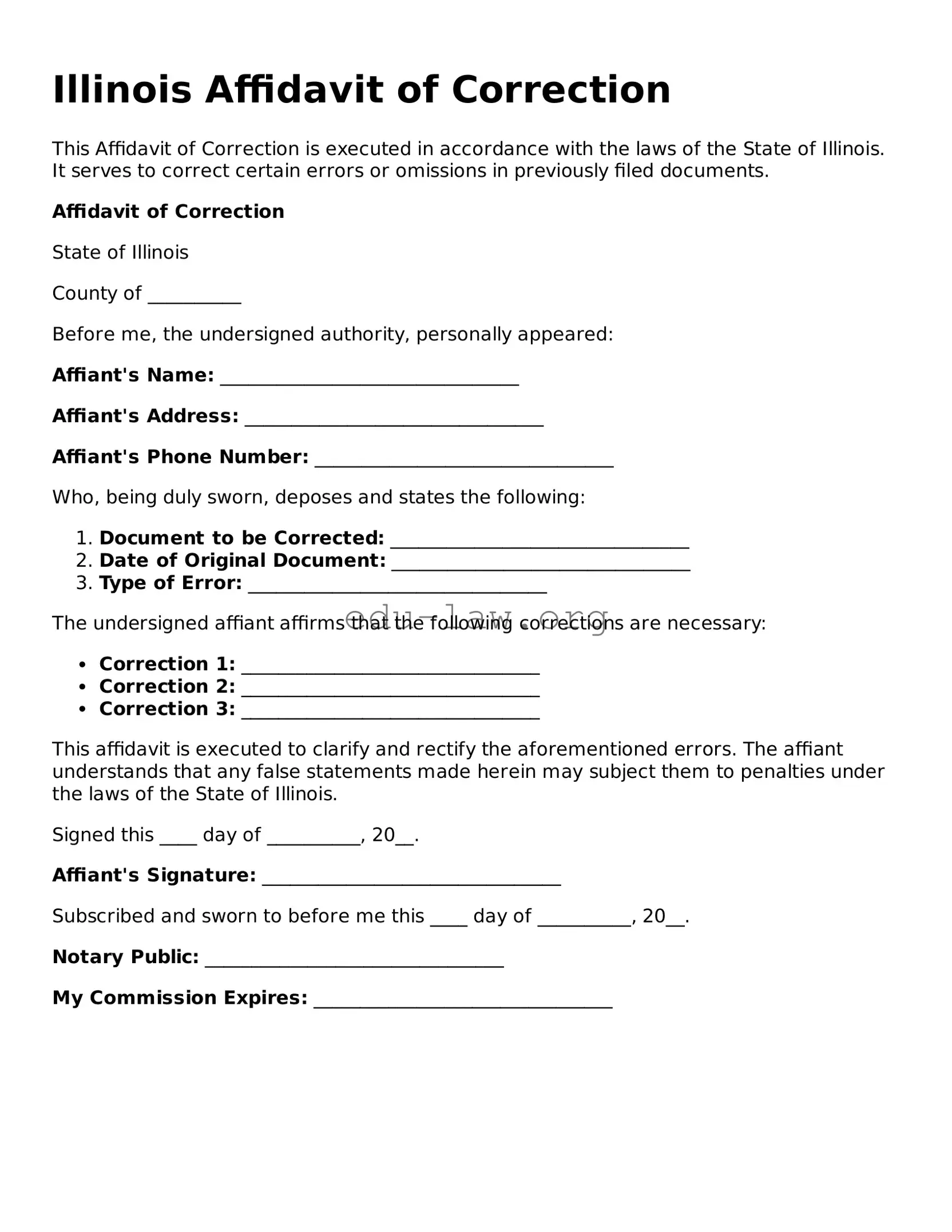
The Illinois Affidavit of Correction form serves as a vital tool for individuals seeking to amend or rectify errors in official documents. This form is commonly used when there are inaccuracies in property records, legal filings, or other important papers that could lead to confusion or disputes. By submitting an Affidavit of Correction, individuals can clarify discrepancies such as misspelled names, incorrect addresses, or erroneous dates. The process typically involves providing specific details about the original document and the nature of the correction. Once completed and filed with the appropriate authority, this affidavit helps ensure that public records accurately reflect the intended information, thereby safeguarding the rights and interests of those involved. Understanding the requirements and implications of this form is essential for anyone looking to maintain the integrity of their legal documents in Illinois.
Illinois Affidavit of Correction
This Affidavit of Correction is executed in accordance with the laws of the State of Illinois. It serves to correct certain errors or omissions in previously filed documents.
Affidavit of Correction
State of Illinois
County of __________
Before me, the undersigned authority, personally appeared:
Affiant's Name: ________________________________
Affiant's Address: ________________________________
Affiant's Phone Number: ________________________________
Who, being duly sworn, deposes and states the following:
The undersigned affiant affirms that the following corrections are necessary:
This affidavit is executed to clarify and rectify the aforementioned errors. The affiant understands that any false statements made herein may subject them to penalties under the laws of the State of Illinois.
Signed this ____ day of __________, 20__.
Affiant's Signature: ________________________________
Subscribed and sworn to before me this ____ day of __________, 20__.
Notary Public: ________________________________
My Commission Expires: ________________________________
| Fact Name | Description |
|---|---|
| Purpose | The Illinois Affidavit of Correction is used to correct clerical errors in documents that have already been recorded. |
| Governing Law | This form is governed by the Illinois Compiled Statutes, specifically 765 ILCS 1005/1. |
| Who Can File | Any party involved in the original document, or their legal representative, can file an Affidavit of Correction. |
| Common Errors | Typical corrections include mistakes in names, dates, or property descriptions. |
| Filing Process | The completed affidavit must be filed with the same office where the original document was recorded. |
| Effect of Filing | Once filed, the correction is treated as part of the original document, clarifying any previous misunderstandings. |
Once you have the Illinois Affidavit of Correction form in hand, it’s important to fill it out carefully. This form is used to correct errors in previously filed documents. Following the steps below will help ensure that you complete the form accurately and efficiently.
After submitting the form, keep an eye out for any confirmation or further instructions from the office where you filed it. They may reach out for additional information or to inform you of the status of your correction request.
What is an Illinois Affidavit of Correction?
The Illinois Affidavit of Correction is a legal document used to correct errors in previously filed documents, such as deeds, mortgages, or other official records. It allows individuals to formally address mistakes without having to refile the entire document, making the correction process more efficient.
Who can file an Affidavit of Correction in Illinois?
Any party involved in the original document can file an Affidavit of Correction. This typically includes property owners, lenders, or any other stakeholders who have a vested interest in the accuracy of the record. However, it’s important to ensure that the person filing has the authority to do so.
What types of errors can be corrected using this affidavit?
Common errors that can be corrected include typographical mistakes, incorrect names, wrong legal descriptions, or any other clerical errors that do not affect the substance of the document. It is crucial to note that substantive changes, such as altering the terms of a contract, may require a different legal process.
How do I complete the Affidavit of Correction?
To complete the Affidavit of Correction, you will need to provide specific information about the original document, including the date it was filed, the names of the parties involved, and a clear description of the errors. Additionally, you must state the correct information that should replace the erroneous details. Be sure to sign the affidavit in the presence of a notary public.
Is there a fee associated with filing an Affidavit of Correction?
Yes, there may be a fee to file an Affidavit of Correction, depending on the county in which you are filing. Fees can vary, so it is advisable to check with the local recorder’s office or relevant authority for the exact amount and payment methods accepted.
Where do I file the Affidavit of Correction?
The completed Affidavit of Correction should be filed with the same office where the original document was recorded. This is usually the county recorder’s office. Ensure that you keep a copy of the affidavit for your records after filing.
Do I need a lawyer to file an Affidavit of Correction?
While it is not legally required to have a lawyer to file an Affidavit of Correction, consulting with one can be beneficial, especially if you are unsure about the process or if the errors are complex. A legal professional can provide guidance and help ensure that the affidavit is completed correctly.
How long does it take for the correction to be processed?
The processing time for an Affidavit of Correction can vary by county. Generally, it may take a few days to several weeks for the correction to be officially recorded. It is advisable to follow up with the recorder’s office if you do not receive confirmation of the filing within a reasonable timeframe.
What happens if I do not file an Affidavit of Correction?
If you do not file an Affidavit of Correction, the errors in the original document will remain on record. This can lead to potential legal issues, disputes over property rights, or complications in future transactions. Therefore, it is wise to address any inaccuracies promptly to avoid complications down the line.
Failing to provide accurate information. Always double-check names, dates, and other critical details.
Not signing the form. A signature is necessary for the affidavit to be valid.
Leaving out required sections. Each part of the form must be completed to avoid delays.
Using incorrect identification numbers. Ensure that any reference numbers are accurate and match official documents.
Not including supporting documentation. Attach any necessary documents to substantiate the corrections.
Submitting the form to the wrong office. Make sure to send it to the correct authority for processing.
Ignoring deadlines. Be aware of any time limits for submitting the affidavit.
Neglecting to keep copies. Always keep a copy of the submitted form for your records.
Overlooking notary requirements. Some affidavits must be notarized before submission.
When dealing with the Illinois Affidavit of Correction form, several other documents may also be necessary. These forms help clarify or support the information being corrected. Below is a list of commonly used forms that can accompany the Affidavit of Correction.
These documents play a crucial role in ensuring that corrections are made properly and legally. Each one serves a specific purpose, helping to maintain accurate records and facilitate smooth transactions.
The Illinois Affidavit of Correction form shares similarities with the Affidavit of Identity. Both documents serve to clarify or rectify information that may have been inaccurately recorded. The Affidavit of Identity is often used when an individual needs to confirm their identity, especially in cases of mistaken identity or when there are discrepancies in public records. This document typically requires the individual to provide personal details and may involve notarization to ensure authenticity.
Another document that resembles the Illinois Affidavit of Correction is the Declaration of Correction. This declaration is utilized to amend errors in previously filed documents, such as deeds or contracts. It serves a similar purpose, allowing individuals or entities to formally correct mistakes without the need for litigation. Like the Affidavit of Correction, it must be signed and often notarized to validate the corrections made.
The Certificate of Correction is also comparable to the Illinois Affidavit of Correction. This certificate is primarily used in corporate settings to rectify inaccuracies in a corporation's formation documents. It allows businesses to correct clerical errors or omissions that may have occurred during the filing process. The Certificate of Correction is filed with the state and is an official acknowledgment of the amendments made.
The Affidavit of Correction is akin to the Notice of Correction. This document is used to inform relevant parties of changes made to previously recorded information. While the Affidavit of Correction focuses on affirming the truth of the corrected information, the Notice of Correction serves as a formal notification to interested parties, ensuring transparency and clarity regarding the changes.
Similar to the Illinois Affidavit of Correction is the Amendment to Document form. This form is used to make changes to existing legal documents, such as leases or agreements. The Amendment to Document specifies the sections that are being altered and outlines the new terms. It is essential for maintaining accurate records and ensuring that all parties are aware of the changes made.
The Correction Deed also bears resemblance to the Illinois Affidavit of Correction. A Correction Deed is executed to amend errors in the original deed, such as misspelled names or incorrect property descriptions. This document is crucial in real estate transactions to ensure that the title is clear and accurately reflects the ownership of the property.
Lastly, the Statement of Correction is similar in function to the Illinois Affidavit of Correction. This statement is often used in various legal contexts to officially document corrections to previously filed statements or reports. It provides a clear account of what corrections were made and why, serving as a formal record of the changes for future reference.
When filling out the Illinois Affidavit of Correction form, it’s important to follow certain guidelines to ensure accuracy and compliance. Here’s a list of things you should and shouldn’t do:
Understanding the Illinois Affidavit of Correction form is essential for anyone looking to rectify errors in official documents. However, several misconceptions can lead to confusion. Here are six common misunderstandings:
Being aware of these misconceptions can help you navigate the process more effectively. If you're considering filing an Affidavit of Correction, ensure you have accurate information and understand the implications of your actions.
When filling out and using the Illinois Affidavit of Correction form, it's essential to keep several key points in mind. Here are ten important takeaways: