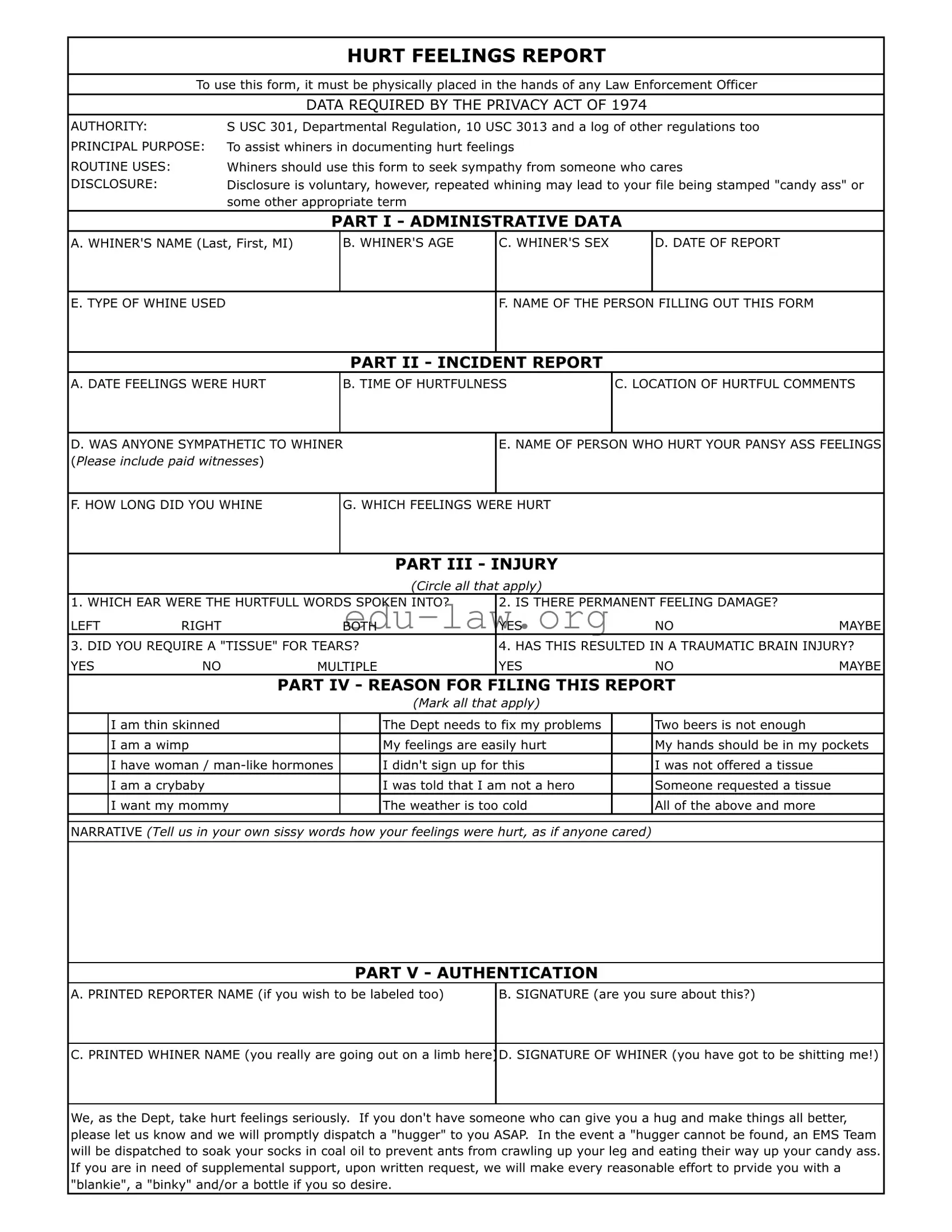
The Hurt Feelings Report form serves as a unique tool for individuals who feel emotionally impacted by the words or actions of others. Designed to be submitted directly to a law enforcement officer, this form allows individuals, referred to as "whiners," to document their experiences in a structured manner. It collects essential data, including the whiner's name, age, and the specifics of the incident that caused the hurt feelings. The form also prompts the user to describe the context of the hurtful comments, including the date, time, and location, as well as any witnesses who may have offered sympathy. Additionally, it includes a section for assessing the nature of the emotional injury, asking questions about the severity of the hurt and whether any physical tissues were required for tears. The report further encourages individuals to reflect on their reasons for filing, with options that range from feeling overly sensitive to simply needing more support. Finally, the form emphasizes the department's commitment to addressing hurt feelings, offering various forms of emotional support, including the dispatch of a 'hugger' if necessary. This approach underscores the importance of emotional well-being in a lighthearted yet serious manner.

HURT FEELINGS REPORT
To use this form, it must be physically placed in the hands of any Law Enforcement Officer
DATA REQUIRED BY THE PRIVACY ACT OF 1974
AUTHORITY: PRINCIPAL PURPOSE:
ROUTINE USES:
DISCLOSURE:
S USC 301, Departmental Regulation, 10 USC 3013 and a log of other regulations too To assist whiners in documenting hurt feelings
Whiners should use this form to seek sympathy from someone who cares
Disclosure is voluntary, however, repeated whining may lead to your file being stamped "candy ass" or some other appropriate term
PART I - ADMINISTRATIVE DATA
A. WHINER'S NAME (Last, First, MI)
B. WHINER'S AGE
C. WHINER'S SEX
D. DATE OF REPORT
E. TYPE OF WHINE USED
F. NAME OF THE PERSON FILLING OUT THIS FORM
PART II - INCIDENT REPORT
A. DATE FEELINGS WERE HURT
B. TIME OF HURTFULNESS
C. LOCATION OF HURTFUL COMMENTS
D. WAS ANYONE SYMPATHETIC TO WHINER (Please include paid witnesses)
E. NAME OF PERSON WHO HURT YOUR PANSY ASS FEELINGS
F. HOW LONG DID YOU WHINE
G. WHICH FEELINGS WERE HURT
PART III - INJURY
(Circle all that apply)
1. WHICH EAR WERE THE HURTFULL WORDS SPOKEN INTO? |
2. IS THERE PERMANENT FEELING DAMAGE? |
|
||||||
LEFT |
RIGHT |
|
BOTH |
|
YES |
NO |
MAYBE |
|
3. DID YOU REQUIRE A "TISSUE" FOR TEARS? |
|
4. HAS THIS RESULTED IN A TRAUMATIC BRAIN INJURY? |
||||||
YES |
NO |
MULTIPLE |
|
YES |
NO |
MAYBE |
||
|
|
PART IV - REASON FOR |
FILING THIS REPORT |
|
||||
|
|
|
|
(Mark all that apply) |
|
|
||
|
I am thin skinned |
|
|
The Dept needs to fix my problems |
|
Two beers is not enough |
|
|
|
I am a wimp |
|
|
My feelings are easily hurt |
|
My hands should be in my pockets |
||
|
I have woman / |
|
I didn't sign up for this |
|
I was not offered a tissue |
|
||
|
I am a crybaby |
|
|
I was told that I am not a hero |
|
Someone requested a tissue |
|
|
|
I want my mommy |
|
|
The weather is too cold |
|
All of the above and more |
|
|
NARRATIVE (Tell us in your own sissy words how your feelings were hurt, as if anyone cared)
PART V - AUTHENTICATION
A. PRINTED REPORTER NAME (if you wish to be labeled too)
B. SIGNATURE (are you sure about this?)
C. PRINTED WHINER NAME (you really are going out on a limb here) D. SIGNATURE OF WHINER (you have got to be shitting me!)
We, as the Dept, take hurt feelings seriously. If you don't have someone who can give you a hug and make things all better, please let us know and we will promptly dispatch a "hugger" to you ASAP. In the event a "hugger cannot be found, an EMS Team will be dispatched to soak your socks in coal oil to prevent ants from crawling up your leg and eating their way up your candy ass. If you are in need of supplemental support, upon written request, we will make every reasonable effort to prvide you with a "blankie", a "binky" and/or a bottle if you so desire.
| Fact Name | Description |
|---|---|
| Purpose of the Form | This form is intended to assist individuals in documenting instances where they feel their feelings have been hurt. |
| Submission Requirement | The form must be physically handed to a law enforcement officer for it to be considered valid. |
| Privacy Act Compliance | The form complies with the Privacy Act of 1974, ensuring that personal data is handled appropriately. |
| Voluntary Disclosure | While providing information on the form is voluntary, repeated submissions may lead to informal labeling. |
| State-Specific Laws | Each state may have specific laws governing the use of such forms, which should be reviewed for compliance. |
Completing the Hurt Feelings Report form is a straightforward process. Once you have filled it out, ensure it is handed directly to a Law Enforcement Officer. This step is crucial for your submission to be recognized. Follow the instructions below carefully to ensure all necessary information is included.
After completing the form, ensure all sections are filled out accurately. Once you have done this, hand it directly to a Law Enforcement Officer for processing. It is essential to follow through promptly to receive the support you may need.
What is the purpose of the Hurt Feelings Report form?
The form is designed to help individuals document their feelings of hurt. It serves as a way for people to express their emotions and seek sympathy from others. While it may seem light-hearted, it is meant to provide a structured way to communicate feelings that might otherwise go unaddressed.
Who can fill out this form?
Anyone who feels that their feelings have been hurt can fill out the form. It is important to provide accurate information, including your name and details about the incident. The form should be submitted to a law enforcement officer in person.
What kind of information is required on the form?
The form requires personal details such as the whiner's name, age, and sex, as well as specifics about the incident. This includes the date and time when feelings were hurt, the location, and the name of the person responsible for the hurtful comments. Additionally, there are sections to describe the nature of the injury and the reasons for filing the report.
Is submitting this form mandatory?
Submitting the form is voluntary. However, it is encouraged for those who feel strongly about their hurt feelings. Keep in mind that repeated submissions may lead to a more casual perception of the concerns raised.
What happens after I submit the form?
Once the form is submitted, the department takes the report seriously. If you need emotional support, they will attempt to send someone to help you feel better. If a "hugger" is unavailable, other forms of assistance may be provided to ensure your comfort.
Can I request additional support after submitting the form?
Yes, you can request additional support in writing. The department aims to accommodate requests for items like a "blankie," a "binky," or even a bottle if needed. They want to ensure that you feel supported during this time.
What should I include in the narrative section of the form?
The narrative section is your opportunity to explain how your feelings were hurt. Use your own words to describe the situation. Be as detailed as you feel comfortable, as this helps convey the impact of the incident on your emotions.
Is there any follow-up after the report is filed?
While there may not be formal follow-up procedures, the department encourages open communication. If you have further concerns or need additional support, you are welcome to reach out again. The goal is to ensure that you feel heard and supported.
Incomplete Information: Many people forget to fill out all the required fields. Missing details like the whiner's name, age, or the date of the incident can delay the processing of the report.
Vague Descriptions: Some individuals provide unclear or overly general accounts of the incident. Specific details about what happened, when, and where are crucial for understanding the situation.
Neglecting Witnesses: Failing to mention any witnesses can weaken a report. Including names of those who were sympathetic or present during the incident can add credibility.
Skipping the Narrative: The narrative section is essential for expressing how feelings were hurt. Omitting this part means missing an opportunity to convey the emotional impact of the incident.
When dealing with emotional distress or interpersonal conflicts, individuals may find it beneficial to accompany the Hurt Feelings Report form with additional documents. These forms can help provide a clearer context for the situation and facilitate better communication with authorities or support systems. Below is a list of related forms and documents that are often used in conjunction with the Hurt Feelings Report.
By utilizing these additional forms and documents, individuals can create a comprehensive approach to addressing their hurt feelings. This not only aids in documenting their experiences but also promotes healing and resolution. Each document serves a specific purpose, contributing to a clearer understanding of the emotional landscape involved.
The Incident Report form is a document often used in various situations where an individual needs to formally report an event that caused distress or harm. Similar to the Hurt Feelings Report, this form collects essential details about the incident, including the date, time, and nature of the event. Both documents aim to provide a structured way for individuals to express their grievances. While the Hurt Feelings Report may focus on emotional hurt, the Incident Report often encompasses a broader range of incidents, from accidents to altercations, ensuring that all necessary information is documented for further investigation.
The Complaint Form is another document that bears resemblance to the Hurt Feelings Report. Individuals use this form to voice their dissatisfaction with a service, product, or experience. Like the Hurt Feelings Report, it requires specific information about the complainant and the nature of the complaint. Both forms serve as a means for individuals to seek resolution or acknowledgment of their issues. While the Complaint Form is generally more formal and may lead to official responses, the Hurt Feelings Report tends to be more lighthearted, reflecting the emotional aspect of the grievances being reported.
The Grievance Form is also similar in purpose and structure to the Hurt Feelings Report. This document is typically utilized in workplace settings, allowing employees to formally express concerns or issues they have faced, whether related to treatment by colleagues or workplace policies. Both forms provide a platform for individuals to articulate their feelings and seek some form of acknowledgment or remedy. However, the Grievance Form often follows a more serious tone, as it is typically associated with employment-related disputes, while the Hurt Feelings Report employs humor to address emotional pain.
The Feedback Form is another document that shares similarities with the Hurt Feelings Report. This form is designed to gather opinions and feelings about a particular service, product, or experience. Both forms encourage individuals to share their thoughts and feelings, fostering a sense of communication and understanding. While the Feedback Form may focus more on constructive criticism or praise, the Hurt Feelings Report emphasizes the emotional impact of experiences. Both documents aim to facilitate dialogue and improve future interactions, ensuring that individuals feel heard and valued.
When filling out the Hurt Feelings Report form, consider these important dos and don'ts to ensure your submission is effective and respectful.
By following these guidelines, you can ensure that your report is taken seriously and handled appropriately.
Misconceptions about the Hurt Feelings Report form can lead to confusion about its purpose and use. Below are ten common misunderstandings:
Understanding these misconceptions can help individuals use the Hurt Feelings Report form more effectively and appreciate its intended purpose.
When filling out and using the Hurt Feelings Report form, consider the following key points: