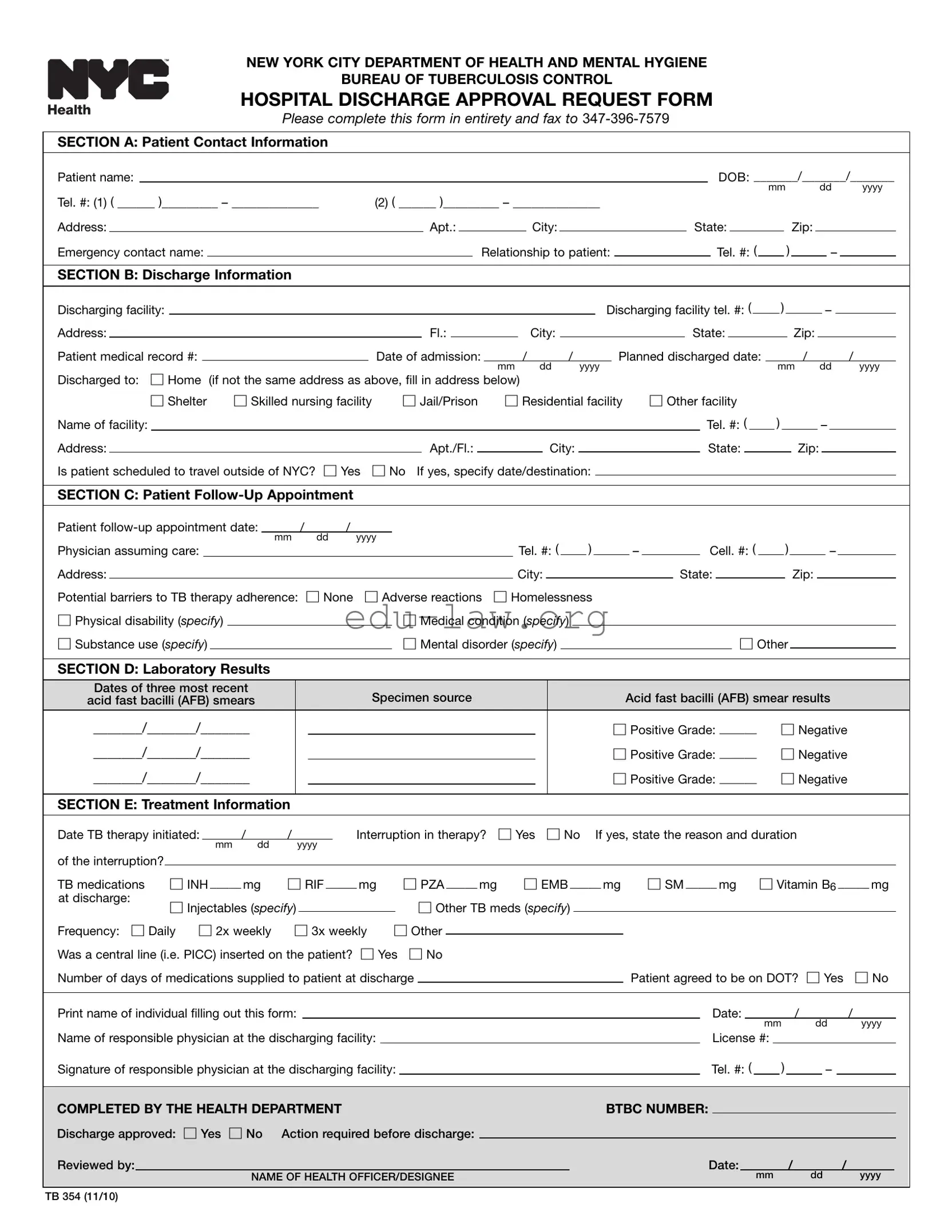
The Hospital Discharge Papers form, officially known as the Hospital Discharge Approval Request Form (TB 354), plays a crucial role in the safe transition of patients diagnosed with infectious tuberculosis (TB) from hospital care to their next living situation. This form is required by the New York City Department of Health and Mental Hygiene and must be completed in full before a patient can be discharged. It collects essential information about the patient, including their contact details, the discharging facility, and the planned discharge date. Additionally, it outlines the follow-up care appointments and identifies any potential barriers to treatment adherence. Laboratory results related to the patient's TB status, such as acid fast bacilli (AFB) smear results, are also documented. Treatment information, including the medications prescribed and their dosages, is critical for ensuring continuity of care. The form must be submitted at least 72 hours prior to discharge to allow for review and approval by health department officials. This process ensures that all necessary precautions are taken to protect both the patient and the community from the spread of TB.

NEW YORK CITY DEPARTMENT OF HEALTH AND MENTAL HYGIENE
BUREAU OF TUBERCULOSIS CONTROL
HOSPITAL DISCHARGE APPROVAL REQUEST FORM
Please complete this form in entirety and fax to
SECTION A: Patient Contact Information
|
|
Patient name: |
|
|
|
|
|
|
|
|
|
|
|
|
|
|
|
|
|
|
|
|
|
|
|
|
|
|
|
|
|
|
|
|
|
|
|
|
|
|
|
|
|
|
|
|
|
|
|
|
|
|
|
|
|
|
|
|
|
|
|
|
|
|
|
|
|
DOB: _______/_______/_______ |
|
|
|||||||||||||||||||||||||||||||||||||
|
|
|
|
|
|
|
|
|
|
|
|
|
|
|
|
|
|
|
|
|
|
|
|
|
|
|
|
|
|
|
|
|
|
|
|
|
|
|
|
|
|
|
|
|
|
|
|
|
|
|
|
|
|
|
|
|
|
|
|
|
|
|
|
|
|
|
|
|
|
|
|
|
|
|
|
|
|
|
mm |
|
|
dd |
|
yyyy |
|
|
|||||||||||||||||||||
|
|
Tel. #: (1) ( ______ )_________ – ______________ |
|
(2) ( ______ )_________ – ______________ |
|
|
|
|
|
|
|
|
|
|
|
|
|
|
|
|
|
|
|
|
|
|
|
|
|
|
|
|
|
|
|
|
|
|
|
|
|
|
|
|
|
|
|
|
|
|
|
|
|||||||||||||||||||||||||||||||||||||||||||||||||||||||
|
|
Address: |
|
|
|
|
|
|
|
|
|
|
|
|
|
|
|
|
|
|
|
|
|
|
|
|
|
|
|
|
Apt.: |
|
|
|
|
|
|
|
|
City: |
|
|
|
|
|
|
|
|
|
|
|
|
|
|
|
|
|
State: |
|
|
|
|
|
|
|
|
|
|
|
|
|
|
|
|
|
Zip: |
|
|
|
|
|
|
|
|
|
|
|
|
|
|
|
|
|||||||||||||||
|
|
Emergency contact name: |
|
|
|
|
|
|
|
|
|
|
|
|
|
|
|
|
|
|
|
|
|
|
|
|
|
|
|
|
Relationship to patient: |
|
|
|
|
|
|
|
|
|
|
|
Tel. #: ( |
|
|
|
|
|
) |
|
|
|
|
|
|
|
|
|
|
|
– |
|
|
|
|
|
|
||||||||||||||||||||||||||||||||||||||||
|
|
|
|
|
|
|
|
|
|
|
|
|
|
|
|
|
|
|
|
|
|
|
|
|
|
|
|
|
|
|
|
|
|
|
|
|
|
|
|
|
|
|
|
|
|
|
|
|
|
|
|
|
|
|
|
|
|
|
|
|
|
|
|
|
|
|
|
|
|
|
|
|
|
|
|
|
|
|
|
|
|
|
|
|
|
|
|
|
|
|
|
|
|
|
|
|
|
|
|
|
|
|
|
|
|
|
|
|
|
|
|
|
|
|
|
|
|
|
|
|
|
|
|
|
|
|
|
|
|
|
|
|
|
|
|
|
|
|
|
|
|
|
|
|
|
|
|
|
|
|
|
|
|
|
|
|
|
|
|
|
|
|
|
|
|
|
|
|
|
|
|
|
|
|
|
|
|
|
|
|
|
|
|
|
|
|
|
|
|
|
|
|
|
|
|
|
|
|
|
|
|
|
|
|
|
|
|
||||||||
|
|
|
|
|
|
|
|
|
|
|
|
|
|
|
|
|
|
|
|
|
|
|
|
|
|
|
|
|
|
|
|
|
|
|
|
|
|
|
|
|
|
|
|
|
|
|
|
|
|
|
|
|
|
|
|
|
|
|
|
|
|
|
|
|
|
|
|
|
|
|
|
|
|
|
|
|
|
|
|
|
|
|
|
|
|
|
|
|
|
|
|
|
|
|
|
|
|
|
|
||||||||
|
|
SECTION B: Discharge Information |
|
|
|
|
|
|
|
|
|
|
|
|
|
|
|
|
|
|
|
|
|
|
|
|
|
|
|
|
|
|
|
|
|
|
|
|
|
|
|
|
|
|
|
|
|
|
|
|
|
|
|
|
|
|
|
|
|
|
|
|
|
|
|
|
|
|
|
|
|
|
|
|
|
|
|
|
|
|
|
|
|
|
|
|
|
|
|
||||||||||||||||||
|
|
|
|
|
|
|
|
|
|
|
|
|
|
|
|
|
|
|
|
|
|
|
|
|
|
|
|
|
|
|
|
|
|
|
|
|
|
|
|
|
|
|
|
|
|
|
|
|
|
|
|
|
|
|
|
|
|
|
|
|
|
|
|
|
|
|
|
|
|
|
|
|
|
|
|
|
|
|
|
|
|
|
|
|
|
|
|
|
|
|
|
|
|
|
|
|
|
|
|||||||||
|
|
|
|
|
|
|
|
|
|
|
|
|
|
|
|
|
|
|
|
|
|
|
|
|
|
|
|
|
|
|
|
|
|
|
|
|
|
|
|
|
|
|
|
|
|
|
|
|
|
|
|
|
|
|
|
|
|
|
|
|
|
|
|
|
|
|
|
|
|
|
|
|
|
|
|
|
|
|
|
|
|
|
|
|
|
|
|
|
|
|
|
|
|
|
|
|
|
|
|
|
|
|
|
|
|
|
|
|
|
Discharging facility: |
|
|
|
|
|
|
|
|
|
|
|
|
|
|
|
|
|
|
|
|
|
|
|
|
|
|
|
|
|
|
|
|
|
|
|
|
|
|
|
|
|
|
|
|
|
|
|
|
Discharging facility tel. #: ( |
|
|
|
) |
|
|
|
|
|
|
|
|
|
|
|
|
|
– |
|
|
|
|
|
|
|
|||||||||||||||||||||||||||||||
|
|
Address: |
|
|
|
|
|
|
|
|
|
|
|
|
|
|
|
|
|
|
|
|
|
|
|
|
|
|
|
|
Fl.: |
|
|
|
|
|
|
|
City: |
|
|
|
|
|
|
|
|
|
|
|
|
|
|
|
|
State: |
|
|
|
|
|
|
|
|
|
|
|
|
|
|
|
|
Zip: |
|
|
|
|
|
|
|
|
|
|
|
|
|
|
|
|
||||||||||||||||||
|
|
Patient medical record #: |
|
|
|
|
|
|
|
|
|
|
|
|
|
|
|
Date of admission: |
|
|
/ |
|
/ |
|
|
|
|
|
|
Planned discharged date: |
|
|
/ |
|
|
|
|
|
|
|
|
|
|
|
/ |
|
|
|
|
||||||||||||||||||||||||||||||||||||||||||||||||||||||||||
|
|
|
|
|
|
|
|
|
|
|
|
|
|
|
|
|
|
|
|
|
|
|
|
|
|
|
|
|
|
|
|
|
|
|
|
|
|
|
|
|
mm |
dd |
yyyy |
|
|
|
|
|
|
|
|
|
|
|
|
|
|
|
|
|
|
|
|
|
mm |
|
|
dd |
|
yyyy |
|
|
|||||||||||||||||||||||||||||||||||
|
|
Discharged to: |
☐ Home (if not the same address as above, fill in address below) |
|
|
|
|
|
|
|
|
|
|
|
|
|
|
|
|
|
|
|
|
|
|
|
|
|
|
|
|
|
|
|
|
|
|
|
|
|
|
|
|
|
|
|
|
|
|
|
|
|
|
|
|
|
|
|
|
|
|
|
|
|
|
||||||||||||||||||||||||||||||||||||||||||
|
|
|
|
|
|
☐ Shelter |
☐ Skilled nursing facility |
|
|
|
|
☐ Jail/Prison |
|
☐ Residential facility |
|
|
☐ Other facility |
|
|
|
|
|
|
|
|
|
|
|
|
|
|
|
|
|
|
|
|
|
|
|
|
|
|
|
|||||||||||||||||||||||||||||||||||||||||||||||||||||||||||||||
|
|
Name of facility: |
|
|
|
|
|
|
|
|
|
|
|
|
|
|
|
|
|
|
|
|
|
|
|
|
|
|
|
|
|
|
|
|
|
|
|
|
|
|
|
|
|
|
|
|
|
|
|
|
|
|
|
|
|
|
|
|
|
|
|
|
Tel. #: ( |
|
|
|
) |
|
|
|
|
|
|
|
|
|
|
|
– |
|
|
|
|
|
|
|
|
||||||||||||||||||||
|
|
Address: |
|
|
|
|
|
|
|
|
|
|
|
|
|
|
|
|
|
|
|
|
|
|
|
|
|
|
|
|
Apt./Fl.: |
|
|
|
|
|
|
|
|
|
City: |
|
|
|
|
|
|
|
|
|
|
|
|
|
State: |
|
|
|
|
|
|
|
|
|
|
|
|
|
Zip: |
|
|
|
|
|
|
|
|
|
|
|
|
|
|||||||||||||||||||||||||
|
|
Is patient scheduled to travel outside of NYC? |
☐ Yes ☐ No If yes, specify date/destination: |
|
|
|
|
|
|
|
|
|
|
|
|
|
|
|
|
|
|
|
|
|
|
|
|
|
|
|
|
|
|
|
|
|
|
|
|
|
|
|
|
|
|
|
|
|
|
|
|
|
|||||||||||||||||||||||||||||||||||||||||||||||||||||||
|
|
|
|
|
|
|
|
|
|
|
|
|
|
|
|
|
|
|
|
|
|
|
|
|
|
|
|
|
|
|
|
|
|
|
|
|
|
|
|
|
|
|
|
|
|
|
|
|
|
|
|||||||||||||||||||||||||||||||||||||||||||||||||||||||||
|
|
|
|
|
|
|
|
|
|
|
|
|
|
|
|
|
|
|
|
|
|
|
|
|
|
|
|
|
|
|
|
|
|
|
|
|
|
|
|
|
|
|
|
|
|
|
|
|
|
|
|
|
|
|
|
|
|
|
|
|
|
|
|
|
|
|
|
|
|
|
|
|
|
|
|
|
|
|
|
|
|
|
|
|
|
|
|
|
|
|
|
|
|
|
|
|
|
|
|
|
|
||||||
|
|
|
|
|
|
|
|
|
|
|
|
|
|
|
|
|
|
|
|
|
|
|
|
|
|
|
|
|
|
|
|
|
|
|
|
|
|
|
|
|
|
|
|
|
|
|
|
|
|
|
|
|
|
|
|
|
|
|
|
|
|
|
|
|
|
|
|
|
|
|
|
|
|
|
|
|
|
|
|
|
|
|
|
|
|
|
|
|
|
|
|
|
|
|
|
|
|
|
|||||||||
|
|
|
|
|
|
|
|
|
|
|
|
|
|
|
|
|
|
|
|
|
|
|
|
|
|
|
|
|
|
|
|
|
|
|
|
|
|
|
|
|
|
|
|
|
|
|
|
|
|
|
|
|
|
|
|
|
|
|
|
|
|
|
|
|
|
|
|
|
|
|
|
|
|
|
|
|
|
|
|
|
|
|
|
|
|
|
|
|
|
|
|
|
|
|
|
|
|
|
|
|
|
|
|
|
|
|
|
|
|
SECTION C: Patient |
|
|
|
|
|
|
|
|
|
|
|
|
|
|
|
|
|
|
|
|
|
|
|
|
|
|
|
|
|
|
|
|
|
|
|
|
|
|
|
|
|
|
|
|
|
|
|
|
|
|
|
|
|
|
|
|
|
|
|
|
|
|
|
|
|
|
|
|
|
|
|
|
|
|
|
|
|
|
|
|
|
|
|
|
|
||||||||||||||||||||
|
|
|
|
|
|
|
|
|
|
|
|
|
|
|
|
|
|
|
|
|
|
|
|
|
|
|
|
|
|
|
|
|
|
|
|
|
|
|
|
|
|
|
|
|
|
|
|
|
|
|
|
|
|
|
|
|
|
|
|
|
|
|
|
|
|
|
|
|
|
|
|
|
|
|
|
|
|
|
|
|
|
|
|
|
|
|
|
|
|
|
|
|
|
|
|
|
|
|
|
|
|||||||
|
|
|
|
|
|
|
|
|
|
|
|
|
|
|
|
|
|
|
|
|
|
|
|
|
|
|
|
|
|
|
|
|
|
|
|
|
|
|
|
|
|
|
|
|
|
|
|
|
|
|
|
|
|
|
|
|
|
|
|
|
|
|
|
|
|
|
|
|
|
|
|
|
|
|
|
|
|
|
|
|
|
|
|
|
|
|
|
|
|
|
|
|
|
|
|
|
|
|
|
|
|||||||
|
|
Patient |
|
/ |
|
/ |
|
|
|
|
|
|
|
|
|
|
|
|
|
|
|
|
|
|
|
|
|
|
|
|
|
|
|
|
|
|
|
|
|
|
|
|
|
|
|
|
|
|
|
|
|
|
|
|
|
|
|
|
|
|
|
|
|
|
|
|
|
|
|
|
|
|
|
|
|
|
|
|
|
|
|
|
|
|
|
|
|
|
|
|
|
||||||||||||||||
|
|
|
|
|
|
|
|
|
|
|
|
|
|
|
mm |
dd |
yyyy |
|
|
|
|
|
|
|
|
|
|
|
|
|
|
|
|
|
|
|
|
|
|
|
|
|
|
|
|
|
|
|
|
|
|
|
|
|
|
|
|
|
|
|
|
|
|
|
|
|
|
|
|
|
|
|
|
|
|
|
|
|
|
|
|
|
|
|
|
|
|
|
|
|
|
|
|
|
|
|
|
|
|
|
|||||||
|
|
Physician assuming care: |
|
|
|
|
|
|
|
|
|
|
|
|
|
|
|
|
|
|
|
|
|
|
|
|
|
|
|
|
|
|
|
Tel. #: ( |
|
|
|
|
) |
|
|
|
|
|
– |
|
|
|
|
|
Cell. #: ( |
|
|
) |
|
|
|
|
|
|
|
|
|
|
|
|
– |
|
|
|
|
|
|
||||||||||||||||||||||||||||||||||
|
|
|
|
|
|
|
|
|
|
|
|
|
|
|
|
|
|
|
|
|
|
|
|
|
|
|
|
|
|
|
|
|
|
|
|
|
|
|
|
|
|
|
|
|
|
|
|
|
|
|
|
|
|
|
|
|
|
|
|
|
|
|
|
|
|
|
|||||||||||||||||||||||||||||||||||||||||
|
|
Address: |
|
|
|
|
|
|
|
|
|
|
|
|
|
|
|
|
|
|
|
|
|
|
|
|
|
|
|
|
|
|
|
|
|
|
|
|
|
|
|
City: |
|
|
|
|
|
|
|
|
|
|
|
|
|
|
State: |
|
|
|
|
|
|
|
|
|
|
|
|
|
|
Zip: |
|
|
|
|
|
|
|
|
|
|
|
|
|
|
|
|
|||||||||||||||||||
|
|
Potential barriers to TB therapy adherence: ☐ None |
☐ Adverse reactions |
☐ Homelessness |
|
|
|
|
|
|
|
|
|
|
|
|
|
|
|
|
|
|
|
|
|
|
|
|
|
|
|
|
|
|
|
|
|
|
|
|
|
|
|
|
|
|
|
|
|
|
|
|
|||||||||||||||||||||||||||||||||||||||||||||||||||||||
|
|
☐ Physical disability (specify) |
|
|
|
|
|
|
|
|
|
|
|
|
|
|
|
|
|
☐ Medical condition (specify) |
|
|
|
|
|
|
|
|
|
|
|
|
|
|
|
|
|
|
|
|
|
|
|
|
|
|
|
|
|
|
|
|
|
|
|
|
|
|
|
|
|
|
|
|
|
|
|
|
|
|
|
|
|
|
|
|
|||||||||||||||||||||||||||||||
|
|
☐ Substance use (specify) |
|
|
|
|
|
|
|
|
|
|
|
|
|
|
|
|
|
|
☐ Mental disorder (specify) |
|
|
|
|
|
|
|
|
|
|
|
|
|
|
|
|
|
|
|
|
|
☐ Other |
|
|
|
|
|
|
|
|
|
|
|
|
|
|
|
|
|
|
|
|
||||||||||||||||||||||||||||||||||||||||||||
|
|
|
|
|
|
|
|
|
|
|
|
|
|
|
|
|
|
|
|
|
|
|
|
|
|
|
|
|
|
|
|
|
|
|
|
|
|
|
|
|
|
|
|
|
|
|
|
|
|
|
|
|
|
|
|
|
|
|
|
|
|
|
|
|
|
|
|
|
|
|
|
|
|
|
|
|
|
|
|
|
|
|
|
|
|
|
|
|
|
|
|
|
|
|
|
|
|
|
|
|
|
|
|
|
|
|
|
|
|
|
|
|
|
|
|
|
|
|
|
|
|
|
|
|
|
|
|
|
|
|
|
|
|
|
|
|
|
|
|
|
|
|
|
|
|
|
|
|
|
|
|
|
|
|
|
|
|
|
|
|
|
|
|
|
|
|
|
|
|
|
|
|
|
|
|
|
|
|
|
|
|
|
|
|
|
|
|
|
|
|
|
|
|
|
|
|
|
|
|
|
|
|
|
|
|
|
|
|
|
|
|
|
|
|
|
|
|
SECTION D: Laboratory Results |
|
|
|
|
|
|
|
|
|
|
|
|
|
|
|
|
|
|
|
|
|
|
|
|
|
|
|
|
|
|
|
|
|
|
|
|
|
|
|
|
|
|
|
|
|
|
|
|
|
|
|
|
|
|
|
|
|
|
|
|
|
|
|
|
|
|
|
|
|
|
|
|
|
|
|
|
|
|
|
|
|
|
|
|
|
|
|
|
|
|
|
|
|
||||||||||||
|
|
|
|
|
|
|
|
|
|
|
|
|
|
|
|
|
|
|
|
|
|
|
|
|
|
|
|
|
|
|
|
|
|
|
|
|
|
|
|
|
|
|
|
|
|
|
|
|
|
|
|
|
|
|
|
|
|
|
|
|
|
|
|
|
|
|
|
|
|
|
|
|
|
|
|
|
|
|
|
|
|
|
|
|
|
|
|
|
|
|
|
|
|
|
|
|
|
|
|
|
|
||||||
|
|
Dates of three most recent |
|
|
|
|
|
|
|
|
|
|
|
Specimen source |
|
|
|
|
|
|
|
|
|
|
|
|
|
|
|
|
|
|
|
|
Acid fast bacilli (AFB) smear results |
|
|
|
|
|
|||||||||||||||||||||||||||||||||||||||||||||||||||||||||||||||||||
|
|
acid fast bacilli (AFB) smears |
|
|
|
|
|
|
|
|
|
|
|
|
|
|
|
|
|
|
|
|
|
|
|
|
|
|
|
|
|
|
|
|
|
|
|||||||||||||||||||||||||||||||||||||||||||||||||||||||||||||||||||||||
|
|
|
|
|
|
|
|
|
|
|
|
|
|
|
|
|
|
|
|
|
|
|
|
|
|
|
|
|
|
|
|
|
|
|
|
|
|
|
|
|
|
|
|
|
|
|
|
|
|
|
|
|
|
|
|
|
|
|
|
|
|||||||||||||||||||||||||||||||||||||||||||||||
|
|
_______/_______/_______ |
|
|
|
|
|
|
|
|
|
|
|
|
|
|
|
|
|
|
|
|
|
|
|
|
|
|
|
|
|
|
|
|
|
|
|
|
|
|
|
|
|
|
|
|
|
☐ Positive Grade: ______ |
|
☐ Negative |
|
|
|
|
|
||||||||||||||||||||||||||||||||||||||||||||||||||||
|
|
_______/_______/_______ |
|
|
|
|
|
|
|
|
|
|
|
|
|
|
|
|
|
|
|
|
|
|
|
|
|
|
|
|
|
|
|
|
|
|
|
|
|
|
|
|
|
|
|
|
|
☐ Positive Grade: ______ |
|
☐ Negative |
|
|
|
|
|
||||||||||||||||||||||||||||||||||||||||||||||||||||
|
|
_______/_______/_______ |
|
|
|
|
|
|
|
|
|
|
|
|
|
|
|
|
|
|
|
|
|
|
|
|
|
|
|
|
|
|
|
|
|
|
|
|
|
|
|
|
|
|
|
|
|
☐ Positive Grade: ______ |
|
☐ Negative |
|
|
|
|
|
||||||||||||||||||||||||||||||||||||||||||||||||||||
|
|
|
|
|
|
|
|
|
|
|
|
|
|
|
|
|
|
|
|
|
|
|
|
|
|
|
|
|
|
|
|
|
|
|
|
|
|
|
|
|
|
|
|
|
|
|
|
|
|
|
|
|
|
|
|
|
|
|
|
|
|
|
|
|
|
|
|
|
|
|
|
|
|
|
|
|
|
|
|
|
|
|
|
|
|
|
|
|
|
|
|
|
|
|
|
|
|
|
|
|
|
|
|
|
|
|
|
|
|
|
|
|
|
|
|
|
|
|
|
|
|
|
|
|
|
|
|
|
|
|
|
|
|
|
|
|
|
|
|
|
|
|
|
|
|
|
|
|
|
|
|
|
|
|
|
|
|
|
|
|
|
|
|
|
|
|
|
|
|
|
|
|
|
|
|
|
|
|
|
|
|
|
|
|
|
|
|
|
|
|
|
|
|
|
|
|
|
|
|
|
|
|
|
|
|
|
|
|
|
|
|
|
|
|
|
|
|
|
|
|
|
|
|
|
|
|
|
|
|
|
|
|
|
|
|
|
|
|
|
|
|
|
|
|
|
|
|
|
|
|
|
|
|
|
|
|
|
|
|
|
|
|
|
|
|
|
|
|
|
|
|
|
|
|
|
|
|
|
|
|
|
|
|
|
|
|
|
|
|
|
|
|
|
|
|
|
|
|
|
|
|
|
|
|
|
|
|
|
|
|
|
|
|
|
|
|
|
|
|
|
|
|
|
|
|
SECTION E: Treatment Information |
|
|
|
|
|
|
|
|
|
|
|
|
|
|
|
|
|
|
|
|
|
|
|
|
|
|
|
|
|
|
|
|
|
|
|
|
|
|
|
|
|
|
|
|
|
|
|
|
|
|
|
|
|
|
|
|
|
|
|
|
|
|
|
|
|
|
|
|
|
|
|
|
|
|
|
|
|
|
|
|
|
|
|
|
|
|
|
||||||||||||||||||
|
|
|
|
|
|
|
|
|
|
|
|
|
|
|
|
|
|
|
|
|
|
|
|
|
|
|
|
|
|
|
|
|
|
|
|
|
|
|
|
|
|
|
|
|
|
|
|
|
|
|
|
|
|
|
|
|
|
|
|
|
|
|
|
|
|
|
|
|
|
|
|
|
|||||||||||||||||||||||||||||||||||
|
|
|
|
|
|
|
|
|
|
|
|
|
|
|
|
|
|
|
|
|
|
|
|
|
|
|
|
|
|
|
|
|
|
|
|
|
|
|
|
|
|
|
|
|
|||||||||||||||||||||||||||||||||||||||||||||||||||||||||||||||
|
|
Date TB therapy initiated: |
|
/ |
|
|
/ |
|
|
|
|
|
|
Interruption in therapy? |
|
☐ Yes |
|
☐ No |
|
|
If yes, state the reason and duration |
|
|
|
|
|
|
|
|
|
|
|
|
|
|
|
|
||||||||||||||||||||||||||||||||||||||||||||||||||||||||||||||||||||||
|
|
|
|
|
|
|
|
|
|
|
mm |
dd |
|
|
yyyy |
|
|
|
|
|
|
|
|
|
|
|
|
|
|
|
|
|
|
|
|
|
|
|
|
|
|
|
|
|
|
|
|
|
|
|
|
|
|
|
|
|
|
|
|
|
|
|
|
|
|
|
|
|
|
|
|
|
|
|
|
|
|
|
|
|
|
|
|
|
|
|
|
|
|
|
|
|
|
|
|
|
|
|
|
|
|||||||
|
|
of the interruption? |
|
|
|
|
|
|
|
|
|
|
|
|
|
|
|
|
|
|
|
|
|
|
|
|
|
|
|
|
|
|
|
|
|
|
|
|
|
|
|
|
|
|
|
|
|
|
|
|
|
|
|
|
|
|
|
|
|
|
|
|
|
|
|
|
|
|
|
|
|
|
|
|
|
|
|
|
|
|
|
|
|
|
|
|
|
|
|
|
|
|
|
|
|
|
|
|
|
||||||||
|
|
|
|
|
|
|
☐ RIF _____ mg |
|
|
|
|
☐ PZA _____ mg |
|
|
☐ EMB _____ mg |
|
|
☐ SM _____ mg ☐ Vitamin B6 _____ mg |
|
|
|||||||||||||||||||||||||||||||||||||||||||||||||||||||||||||||||||||||||||||||||||||||
|
|
TB medications |
|
|
☐ INH _____ mg |
|
|
|
|
|
|
|
|
|
|
|
|||||||||||||||||||||||||||||||||||||||||||||||||||||||||||||||||||||||||||||||||||||||||||
|
|
at discharge: |
|
|
☐ Injectables (specify) |
|
|
|
|
|
|
|
|
|
|
|
|
☐ Other TB meds (specify) |
|
|
|
|
|
|
|
|
|
|
|
|
|
|
|
|
|
|
|
|
|
|
|
|
|
|
|
|
|
|
|
|
|
|
|
|
|
|
|
|
|
|
|
|
|
|
|
|
|
|
|
|
|
|
|
||||||||||||||||||||||||||||||||||
|
|
|
|
|
|
|
|
|
|
|
|
|
|
|
|
|
|
|
|
|
|
|
|
|
|
|
|
|
|
|
|
|
|
|
|
|
|
|
|
|
|
|
|
|
|
|
|
|
|
|
|
|
|
|
|
|
|
|
|
|
|
|
|
|
|
|
|
|
|
|
|
|
|||||||||||||||||||||||||||||||||||
|
|
|
|
|
|
|
|
|
|
|
|
|
|
|
|
|
|
|
|
|
|
|
|
|
|
|
|
|
|
|
|
|
|
|
|
|
|
|
|
|
|
|
|
|
|
|
|
|
|
|
|
|
|
|
|
|
|
|
|
|
|
|
|
|
|
|
|
|
|
|
|
||||||||||||||||||||||||||||||||||||
|
|
Frequency: ☐ Daily ☐ 2x weekly |
|
☐ 3x weekly |
|
|
☐ Other |
|
|
|
|
|
|
|
|
|
|
|
|
|
|
|
|
|
|
|
|
|
|
|
|
|
|
|
|
|
|
|
|
|
|
|
|
|
|
|
|
|
|
|
|
|
|
|
|
|
|
|
|
|
|
|
|
|
|
|
|
|
|
|
|
|
|
|
|
|
|||||||||||||||||||||||||||||||
|
|
|
|
|
|
|
|
|
|
|
|
|
|
|
|
|
|
|
|
|
|
|
|
|
|
|
|
|
|
|
|
|
|
|
|
|
|
|
|
|
|
|
|
|
|
|
|
|
|
|
|
|
|
|
|
|
|
|
|
|
|
|
|
|
|
|
|
|
|
|
|
|
|
||||||||||||||||||||||||||||||||||
|
|
Was a central line (i.e. PICC) inserted on the patient? |
☐ Yes ☐ No |
|
|
|
|
|
|
|
|
|
|
|
|
|
|
|
|
|
|
|
|
|
|
|
|
|
|
|
|
|
|
|
|
|
|
|
|
|
|
|
|
|
|
|
|
|
|
|
|
|
|
|
|
|
|
|
|
|
|
|
|
|
|
|
|
|
|
|
|
||||||||||||||||||||||||||||||||||||
|
|
Number of days of medications supplied to patient at discharge |
|
|
|
|
|
|
|
|
|
|
|
|
|
|
|
|
|
|
|
|
|
|
Patient agreed to be on DOT? ☐ Yes |
☐ No |
|
|
|||||||||||||||||||||||||||||||||||||||||||||||||||||||||||||||||||||||||||||||
|
|
|
|
|
|
|
|
|
|
|
|
|
|
|
|
|
|
|
|
|
|
|
|
|
|
|
|
|
|
|
|
|
|
|
|
|
|
|
|
|
|
|
|
|
|
|
|
|
|
|
|
|
|
|
|
|
|
|
|
|
|
|
|
|
|
|
|
|
|
|
|
|
|
|
|
|
|
|
|
|
|
|
|
|
|
|
|
|
|
|
|
|
|
|
|
|
|
|
|
|
|
|
|
|
|
|
|
|
|
|
|
|
|
|
|
|
|
|
|
|
|
|
|
|
|
|
|
|
|
|
|
|
|
|
|
|
|
|
|
|
|
|
|
|
|
|
|
|
|
|
|
|
|
|
|
|
|
|
|
|
|
|
|
|
|
|
|
|
|
|
|
|
|
|
|
|
|
|
|
|
|
|
|
|
|
|
|
|
|
|
|
|
|
|
|
|
|
|
|
|
|
|
|
|
|
|
|
|
|
|
|
|
|
|
|
|
|
Print name of individual filling out this form: |
|
|
|
|
|
|
|
|
|
|
|
|
|
|
|
|
|
|
|
|
|
|
|
|
|
|
|
|
|
|
|
|
|
|
|
|
|
|
|
|
|
|
|
|
|
|
|
Date: |
/ |
|
|
|
|
|
|
|
|
|
|
|
|
|
/ |
|
|
|
|
||||||||||||||||||||||||||||||||||||||
|
|
|
|
|
|
|
|
|
|
|
|
|
|
|
|
|
|
|
|
|
|
|
|
|
|
|
|
|
|
|
|
|
|
|
|
|
|
|
|
|
|
|
|
|
|
|
|
|
|
|
|
|
|
|
|
|
|
|
|
|
|
|
|
|
|
|
|
|
|
|
|
|
|
|
|
|
|
mm |
dd |
|
yyyy |
|
|
||||||||||||||||||||||||
|
|
Name of responsible physician at the discharging facility: |
|
|
|
|
|
|
|
|
|
|
|
|
|
|
|
|
|
|
|
|
|
|
|
|
|
|
|
|
|
|
|
|
|
|
|
|
|
|
|
|
|
|
|
License #: |
|
|
|
|
|
|
|
|
|
|
|
|
|
|
|
|
|
|
|
|
|
|
|
|
|
|
|
|
|||||||||||||||||||||||||||||||||
|
|
Signature of responsible physician at the discharging facility: |
|
|
|
|
|
|
|
|
|
|
|
|
|
|
|
|
|
|
|
|
|
|
|
|
|
|
|
|
Tel. #: ( |
) |
|
|
|
|
|
|
|
|
|
|
|
|
|
– |
|
|
|
|
|
||||||||||||||||||||||||||||||||||||||||||||||||||||||||
|
|
|
|
|
|
|
|
|
|
|
|
|
|
|
|
|
|
|
|
|
|
|
|
|
|
|
|
|
|
|
|
|
|
|
|
|
|
|
|
|
|
|
|
|
|
|
|
|
|
|
|
|
|
|
|
|
|
|
|
|
|
|
|
|
|
|
|
|
|
|
|
|
|
|
|
|
|
|
|
|
|
|
|
|
|
|
|
|
|
|
|
|
|
|
|
|
|
|
|
|
|
|
|
|
|
|
|
|
|
|
|
|
|
|
|
|
|
|
|
|
|
|
|
|
|
|
|
|
|
|
|
|
|
|
|
|
|
|
|
|
|
|
|
|
|
|
|
|
|
|
|
|
|
|
|
|
|
|
|
|
|
|
|
|
|
|
|
|
|
|
|
|
|
|
|
|
|
|
|
|
|
|
|
|
|
|
|
|
|
|
|
|
|
|
|
|
|
|
|
|
|
|
|
|
|
|
|
|
|
|
|
|
|
|
|
|
|
COMPLETED BY THE HEALTH DEPARTMENT |
|
|
|
|
|
|
|
|
|
|
|
|
|
|
|
|
|
|
|
|
|
|
|
|
|
|
|
|
|
|
|
|
|
|
BTBC NUMBER: |
|
|
|
|
|
|
|
|
|
|
|
|
|
|
|
|
|
|
|
|
|
|
|
|
|
|
|
|
|
|
|
|
|
|||||||||||||||||||||||||||||||||||||
|
|
Discharge approved: ☐ Yes |
☐ No |
Action required before discharge: |
|
|
|
|
|
|
|
|
|
|
|
|
|
|
|
|
|
|
|
|
|
|
|
|
|
|
|
|
|
|
|
|
|
|
|
|
|
|
|
|
|
|
|
|
|
|
|
|
|
|
|
|
|
|
|
|
|
|
|
|
|
|
|
|
|
|
|
|
|
||||||||||||||||||||||||||||||||||
|
|
Reviewed by: |
|
|
|
|
|
|
|
|
|
|
|
|
|
|
|
|
|
|
|
|
|
|
|
|
|
|
|
|
|
|
|
|
|
|
|
|
|
|
|
|
|
|
|
|
|
|
|
|
|
|
|
|
|
|
|
|
|
|
|
|
|
|
Date: |
|
/ |
|
|
/ |
|
|
|
|
|
||||||||||||||||||||||||||||||||
|
|
|
|
|
|
|
|
|
|
|
|
|
NAME OF HEALTH OFFICER/DESIGNEE |
|
|
|
|
|
|
|
|
|
|
|
|
|
|
|
|
|
|
|
|
|
|
|
|
|
|
|
|
|
|
|
|
|
|
|
|
|
mm |
|
|
|
|
|
|
|
|
|
|
dd |
|
yyyy |
|
|
|||||||||||||||||||||||||||||||||||||||||
|
|
|
|
|
|
|
|
|
|
|
|
|
|
|
|
|
|
|
|
|
|
|
|
|
|
|
|
|
|
|
|
|
|
|
|
|
|
|
|
|
|
|
|
|
|
|
|
|
|
|
|
|
|
|
|
|
|
|
|
|
|
|
|
|
|
|
|
|
|
|
|
|
|
|
|
|
|
|
|
|
|
|
|
|
|
|
|
|
|
|
|
|
|
|
|
|
|
|
|
|
|
|
|
|
|
|
|
TB 354 (11/10)
| Fact Name | Details |
|---|---|
| Governing Law | The New York City Health Code, Article 11 mandates approval from the NYC Department of Health & Mental Hygiene for discharging infectious TB patients. |
| Submission Timeline | Health care providers must submit the Hospital Discharge Approval Request Form at least 72 hours before the planned discharge date. |
| Discharge Review | The Department of Health will review the form and may approve it or request additional information before discharge. |
| Weekend/Holiday Protocol | For weekend or holiday discharges, arrangements should be made in advance to ensure compliance with regulations. |
| Contact Information | Section A of the form requires the patient’s contact details, including an emergency contact's information. |
| Follow-Up Care | Section C mandates that the form includes the patient’s follow-up appointment date and the physician assuming care. |
Once the Hospital Discharge Papers form is completed, it should be faxed to the New York City Department of Health and Mental Hygiene at 347-396-7579. Ensure all sections are filled out accurately to avoid delays in the discharge process.
What is the purpose of the Hospital Discharge Papers form?
The Hospital Discharge Papers form, also known as the TB 354, is used to obtain approval from the New York City Department of Health and Mental Hygiene before discharging patients with infectious tuberculosis (TB) from the hospital. This process ensures that the patient receives appropriate follow-up care and minimizes the risk of spreading TB to others.
Who needs to complete this form?
This form must be completed by healthcare providers at the discharging facility. It requires detailed information about the patient, their treatment, and their discharge plans. This information is crucial for the health department to assess the patient's condition and ensure safe discharge.
How far in advance must the form be submitted?
The form should be submitted at least 72 hours prior to the anticipated discharge date. This timeframe allows the Department of Health to review the information and approve the discharge or request additional details if necessary.
What information is required in Section A of the form?
Section A collects the patient's contact information, including their name, date of birth, telephone numbers, and address. Additionally, it requires the name and contact information of an emergency contact, along with their relationship to the patient. Accurate information in this section is essential for follow-up care.
What should be included in Section B regarding discharge information?
In Section B, the form asks for details about the discharging facility, including its name, address, and telephone number. It also requires the patient's medical record number, admission date, planned discharge date, and the destination to which the patient will be discharged. If the patient is going to a different location, that facility's details must also be provided.
What is the significance of the follow-up appointment in Section C?
Section C emphasizes the importance of continuity of care after discharge. It requires the date of the patient's follow-up appointment and the contact information of the physician who will assume care. Identifying potential barriers to treatment adherence, such as homelessness or substance use, is also crucial for planning effective follow-up support.
What laboratory results need to be reported in Section D?
Section D requires the reporting of the three most recent acid fast bacilli (AFB) smear results. This includes the date of the specimen collection, the source, and whether the results were positive or negative. This information helps assess the patient's infectious status and informs the discharge decision.
What details are necessary in Section E regarding treatment information?
In Section E, healthcare providers must indicate when TB therapy was initiated and whether there were any interruptions in treatment. They should list all prescribed TB medications, including dosages and frequency. It is also important to note if a central line will be inserted and how many days of medication will be supplied at discharge.
What should be done if a discharge is planned for a weekend or holiday?
For weekend or holiday discharges, all arrangements should be made in advance. The written discharge plan must still be submitted to the Bureau of TB Control, but it is essential to plan ahead to ensure that the necessary reviews and approvals can be completed on time.
Where can I find more information about the TB discharge process?
For detailed guidelines on the hospital admission and discharge of TB patients, you can refer to the New York City Department of Health and Mental Hygiene’s Bureau of TB Control Policies and Protocols manual. This resource is available online and provides comprehensive information about the procedures and requirements.
Incomplete Patient Information: Failing to provide complete contact information for the patient can lead to delays in processing. Ensure all fields, including the patient's name, date of birth, and contact numbers, are filled out accurately.
Missing Discharge Details: Not specifying the discharging facility or its contact information can create confusion. Include the facility's name, address, and phone number to ensure proper communication.
Neglecting Follow-Up Appointments: Omitting the follow-up appointment date and the physician's information can hinder the patient's continuity of care. Always provide this critical information to facilitate further treatment.
Laboratory Results Inaccuracy: Reporting incorrect or incomplete laboratory results can compromise patient safety. Verify all acid fast bacilli (AFB) smear results and ensure the dates are accurate.
Unclear Treatment Information: Failing to clearly state the treatment plan, including dosages and medication frequency, can lead to misunderstandings. Be precise and thorough when documenting TB medications.
Not Submitting on Time: Submitting the form less than 72 hours before the planned discharge date can result in delays. Always adhere to the submission timeline to avoid complications.
When a patient is discharged from a hospital, especially in cases involving tuberculosis (TB), several important forms and documents may accompany the Hospital Discharge Papers. Each of these documents serves a specific purpose in ensuring the patient's continuity of care and compliance with health regulations. Below is a list of additional forms that are commonly used in conjunction with the Hospital Discharge Papers.
Understanding these documents is essential for ensuring a safe and effective discharge process. Each form plays a role in protecting the patient's health and ensuring they receive the appropriate follow-up care. If you have any questions about these forms or the discharge process, it is important to reach out to healthcare providers for clarification.
The Hospital Discharge Summary is a document that provides an overview of a patient's hospitalization. It typically includes information such as the patient's diagnosis, treatment received, and instructions for follow-up care. Like the Hospital Discharge Papers, this summary is essential for ensuring continuity of care. Both documents serve to inform the next healthcare provider about the patient's condition and treatment history, facilitating a smooth transition from hospital to home or another care facility.
The Aftercare Instructions document is similar to the Hospital Discharge Papers in that it provides detailed guidance on the care a patient should receive after leaving the hospital. This document outlines medication regimens, follow-up appointments, and any lifestyle changes needed for recovery. Both forms aim to ensure that patients understand their post-discharge responsibilities and the steps necessary for their ongoing health management.
The Transfer of Care Form is another document comparable to the Hospital Discharge Papers. It is used when a patient is being transferred from one healthcare facility to another. This form includes vital information about the patient’s medical history, current condition, and treatment plan. Like the discharge papers, it aims to provide the receiving facility with the necessary information to continue care without interruption.
The Continuity of Care Document (CCD) is also similar to the Hospital Discharge Papers. It is a standard format for sharing patient information among healthcare providers. The CCD includes details about the patient's medical history, medications, and care plans. Both documents serve to enhance communication between healthcare providers, ensuring that everyone involved in the patient's care is informed and aligned on treatment goals.
Lastly, the Medication Reconciliation Form shares similarities with the Hospital Discharge Papers. This document lists all medications a patient is taking, including dosages and instructions. It helps prevent medication errors during transitions in care. Both forms emphasize the importance of accurate medication information to ensure patient safety and adherence to treatment plans after discharge.
When filling out the Hospital Discharge Papers form, there are several important actions to consider. Below is a list of things you should do, as well as things you should avoid.
Understanding the Hospital Discharge Papers form is crucial for ensuring a smooth transition from hospital to home or another facility. However, there are several misconceptions that can lead to confusion. Here are eight common misconceptions about this important document:
Being aware of these misconceptions can help patients and healthcare providers navigate the discharge process more effectively. Timely and accurate completion of the Hospital Discharge Approval Request Form is essential for the health and safety of patients with tuberculosis.
Here are some key takeaways for filling out and using the Hospital Discharge Papers form:
By following these guidelines, you can help ensure a smooth discharge process for patients with tuberculosis.