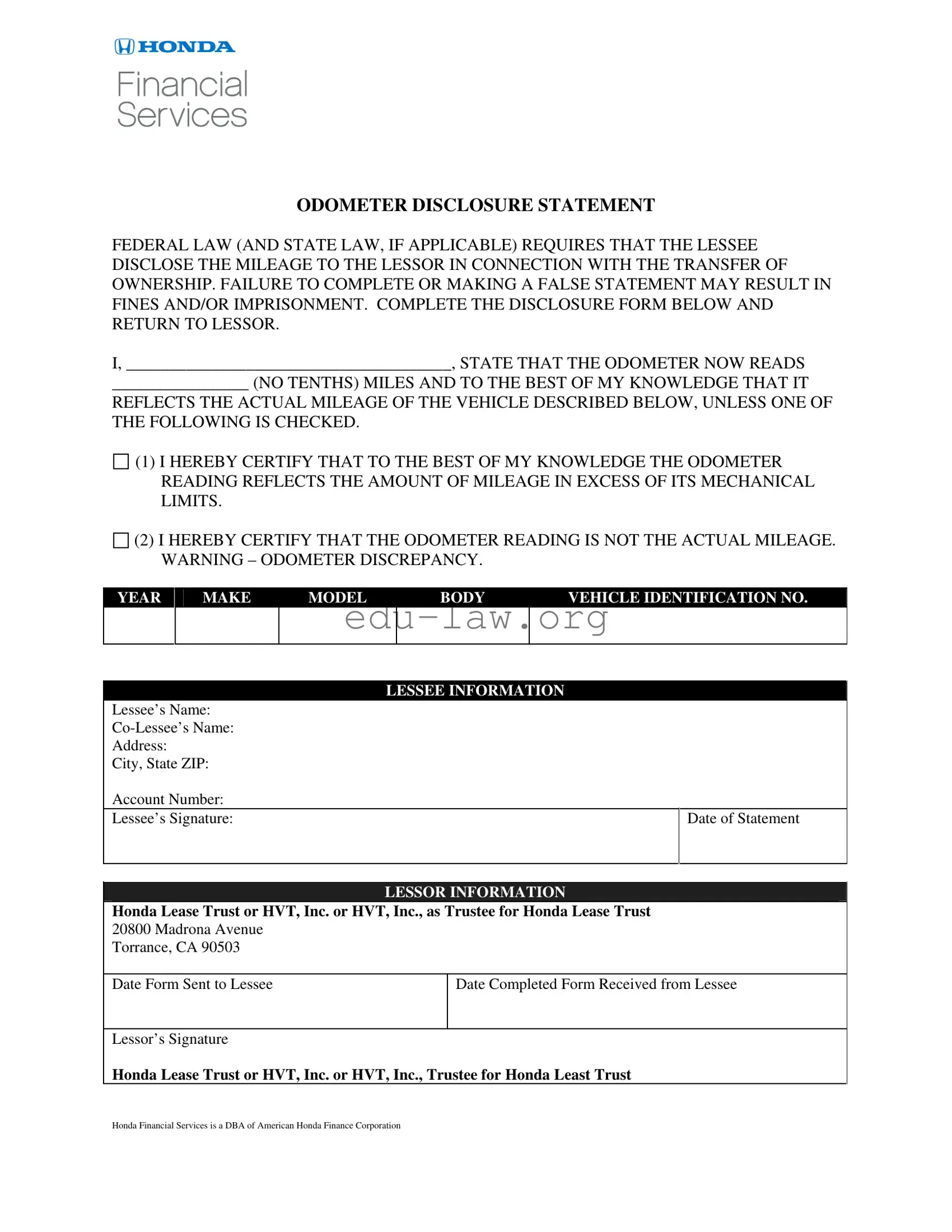
When transferring ownership of a vehicle, it is crucial to provide accurate information about the odometer reading. The Honda Odometer Statement form plays a vital role in this process, ensuring compliance with both federal and state laws. This form requires the lessee to disclose the current mileage of the vehicle, which must be reported in whole miles without tenths. A significant aspect of the form is the lessee's certification regarding the accuracy of the odometer reading. They must affirm that, to the best of their knowledge, the mileage reflects the actual distance the vehicle has traveled. However, if the odometer reading is not accurate, the lessee has the option to indicate this by checking a box on the form. Furthermore, the document includes essential details about the vehicle, such as its year, make, model, and Vehicle Identification Number (VIN), along with the lessee’s and lessor’s information. Completing this form is not just a formality; it is a legal obligation, and failing to do so accurately can lead to serious consequences, including fines and potential imprisonment. Understanding the importance of this document is essential for anyone involved in the leasing or transfer of a Honda vehicle.

ODOMETER DISCLOSURE STATEMENT
FEDERAL LAW (AND STATE LAW, IF APPLICABLE) REQUIRES THAT THE LESSEE DISCLOSE THE MILEAGE TO THE LESSOR IN CONNECTION WITH THE TRANSFER OF OWNERSHIP. FAILURE TO COMPLETE OR MAKING A FALSE STATEMENT MAY RESULT IN FINES AND/OR IMPRISONMENT. COMPLETE THE DISCLOSURE FORM BELOW AND RETURN TO LESSOR.
I, ______________________________________, STATE THAT THE ODOMETER NOW READS
________________ (NO TENTHS) MILES AND TO THE BEST OF MY KNOWLEDGE THAT IT
REFLECTS THE ACTUAL MILEAGE OF THE VEHICLE DESCRIBED BELOW, UNLESS ONE OF THE FOLLOWING IS CHECKED.
(1) I HEREBY CERTIFY THAT TO THE BEST OF MY KNOWLEDGE THE ODOMETER READING REFLECTS THE AMOUNT OF MILEAGE IN EXCESS OF ITS MECHANICAL LIMITS.
(2) I HEREBY CERTIFY THAT THE ODOMETER READING IS NOT THE ACTUAL MILEAGE. WARNING – ODOMETER DISCREPANCY.
|
|
YEAR |
|
|
MAKE |
|
|
MODEL |
|
|
BODY |
|
|
VEHICLE IDENTIFICATION NO. |
|
||
|
|
|
|
|
|
|
|
|
|
|
|||||||
|
|
|
|
|
|
|
|
|
|
|
|
|
|
|
|
||
|
|
|
|
|
|
|
|
|
|
|
|
|
|
||||
|
|
|
|
|
|
|
|
|
LESSEE INFORMATION |
|
|
|
|||||
|
|
Lessee’s Name: |
|
|
|
|
|
|
|
|
|
|
|
||||
|
|
|
|
|
|
|
|
|
|
|
|
|
|||||
|
|
Address: |
|
|
|
|
|
|
|
|
|
|
|
|
|
|
|
|
|
City, State ZIP: |
|
|
|
|
|
|
|
|
|
|
|
||||
|
|
Account Number: |
|
|
|
|
|
|
|
|
|
|
|
||||
|
|
Lessee’s Signature: |
|
|
|
|
|
|
|
|
|
Date of Statement |
|||||
|
|
|
|
|
|
|
|
|
|
|
|
|
|
||||
|
|
|
|
|
|
|
|
|
|
|
|
|
|
||||
|
|
|
|
|
|
|
|
|
LESSOR INFORMATION |
|
|
|
|||||
|
|
HONDA LEASE TRUST OR HVT, INC. OR HVT, INC., AS TRUSTEE FOR HONDA LEASE TRUST |
|||||||||||||||
|
|
20800 Madrona Avenue |
|
|
|
|
|
|
|
|
|
|
|
||||
|
|
Torrance, CA 90503 |
|
|
|
|
|
|
|
|
|
|
|
||||
|
|
|
|
|
|
|
|
|
|||||||||
|
|
Date Form Sent to Lessee |
|
|
|
|
|
Date Completed Form Received from Lessee |
|||||||||
|
|
|
|
|
|
|
|
|
|
|
|
|
|
|
|
|
|
Lessor’s Signature
HONDA LEASE TRUST OR HVT, INC. OR HVT, INC., TRUSTEE FOR HONDA LEAST TRUST
Honda Financial Services is a DBA of American Honda Finance Corporation
| Fact Name | Description |
|---|---|
| Odometer Disclosure Requirement | Federal law mandates that the lessee must disclose the vehicle's mileage to the lessor during the transfer of ownership. |
| Consequences of Non-Compliance | Failure to complete the form accurately or making a false statement can lead to fines and/or imprisonment. |
| Certification of Mileage | The lessee must certify that the odometer reading reflects the actual mileage unless specific conditions are checked. |
| Excess Mileage Certification | The lessee can certify that the odometer reading exceeds its mechanical limits if applicable. |
| Odometer Discrepancy Warning | A warning is included to alert parties of any discrepancies in the odometer reading. |
| Lessee Information | The form requires detailed information about the lessee, including names, address, and signature. |
| Lessor Information | The lessor's information, including the name and address of Honda Lease Trust, must also be provided. |
| Submission Dates | There are fields for the date the form is sent to the lessee and the date the completed form is received back. |
| Governing Laws | State-specific laws may apply, alongside federal regulations, regarding odometer disclosures. |
Completing the Honda Odometer Statement form is a straightforward process that requires accurate information about the vehicle's mileage. After filling out the form, it should be returned to the lessor as part of the vehicle ownership transfer process.
What is the purpose of the Honda Odometer Statement form?
The Honda Odometer Statement form serves to disclose the mileage of a vehicle at the time of ownership transfer. Federal law, along with state laws, mandates that the lessee must provide accurate mileage information to the lessor. This requirement helps prevent fraud and ensures that all parties have a clear understanding of the vehicle's usage history.
Who is required to complete the Odometer Statement form?
The lessee is responsible for completing the Odometer Statement form. This individual is the person who has leased the vehicle and is transferring ownership. It is essential that the lessee provides accurate information regarding the odometer reading to comply with legal obligations.
What happens if the Odometer Statement form is not completed accurately?
If the form is not completed accurately or if false statements are made, the lessee may face serious consequences. Potential penalties include fines and, in some cases, imprisonment. Therefore, it is crucial for the lessee to ensure that all information provided is truthful and complete.
What should be included in the Odometer Statement form?
The form requires the lessee to provide specific details, including the current odometer reading (without tenths), the vehicle's year, make, model, and Vehicle Identification Number (VIN). Additionally, the lessee must include their name, address, and signature, as well as the date of the statement. There are also options to indicate if the odometer reading reflects mileage in excess of its mechanical limits or if it is not the actual mileage.
Where should the completed Odometer Statement form be sent?
The completed Odometer Statement form should be returned to the lessor, which may be Honda Lease Trust or HVT, Inc. The address for the lessor is provided on the form. It is important to send the form promptly to ensure compliance with the transfer process.
Is there a specific format for the odometer reading on the form?
The odometer reading must be recorded in whole miles, meaning that no tenths of a mile should be included. This requirement is designed to maintain clarity and consistency in the mileage reported. Lessees should double-check the reading before submitting the form to avoid any discrepancies.
When filling out the Honda Odometer Statement form, it’s easy to make mistakes that could lead to complications down the road. Here are six common errors to watch out for:
Many people forget to fill in all required fields, such as the lessee’s name, address, and vehicle details. Missing information can delay the process and cause confusion.
Some individuals mistakenly enter the odometer reading with tenths of miles. The form specifically asks for the reading without tenths, so be sure to follow this instruction closely.
There are specific boxes to check if the odometer reading is not accurate or if it exceeds mechanical limits. Skipping this step can lead to legal issues and misunderstandings.
Both the lessee and lessor must sign the form. Forgetting to sign can render the document invalid, causing delays in the transfer of ownership.
Providing an incorrect VIN can create significant problems. Always double-check this number against the vehicle’s title or registration to ensure accuracy.
After submitting the form, it’s wise to keep a copy for your records. This can serve as proof of the odometer disclosure in case of any future disputes.
By avoiding these common mistakes, you can ensure a smoother process when transferring ownership of your vehicle. Take your time to review the form carefully before submission.
The Honda Odometer Statement form is an essential document in the vehicle transfer process, ensuring transparency regarding mileage. However, it is often accompanied by other important forms and documents that help facilitate the transaction and protect both parties involved. Below is a list of commonly used documents that may accompany the Honda Odometer Statement.
Each of these documents plays a vital role in the vehicle transfer process. They help ensure that both parties are protected and that the transaction proceeds smoothly. Understanding the purpose of each document can simplify the process and reduce the risk of complications down the line.
The Bill of Sale is a fundamental document in vehicle transactions. It serves as a receipt for the sale and includes important details such as the buyer's and seller's names, the vehicle identification number (VIN), and the sale price. Similar to the Honda Odometer Statement, it requires accurate information to prevent disputes later on. Both documents are essential for transferring ownership and protecting the rights of both parties involved. A Bill of Sale can also include odometer readings, making it a comprehensive record of the transaction.
The Vehicle Title is another critical document related to vehicle ownership. It serves as legal proof that a person owns a vehicle. Like the Honda Odometer Statement, the title may contain information about the odometer reading at the time of transfer. This ensures that the new owner is aware of the vehicle's mileage, which is crucial for assessing its value and condition. If there are discrepancies in the odometer reading, the title can help clarify any misunderstandings that may arise after the sale.
The Odometer Disclosure Statement is a federal requirement for certain vehicle transactions. This document is similar to the Honda Odometer Statement in that it mandates the seller to disclose the odometer reading at the time of sale. It is designed to prevent fraud by ensuring that buyers receive accurate information about the vehicle's mileage. Both documents require the seller's signature and a declaration regarding the accuracy of the mileage, reinforcing the importance of honesty in vehicle sales.
The Lease Agreement is another document that shares similarities with the Honda Odometer Statement. This contract outlines the terms of leasing a vehicle, including the responsibilities of the lessee and lessor. Like the odometer statement, the lease agreement often requires the lessee to disclose the mileage at the end of the lease term. This helps the lessor assess any potential excess mileage fees and ensures that both parties are on the same page regarding the vehicle's condition upon return.
The Maintenance Record is also relevant when discussing vehicle ownership and mileage. While it primarily focuses on the services performed on a vehicle, it often includes odometer readings at the time of each service. This documentation can provide a comprehensive history of the vehicle's use and condition, similar to the purpose of the Honda Odometer Statement. Accurate maintenance records can enhance the resale value of a vehicle and provide transparency to potential buyers.
The Vehicle History Report is a document that provides a detailed account of a vehicle's past, including accidents, title changes, and service records. This report often includes the odometer readings reported over time. Like the Honda Odometer Statement, it aims to provide potential buyers with accurate information to make informed decisions. A clean history report can significantly impact the perceived value of a vehicle, making it a crucial tool in the buying process.
The Insurance Policy is another document that may reference odometer readings. When obtaining insurance for a vehicle, the insurer may require the current mileage to assess risk and determine premiums. This is similar to the Honda Odometer Statement, where accurate mileage disclosure is essential for legal compliance. Both documents highlight the importance of providing truthful information to avoid complications in the event of a claim or dispute.
Lastly, the Title Transfer Form is a document used when changing ownership of a vehicle. This form is similar to the Honda Odometer Statement in that it requires the seller to disclose the odometer reading at the time of transfer. Both documents serve to protect against odometer fraud and ensure that the new owner is aware of the vehicle's mileage. Accurate completion of the title transfer form is crucial for a smooth transition of ownership.
When filling out the Honda Odometer Statement form, it's important to be accurate and thorough. Here are some guidelines to follow:
Understanding the Honda Odometer Statement form can be challenging, and several misconceptions often arise. Here are ten common misunderstandings about this important document:
Being informed about these misconceptions can help ensure that the odometer statement is completed accurately and in compliance with the law.
When filling out and using the Honda Odometer Statement form, several important points must be considered to ensure compliance and accuracy. Here are the key takeaways:
By following these guidelines, you can navigate the process of filling out the Honda Odometer Statement form with confidence and clarity.