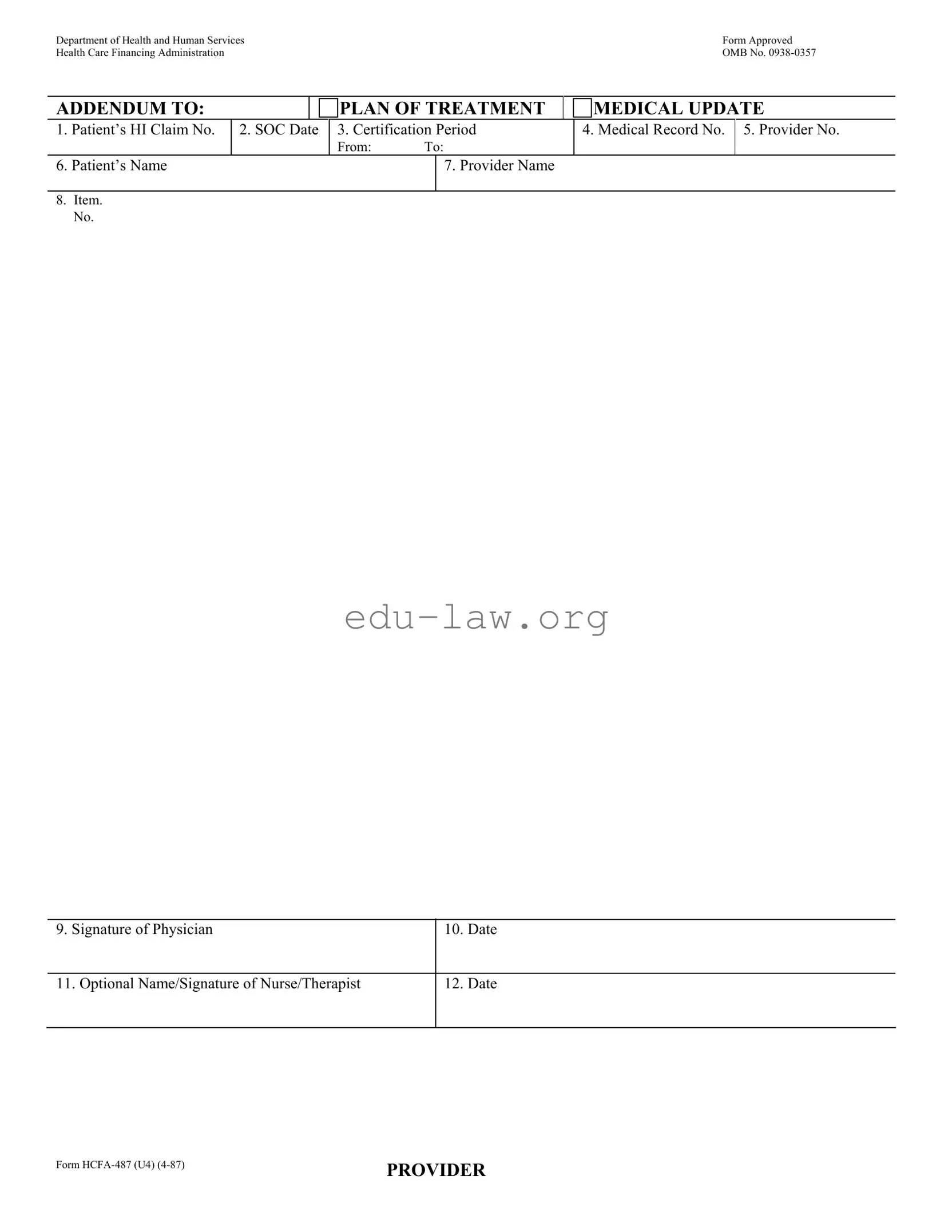
The HCFA 487 form, officially known as the Addendum to Plan of Treatment Medical Update, plays a crucial role in the healthcare system by facilitating communication between healthcare providers and insurers. This form is utilized primarily by providers to document updates in a patient's medical treatment plan. It includes essential information such as the patient's Health Insurance claim number, the start and end dates of the certification period, and the medical record number. Additionally, the form captures key details about the patient and provider, including names and provider identification numbers. A physician's signature is required to validate the information, along with an optional signature from a nurse or therapist, which adds another layer of professionalism and accountability. The HCFA 487 form is vital for ensuring that treatment plans are accurately communicated and that patients receive the necessary care without delays in insurance processing.

Department of Health and Human Services |
Form Approved |
Health Care Financing Administration |
OMB No. |
ADDENDUM TO: |
|
|
PLAN OF TREATMENT |
|
MEDICAL UPDATE |
||||
|
|
|
|
|
|
|
|
|
|
1. |
Patient’s HI Claim No. |
2. SOC Date |
3. Certification Period |
|
4. Medical Record No. |
5. Provider No. |
|||
|
|
|
|
From: |
To: |
|
|
|
|
6. |
Patient’s Name |
|
|
|
|
7. Provider Name |
|
|
|
|
|
|
|
|
|
|
|
|
|
8.Item.
No.
9. Signature of Physician
10. Date
11. Optional Name/Signature of Nurse/Therapist
12. Date
Form
PROVIDER
| Fact Name | Details |
|---|---|
| Purpose | The HCFA 487 form is used as an addendum to the plan of treatment, primarily for medical updates in healthcare settings. |
| Governing Authority | This form is regulated under the Health Insurance Portability and Accountability Act (HIPAA) and guidelines from the Centers for Medicare & Medicaid Services (CMS). |
| Patient Information | The form requires essential patient details, including the patient's HI claim number, medical record number, and certification period. |
| Provider Information | It includes fields for the provider's name and number, ensuring that the healthcare provider is clearly identified. |
| Signature Requirement | The HCFA 487 must be signed by a physician, with an optional signature from a nurse or therapist, validating the medical update. |
| Form Version | The version of the form in use is HCFA-487 (U4) dated April 1987, indicating its long-standing use in healthcare documentation. |
Completing the HCFA 487 form is a crucial step in ensuring that necessary medical updates are communicated effectively. Following these instructions carefully will help streamline the process and ensure that all required information is accurately captured.
After completing these steps, review the form for any errors or omissions before submission. This will help prevent delays in processing and ensure that the patient's information is accurately conveyed.
What is the HCFA 487 form used for?
The HCFA 487 form, also known as the Addendum to Plan of Treatment Medical Update, is used primarily for documenting updates to a patient's treatment plan. It helps healthcare providers communicate necessary changes in a patient's care, ensuring that all parties involved have the most current information. This form is essential for maintaining compliance with health care regulations and facilitating the proper management of patient care.
Who needs to fill out the HCFA 487 form?
The form should be filled out by healthcare providers involved in a patient's treatment, including physicians, nurses, and therapists. It is typically completed when there are updates to the patient's plan of treatment or when a medical update is required. The provider responsible for the patient's care must ensure that the form is accurately completed and submitted to the appropriate parties.
What information is required on the HCFA 487 form?
Essential details on the HCFA 487 form include the patient's health insurance claim number, the start and end dates of the certification period, the medical record number, and the provider's information. Additionally, the patient's name, the signature of the physician, and optional signatures from nurses or therapists are also required. This information ensures that the treatment updates are properly documented and linked to the correct patient record.
How is the HCFA 487 form submitted?
The HCFA 487 form is typically submitted electronically or via mail, depending on the healthcare provider's system and the requirements of the insurance payer. It is crucial for providers to follow the specific submission guidelines outlined by the payer to ensure timely processing and reimbursement for services rendered.
What should I do if I make a mistake on the HCFA 487 form?
If an error is made on the HCFA 487 form, it is important to correct it promptly. Depending on the nature of the mistake, providers may need to either cross out the incorrect information and write the correct details next to it or complete a new form altogether. Always ensure that any corrections are initialed and dated to maintain clarity and accountability.
Is the HCFA 487 form mandatory for all patients?
The use of the HCFA 487 form is generally required when there are updates to a patient's treatment plan, especially for those under certain insurance programs or government healthcare plans. However, not all patients may need this form if their treatment remains unchanged. It is best to consult with the healthcare provider or billing department to determine the necessity of the form for specific cases.
Incomplete Patient Information: Failing to provide all necessary details about the patient, such as their name or HI Claim Number, can lead to delays or denials of claims.
Missing Dates: Not including the SOC Date or Certification Period can create confusion and complicate the processing of the form.
Incorrect Provider Information: Listing the wrong Provider Number or failing to include the Provider Name can result in the claim being rejected.
Signature Issues: Omitting the Physician's signature or date can invalidate the form. Always double-check that these are included.
Optional Sections Left Blank: While optional, leaving out the Nurse/Therapist's name and signature can provide additional support for the claim.
Item Number Confusion: Not correctly filling out the Item Number can lead to misunderstandings regarding the treatment provided.
Medical Record Number Errors: Providing an incorrect Medical Record Number can cause significant delays in processing.
Neglecting to Review: Failing to review the completed form for errors or omissions before submission can result in unnecessary complications.
The HCFA 487 form is an important document used in the healthcare field, specifically for updating the plan of treatment for patients. Alongside this form, several other documents are often utilized to ensure comprehensive patient care and proper record-keeping. Each of these documents serves a unique purpose in the healthcare process.
These documents, when used in conjunction with the HCFA 487 form, help create a comprehensive framework for patient care. They ensure that all aspects of a patient's treatment are documented and that healthcare providers can communicate effectively with one another, ultimately leading to better patient outcomes.
The HCFA 1500 form is a widely recognized document in the healthcare industry, similar to the HCFA 487. It is used primarily by healthcare providers to bill Medicare and other insurance carriers for services rendered to patients. The HCFA 1500 captures essential patient information, including diagnosis codes and procedure codes, which are critical for reimbursement. Like the HCFA 487, it requires the provider's signature, affirming that the information is accurate and reflects the services provided. This form plays a vital role in ensuring that healthcare providers receive appropriate compensation for their services.
The CMS 1450 form, also known as the UB-04, serves as another counterpart to the HCFA 487. This form is typically utilized by hospitals and other institutional providers to submit claims for inpatient and outpatient services. It includes detailed information about the patient’s stay, including admission and discharge dates, as well as the services provided. Similar to the HCFA 487, the CMS 1450 requires accurate documentation to ensure proper billing and reimbursement. Both forms emphasize the importance of a thorough treatment plan and medical updates, reflecting the ongoing care patients receive.
The CMS 855 form is another document that shares similarities with the HCFA 487. This form is used by healthcare providers to enroll in Medicare and update their enrollment information. While the HCFA 487 focuses on the treatment plan and medical updates for a specific patient, the CMS 855 ensures that providers are correctly registered and can bill for their services. Both documents underscore the necessity of maintaining accurate and up-to-date records, which are essential for compliance and reimbursement in the healthcare system.
The Medical Necessity Form is closely related to the HCFA 487, as it establishes the need for certain medical services or treatments. This document is often required by insurance companies to justify the services billed. It outlines the rationale behind the treatment plan, detailing why specific interventions are necessary for the patient's health. Like the HCFA 487, the Medical Necessity Form is signed by a healthcare provider, reinforcing the importance of professional oversight in patient care and billing processes.
Finally, the Treatment Authorization Request (TAR) form bears resemblance to the HCFA 487 in that it seeks approval for specific medical services or procedures before they are provided. This document is typically submitted to insurance companies to gain pre-authorization for treatments. The TAR includes detailed information about the patient’s condition and the proposed treatment plan, similar to the updates found in the HCFA 487. Both forms emphasize the importance of clear communication between healthcare providers and insurers to ensure that patients receive necessary care without unnecessary delays.
When filling out the HCFA 487 form, attention to detail is crucial. Here are some important do's and don'ts to consider.
Misconceptions about the HCFA 487 form can lead to confusion and delays in processing. Here are five common misunderstandings:
Understanding these points can help ensure that the HCFA 487 form is completed correctly and submitted on time.
When filling out and using the HCFA 487 form, there are several important points to keep in mind. This form is a vital document for health care providers to communicate medical updates and treatment plans. Here are key takeaways to consider:
By following these guidelines, you can ensure that the HCFA 487 form is completed correctly and used effectively in the patient care process.