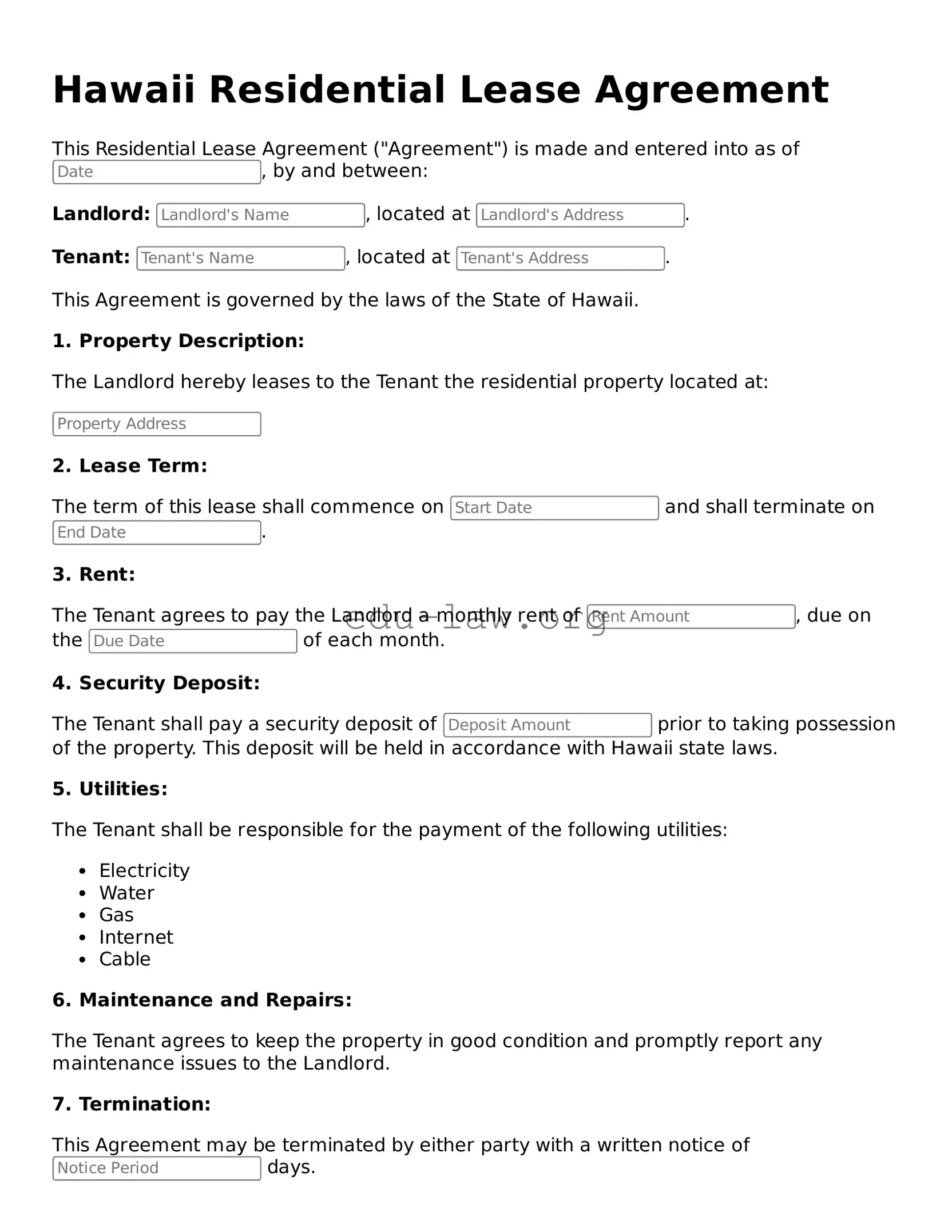
The Hawaii Residential Lease Agreement is a vital document for both landlords and tenants, ensuring a clear understanding of the terms and conditions governing the rental of residential properties in the state. This agreement typically outlines key elements such as the rental amount, payment schedule, and duration of the lease. It also specifies the responsibilities of both parties, including maintenance obligations and rules regarding property use. Additionally, the agreement addresses security deposits, late fees, and procedures for terminating the lease. By detailing these aspects, the Hawaii Residential Lease Agreement provides a framework that protects the rights of both landlords and tenants, fostering a transparent and respectful rental relationship.
Hawaii Residential Lease Agreement
This Residential Lease Agreement ("Agreement") is made and entered into as of , by and between:
Landlord: , located at .
Tenant: , located at .
This Agreement is governed by the laws of the State of Hawaii.
1. Property Description:
The Landlord hereby leases to the Tenant the residential property located at:
2. Lease Term:
The term of this lease shall commence on and shall terminate on .
3. Rent:
The Tenant agrees to pay the Landlord a monthly rent of , due on the of each month.
4. Security Deposit:
The Tenant shall pay a security deposit of prior to taking possession of the property. This deposit will be held in accordance with Hawaii state laws.
5. Utilities:
The Tenant shall be responsible for the payment of the following utilities:
6. Maintenance and Repairs:
The Tenant agrees to keep the property in good condition and promptly report any maintenance issues to the Landlord.
7. Termination:
This Agreement may be terminated by either party with a written notice of days.
8. Governing Law:
This Agreement shall be governed by and construed in accordance with the laws of the State of Hawaii.
IN WITNESS WHEREOF, the parties have executed this Residential Lease Agreement as of the date first above written.
Landlord Signature: ___________________________
Date: ___________________________
Tenant Signature: ___________________________
Date: ___________________________
| Fact Name | Description |
|---|---|
| Governing Law | The Hawaii Residential Lease Agreement is governed by the Hawaii Revised Statutes, particularly Chapter 521. |
| Parties Involved | The agreement typically involves a landlord and a tenant, both of whom must be clearly identified in the document. |
| Property Description | The lease must include a detailed description of the rental property, including the address and any specific unit number. |
| Lease Term | The agreement specifies the duration of the lease, which can be a fixed term or month-to-month. |
| Rent Payment | It outlines the amount of rent due, the payment schedule, and acceptable payment methods. |
| Security Deposit | The agreement details the amount of the security deposit, conditions for its return, and any permissible deductions. |
| Maintenance Responsibilities | Responsibilities for property maintenance and repairs are clearly outlined to prevent disputes. |
| Termination Conditions | The lease includes conditions under which either party can terminate the agreement, including notice requirements. |
Filling out the Hawaii Residential Lease Agreement form requires attention to detail. Ensure all information is accurate to avoid complications later. Follow these steps carefully to complete the form correctly.
Once the form is completed, make copies for all parties involved. This ensures everyone has a record of the agreement. Keep the original in a safe place for future reference.
What is a Hawaii Residential Lease Agreement?
A Hawaii Residential Lease Agreement is a legally binding contract between a landlord and a tenant. This document outlines the terms and conditions under which a tenant agrees to rent a residential property from the landlord. It typically includes details such as the rental amount, lease duration, and responsibilities of both parties.
What are the key components of the agreement?
The agreement generally includes essential components such as the names of the landlord and tenant, the property address, the lease term (whether it's month-to-month or for a fixed duration), the rental amount, payment due dates, and security deposit requirements. Additionally, it may outline rules regarding maintenance, repairs, and any restrictions on the use of the property.
How long is a typical lease term in Hawaii?
In Hawaii, lease terms can vary widely. Most commonly, leases are set for one year, but month-to-month agreements are also popular. The specific duration should be clearly stated in the lease agreement, allowing both parties to understand their commitment and plan accordingly.
What happens if a tenant wants to break the lease early?
If a tenant wishes to break the lease before its expiration, they may face penalties as outlined in the agreement. This could involve forfeiting the security deposit or paying a fee. However, tenants may also be able to negotiate an early termination with the landlord, especially if they provide adequate notice and find a replacement tenant.
Is a security deposit required?
Yes, landlords in Hawaii typically require a security deposit. This deposit serves as a financial safeguard for the landlord in case of property damage or unpaid rent. The maximum amount allowed for a security deposit in Hawaii is usually one month's rent, but this can vary based on the terms agreed upon in the lease.
Are there any specific laws that govern residential leases in Hawaii?
Yes, Hawaii has specific laws that regulate residential leases. These laws address issues such as security deposits, eviction procedures, and tenant rights. Both landlords and tenants should familiarize themselves with these regulations to ensure compliance and protect their rights throughout the lease term.
Can a landlord enter the rental property without notice?
Generally, landlords must provide reasonable notice before entering a rental property, typically 24 hours, except in emergencies. This requirement is designed to respect the tenant's right to privacy. The specific notice period may be detailed in the lease agreement, so both parties should be aware of these terms.
What should a tenant do if they have a dispute with their landlord?
If a tenant encounters a dispute with their landlord, the first step is to communicate directly with the landlord to resolve the issue amicably. If that fails, tenants may seek mediation or file a complaint with local housing authorities. In some cases, legal action may be necessary, so it's advisable to consult a legal professional for guidance.
Failing to provide accurate tenant information. Ensure that all names and contact details are correct. Any discrepancies can lead to issues later.
Not specifying the lease term. Clearly state the start and end dates of the lease. Leaving this blank can create confusion about the duration of the agreement.
Overlooking the rent amount. It is crucial to clearly indicate the monthly rent and any additional fees. Ambiguities can lead to disputes.
Ignoring maintenance responsibilities. Both the landlord's and tenant's obligations should be clearly outlined. Misunderstandings can arise if these are not specified.
Not including the security deposit terms. Specify the amount and conditions for the return of the deposit. This helps prevent future disagreements.
Failing to sign and date the agreement. Both parties must sign the document for it to be legally binding. An unsigned lease is not enforceable.
When entering into a residential lease agreement in Hawaii, several other forms and documents may be necessary to ensure clarity and legal compliance. Each of these documents serves a specific purpose in the leasing process, providing additional protections and information for both landlords and tenants.
These documents, when used in conjunction with the Hawaii Residential Lease Agreement, help create a comprehensive leasing framework. They ensure that both parties understand their rights and responsibilities, thereby promoting a positive rental experience.
The Hawaii Residential Lease Agreement is similar to the Standard Residential Lease Agreement used in many states. Both documents outline the terms and conditions of renting a residential property. They typically cover essential elements such as the rental amount, duration of the lease, and responsibilities of both the landlord and tenant. The structure is straightforward, making it easy for both parties to understand their obligations and rights.
Another document similar to the Hawaii Residential Lease Agreement is the Month-to-Month Rental Agreement. This type of lease offers more flexibility, allowing either party to terminate the agreement with proper notice. Like the Residential Lease Agreement, it specifies rental terms but does not lock tenants into a long-term commitment. This can be beneficial for those who may need to move unexpectedly.
The Lease Purchase Agreement also shares similarities with the Hawaii Residential Lease Agreement. This document allows tenants to rent a property with the option to purchase it later. It combines elements of leasing and buying, providing a pathway for tenants who may want to invest in the property they are renting. Terms regarding rent credits and purchase price are typically included, making it distinct yet related to standard lease agreements.
The Commercial Lease Agreement is another document that resembles the Hawaii Residential Lease Agreement, though it is tailored for business properties. It outlines the terms of leasing a commercial space, including rental payments, maintenance responsibilities, and use of the property. While the context differs, both agreements serve to protect the interests of landlords and tenants in their respective situations.
The Sublease Agreement is also similar, as it allows a tenant to rent out their leased property to another party. This document must adhere to the original lease terms and often requires the landlord's approval. It establishes the rights and responsibilities of the original tenant and the subtenant, ensuring that both parties understand their obligations.
The Roommate Agreement can be compared to the Hawaii Residential Lease Agreement as well. This document is used when multiple individuals share a rental property. It outlines the terms of living together, including rent division, utility payments, and house rules. While it may not be a formal lease, it serves to clarify expectations and reduce potential conflicts among roommates.
Finally, the Lease Agreement for a Vacation Rental is similar to the Hawaii Residential Lease Agreement, especially in a tourist-heavy state like Hawaii. This document governs short-term rentals and includes specific terms related to the duration of stay, payment details, and property use. Both agreements aim to protect the interests of property owners while providing clear guidelines for tenants.
When filling out the Hawaii Residential Lease Agreement form, it’s important to be thorough and careful. Here are some key dos and don'ts to keep in mind:
The Hawaii Residential Lease Agreement is an essential document for both landlords and tenants. However, several misconceptions surround its use and implications. Here are four common misunderstandings:
Many people think that a lease agreement and a rental agreement are interchangeable. While both serve to outline the terms of renting a property, a lease typically covers a longer period, often a year, whereas a rental agreement may be month-to-month. Understanding this distinction is crucial for both parties.
Some believe that a lease must always be in writing to be valid. While having a written lease is highly recommended for clarity and legal protection, oral leases can also be enforceable in certain situations, particularly for agreements that last less than a year. However, relying on verbal agreements can lead to misunderstandings.
Another common belief is that tenants can simply walk away from a lease without repercussions. In reality, breaking a lease can result in financial penalties and damage to the tenant's credit score. It's important to understand the terms of the lease and the potential consequences of breaking it.
Some individuals think that lease agreements are designed solely to protect landlords. In truth, these agreements are meant to safeguard the rights and responsibilities of both parties. They outline not only the landlord's obligations but also the tenant's rights, ensuring a fair rental relationship.
When filling out and using the Hawaii Residential Lease Agreement form, there are several important points to keep in mind. Understanding these key takeaways can help ensure a smooth leasing experience for both landlords and tenants.
By keeping these takeaways in mind, both landlords and tenants can navigate the leasing process more effectively and with greater confidence.