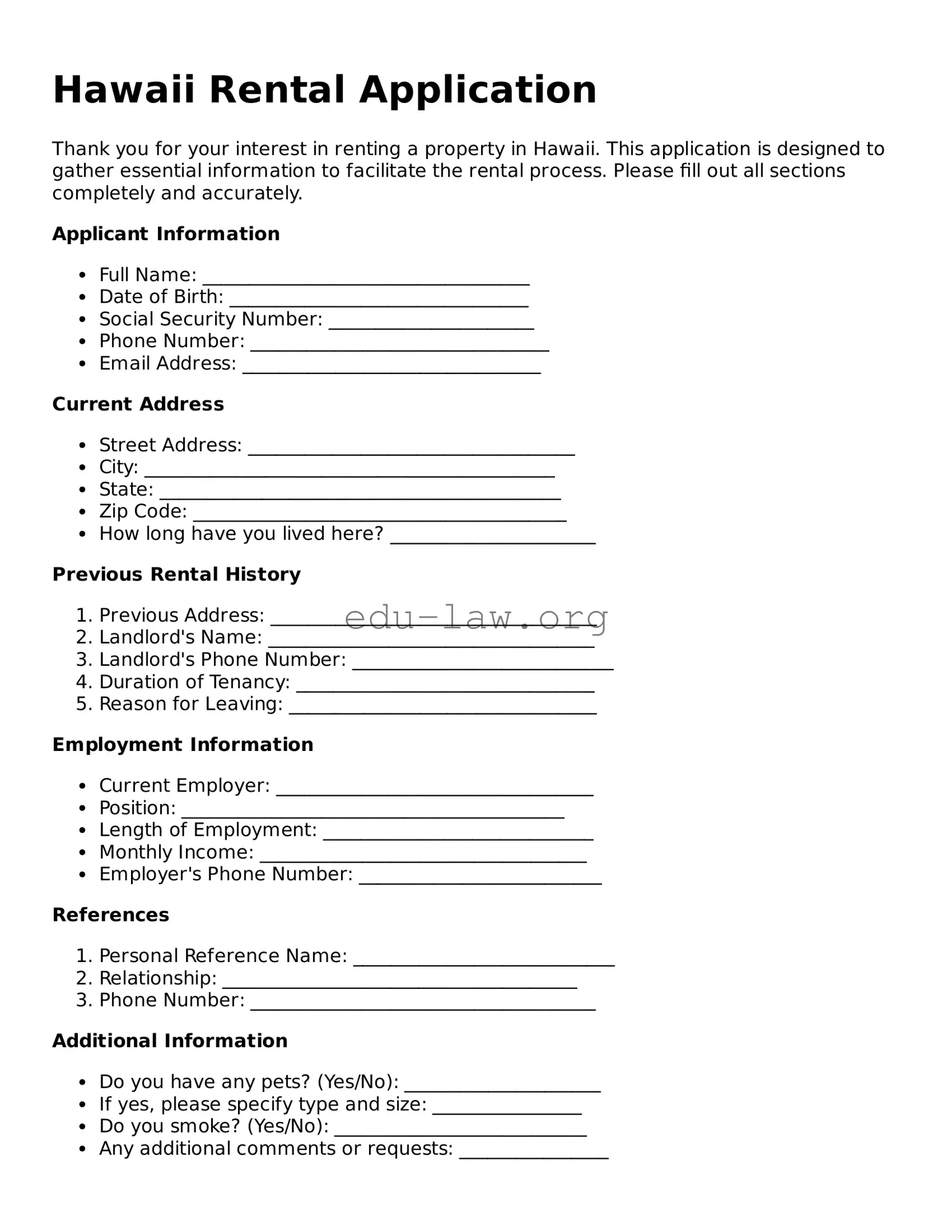
When seeking a rental property in Hawaii, prospective tenants will encounter the Hawaii Rental Application form, an essential document that helps landlords assess potential renters. This form typically requires personal information, including the applicant's full name, contact details, and social security number. Employment history is also a critical component, as landlords want to verify income stability. Applicants will need to disclose their rental history, providing details about previous residences and landlord references. Additionally, financial information, such as monthly income and credit history, plays a significant role in the application process. Some landlords may also require a background check, which the form may authorize. Understanding these elements can streamline the rental process and improve the chances of securing a desired property.
Hawaii Rental Application
Thank you for your interest in renting a property in Hawaii. This application is designed to gather essential information to facilitate the rental process. Please fill out all sections completely and accurately.
Applicant Information
Current Address
Previous Rental History
Employment Information
References
Additional Information
By signing below, you acknowledge that the information provided is accurate to the best of your knowledge and that you authorize the landlord to verify this information.
Applicant Signature: ________________________________
Date: _____________________________________________
| Fact Name | Description |
|---|---|
| Purpose | The Hawaii Rental Application form is used by landlords to screen potential tenants for rental properties. |
| Information Required | Applicants typically need to provide personal information, employment history, and references. |
| Application Fee | Landlords may charge an application fee to cover the cost of background checks and processing. |
| Background Checks | Landlords often conduct background checks, including credit history and criminal records, to assess applicants. |
| Fair Housing Laws | The application process must comply with federal and state fair housing laws, prohibiting discrimination. |
| Governing Laws | The Hawaii Revised Statutes, particularly Chapter 521, govern rental agreements and tenant rights in Hawaii. |
| Approval Process | Once submitted, landlords will review applications and notify applicants of their approval or denial status. |
| Security Deposit | Upon approval, tenants may be required to pay a security deposit, which is typically refundable at lease end. |
Completing the Hawaii Rental Application form is an important step in securing a rental property. Once filled out, the application will be submitted to the landlord or property manager for review. This process helps determine your eligibility as a tenant.
What is the purpose of the Hawaii Rental Application form?
The Hawaii Rental Application form is designed to help landlords and property managers screen potential tenants. It collects essential information about the applicant, including their rental history, employment details, and financial background. This information assists landlords in making informed decisions about who to rent their property to, ensuring they select responsible tenants who are likely to pay rent on time and maintain the property well.
What information do I need to provide on the application?
When filling out the Hawaii Rental Application form, applicants typically need to provide personal details such as their full name, contact information, and Social Security number. Additionally, the form may require information about current and previous addresses, employment history, and income. Applicants should also be prepared to disclose any criminal history or past evictions, as this information is often requested by landlords to assess risk.
Is there a fee associated with submitting the rental application?
Many landlords and property management companies charge a fee for processing rental applications. This fee helps cover the costs of background checks, credit reports, and administrative expenses. The amount can vary widely depending on the landlord or property management company. It is advisable to inquire about the fee upfront to avoid any surprises during the application process.
How long does it take to process the rental application?
The processing time for a rental application can vary depending on several factors, including the landlord's policies and the completeness of the application. Generally, applicants can expect a response within a few days to a week. However, if the landlord needs to verify information or conduct background checks, it may take longer. It is a good idea to follow up if you have not received a response within the expected timeframe.
What should I do if my application is denied?
If a rental application is denied, the landlord is typically required to provide a reason for the denial. Common reasons may include insufficient income, poor credit history, or negative rental references. Applicants have the right to request this information. If you believe the denial was unjust, consider addressing the issues raised, such as providing additional documentation or references. In some cases, you may also want to explore other rental options or seek legal advice if you feel your rights have been violated.
When filling out the Hawaii Rental Application form, it's important to be thorough and accurate. Here are nine common mistakes to avoid:
Many applicants forget to fill in all required fields. Ensure every section is completed to avoid delays.
Double-check your phone number and email address. Incorrect information can hinder communication.
Applicants sometimes skip this section or provide vague details. Include your current employer, job title, and duration of employment.
Failure to provide a complete address history can raise red flags. Include all previous residences for the past five years.
Be honest about any pets. Failing to mention them can lead to issues later in the rental process.
References can strengthen your application. Provide both personal and professional contacts who can vouch for your reliability.
Landlords often require proof of income. Include your salary, pay stubs, or other financial documentation as needed.
Ensure that your Social Security Number is correct. An error can complicate background checks.
A signature is essential. An unsigned application will not be processed.
By avoiding these common mistakes, applicants can improve their chances of securing a rental in Hawaii.
When applying for a rental property in Hawaii, it’s essential to have all necessary documents ready to streamline the process. Along with the Hawaii Rental Application form, several other forms and documents are commonly required. These help landlords assess applicants more thoroughly and ensure a smooth rental experience.
Having these documents prepared can significantly enhance your rental application. It demonstrates responsibility and readiness, increasing your chances of securing the rental property you desire.
The Hawaii Rental Application form shares similarities with the standard Residential Lease Agreement. Both documents are essential in the rental process, serving to outline the terms and conditions of the rental arrangement. The Residential Lease Agreement typically includes details such as the rental amount, duration of the lease, and responsibilities of both the landlord and tenant. The application form, on the other hand, collects personal information and financial history, which helps landlords assess potential tenants before entering into a lease agreement.
Another document that resembles the Hawaii Rental Application form is the Tenant Screening Report. This report is often generated after a rental application is submitted. It provides landlords with critical information about a prospective tenant's credit history, rental history, and criminal background. While the application form gathers data directly from the applicant, the screening report compiles this information from various sources to help landlords make informed decisions.
The Lease Guaranty Agreement is also similar to the Hawaii Rental Application form in that it involves the evaluation of a tenant's financial stability. This document is used when a tenant requires a guarantor to co-sign the lease. The guarantor agrees to take responsibility for the lease obligations if the tenant defaults. Like the rental application, it assesses the financial background of the guarantor, ensuring that they have the means to fulfill the lease terms if necessary.
The Rental History Verification form has a close connection with the Hawaii Rental Application form as well. This document is used by landlords to confirm the rental history provided by the applicant. It typically includes contact information for previous landlords and details about the tenant's behavior, payment history, and any lease violations. The rental application relies on the accuracy of this information, making it a crucial part of the tenant evaluation process.
Similar to the rental application, the Employment Verification form is used to assess a prospective tenant's financial reliability. Landlords often request this document to confirm the applicant's employment status, income level, and job stability. By verifying employment, landlords can better determine whether the applicant can afford the rent, which is a key consideration in the rental application process.
The Credit Application is another document that parallels the Hawaii Rental Application form. While the rental application collects personal information, the credit application focuses specifically on the applicant's creditworthiness. This document allows landlords to evaluate the applicant's credit score and history, which can indicate their ability to pay rent on time. Both documents serve to inform the landlord's decision-making process regarding potential tenants.
Lastly, the Move-In Checklist is similar in purpose to the Hawaii Rental Application form, as both are integral to the rental process. The Move-In Checklist documents the condition of the property before the tenant moves in, ensuring that both parties agree on the state of the rental unit. While the rental application assesses tenant qualifications, the checklist protects the interests of both the landlord and tenant by establishing a baseline for property condition and any pre-existing damages.
When filling out the Hawaii Rental Application form, it's essential to approach the task thoughtfully. Here are five things you should and shouldn't do:
By following these guidelines, you can increase your chances of a smooth application process.
When it comes to renting a property in Hawaii, many people have misconceptions about the rental application process. Understanding these common myths can help applicants navigate the process more smoothly. Here are six misconceptions about the Hawaii Rental Application form:
Being informed about these misconceptions can help you approach the rental application process with confidence and clarity. Always read the specific requirements for each application and communicate openly with landlords to ensure a smooth experience.
Filling out the Hawaii Rental Application form requires careful attention to detail. Here are some key takeaways to keep in mind: