When navigating the vibrant real estate market of Hawaii, understanding the intricacies of the Real Estate Purchase Agreement form is essential for both buyers and sellers. This document serves as the backbone of any property transaction, outlining the key terms and conditions that govern the sale. It includes important details such as the purchase price, financing arrangements, and the closing date. Additionally, the agreement addresses contingencies that may affect the sale, such as inspections, appraisals, and the buyer's ability to secure financing. Both parties must also be aware of their respective rights and obligations, which are clearly defined within the form. By familiarizing themselves with these components, individuals can approach the buying or selling process with confidence, ensuring a smoother transaction that aligns with their goals and expectations.
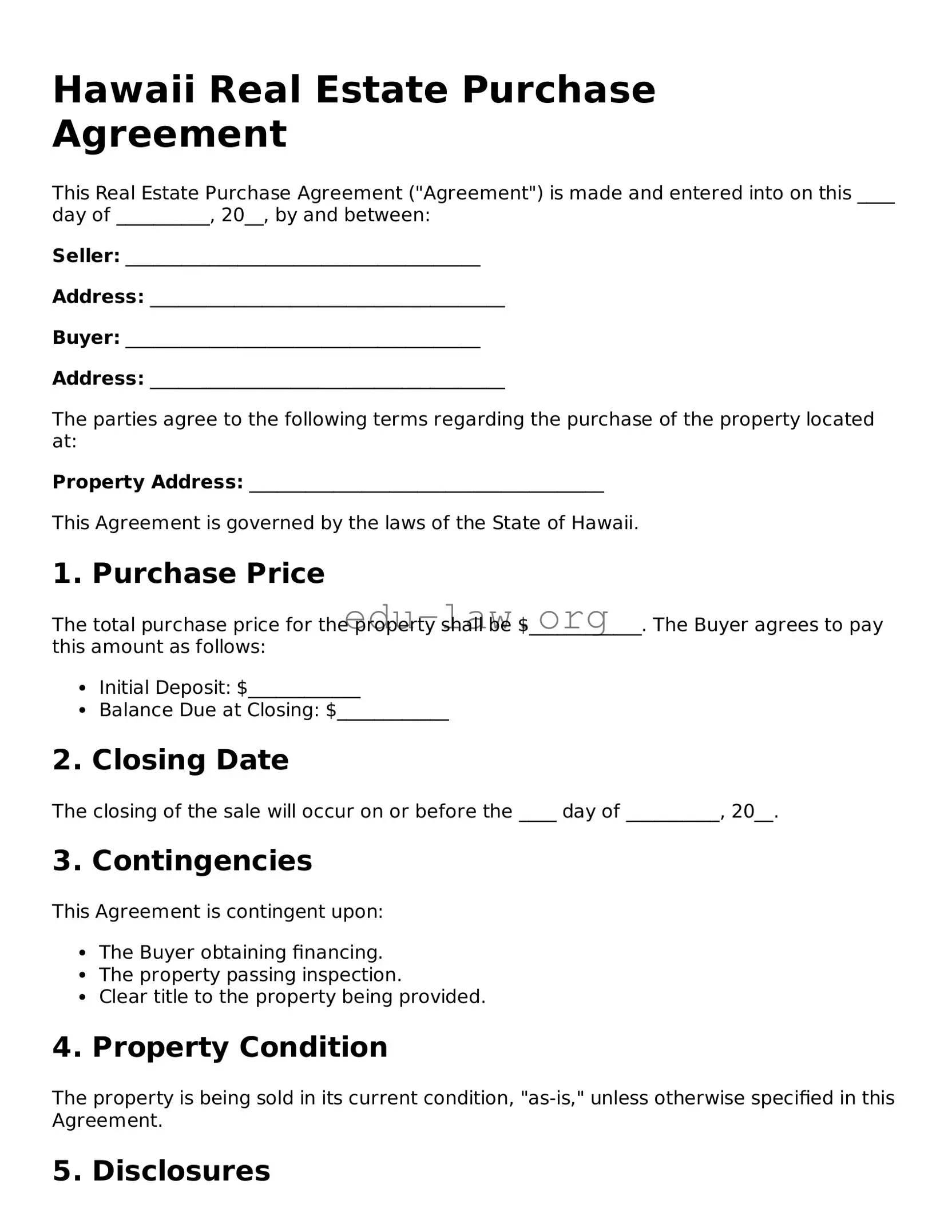
Hawaii Real Estate Purchase Agreement
This Real Estate Purchase Agreement ("Agreement") is made and entered into on this ____ day of __________, 20__, by and between:
Seller: ______________________________________
Address: ______________________________________
Buyer: ______________________________________
Address: ______________________________________
The parties agree to the following terms regarding the purchase of the property located at:
Property Address: ______________________________________
This Agreement is governed by the laws of the State of Hawaii.
1. Purchase Price
The total purchase price for the property shall be $____________. The Buyer agrees to pay this amount as follows:
2. Closing Date
The closing of the sale will occur on or before the ____ day of __________, 20__.
3. Contingencies
This Agreement is contingent upon:
4. Property Condition
The property is being sold in its current condition, "as-is," unless otherwise specified in this Agreement.
5. Disclosures
The Seller agrees to provide all necessary disclosures required by Hawaii law, including but not limited to:
6. Signatures
By signing below, both parties agree to the terms of this Agreement:
Seller's Signature: ____________________________ Date: __________
Buyer's Signature: ____________________________ Date: __________
This Agreement represents the entire understanding between the parties and supersedes all prior negotiations, representations, or agreements, whether written or oral.
| Fact Name | Details |
|---|---|
| Governing Law | The Hawaii Real Estate Purchase Agreement is governed by the laws of the State of Hawaii. |
| Purpose | This agreement outlines the terms and conditions for the sale of real estate in Hawaii. |
| Parties Involved | The agreement typically involves a buyer and a seller, both of whom must be identified. |
| Property Description | A detailed description of the property being sold must be included in the agreement. |
| Purchase Price | The total purchase price must be clearly stated, along with any deposit amounts. |
| Contingencies | Common contingencies include financing, inspections, and appraisal conditions. |
| Closing Date | The agreement specifies a closing date when the transaction will be finalized. |
| Disclosures | Sellers are required to provide disclosures about the property's condition and any known issues. |
| Signatures | Both parties must sign the agreement for it to be legally binding. |
Completing the Hawaii Real Estate Purchase Agreement form is an essential step in the property buying process. After filling out the form, it will be submitted to the appropriate parties for review and negotiation. Following these instructions carefully will help ensure that all necessary information is accurately provided.
What is a Hawaii Real Estate Purchase Agreement?
A Hawaii Real Estate Purchase Agreement is a legally binding document that outlines the terms and conditions of a real estate transaction in Hawaii. It includes details about the property, the purchase price, and the responsibilities of both the buyer and the seller.
Who uses the Real Estate Purchase Agreement?
This agreement is primarily used by buyers and sellers of real estate in Hawaii. Real estate agents and attorneys may also be involved in preparing and reviewing the document to ensure that all parties understand their rights and obligations.
What information is typically included in the agreement?
The agreement usually includes the names of the buyer and seller, a description of the property, the purchase price, payment terms, contingencies, and any special conditions. It may also cover closing costs, inspection rights, and the timeline for completing the transaction.
What are contingencies in the Real Estate Purchase Agreement?
Contingencies are conditions that must be met for the sale to proceed. Common contingencies include financing, home inspections, and the sale of the buyer’s current home. If a contingency is not satisfied, the buyer may have the right to withdraw from the agreement without penalty.
Can the terms of the agreement be negotiated?
Yes, the terms of the agreement can be negotiated between the buyer and seller. This may involve discussions about the purchase price, closing date, or specific repairs that need to be made. Both parties should agree on any changes before finalizing the document.
What happens after the agreement is signed?
Once both parties sign the agreement, it becomes legally binding. The buyer typically provides an earnest money deposit, and the transaction proceeds according to the agreed-upon timeline. This may include inspections, appraisals, and finalizing financing.
Is it necessary to have a lawyer review the agreement?
While it is not legally required to have a lawyer review the agreement, it is often recommended. A legal professional can help ensure that the terms are fair and that all necessary provisions are included to protect the interests of the parties involved.
What should I do if I want to back out of the agreement?
If a buyer or seller wishes to back out of the agreement, they should first review the contingencies outlined in the document. If a contingency has not been met, they may have the right to withdraw. Otherwise, they may need to negotiate with the other party or face potential legal consequences.
How is the closing process handled?
The closing process involves finalizing the sale of the property. This typically includes signing the final documents, transferring funds, and officially recording the sale with local authorities. Both the buyer and seller, along with their representatives, usually attend the closing meeting.
Are there any fees associated with the Real Estate Purchase Agreement?
Yes, there may be various fees associated with the purchase agreement, including earnest money deposits, inspection fees, and closing costs. These fees can vary depending on the specifics of the transaction and should be discussed by both parties before signing the agreement.
Failing to include all necessary parties. It is crucial to ensure that all individuals involved in the transaction are listed. This includes both buyers and sellers, as missing a party can lead to legal complications.
Not specifying the purchase price clearly. The purchase price should be stated clearly and accurately. Ambiguities can lead to misunderstandings or disputes later on.
Overlooking contingencies. Buyers often forget to include contingencies, such as financing or inspection clauses. These provisions protect buyers and should not be neglected.
Neglecting to provide accurate property descriptions. A precise description of the property is essential. This includes the address and any legal descriptions, as inaccuracies can create issues with title transfer.
Forgetting to address earnest money deposits. The agreement should specify the amount of earnest money and the conditions under which it may be forfeited or returned.
Ignoring deadlines and timelines. Important dates, such as closing dates and inspection periods, must be clearly outlined. Missing these dates can jeopardize the transaction.
Not consulting with a real estate professional. Many individuals attempt to fill out the form without guidance. Consulting with a real estate agent or attorney can help avoid costly mistakes.
Failing to sign and date the agreement. It may seem simple, but forgetting to sign or date the document can render it invalid. All parties must ensure their signatures are included.
When entering into a real estate transaction in Hawaii, several forms and documents may be required alongside the Hawaii Real Estate Purchase Agreement. Each document serves a specific purpose in ensuring the transaction proceeds smoothly and legally. Below is a list of commonly used forms.
Each of these documents plays a crucial role in the real estate transaction process in Hawaii. Understanding their purpose can help ensure that buyers and sellers navigate the process effectively and with confidence.
The Residential Purchase Agreement is a document commonly used in real estate transactions across the United States, including Hawaii. Similar to the Hawaii Real Estate Purchase Agreement, it outlines the terms and conditions under which a buyer agrees to purchase a residential property. This agreement typically includes details such as the purchase price, contingencies, and the closing date. Both documents serve to protect the interests of both parties and ensure that all essential aspects of the transaction are clearly defined and agreed upon.
The Commercial Purchase Agreement is another document that bears resemblance to the Hawaii Real Estate Purchase Agreement. While the latter is focused on residential properties, the Commercial Purchase Agreement deals with the sale of commercial real estate. Both documents contain similar sections regarding price, terms, and contingencies, but the Commercial Purchase Agreement may include additional clauses specific to business operations, zoning laws, and other factors pertinent to commercial properties. This ensures that both buyers and sellers are adequately informed about the complexities of commercial transactions.
The Lease Agreement shares similarities with the Hawaii Real Estate Purchase Agreement, particularly in its role as a binding contract between parties. While a Lease Agreement pertains to renting a property rather than purchasing it, both documents outline the rights and obligations of the involved parties. They include critical information such as payment terms, duration of the agreement, and maintenance responsibilities. This commonality highlights the importance of clear communication and understanding in any real estate transaction, whether it involves leasing or purchasing.
The Option to Purchase Agreement is another document that parallels the Hawaii Real Estate Purchase Agreement. This agreement grants a potential buyer the right, but not the obligation, to purchase a property at a predetermined price within a specified timeframe. Like the Hawaii Real Estate Purchase Agreement, it establishes key terms such as the purchase price and conditions under which the option can be exercised. This document is particularly useful for buyers who wish to secure a property while they assess their financial situation or conduct further due diligence.
The Seller Financing Agreement is a document that can also be compared to the Hawaii Real Estate Purchase Agreement. In situations where a buyer cannot obtain traditional financing, the seller may agree to finance the purchase directly. This agreement outlines the terms of the loan, including interest rates and repayment schedules. Both agreements emphasize the importance of clear terms and conditions to protect the interests of both the buyer and the seller, ensuring that the transaction proceeds smoothly despite the alternative financing method.
Finally, the Counteroffer form is another document that aligns with the principles of the Hawaii Real Estate Purchase Agreement. When a buyer submits an offer to purchase a property, the seller may respond with a counteroffer, proposing different terms. This document serves to facilitate negotiation between the parties, similar to how the Hawaii Real Estate Purchase Agreement lays out the initial terms of the sale. Both documents are essential in the negotiation process, allowing for adjustments and refinements to ensure that both parties reach a mutually agreeable outcome.
When filling out the Hawaii Real Estate Purchase Agreement form, it's essential to be thorough and accurate. Here’s a list of things to keep in mind:
By following these guidelines, you can help ensure a smoother transaction process in your real estate dealings in Hawaii.
Understanding the Hawaii Real Estate Purchase Agreement form is crucial for anyone looking to buy property in the state. However, several misconceptions can lead to confusion and potential issues during the transaction process. Here are ten common misconceptions:
Being aware of these misconceptions can help buyers and sellers navigate the Hawaii Real Estate Purchase Agreement with greater confidence and understanding.
When filling out and using the Hawaii Real Estate Purchase Agreement form, keep these key takeaways in mind:
By following these guidelines, you can effectively navigate the Hawaii Real Estate Purchase Agreement process.