When starting a business in Hawaii, especially a limited liability company (LLC), having a well-structured operating agreement is essential. This document serves as the backbone of your business, outlining the roles, responsibilities, and rights of each member involved. It details how the company will be managed, how profits and losses will be distributed, and the procedures for adding new members or handling disputes. Additionally, it addresses important aspects like voting rights and what happens if a member wants to leave the company. Without this agreement, members may face uncertainty and confusion regarding their obligations and expectations. In Hawaii, an operating agreement is not just a formality; it can significantly impact your business's success and legal standing. Therefore, understanding its components and importance is crucial for anyone looking to establish a solid foundation for their LLC.
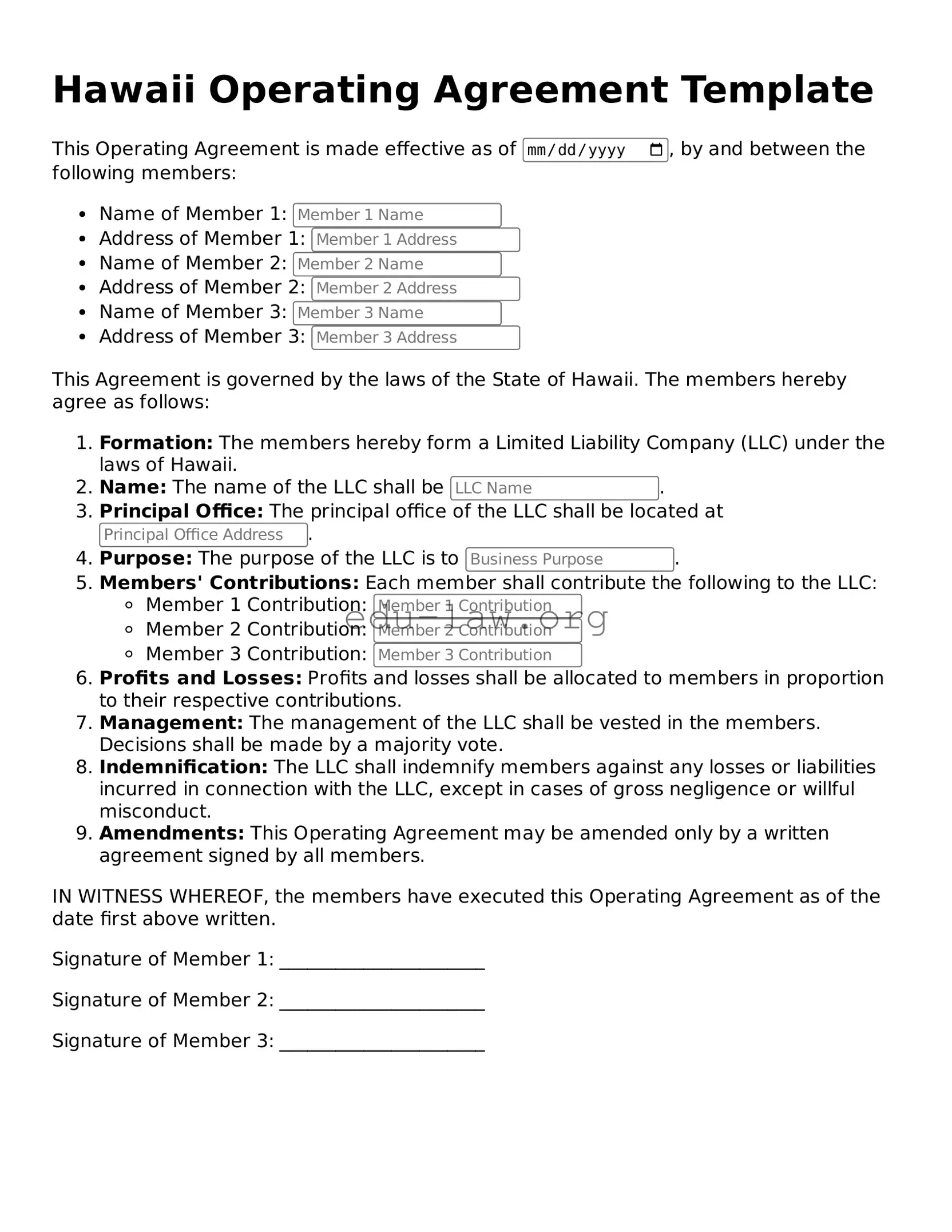
Hawaii Operating Agreement Template
This Operating Agreement is made effective as of , by and between the following members:
This Agreement is governed by the laws of the State of Hawaii. The members hereby agree as follows:
IN WITNESS WHEREOF, the members have executed this Operating Agreement as of the date first above written.
Signature of Member 1: ______________________
Signature of Member 2: ______________________
Signature of Member 3: ______________________
| Fact Name | Description |
|---|---|
| Governing Law | The Hawaii Operating Agreement is governed by Hawaii state law. |
| Purpose | This form outlines the management structure and operational procedures for an LLC in Hawaii. |
| Members' Rights | The agreement defines the rights and responsibilities of the LLC members. |
| Profit Distribution | It specifies how profits and losses will be shared among members. |
| Amendments | The Operating Agreement can be amended as needed, following the procedures outlined in the document. |
| Not Mandatory | While it's recommended, an Operating Agreement is not legally required in Hawaii. |
Completing the Hawaii Operating Agreement form is an essential step for establishing your business structure. This document outlines the management and operational procedures of your company. Once you have filled out the form, you will be ready to move forward with your business registration.
What is a Hawaii Operating Agreement?
A Hawaii Operating Agreement is a document that outlines the management structure and operating procedures of a Limited Liability Company (LLC) in Hawaii. It serves as an internal guide for the members of the LLC, detailing how the business will be run and how decisions will be made.
Is an Operating Agreement required in Hawaii?
No, an Operating Agreement is not legally required in Hawaii. However, it is highly recommended. Having one can help clarify the roles and responsibilities of members, protect personal assets, and provide a clear plan for resolving disputes.
Who should create the Operating Agreement?
The members of the LLC should work together to create the Operating Agreement. It’s important that all members contribute to ensure their interests and expectations are accurately represented.
What should be included in the Operating Agreement?
The Operating Agreement should include details such as the LLC's purpose, member contributions, management structure, voting rights, profit distribution, and procedures for adding or removing members. It may also cover how to handle disputes and what happens if a member leaves the LLC.
Can the Operating Agreement be changed?
Yes, the Operating Agreement can be amended. Changes should be documented in writing and agreed upon by all members. This ensures that everyone is on the same page and maintains the integrity of the agreement.
How does the Operating Agreement affect liability?
The Operating Agreement helps reinforce the limited liability status of the LLC. By clearly defining the business operations and the roles of members, it protects personal assets from business debts and legal actions, provided the LLC is properly maintained.
Do I need a lawyer to draft the Operating Agreement?
While it’s not required to have a lawyer draft the Operating Agreement, it can be beneficial. A legal professional can ensure that the document meets all necessary requirements and adequately protects the interests of all members.
How many copies of the Operating Agreement should I have?
It is advisable to have multiple copies of the Operating Agreement. Each member should keep a copy for their records, and an additional copy should be stored with the LLC’s official documents. This ensures easy access when needed.
What happens if we don’t have an Operating Agreement?
Without an Operating Agreement, members may face confusion regarding roles, responsibilities, and profit sharing. In the absence of a formal agreement, Hawaii's default LLC laws will govern the business, which may not align with the members' intentions.
How can I get a Hawaii Operating Agreement template?
Templates for a Hawaii Operating Agreement can be found online through various legal websites or business resources. Ensure that any template you use is tailored to meet the specific needs of your LLC and complies with Hawaii state laws.
Incomplete Information: Many individuals forget to fill out all required sections of the form. This can lead to delays or rejection of the agreement.
Incorrect Member Names: It is crucial to list the full legal names of all members. Abbreviations or nicknames can create confusion and legal issues.
Omitting Signatures: Failing to have all members sign the agreement can render it invalid. Each member's signature is necessary to confirm their agreement to the terms.
Ignoring State Requirements: Each state has specific regulations regarding operating agreements. Not adhering to Hawaii’s requirements can lead to complications.
Improperly Stating Ownership Percentages: It is important to accurately reflect each member’s ownership percentage. Mistakes in this area can lead to disputes later on.
Failing to Update the Agreement: As circumstances change, the operating agreement should be updated accordingly. Neglecting to do so can cause misunderstandings among members.
Not Including a Dissolution Clause: A clear procedure for dissolution is essential. Without this, members may face difficulties if they decide to close the business.
Using Ambiguous Language: Clarity is key in legal documents. Vague terms can lead to different interpretations and potential conflicts among members.
When forming a limited liability company (LLC) in Hawaii, several important documents complement the Hawaii Operating Agreement. Each of these forms plays a crucial role in establishing the legal and operational framework of the business. Below is a list of commonly used forms and documents.
Understanding these documents can facilitate a smoother business formation process in Hawaii. Each document serves a specific purpose, ensuring that your LLC operates within the legal framework and meets state requirements.
The Hawaii Operating Agreement is similar to the Limited Liability Company (LLC) Agreement, which outlines the structure and operation of an LLC. Both documents serve to define the roles of members, management responsibilities, and distribution of profits and losses. They ensure that all members are on the same page regarding the company's operations, providing a clear framework for decision-making and conflict resolution.
Another related document is the Partnership Agreement. This agreement is essential for partnerships, as it details the terms of the partnership, including each partner's contributions, profit-sharing ratios, and management duties. Like the Operating Agreement, it helps to prevent disputes by setting clear expectations and responsibilities among partners.
The Corporate Bylaws share similarities with the Operating Agreement in that they govern the internal management of a corporation. They outline the roles of directors and officers, meeting procedures, and voting rights. Both documents aim to establish a clear governance structure, ensuring that all parties understand their rights and responsibilities within the organization.
The Shareholders' Agreement is another document that parallels the Operating Agreement. This agreement is crucial for corporations with multiple shareholders. It addresses issues such as share transfers, voting rights, and the handling of disputes among shareholders. Like the Operating Agreement, it seeks to protect the interests of all parties involved and maintain harmony within the organization.
A Joint Venture Agreement also bears resemblance to the Operating Agreement. This document is used when two or more parties collaborate on a specific project or business venture. It outlines each party's contributions, responsibilities, and profit-sharing arrangements. Both agreements emphasize the importance of clear communication and defined roles to ensure the success of the venture.
Finally, the Non-Disclosure Agreement (NDA) can be considered similar in terms of protecting sensitive information. While it serves a different purpose, both the NDA and Operating Agreement help establish trust among parties involved. An NDA ensures that confidential information shared during business operations remains protected, similar to how an Operating Agreement safeguards the interests of members within an LLC.
When filling out the Hawaii Operating Agreement form, it's important to be careful and thorough. Here are some key dos and don'ts to consider:
Following these guidelines can help ensure that your Operating Agreement is completed correctly and efficiently.
When it comes to the Hawaii Operating Agreement form, there are several misconceptions that can lead to confusion. Understanding these can help ensure that you are well-informed when creating or reviewing your operating agreement.
Being aware of these misconceptions can help you make better decisions regarding your business structure and operations in Hawaii. It’s always wise to consult with a professional if you have specific questions or concerns.
When filling out and using the Hawaii Operating Agreement form, it is essential to understand several key aspects to ensure compliance and clarity in your business operations. Here are five important takeaways:
By keeping these key points in mind, individuals and businesses can create a comprehensive and effective Operating Agreement that supports their goals and protects their interests.