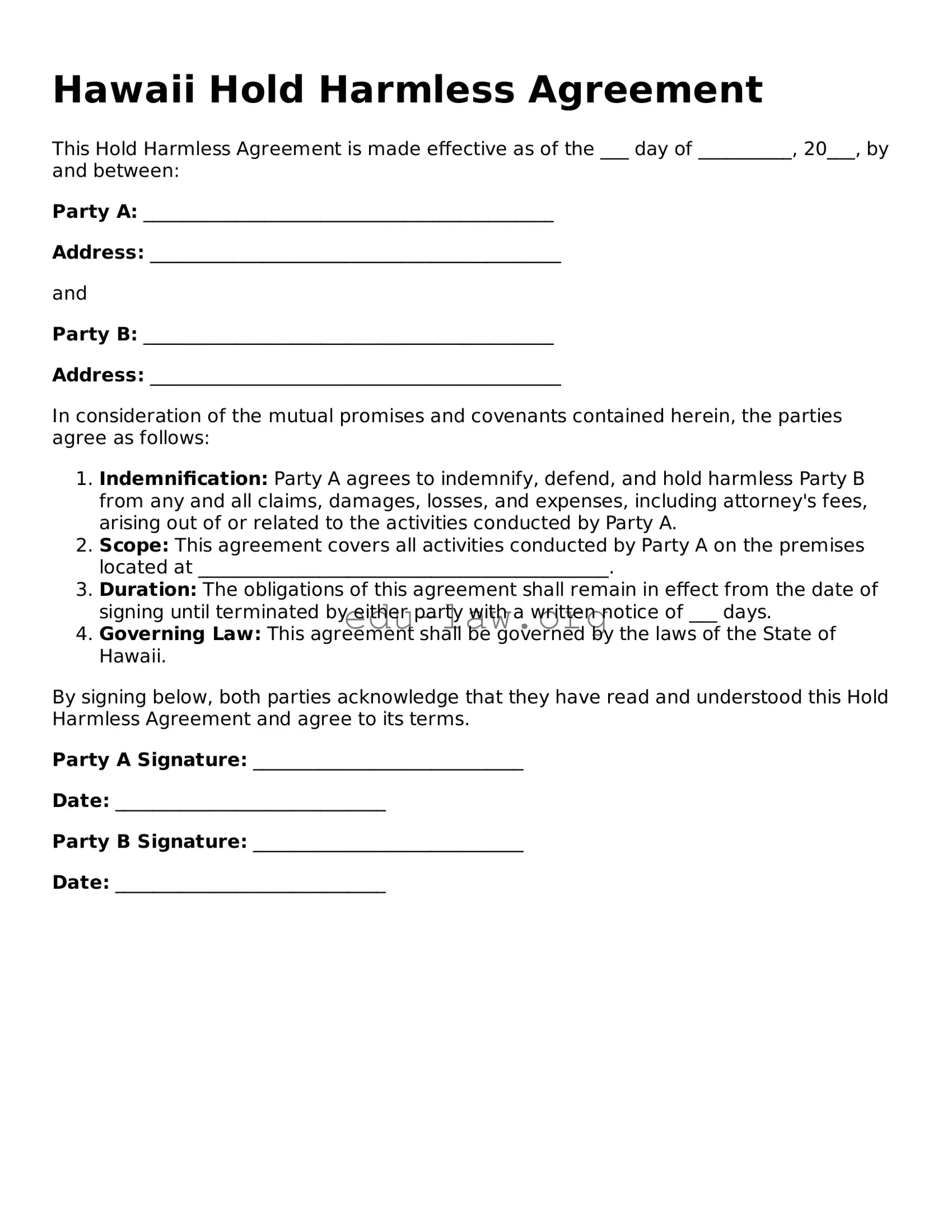
The Hawaii Hold Harmless Agreement form serves as a crucial legal tool for individuals and organizations engaging in various activities across the islands. This document is designed to protect one party from liability for any injuries or damages that may occur during a specified event or activity. It outlines the responsibilities of each party involved and clearly states that one party agrees not to hold the other responsible for certain risks. By signing this agreement, participants acknowledge their understanding of the potential dangers associated with the activity and accept the inherent risks involved. The form typically includes essential details such as the names of the parties, the nature of the activity, and the duration of the agreement. It is important for both parties to carefully review the terms, as the agreement can have significant legal implications. Understanding the nuances of this document is essential for anyone looking to engage in activities that carry potential risks, ensuring that they are adequately protected while also respecting the rights of others.
Hawaii Hold Harmless Agreement
This Hold Harmless Agreement is made effective as of the ___ day of __________, 20___, by and between:
Party A: ____________________________________________
Address: ____________________________________________
and
Party B: ____________________________________________
Address: ____________________________________________
In consideration of the mutual promises and covenants contained herein, the parties agree as follows:
By signing below, both parties acknowledge that they have read and understood this Hold Harmless Agreement and agree to its terms.
Party A Signature: _____________________________
Date: _____________________________
Party B Signature: _____________________________
Date: _____________________________
| Fact Name | Description |
|---|---|
| Purpose | The Hawaii Hold Harmless Agreement is designed to protect one party from liability for damages or injuries that may occur during a specific activity. |
| Parties Involved | The agreement typically involves two parties: the indemnitor (the party assuming the risk) and the indemnitee (the party being protected). |
| Governing Law | This agreement is governed by the laws of the State of Hawaii. |
| Scope of Liability | The agreement outlines the specific liabilities that are being waived, ensuring clarity on what is covered. |
| Enforceability | For the agreement to be enforceable, it must be clear, voluntary, and not against public policy. |
| Common Uses | It is commonly used in recreational activities, events, and construction projects where risks are present. |
Filling out the Hawaii Hold Harmless Agreement form is a straightforward process that requires attention to detail. Once the form is completed, it will need to be submitted as directed by the relevant party or organization. Here are the steps to guide you through the process.
What is a Hawaii Hold Harmless Agreement?
A Hawaii Hold Harmless Agreement is a legal document designed to protect one party from liability for any damages or injuries that may occur during a specified activity or event. By signing this agreement, one party agrees to assume responsibility for any potential risks, thereby shielding the other party from legal claims or financial losses.
Who typically uses a Hold Harmless Agreement in Hawaii?
This agreement is commonly used by event organizers, property owners, and businesses. For instance, if you are hosting an event at a venue, you may ask participants to sign a Hold Harmless Agreement to protect yourself from any injuries that might occur during the event. Similarly, landlords may use it to protect themselves from tenant-related claims.
What should be included in a Hold Harmless Agreement?
A comprehensive Hold Harmless Agreement should include the names of the parties involved, a clear description of the activity or event, the specific risks being assumed, and the duration of the agreement. Additionally, it should state that the signatory waives their right to sue for any injuries or damages that may occur.
Is a Hold Harmless Agreement legally enforceable in Hawaii?
Yes, a Hold Harmless Agreement can be legally enforceable in Hawaii, provided it is properly drafted and signed. However, it must be clear and unambiguous. Courts may not enforce agreements that are overly broad or vague, especially if they attempt to waive liability for gross negligence or willful misconduct.
Can a Hold Harmless Agreement protect against all types of claims?
No, a Hold Harmless Agreement cannot protect against all claims. While it can shield against ordinary negligence, it typically does not cover gross negligence or intentional acts. Always consult with a legal professional to ensure your agreement is appropriately tailored to your needs.
How does one enforce a Hold Harmless Agreement?
Enforcement of a Hold Harmless Agreement generally requires that the agreement be in writing and signed by both parties. If a dispute arises, the injured party may need to prove that they signed the agreement and that it covers the specific situation in question. Legal action may involve presenting the agreement in court.
Can minors sign a Hold Harmless Agreement?
Minors cannot legally enter into contracts, including Hold Harmless Agreements. If a minor is participating in an event or activity, a parent or legal guardian must sign the agreement on their behalf. This ensures that the responsible adult acknowledges the risks involved.
What happens if a Hold Harmless Agreement is breached?
If a Hold Harmless Agreement is breached, the non-breaching party may pursue legal action to seek damages. This could involve proving that the other party failed to uphold their responsibilities as outlined in the agreement. The specific remedies available will depend on the terms of the agreement and applicable laws.
How can I create a Hold Harmless Agreement for my needs?
To create a Hold Harmless Agreement, consider consulting with a legal professional who can help you draft a document that meets your specific requirements. Ensure that the agreement is clear, concise, and tailored to the activity or event in question. Templates are available, but customization is often necessary to ensure enforceability.
Incomplete Information: Many individuals fail to fill out all required fields. Missing details can lead to delays or invalidation of the agreement.
Incorrect Dates: Entering the wrong date can create confusion about the agreement's validity. Always double-check the dates before submission.
Not Reading the Terms: Some people skim through the terms and conditions, missing important clauses. Understanding what you are agreeing to is crucial.
Signature Issues: Forgetting to sign or improperly signing the document can render it unenforceable. Always ensure your signature is clear and in the correct place.
Using Incorrect Names: Misnaming parties involved can lead to legal complications. Verify that all names are spelled correctly and match official documents.
Ignoring Witness Requirements: Some versions of the agreement may require a witness. Failing to include a witness can invalidate the agreement.
Assuming Standard Clauses Apply: Not all agreements are the same. Assuming that standard clauses apply without reviewing them can lead to misunderstandings.
Neglecting to Keep a Copy: After submitting the form, some forget to keep a copy for their records. Retaining a copy is essential for future reference.
Misunderstanding Liability: Some individuals do not fully grasp what they are agreeing to regarding liability. It’s important to understand the implications of the hold harmless clause.
Not Seeking Legal Advice: Many people fill out the form without consulting a legal professional. Seeking advice can help clarify any uncertainties and ensure the agreement is appropriately tailored to your needs.
A Hawaii Hold Harmless Agreement is a useful document that protects one party from liability for any injuries or damages that may occur during a specific activity or event. When using this agreement, it is often beneficial to have additional forms and documents to ensure comprehensive protection and clarity. Below are four other forms that are commonly used alongside the Hold Harmless Agreement.
Having these documents in place can enhance the effectiveness of a Hawaii Hold Harmless Agreement. They help clarify responsibilities, outline expectations, and provide additional legal protections. Always consider consulting a legal professional to ensure that all necessary documents are properly prepared and executed.
The Release of Liability form is similar to the Hawaii Hold Harmless Agreement in that both documents aim to protect one party from legal claims resulting from specific activities. In a Release of Liability, an individual agrees not to hold another party responsible for any injuries or damages that may occur during an event or activity. This document often comes into play in recreational settings, such as sports events or outdoor activities, where participants acknowledge the risks involved and waive their right to sue for any accidents that may happen.
The Indemnity Agreement serves a similar purpose, focusing on the responsibility of one party to compensate another for any losses or damages incurred. Like the Hold Harmless Agreement, it shifts the financial burden of claims from one party to another. This document is often used in business transactions, where one party agrees to indemnify the other against losses arising from specific actions or events, thus providing a layer of financial protection.
The Waiver of Claims is another document that mirrors the Hold Harmless Agreement. In this case, individuals voluntarily relinquish their right to pursue legal action for any potential claims related to an activity. This waiver is commonly used in sports, fitness classes, and other recreational activities, ensuring that participants understand the risks and agree not to seek compensation for injuries that may occur.
The Assumption of Risk form is closely related, as it outlines the inherent dangers associated with an activity that a participant acknowledges. By signing this document, individuals accept the risks involved, which can limit their ability to claim damages later. This form is often used in adventure sports or activities where the risk of injury is significant, and it serves to inform participants of the potential hazards.
The Non-Disclosure Agreement (NDA) shares a protective element with the Hold Harmless Agreement, though it focuses on confidentiality rather than liability. An NDA prevents parties from disclosing sensitive information shared during a business relationship. While it does not address physical harm, it ensures that proprietary information remains secure, thereby protecting the interests of the parties involved.
The Service Agreement often includes clauses that limit liability, making it similar to the Hold Harmless Agreement. In this document, one party provides services to another while outlining the scope of work and responsibilities. Liability limitations within the agreement help protect the service provider from claims related to the quality of service or unforeseen issues that may arise during the engagement.
The Rental Agreement can also bear similarities, particularly in clauses that address liability for damages or injuries occurring on the rental property. Such agreements typically include provisions that hold the renter responsible for any harm that may occur during their use of the property. This aspect aligns with the Hold Harmless Agreement's intent to protect one party from claims arising from another's actions.
The Employment Agreement may contain indemnification clauses that protect employers from legal claims made by employees. Similar to the Hold Harmless Agreement, these clauses shift responsibility for certain claims, such as those arising from workplace injuries, back to the employee under specific circumstances. This helps employers mitigate potential legal risks associated with their workforce.
The Partnership Agreement can include hold harmless provisions, particularly when partners want to protect themselves from liability arising from the actions of other partners. This document outlines the roles, responsibilities, and financial obligations of each partner while ensuring that one partner is not held liable for the negligent actions of another, mirroring the protective intent of the Hold Harmless Agreement.
Finally, the Construction Contract often includes hold harmless clauses to protect contractors from claims related to construction activities. These clauses can specify that the property owner or developer assumes responsibility for any injuries or damages that occur on the job site. By doing so, the contractor is shielded from liability, similar to the protections offered in a Hold Harmless Agreement.
When filling out the Hawaii Hold Harmless Agreement form, it’s essential to approach the task with care. Here’s a list of things to do and avoid to ensure the process goes smoothly.
Understanding the Hawaii Hold Harmless Agreement is essential for anyone involved in contracts or agreements within the state. However, several misconceptions often arise regarding this form. Below is a list of ten common misconceptions, along with clarifications to help you navigate this important document.
By addressing these misconceptions, individuals and businesses can approach the Hawaii Hold Harmless Agreement with a clearer understanding, ensuring that they are better prepared to protect their interests.
When filling out and using the Hawaii Hold Harmless Agreement form, consider the following key takeaways:
Using the Hawaii Hold Harmless Agreement form correctly can help mitigate risks and clarify responsibilities between parties.