Creating a comprehensive employee handbook is an essential step for any business operating in Hawaii. This document serves as a vital resource for both employers and employees, outlining workplace policies, expectations, and rights. The Hawaii Employee Handbook form typically includes sections on company culture, employee responsibilities, and important legal obligations. It addresses topics such as workplace conduct, anti-discrimination policies, and procedures for reporting grievances. Additionally, the handbook often covers benefits, leave policies, and safety protocols, ensuring that employees understand their entitlements and obligations. By providing clear guidelines and fostering a positive work environment, the employee handbook can help prevent misunderstandings and promote a harmonious workplace.
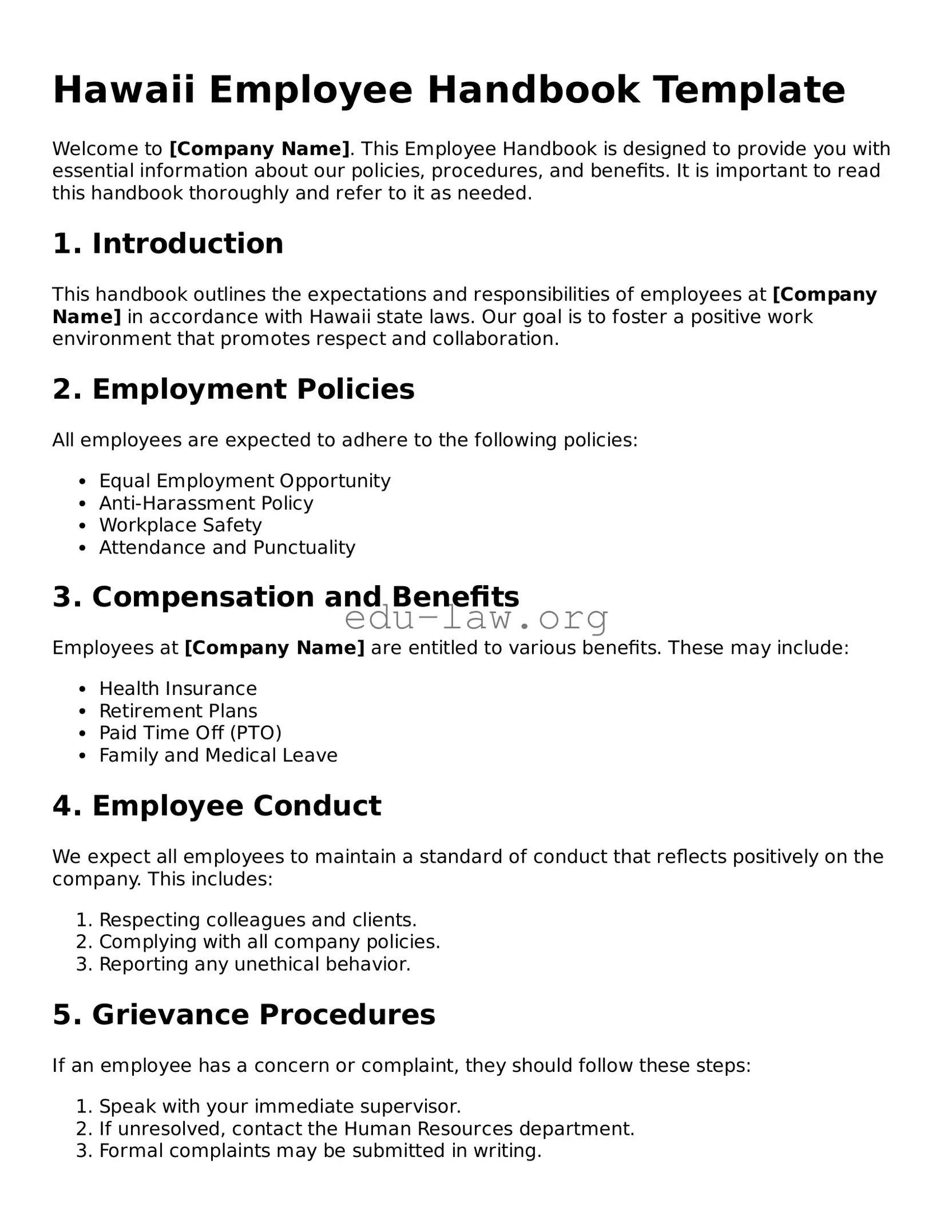
Hawaii Employee Handbook Template
Welcome to [Company Name]. This Employee Handbook is designed to provide you with essential information about our policies, procedures, and benefits. It is important to read this handbook thoroughly and refer to it as needed.
1. Introduction
This handbook outlines the expectations and responsibilities of employees at [Company Name] in accordance with Hawaii state laws. Our goal is to foster a positive work environment that promotes respect and collaboration.
2. Employment Policies
All employees are expected to adhere to the following policies:
3. Compensation and Benefits
Employees at [Company Name] are entitled to various benefits. These may include:
4. Employee Conduct
We expect all employees to maintain a standard of conduct that reflects positively on the company. This includes:
5. Grievance Procedures
If an employee has a concern or complaint, they should follow these steps:
6. Acknowledgment of Receipt
By signing below, you acknowledge that you have received and read the Employee Handbook. You agree to abide by the policies outlined herein.
Employee Name: [Employee Name]
Signature: [Employee Signature]
Date: [Date]
7. Contact Information
If you have any questions regarding this handbook or any company policies, please contact:
Human Resources Department
Email: [HR Email]
Phone: [HR Phone Number]
Thank you for being a part of [Company Name]. We look forward to working together to create a successful and enjoyable workplace.
| Fact Name | Description |
|---|---|
| Purpose | The Hawaii Employee Handbook serves as a guide for employees, outlining workplace policies, procedures, and expectations. |
| Governing Law | This handbook is governed by the Hawaii Revised Statutes, specifically Chapter 378, which addresses employment practices. |
| Mandatory Policies | Employers are required to include certain policies, such as anti-discrimination and harassment policies, in their handbooks. |
| Employee Acknowledgment | Employees should sign an acknowledgment form to confirm they have received and understood the handbook. |
| Updates and Revisions | Handbooks should be reviewed and updated regularly to reflect changes in laws or company policies. |
| At-Will Employment | It is essential to clarify the at-will employment status in the handbook, indicating that either party can terminate employment at any time. |
| Accessibility | The handbook must be accessible to all employees, including those with disabilities, ensuring equal understanding of policies. |
After obtaining the Hawaii Employee Handbook form, you will need to complete it accurately to ensure compliance with workplace policies. This process is essential for understanding your rights and responsibilities as an employee in Hawaii.
What is the purpose of the Hawaii Employee Handbook form?
The Hawaii Employee Handbook form serves as a comprehensive guide for employees. It outlines company policies, procedures, and expectations. This document helps ensure that employees understand their rights and responsibilities, contributing to a positive workplace environment.
Who needs to complete the Employee Handbook form?
All employees in Hawaii should receive and acknowledge the Employee Handbook form. This includes full-time, part-time, and temporary employees. It is essential for everyone to be aware of the company's policies and procedures.
How often should the Employee Handbook be updated?
The Employee Handbook should be reviewed and updated regularly, ideally at least once a year. Changes in laws, company policies, or organizational structure may necessitate updates. Keeping the handbook current helps ensure compliance and clarity for all employees.
What should I do if I have questions about the Employee Handbook?
If you have questions about the Employee Handbook, you should reach out to your supervisor or the human resources department. They can provide clarification on any policies or procedures that may be unclear. Open communication is encouraged to ensure everyone understands the handbook.
Is it mandatory for employees to sign the Employee Handbook form?
Yes, it is generally required for employees to sign the Employee Handbook form. This signature indicates that the employee has received, read, and understood the contents of the handbook. It serves as a record that the employee is aware of the company's policies.
What happens if an employee violates a policy outlined in the Employee Handbook?
Violating a policy in the Employee Handbook may result in disciplinary action. The specific consequences depend on the nature of the violation and the company’s disciplinary procedures. Employees should familiarize themselves with these policies to avoid potential issues.
Can the Employee Handbook be used in legal disputes?
Yes, the Employee Handbook can be referenced in legal disputes. It serves as a record of the company's policies and procedures. However, it is important to ensure that the handbook is clear, consistent, and compliant with applicable laws to be effective in such situations.
How can I provide feedback on the Employee Handbook?
Employees are encouraged to provide feedback on the Employee Handbook. Suggestions can be submitted to the human resources department or during employee meetings. Feedback helps improve the handbook and ensures it meets the needs of all employees.
Filling out the Hawaii Employee Handbook form is an important step for new employees. However, there are common mistakes that can lead to confusion or delays. Here is a list of four frequent errors made during this process:
Incomplete Information: Many individuals forget to fill out all required fields. Leaving out essential details can result in processing delays or issues with employment records.
Incorrect Contact Information: Some employees provide outdated or incorrect contact details. This can hinder communication and affect important notifications regarding employment policies.
Not Reading the Policies: A common mistake is failing to read the handbook thoroughly. Understanding the policies is crucial for compliance and can prevent misunderstandings later on.
Neglecting to Sign: Some individuals forget to sign the form. Without a signature, the document may be considered incomplete, leading to potential issues with employment verification.
By being mindful of these common mistakes, employees can ensure a smoother onboarding experience and a better understanding of their rights and responsibilities within the workplace.
The Hawaii Employee Handbook is a crucial document for outlining workplace policies and expectations. Alongside this handbook, several other forms and documents are commonly utilized to ensure clarity and compliance within the workplace. Below is a list of related documents that often accompany the Employee Handbook.
These documents play a vital role in maintaining a transparent and organized workplace. Together with the Employee Handbook, they help foster a positive work culture and ensure compliance with employment laws in Hawaii.
The Employee Handbook serves a similar purpose to a company policy manual. Both documents outline the expectations, rules, and guidelines that employees must follow. A policy manual often includes more detailed procedures and protocols specific to various departments, whereas the Employee Handbook provides a broader overview of company culture and general workplace conduct.
Another document similar to the Employee Handbook is the onboarding guide. This guide is typically provided to new hires and contains essential information about the company, including its mission, values, and key policies. While the onboarding guide focuses on the initial transition for new employees, the Employee Handbook serves as a comprehensive reference throughout an employee's tenure.
The employee contract is another important document that shares similarities with the Employee Handbook. Both documents outline the rights and responsibilities of employees. However, the employee contract is a legally binding agreement that specifies terms of employment, such as salary and benefits, while the Employee Handbook provides general guidelines and policies.
Job descriptions are also comparable to the Employee Handbook. Job descriptions detail the specific duties and responsibilities associated with a particular position, while the Employee Handbook provides an overarching view of workplace expectations. Both documents aim to ensure clarity regarding roles and responsibilities within the organization.
The performance evaluation form aligns with the Employee Handbook in that both address employee expectations and standards. The performance evaluation form focuses on assessing an individual’s work performance, while the Employee Handbook outlines the overall expectations for all employees. Together, they contribute to a culture of accountability and growth.
Training manuals are similar to the Employee Handbook in that they provide guidance on specific skills and processes required for various roles within the company. Training manuals focus on the practical aspects of job performance, while the Employee Handbook covers broader policies and workplace conduct. Both documents are essential for employee development.
The safety manual is another document that shares a common goal with the Employee Handbook: promoting a safe and compliant work environment. The safety manual provides specific procedures and protocols for maintaining safety in the workplace, while the Employee Handbook includes general safety policies and expectations for employee behavior.
Finally, the benefits guide is comparable to the Employee Handbook in that it outlines the various benefits available to employees. The benefits guide focuses specifically on health insurance, retirement plans, and other perks, while the Employee Handbook provides a more comprehensive overview of workplace policies, including those related to benefits. Both documents are crucial for informing employees about their rights and entitlements.
When filling out the Hawaii Employee Handbook form, it is important to follow certain guidelines to ensure accuracy and compliance. Below are six recommended practices and pitfalls to avoid.
When it comes to the Hawaii Employee Handbook, several misconceptions can lead to confusion for both employers and employees. Understanding these myths is crucial for ensuring compliance with state laws and fostering a positive workplace environment.
While it's true that not all employers are legally required to have a handbook, having one is highly recommended. It helps clarify workplace policies and expectations, which can prevent misunderstandings and legal disputes.
Employers should focus on essential policies that reflect their company culture and legal obligations. Overloading the handbook with unnecessary information can lead to confusion rather than clarity.
Workplace laws and company policies can change. Regularly reviewing and updating the handbook ensures that it remains relevant and compliant with current regulations.
Assuming that employees know workplace policies can lead to significant issues. A handbook provides a clear reference point for employees, helping them understand their rights and responsibilities.
While a well-crafted handbook can provide some legal protections, it does not guarantee immunity from lawsuits. Employers must still adhere to labor laws and treat employees fairly.
Small businesses can benefit just as much from an Employee Handbook. It sets clear expectations and can help small teams operate smoothly and cohesively.
While having employees sign an acknowledgment can help demonstrate that they received the handbook, it is not a requirement for the handbook to be enforceable. Clear communication is key.
Every workplace is unique. Tailoring the handbook to fit the specific needs and culture of the organization ensures that it is both effective and relevant.
When filling out and using the Hawaii Employee Handbook form, consider the following key takeaways: