When renting a property in Georgia, understanding the Residential Lease Agreement form is essential for both landlords and tenants. This document outlines the rights and responsibilities of each party, ensuring a clear understanding of the terms of the lease. Key components include the duration of the lease, rental payment details, and security deposit requirements. Additionally, it specifies maintenance responsibilities, rules regarding pets, and procedures for terminating the lease. By addressing these important aspects, the agreement helps prevent misunderstandings and disputes, fostering a more harmonious landlord-tenant relationship. Whether you’re a first-time renter or an experienced landlord, familiarizing yourself with this form can make the leasing process smoother and more transparent.
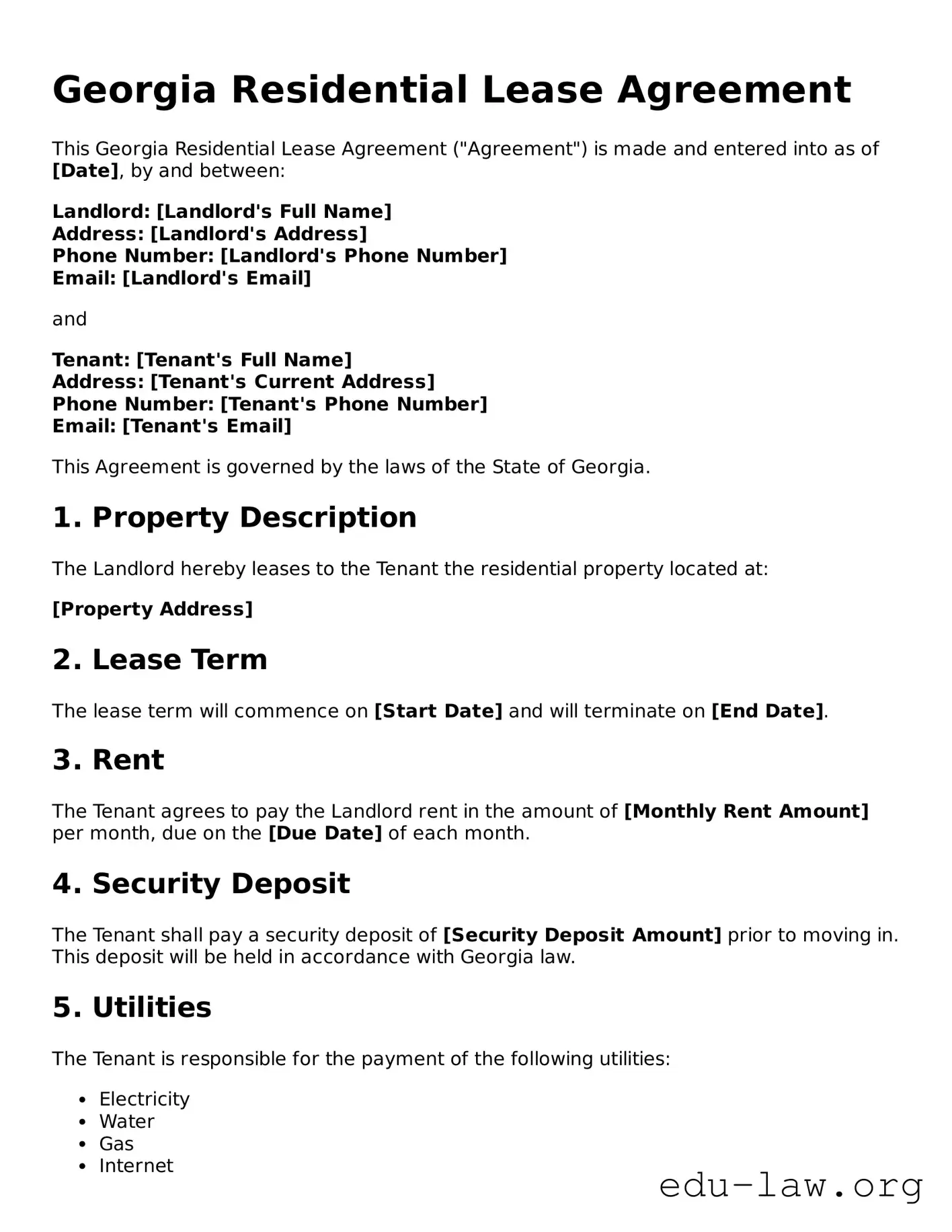
Georgia Residential Lease Agreement
This Georgia Residential Lease Agreement ("Agreement") is made and entered into as of [Date], by and between:
Landlord: [Landlord's Full Name]
Address: [Landlord's Address]
Phone Number: [Landlord's Phone Number]
Email: [Landlord's Email]
and
Tenant: [Tenant's Full Name]
Address: [Tenant's Current Address]
Phone Number: [Tenant's Phone Number]
Email: [Tenant's Email]
This Agreement is governed by the laws of the State of Georgia.
1. Property Description
The Landlord hereby leases to the Tenant the residential property located at:
[Property Address]
2. Lease Term
The lease term will commence on [Start Date] and will terminate on [End Date].
3. Rent
The Tenant agrees to pay the Landlord rent in the amount of [Monthly Rent Amount] per month, due on the [Due Date] of each month.
4. Security Deposit
The Tenant shall pay a security deposit of [Security Deposit Amount] prior to moving in. This deposit will be held in accordance with Georgia law.
5. Utilities
The Tenant is responsible for the payment of the following utilities:
6. Maintenance and Repairs
The Tenant agrees to keep the premises in good condition. The Landlord is responsible for major repairs unless damage is caused by the Tenant's negligence.
7. Use of Property
The Tenant shall use the property solely for residential purposes and shall not engage in any illegal activities.
8. Termination
Either party may terminate this Agreement with a written notice of [Notice Period] days prior to the intended termination date.
9. Governing Law
This Agreement shall be governed by and construed in accordance with the laws of the State of Georgia.
10. Signatures
By signing below, both parties agree to the terms of this Agreement:
Landlord Signature: ___________________________ Date: _______________
Tenant Signature: ___________________________ Date: _______________
This Agreement constitutes the entire understanding between the parties and supersedes all prior negotiations and agreements.
| Fact Name | Description |
|---|---|
| Governing Law | The Georgia Residential Lease Agreement is governed by the Official Code of Georgia Annotated (O.C.G.A.) § 44-7-1 et seq. |
| Duration of Lease | The lease can be for a fixed term or month-to-month, depending on the agreement between the landlord and tenant. |
| Security Deposit | Georgia law allows landlords to charge a security deposit, but it must be returned within one month after the lease ends, barring any deductions. |
| Notice Requirements | Both landlords and tenants must provide written notice for termination of the lease. The notice period varies based on the lease type. |
| Habitability Standards | Landlords are required to maintain rental properties in a habitable condition, ensuring basic living standards are met. |
Filling out the Georgia Residential Lease Agreement form is a straightforward process. Once completed, this form will serve as a legally binding document between the landlord and tenant. Make sure to have all necessary information on hand before you begin.
What is a Georgia Residential Lease Agreement?
A Georgia Residential Lease Agreement is a legal document that outlines the terms and conditions under which a landlord rents property to a tenant. This agreement typically includes details such as the rental amount, lease duration, and responsibilities of both parties.
What are the key components of a Georgia Residential Lease Agreement?
Key components often include the names of the landlord and tenant, property address, lease term, rental amount, payment methods, security deposit details, maintenance responsibilities, and rules regarding pets and guests. Each of these elements helps clarify expectations for both parties.
Is a written lease agreement required in Georgia?
While a verbal agreement can be legally binding, it is highly recommended to have a written lease agreement. A written document provides clear evidence of the terms agreed upon, which can help prevent disputes later on.
How long can a lease agreement last in Georgia?
Lease agreements in Georgia can vary in length. They can be month-to-month, lasting one year, or even longer. The duration should be clearly stated in the lease to avoid any confusion.
What is a security deposit, and how is it handled?
A security deposit is a sum of money collected by the landlord to cover potential damages or unpaid rent. In Georgia, landlords may charge up to one month's rent as a security deposit. The law requires landlords to return the deposit within one month after the lease ends, minus any deductions for damages or unpaid rent.
Can a landlord enter the rental property without permission?
In Georgia, landlords must provide reasonable notice before entering a tenant's property, typically 24 hours. Exceptions exist for emergencies, where immediate entry may be necessary without prior notice.
What happens if a tenant wants to break the lease early?
If a tenant wishes to break the lease early, they should review the lease terms regarding early termination. Many leases include a clause that outlines penalties or fees for breaking the lease. Open communication with the landlord may lead to a mutual agreement.
Are there any specific laws regarding eviction in Georgia?
Yes, Georgia has specific laws regarding eviction. A landlord must provide a notice to the tenant, stating the reason for eviction. If the tenant does not comply, the landlord can file for eviction in court. It's important for both parties to understand their rights and responsibilities in this process.
Can tenants make changes to the rental property?
Tenants generally need the landlord's permission to make changes to the property, such as painting walls or installing fixtures. The lease should specify what modifications are allowed and whether the tenant is responsible for restoring the property to its original condition upon moving out.
What should a tenant do if they have a dispute with their landlord?
If a tenant has a dispute with their landlord, they should first try to resolve the issue through direct communication. If that does not work, tenants can seek mediation or legal advice. Keeping records of all communications and agreements can be beneficial in resolving disputes.
Incomplete Information: One common mistake is leaving sections of the lease agreement blank. Essential details such as tenant names, property address, and lease term must be filled out completely to avoid future disputes.
Incorrect Dates: Entering the wrong start or end dates for the lease can lead to confusion. It is crucial to double-check these dates to ensure they align with both parties' expectations.
Failure to Understand Terms: Many people sign the lease without fully understanding the terms. It is important to read and comprehend all clauses, especially those regarding security deposits, maintenance responsibilities, and termination conditions.
Not Including Additional Agreements: If there are any verbal agreements made between the landlord and tenant, failing to include them in the written lease can result in misunderstandings. Always document any additional agreements to ensure clarity.
Ignoring Local Laws: Some individuals overlook specific local regulations that may affect the lease agreement. Familiarizing oneself with Georgia's rental laws can help avoid legal issues later on.
When entering into a rental agreement in Georgia, several additional forms and documents may accompany the Residential Lease Agreement. These documents help clarify responsibilities, outline terms, and protect the rights of both landlords and tenants. Below are some commonly used forms.
Using these documents in conjunction with the Georgia Residential Lease Agreement can help create a clear and comprehensive rental experience for both parties. Proper documentation can mitigate misunderstandings and provide a solid foundation for the landlord-tenant relationship.
The first document similar to the Georgia Residential Lease Agreement is the Standard Lease Agreement. This document outlines the terms and conditions of renting a property, including the duration of the lease, rent amount, and responsibilities of both the landlord and tenant. Like the Georgia form, it serves to protect the rights of both parties and provides a clear framework for the rental relationship.
Another comparable document is the Month-to-Month Rental Agreement. This agreement allows tenants to rent a property on a monthly basis without a long-term commitment. Similar to the Georgia Residential Lease Agreement, it specifies the rent amount and conditions for termination. However, it offers more flexibility, allowing either party to terminate the agreement with proper notice.
The Sublease Agreement is also akin to the Georgia Residential Lease Agreement. This document allows a tenant to rent out their leased property to another individual. It mirrors the original lease in terms of responsibilities and obligations but also includes clauses specific to the relationship between the original tenant and the subtenant, ensuring that the landlord's interests are still protected.
A Commercial Lease Agreement shares similarities with the Georgia Residential Lease Agreement, although it pertains to business properties rather than residential ones. Both documents outline the terms of occupancy, payment obligations, and maintenance responsibilities. However, a commercial lease may include additional clauses related to business operations and zoning laws.
The Lease Option Agreement is another document that resembles the Georgia Residential Lease Agreement. This agreement not only allows a tenant to rent a property but also gives them the option to purchase it at a later date. Both agreements detail the rental terms, but the lease option includes specific provisions regarding the purchase price and timeframe for exercising the option.
The Rent-to-Own Agreement is similar in nature to the Lease Option Agreement. It combines elements of renting and purchasing, allowing tenants to build equity while they occupy the property. Like the Georgia Residential Lease Agreement, it stipulates rental terms but also includes provisions for applying a portion of the rent toward the eventual purchase of the home.
The Roommate Agreement is another relevant document. While it typically involves multiple tenants sharing a rental space, it can include many of the same elements found in the Georgia Residential Lease Agreement. This agreement clarifies responsibilities for rent, utilities, and household chores, ensuring that all roommates understand their obligations.
The Tenant Agreement for a Mobile Home Park is also similar to the Georgia Residential Lease Agreement. It outlines the terms for renting a mobile home space, including rent, maintenance responsibilities, and park rules. Both agreements serve to protect the rights of tenants and landlords, though the mobile home agreement may include additional regulations specific to park management.
Finally, the Lease Termination Agreement is closely related to the Georgia Residential Lease Agreement. This document is used when either party wishes to end the lease before its expiration. It outlines the terms of termination and any obligations that remain, ensuring that both parties understand their rights and responsibilities at the end of the rental relationship.
When filling out the Georgia Residential Lease Agreement form, it is important to pay attention to details. Here are some guidelines to help ensure the process goes smoothly.
The Georgia Residential Lease Agreement form is often surrounded by various misconceptions. Understanding these can help both landlords and tenants navigate their rights and responsibilities more effectively. Below are six common misconceptions:
Clarifying these misconceptions can lead to more informed decisions and smoother interactions between landlords and tenants in Georgia.
When filling out and using the Georgia Residential Lease Agreement form, there are several important points to keep in mind: