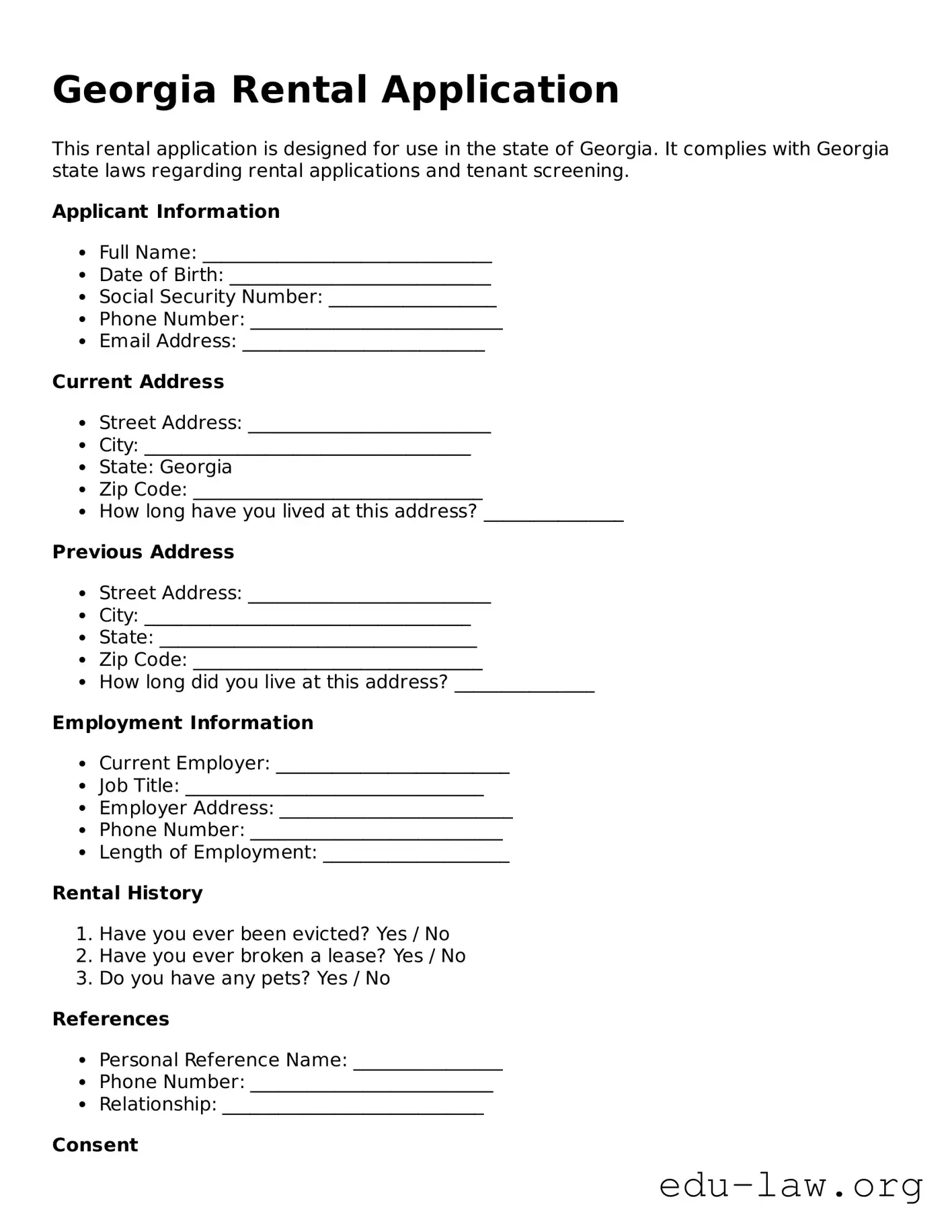
The Georgia Rental Application form serves as a crucial tool for both landlords and prospective tenants in the rental process. It collects essential information that helps landlords evaluate potential renters and make informed decisions. Key aspects of the form include personal details such as the applicant's name, contact information, and social security number. It also requires employment history, income verification, and references to assess financial stability and reliability. Additionally, the application may inquire about rental history, including previous addresses and landlord contacts, to gauge a tenant's past behavior. By providing consent for background checks, applicants allow landlords to verify their credit history and criminal record, ensuring a comprehensive review. Understanding these components can facilitate a smoother rental experience for everyone involved.
Georgia Rental Application
This rental application is designed for use in the state of Georgia. It complies with Georgia state laws regarding rental applications and tenant screening.
Applicant Information
Current Address
Previous Address
Employment Information
Rental History
References
Consent
By signing below, I authorize the landlord or property manager to conduct a background check, including credit and criminal history.
Signature: ________________________________
Date: _____________________________________
| Fact Name | Description |
|---|---|
| Purpose | The Georgia Rental Application form is used by landlords to screen potential tenants and gather necessary information for lease agreements. |
| Required Information | The application typically requires personal details, employment history, rental history, and references. |
| Application Fee | Landlords in Georgia may charge an application fee, which must be disclosed upfront and cannot exceed a reasonable amount. |
| Governing Laws | The use of rental applications in Georgia is governed by state laws, including the Georgia Fair Housing Act and applicable landlord-tenant laws. |
| Background Checks | Landlords often conduct background checks, including credit and criminal history, with the applicant's consent. |
Completing the Georgia Rental Application form is a crucial step in securing your desired rental property. Once you have filled out the form, you will need to submit it to the landlord or property manager, who will review your information and conduct background checks.
What is a Georgia Rental Application form?
The Georgia Rental Application form is a document that landlords use to collect information from potential tenants. This form typically requests personal details, rental history, employment information, and references. It helps landlords assess the suitability of applicants for their rental properties.
What information do I need to provide on the application?
When filling out the application, you will need to provide your full name, contact information, social security number, and date of birth. Additionally, you may be asked for your current and previous addresses, employment details, income information, and references. Be prepared to provide accurate and truthful information, as any discrepancies could affect your application.
Is there a fee for submitting the rental application?
Many landlords charge a fee to process rental applications. This fee typically covers the cost of background checks and credit reports. The amount can vary, so it’s important to ask the landlord about any fees before submitting your application.
How long does it take to process a rental application?
The processing time for a rental application can vary based on the landlord or property management company. Generally, you can expect a response within a few days to a week. If you haven’t heard back within that timeframe, it’s acceptable to follow up for an update.
What happens if my application is denied?
If your application is denied, the landlord is required to provide you with a notice explaining the reason for the denial. Common reasons include poor credit history, insufficient income, or negative rental history. You have the right to request a copy of your credit report if that was a factor in the decision.
Can I appeal a denied application?
While there is no formal appeal process for a denied application, you can communicate directly with the landlord or property manager. If you believe there has been a mistake or if you have additional information that could positively influence their decision, it’s worth discussing your situation with them.
Do I need to provide references?
Yes, most rental applications will ask for references. These can include previous landlords, employers, or personal contacts who can vouch for your character and reliability as a tenant. Providing strong references can enhance your application and increase your chances of approval.
Is my personal information safe on the rental application?
Landlords and property management companies are required to handle your personal information responsibly. However, it’s always wise to ask about their privacy policies and how they protect your data. Ensure that you only provide your application to reputable landlords or companies.
Many applicants forget to provide complete contact information. This includes not only their phone number but also their email address. Missing this information can lead to delays in communication.
Some individuals fail to disclose their rental history accurately. This can create issues later on, especially if a landlord seeks references from previous landlords. It’s important to be honest about past rental experiences.
Another common mistake is not including sufficient income verification. Landlords often require proof of income, such as pay stubs or bank statements. Without this documentation, the application may be rejected.
Lastly, applicants sometimes overlook the importance of signing the application. A signature indicates agreement to the terms and conditions set forth. Without it, the application may not be considered valid.
When renting a property in Georgia, a rental application form is just one of several important documents that landlords and tenants may encounter. Each of these forms serves a specific purpose in the rental process, ensuring that both parties understand their rights and responsibilities.
Understanding these documents is essential for anyone involved in the rental process. Each form plays a crucial role in establishing a clear and fair rental relationship, helping to prevent misunderstandings and disputes down the line.
The Georgia Rental Application form shares similarities with the standard Residential Lease Agreement. Both documents are essential in establishing the terms and conditions of a rental arrangement. The lease agreement outlines the responsibilities of both the landlord and tenant, including rent payment, maintenance obligations, and duration of the lease. Like the rental application, the lease requires personal information and may include background checks to ensure the suitability of the tenant.
Another document that resembles the Georgia Rental Application is the Tenant Screening Report. This report is often generated after a rental application is submitted. It includes critical information about the applicant’s credit history, rental history, and any criminal background checks. Both documents aim to assess the applicant's reliability and ability to fulfill the lease terms.
The Rental Agreement Addendum is similar as well. This document modifies or adds specific terms to the existing lease agreement. It may address issues such as pet policies, maintenance responsibilities, or alterations to the property. Like the rental application, it requires the consent of both parties and can impact the overall rental arrangement.
The Lease Guaranty Agreement is also comparable. This document is signed by a third party who agrees to take responsibility for the lease if the tenant fails to meet their obligations. The rental application may require information about potential guarantors, ensuring that the landlord has a backup in case of default.
The Move-In Checklist is another document that aligns with the rental application. It is used to document the condition of the property at the time of move-in. Both documents serve to protect the interests of both the landlord and tenant by ensuring that any pre-existing issues are noted before the tenant occupies the space.
The Rental History Verification form is similar as well. This document is used to confirm the tenant’s previous rental experiences. It typically requires information from previous landlords about payment history and property care. The rental application often requests this information upfront to streamline the approval process.
Lastly, the Security Deposit Agreement parallels the rental application. This document outlines the terms regarding the security deposit, including the amount, conditions for its return, and how it may be used. Both documents are integral to the rental process and help clarify financial expectations between the landlord and tenant.
When filling out a Georgia Rental Application form, there are several important dos and don'ts to keep in mind. Following these guidelines can help ensure a smoother application process.
When it comes to the Georgia Rental Application form, there are several misconceptions that can lead to confusion for both landlords and tenants. Here are six common misunderstandings:
This is not true. Each rental application can vary significantly based on the landlord’s requirements and the property type. It’s essential to review the specific application for the property you are interested in.
While many landlords do require an application fee, it’s not a universal rule. Some may waive this fee or allow it to be paid after approval. Always confirm the payment terms with the landlord.
Landlords often look at multiple factors when evaluating an application. These can include rental history, income verification, and references. A good credit score is important, but it’s not the sole determining factor.
Submitting an application does not guarantee approval. Landlords may receive multiple applications and will choose the one that best meets their criteria.
Even after an application is approved, the lease terms can still be negotiated. It’s important to discuss any concerns or desired changes before signing the lease.
While landlords are required to protect your personal information, some details may be shared with third parties for background checks. Always ask how your information will be used and protected.
Understanding these misconceptions can help you navigate the rental application process more effectively. Always communicate openly with landlords and clarify any uncertainties you may have.
When filling out and using the Georgia Rental Application form, it is essential to approach the process with care and attention to detail. Here are some key takeaways to keep in mind:
By keeping these points in mind, you can navigate the rental application process more effectively and increase your chances of securing the rental property you desire.