In the vibrant state of Georgia, the Commercial Lease Agreement form serves as a crucial document for landlords and tenants engaging in business transactions. This form outlines the terms and conditions under which a commercial property is leased, ensuring that both parties understand their rights and responsibilities. Key aspects of the agreement include the duration of the lease, the amount of rent, and the payment schedule, which are essential for establishing a clear financial framework. Additionally, the form addresses maintenance responsibilities, utility payments, and the use of the property, which are vital for avoiding disputes down the line. Provisions regarding security deposits, renewal options, and termination clauses are also included, providing a comprehensive overview of the leasing arrangement. By laying out these details, the Commercial Lease Agreement not only protects the interests of both landlords and tenants but also fosters a transparent and professional relationship that can lead to successful business ventures.
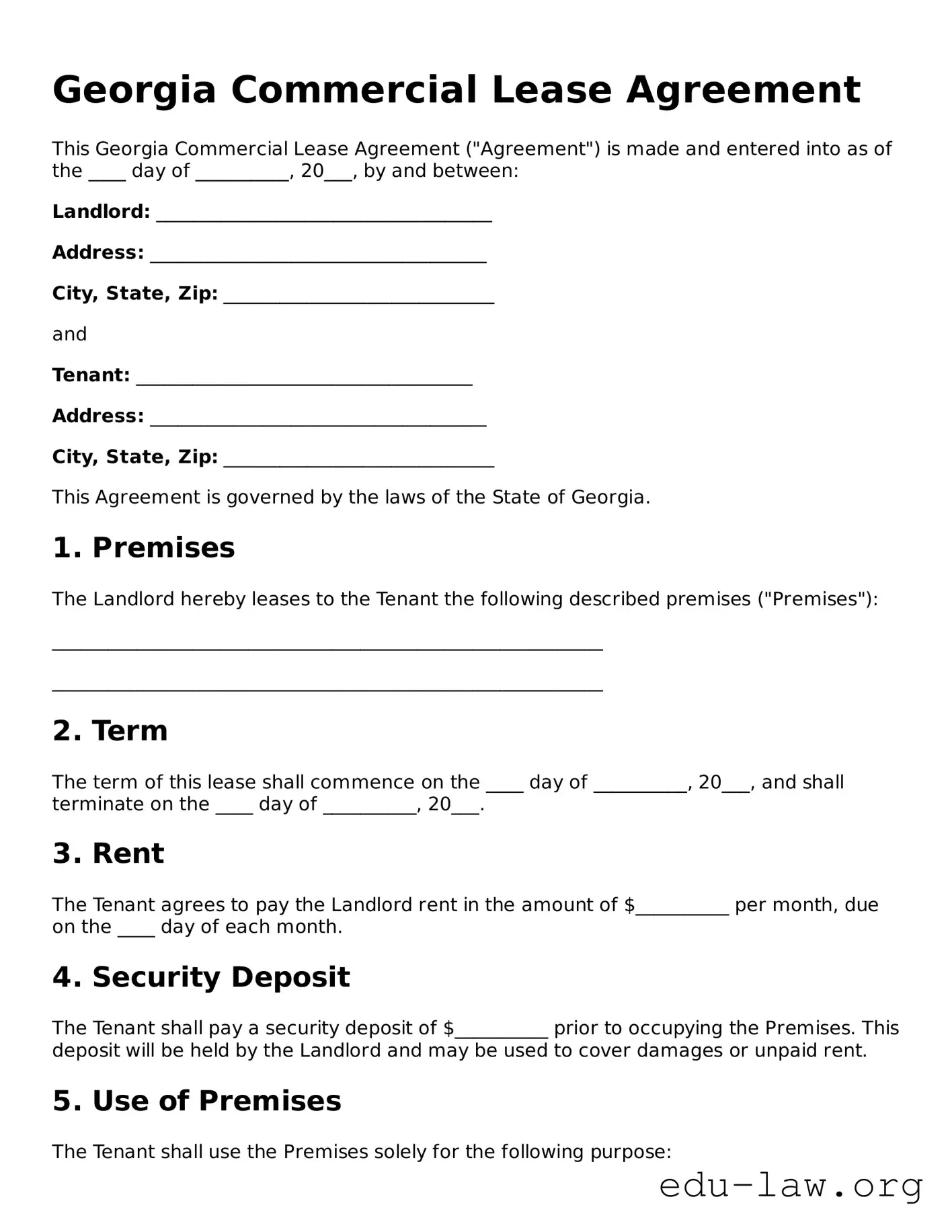
Georgia Commercial Lease Agreement
This Georgia Commercial Lease Agreement ("Agreement") is made and entered into as of the ____ day of __________, 20___, by and between:
Landlord: ____________________________________
Address: ____________________________________
City, State, Zip: _____________________________
and
Tenant: ____________________________________
Address: ____________________________________
City, State, Zip: _____________________________
This Agreement is governed by the laws of the State of Georgia.
1. Premises
The Landlord hereby leases to the Tenant the following described premises ("Premises"):
___________________________________________________________
___________________________________________________________
2. Term
The term of this lease shall commence on the ____ day of __________, 20___, and shall terminate on the ____ day of __________, 20___.
3. Rent
The Tenant agrees to pay the Landlord rent in the amount of $__________ per month, due on the ____ day of each month.
4. Security Deposit
The Tenant shall pay a security deposit of $__________ prior to occupying the Premises. This deposit will be held by the Landlord and may be used to cover damages or unpaid rent.
5. Use of Premises
The Tenant shall use the Premises solely for the following purpose:
___________________________________________________________
6. Maintenance and Repairs
The Tenant shall maintain the Premises in good condition and shall be responsible for repairs, except for structural repairs which shall be the responsibility of the Landlord.
7. Utilities
The Tenant shall be responsible for the payment of all utilities, including:
8. Alterations
The Tenant shall not make any alterations to the Premises without the prior written consent of the Landlord.
9. Default
In the event of a default by the Tenant, the Landlord may terminate this Agreement and seek any remedies available under Georgia law.
10. Governing Law
This Agreement shall be governed by and construed in accordance with the laws of the State of Georgia.
11. Signatures
IN WITNESS WHEREOF, the parties hereto have executed this Agreement as of the date first above written.
Landlord Signature: ___________________________
Date: _____________________________________
Tenant Signature: ___________________________
Date: _____________________________________
| Fact Name | Description |
|---|---|
| Governing Law | The Georgia Commercial Lease Agreement is governed by the laws of the State of Georgia. |
| Parties Involved | The agreement involves at least two parties: the landlord and the tenant. |
| Property Description | A clear description of the commercial property being leased must be included. |
| Lease Term | The lease term specifies the duration of the lease, which can vary based on agreement. |
| Rent Payment | The agreement outlines the amount of rent, payment schedule, and acceptable payment methods. |
| Security Deposit | A security deposit may be required to cover potential damages or unpaid rent. |
| Use of Premises | The intended use of the property must be clearly stated to avoid future disputes. |
| Maintenance Responsibilities | The lease should specify which party is responsible for maintenance and repairs. |
| Termination Clause | Conditions under which either party can terminate the lease should be clearly defined. |
| Signatures Required | Both parties must sign the agreement for it to be legally binding. |
Completing the Georgia Commercial Lease Agreement form is an important step in establishing a rental relationship between a landlord and a tenant. By carefully filling out the necessary sections, both parties can ensure clarity and mutual understanding of the lease terms. Follow these steps to fill out the form accurately.
Once the form is completed, both parties should keep a signed copy for their records. This ensures everyone is on the same page regarding the terms of the lease and helps avoid misunderstandings in the future.
What is a Georgia Commercial Lease Agreement?
A Georgia Commercial Lease Agreement is a legal document that outlines the terms and conditions under which a landlord leases commercial property to a tenant. This agreement includes details such as the duration of the lease, rental payment amounts, responsibilities for maintenance, and rules regarding the use of the property. It serves to protect the rights of both parties and ensures clarity in the landlord-tenant relationship.
What key terms should be included in the lease agreement?
Essential terms in a Georgia Commercial Lease Agreement include the lease term, rent amount, payment schedule, security deposit, maintenance responsibilities, and any permitted uses of the property. Additionally, clauses regarding termination, renewal options, and dispute resolution should be clearly defined. These elements help prevent misunderstandings and provide a framework for the business relationship.
How is rent typically structured in a commercial lease?
Rent in a commercial lease can be structured in various ways. Common arrangements include a fixed monthly amount, percentage rent based on sales, or a combination of both. The lease should specify when rent is due, acceptable payment methods, and any penalties for late payments. Understanding the rent structure is crucial for budgeting and financial planning.
What are the tenant's responsibilities in a commercial lease?
Tenants generally have several responsibilities in a commercial lease. These may include paying rent on time, maintaining the property in good condition, and complying with local laws and regulations. Depending on the lease terms, tenants might also be responsible for utilities, property taxes, and insurance. Clear delineation of these responsibilities helps ensure a smooth operation of the business.
Can a commercial lease be modified after it is signed?
Yes, a commercial lease can be modified after it is signed, but both parties must agree to any changes. Modifications should be documented in writing and signed by both the landlord and the tenant to avoid disputes. It is advisable to consult legal counsel before making significant changes to ensure compliance with applicable laws and to protect your interests.
Incomplete Information: One of the most common mistakes is leaving sections of the lease agreement blank. Every part of the form should be filled out completely. Failing to provide necessary details can lead to confusion or disputes later on.
Misunderstanding Lease Terms: Many individuals overlook the importance of understanding the lease terms. It’s crucial to read and comprehend the obligations and rights outlined in the agreement. Misinterpreting terms can result in unintended consequences.
Ignoring Additional Clauses: The lease may contain additional clauses that are not standard. These can include specific conditions related to maintenance, repairs, or modifications. Ignoring these clauses can lead to misunderstandings about responsibilities.
Failure to Seek Clarification: If any part of the lease is unclear, individuals often hesitate to ask questions. It’s important to seek clarification from the landlord or a legal professional to ensure a full understanding of the agreement before signing.
When entering into a commercial lease in Georgia, various forms and documents may accompany the lease agreement to ensure clarity and legal compliance. These documents help outline the responsibilities of both the landlord and tenant, as well as provide essential information regarding the property and the leasing process.
These documents play a crucial role in establishing a clear and mutually beneficial relationship between landlords and tenants in Georgia. By understanding and utilizing these forms, both parties can protect their interests and ensure a smoother leasing process.
The Georgia Commercial Lease Agreement shares similarities with the Residential Lease Agreement. Both documents outline the terms and conditions under which a property is rented. While the Commercial Lease focuses on business use, the Residential Lease is tailored for individuals or families. Both agreements typically include rental amounts, duration, and responsibilities of the parties involved. However, the Commercial Lease often has more complex clauses due to the nature of business operations.
Another document akin to the Georgia Commercial Lease Agreement is the Retail Lease Agreement. This type of lease specifically caters to retail spaces and includes provisions unique to the retail industry, such as signage rights and common area maintenance. Like the Commercial Lease, it defines the responsibilities of the landlord and tenant but is more focused on the retail environment and customer interactions.
The Office Lease Agreement is also similar. This document is designed for office spaces and outlines the terms for renting an office environment. Both the Office Lease and the Commercial Lease address aspects such as rent, duration, and maintenance responsibilities. However, the Office Lease may include additional clauses related to office hours, utilities, and shared facilities, reflecting the needs of businesses operating in an office setting.
Additionally, the Industrial Lease Agreement shares characteristics with the Commercial Lease. This type of lease is specifically for industrial properties, such as warehouses or manufacturing facilities. Both agreements cover rental terms and tenant obligations, but the Industrial Lease often includes provisions for equipment use, hazardous materials, and compliance with zoning laws, which are critical for industrial operations.
The Ground Lease Agreement is another document that resembles the Georgia Commercial Lease Agreement. A Ground Lease allows a tenant to develop a property owned by the landlord. While both agreements involve leasing land or property, the Ground Lease typically has a longer duration and focuses on the tenant's rights to build and develop on the land. This aspect makes it distinct yet similar in structure to the Commercial Lease.
The Sublease Agreement also shares common elements with the Commercial Lease. This document allows a tenant to lease their rented space to another party. Both agreements outline rental terms, but the Sublease must also address the relationship between the original tenant and the subtenant, ensuring that the original lease's terms are honored. This creates a layered leasing structure that retains the essence of the Commercial Lease.
The Lease Option Agreement is another related document. This agreement gives a tenant the option to purchase the leased property at a predetermined price after a specified period. While both agreements outline rental terms, the Lease Option adds a layer of potential ownership, making it distinct. It allows tenants to invest in the property while still having the flexibility of renting.
The Triple Net Lease Agreement is similar in that it involves commercial properties. This type of lease requires the tenant to pay not only rent but also property taxes, insurance, and maintenance costs. Like the Commercial Lease, it defines the financial responsibilities of the tenant. However, the Triple Net Lease places more financial burden on the tenant, which can be a crucial factor for businesses considering their lease options.
Finally, the Commercial Rental Agreement is akin to the Georgia Commercial Lease Agreement. This document encompasses various commercial property types and outlines the terms of rental. While both agreements serve the same purpose, the Commercial Rental Agreement may be less formal and include simpler terms, making it suitable for short-term or less complex rental situations. Both documents, however, aim to protect the interests of both parties involved in the lease.
When filling out the Georgia Commercial Lease Agreement form, it's essential to follow specific guidelines to ensure accuracy and compliance. Here are four things you should and shouldn't do:
Understanding the Georgia Commercial Lease Agreement is crucial for both landlords and tenants. However, several misconceptions can lead to confusion and potential disputes. Here are five common misconceptions:
By addressing these misconceptions, both landlords and tenants can engage in more informed and productive discussions regarding their commercial lease agreements.
When filling out and using the Georgia Commercial Lease Agreement form, it's essential to keep several key points in mind. Here are some important takeaways to consider:
By keeping these points in mind, you can navigate the process of filling out and using the Georgia Commercial Lease Agreement more effectively. A well-prepared lease can lead to a smoother landlord-tenant relationship.