In an age where visual content reigns supreme, the importance of a General Photo Release form cannot be overstated. This document serves as a vital tool for photographers, organizations, and individuals alike, ensuring that the rights to use images are clearly defined and respected. By obtaining permission from subjects featured in photographs, the release form protects against potential legal disputes and fosters trust between parties. It outlines the scope of usage, which can range from social media sharing to commercial advertising, thereby granting the photographer or organization the ability to utilize the images without fear of infringement. Additionally, it often includes clauses regarding compensation, the duration of use, and the rights of the subjects, creating a comprehensive framework for both parties involved. With the rise of digital media, understanding the nuances of this form has become essential for anyone looking to navigate the complex landscape of image rights and permissions.
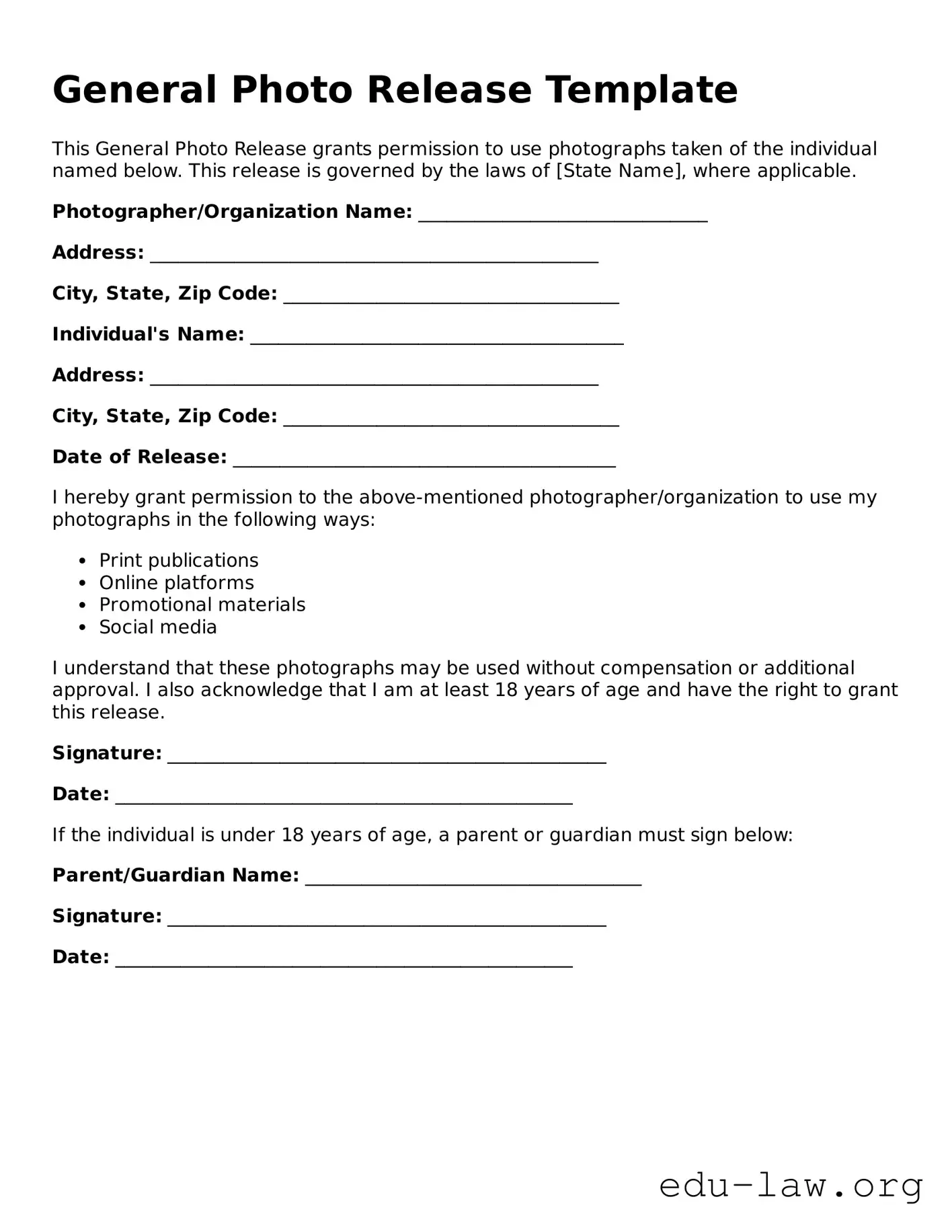
General Photo Release Template
This General Photo Release grants permission to use photographs taken of the individual named below. This release is governed by the laws of [State Name], where applicable.
Photographer/Organization Name: _______________________________
Address: ________________________________________________
City, State, Zip Code: ____________________________________
Individual's Name: ________________________________________
Address: ________________________________________________
City, State, Zip Code: ____________________________________
Date of Release: _________________________________________
I hereby grant permission to the above-mentioned photographer/organization to use my photographs in the following ways:
I understand that these photographs may be used without compensation or additional approval. I also acknowledge that I am at least 18 years of age and have the right to grant this release.
Signature: _______________________________________________
Date: _________________________________________________
If the individual is under 18 years of age, a parent or guardian must sign below:
Parent/Guardian Name: ____________________________________
Signature: _______________________________________________
Date: _________________________________________________
| Fact Name | Details |
|---|---|
| Purpose | A General Photo Release form allows individuals to give permission for their images to be used in various media, including print and online platforms. |
| Consent | By signing the form, individuals consent to the use of their photographs without compensation or further approval. |
| State-Specific Forms | Some states may have specific requirements or variations of the General Photo Release. For example, California law requires explicit consent for commercial use. |
| Revocation | Individuals can revoke their consent at any time, but this typically does not affect images already published or used before the revocation. |
| Governing Law | The General Photo Release is generally governed by state laws, which can vary. For instance, in New York, the law emphasizes the need for clear consent in commercial contexts. |
Completing the General Photo Release form is essential for ensuring proper consent for the use of images. After filling out this form, it will be submitted to the relevant parties for processing. Follow the steps below to accurately complete the form.
What is a General Photo Release form?
A General Photo Release form is a legal document that grants permission for the use of a person's image or likeness in photographs. This form is typically used by photographers, businesses, or organizations to ensure they have the right to use images for promotional, marketing, or other purposes without legal repercussions.
Who needs to sign a General Photo Release form?
Anyone whose image may be captured and used in photos should sign a General Photo Release form. This includes models, event participants, or any individuals who may appear in the photographs. Obtaining consent is crucial to avoid potential legal issues related to privacy and image rights.
What are the benefits of using a General Photo Release form?
Using a General Photo Release form provides legal protection for both the photographer and the individual being photographed. It clarifies how the images will be used and helps prevent misunderstandings. Additionally, it can enhance the credibility of the photographer or organization by demonstrating professionalism and respect for personal rights.
Can a General Photo Release form be revoked?
Yes, a General Photo Release form can be revoked, but this typically must be done in writing. However, revocation may not apply retroactively. If the images have already been published or used, the individual may not have the right to demand their removal unless otherwise specified in the release.
Is a General Photo Release form required for all photography?
No, a General Photo Release form is not always required. For example, candid photos taken in public spaces may not need a release. However, it is advisable to obtain one when the intent is to use the images commercially or for promotional purposes. When in doubt, it’s best to secure a release to avoid complications.
How should a General Photo Release form be stored?
A General Photo Release form should be stored securely, either in physical or digital format. It is essential to keep the forms organized and easily accessible in case they are needed for legal verification. Digital copies should be backed up to prevent loss.
Not reading the form thoroughly. Many individuals rush through the form without fully understanding its content. This can lead to misunderstandings about what rights they are granting.
Failing to provide complete information. Incomplete forms can cause delays or even result in the release being deemed invalid. Ensure all required fields are filled out accurately.
Overlooking the date. Forgetting to date the form can create confusion about when the release was granted. Always include the date to avoid any potential disputes.
Neglecting to sign the form. A signature is essential. Without it, the form is not legally binding. Double-check that you have signed before submitting.
Not specifying the scope of use. It’s important to clarify how the photos can be used. Vague language can lead to misunderstandings later on.
Ignoring the rights of minors. If the photos involve children, parental consent is required. Failing to obtain this can lead to legal issues down the line.
Assuming verbal agreements are enough. Relying on a handshake or verbal agreement instead of completing the form can lead to complications. Always get it in writing.
The General Photo Release form is an important document that allows photographers and organizations to use images of individuals for various purposes, such as marketing and promotional activities. However, there are several other forms and documents that are often utilized alongside this release to ensure clarity and protection for all parties involved. Here’s a list of some commonly used documents:
Using these forms in conjunction with the General Photo Release form can help streamline the process of obtaining permissions and protect the rights of all individuals involved. By having clear agreements in place, everyone can feel more secure and confident in the use of their images and likenesses.
The General Photo Release form shares similarities with the Model Release form. Both documents are designed to protect the rights of photographers and models regarding the use of images. A Model Release is specifically focused on individuals who are recognizable in the photographs, granting permission for their likeness to be used in marketing, advertising, or other commercial purposes. This ensures that the model has consented to the use of their image, just as the General Photo Release secures the photographer’s rights to use the images they capture.
Another document akin to the General Photo Release is the Property Release form. This form is used when a photographer captures images of private property, such as homes or businesses. It grants the photographer permission to use those images for commercial purposes. Just like the General Photo Release, a Property Release protects the rights of the photographer while ensuring that the property owner has agreed to the use of their property in the images, thus preventing any potential legal disputes over unauthorized usage.
The Event Photo Release form also bears resemblance to the General Photo Release. This document is commonly used at events, such as weddings or concerts, where multiple individuals may be photographed. By signing an Event Photo Release, attendees grant permission for their images to be used in promotional materials or social media. Similar to the General Photo Release, it helps photographers avoid issues related to consent and provides clarity on how the images can be used after the event.
Lastly, the Video Release form is another document that aligns closely with the General Photo Release. While the General Photo Release focuses on still images, the Video Release pertains to the use of video footage. It allows individuals to give permission for their likeness to be captured on video and used in various media. Both forms serve a similar purpose in ensuring that the rights of the individuals being photographed or filmed are respected and that the creators can use the content without legal complications.
When filling out a General Photo Release form, it’s important to follow certain guidelines. Here’s a list of things you should and shouldn’t do:
Following these tips can help ensure that the process goes smoothly and that you are fully informed about your rights and responsibilities.
Understanding the General Photo Release form is essential for anyone involved in photography or media. However, there are several misconceptions that can lead to confusion. Here are seven common misconceptions about the General Photo Release form:
Clarifying these misconceptions can help individuals navigate the complexities of using images in various contexts. Being informed about the General Photo Release form is beneficial for both photographers and subjects alike.
When utilizing a General Photo Release form, there are several important considerations to keep in mind. Understanding these key takeaways can help ensure that the process is smooth and respectful for all parties involved.