The Fraternity Recommendation Letter form serves as a vital tool in the fraternity recruitment process, ensuring that prospective members receive the support and endorsement they need to join a fraternity. This form typically includes sections for the recommender's contact information, the candidate's details, and a space for the recommender to articulate their insights about the candidate's character, leadership abilities, and overall fit within the fraternity's values. By providing a structured format, the form encourages thoughtful and comprehensive evaluations, allowing fraternity members to present a well-rounded view of the candidate. It is not just a formality; it is an opportunity for current members to advocate for individuals they believe will contribute positively to the fraternity community. Understanding the nuances of this form can significantly enhance the recruitment experience for both the candidates and the fraternities involved.
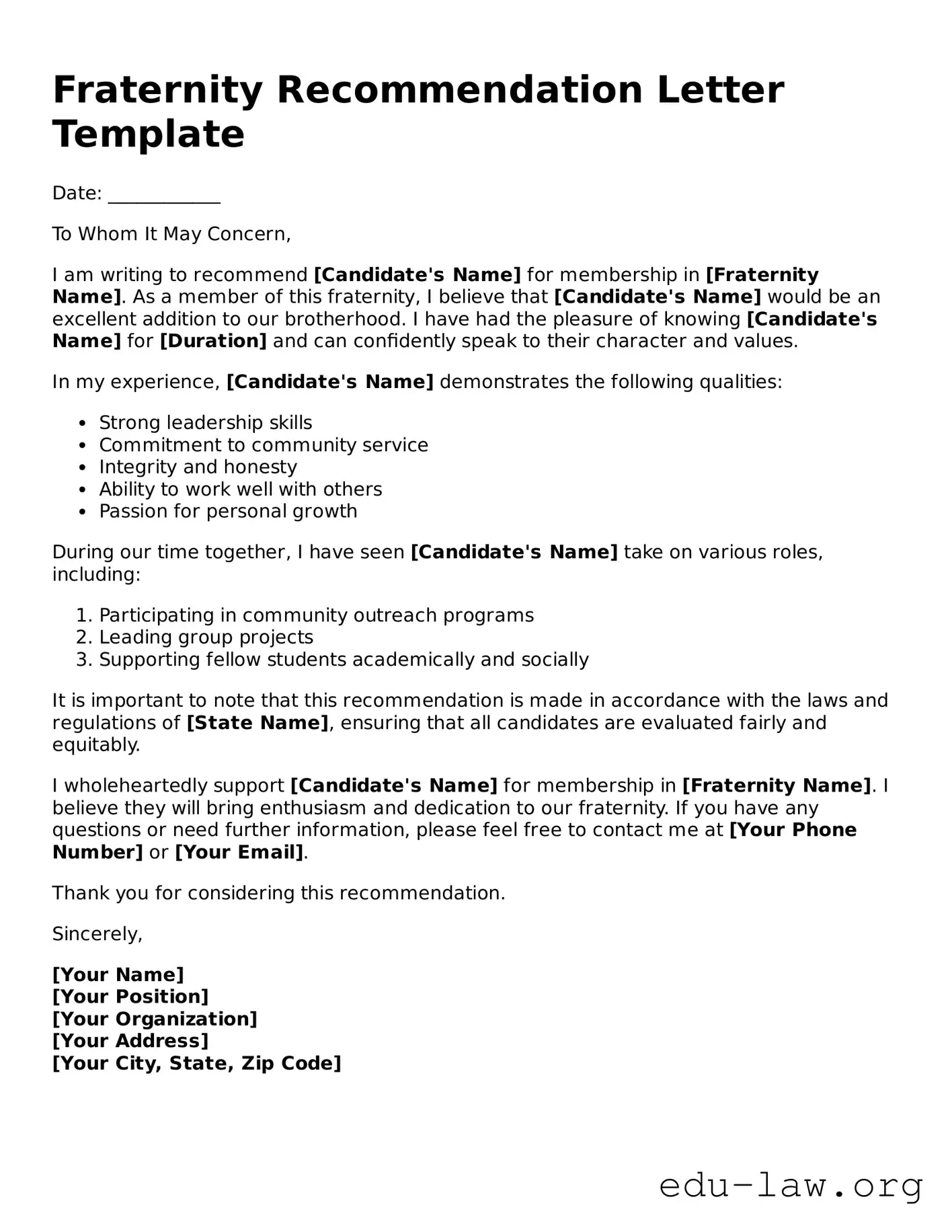
Fraternity Recommendation Letter Template
Date: ____________
To Whom It May Concern,
I am writing to recommend [Candidate's Name] for membership in [Fraternity Name]. As a member of this fraternity, I believe that [Candidate's Name] would be an excellent addition to our brotherhood. I have had the pleasure of knowing [Candidate's Name] for [Duration] and can confidently speak to their character and values.
In my experience, [Candidate's Name] demonstrates the following qualities:
During our time together, I have seen [Candidate's Name] take on various roles, including:
It is important to note that this recommendation is made in accordance with the laws and regulations of [State Name], ensuring that all candidates are evaluated fairly and equitably.
I wholeheartedly support [Candidate's Name] for membership in [Fraternity Name]. I believe they will bring enthusiasm and dedication to our fraternity. If you have any questions or need further information, please feel free to contact me at [Your Phone Number] or [Your Email].
Thank you for considering this recommendation.
Sincerely,
[Your Name]
[Your Position]
[Your Organization]
[Your Address]
[Your City, State, Zip Code]
| Fact Name | Description |
|---|---|
| Purpose | The Fraternity Recommendation Letter form is used to provide a formal endorsement for a potential new member of a fraternity. |
| Eligibility | Typically, the form must be completed by an active member of the fraternity, who knows the candidate well. |
| Submission Process | The completed form is usually submitted to the fraternity’s recruitment chair or designated officer. |
| State-Specific Laws | In states like California, the form may be subject to privacy laws such as the California Consumer Privacy Act (CCPA), which governs the handling of personal information. |
After obtaining the Fraternity Recommendation Letter form, it's time to fill it out carefully. This process ensures that all necessary information is provided for the recommendation. Follow these steps to complete the form accurately.
Once you have completed the form, review it to ensure all information is accurate and clear. After that, you can submit it according to the fraternity's guidelines.
What is a Fraternity Recommendation Letter?
A Fraternity Recommendation Letter is a document that supports a potential member's application to join a fraternity. It is typically written by someone who knows the candidate well, such as a family member, teacher, or friend, and highlights the candidate's character, achievements, and suitability for fraternity life.
Who should write a Fraternity Recommendation Letter?
It is best for individuals who have a strong understanding of the candidate's personality and accomplishments to write the letter. This may include alumni of the fraternity, teachers, coaches, or family friends. The writer should ideally have a positive relationship with the candidate and be able to speak to their strengths and potential contributions to the fraternity.
What information should be included in the letter?
The letter should include the writer's relationship to the candidate, specific examples of the candidate's strengths and achievements, and any relevant experiences that demonstrate their leadership, character, and commitment to community. It is also helpful to mention why the candidate would be a good fit for the specific fraternity.
How long should the Fraternity Recommendation Letter be?
Typically, a recommendation letter should be one to two pages long. It should be concise yet comprehensive enough to provide a clear picture of the candidate's qualifications. Quality is more important than quantity; focus on meaningful content rather than filler information.
Is there a specific format for the letter?
While there is no strict format, the letter should be typed and professionally presented. It should begin with the date and the writer's contact information, followed by a salutation. The body of the letter should include the key points about the candidate, and it should conclude with a strong endorsement and the writer's signature.
When is the deadline for submitting the letter?
Deadlines can vary by fraternity and chapter, so it is important to check with the specific organization for their requirements. Generally, letters should be submitted well in advance of recruitment events to ensure they are considered during the selection process.
Can a candidate submit multiple recommendation letters?
Yes, candidates can submit multiple recommendation letters. Having more than one letter can provide a broader perspective on the candidate's qualifications and character. However, it is essential that each letter offers unique insights rather than repeating the same information.
What if I do not know anyone in the fraternity?
If you do not know anyone in the fraternity, consider reaching out to alumni or friends who may have connections. You can also ask teachers or coaches who are familiar with fraternity life to help you find someone to write the letter. It is important to ensure that the writer understands your character and achievements well enough to provide a thoughtful recommendation.
Can I see the letter before it is submitted?
It is reasonable to ask the writer if you can review the letter before submission. This can help ensure that the information is accurate and that the letter reflects your strengths appropriately. However, respect the writer's discretion; some may prefer to keep their recommendations confidential.
Incomplete Information: One of the most common mistakes is failing to provide all the required details. Ensure that every section of the form is filled out completely. Missing information can delay the process or even lead to rejection.
Incorrect Contact Information: Double-check the contact information provided. This includes phone numbers and email addresses. If the fraternity cannot reach the recommender, it can hinder the candidate's chances.
Generic Recommendations: Avoid using a one-size-fits-all approach. Tailoring the recommendation to reflect the candidate's unique qualities and contributions makes a significant difference.
Failure to Follow Guidelines: Each fraternity may have specific requirements for the recommendation letter. Ignoring these guidelines can lead to disqualification. Always review the fraternity's instructions carefully.
Overly Formal Language: While professionalism is important, using overly complex language can make the letter difficult to read. Aim for a conversational tone that still conveys respect and seriousness.
Neglecting to Highlight Leadership Qualities: Fraternities often seek candidates who exhibit leadership potential. Make sure to include specific examples of how the candidate has demonstrated leadership skills.
Omitting Personal Anecdotes: Personal stories can make a recommendation stand out. Including anecdotes that showcase the candidate's character and values can leave a lasting impression.
Rushing the Submission: Taking the time to review the recommendation before submitting is crucial. Rushing can lead to typos or omissions that could negatively impact the candidate.
Not Proofreading: Spelling and grammatical errors can undermine the credibility of the recommendation. Always proofread the letter to ensure it is polished and professional.
When seeking membership in a fraternity, several important documents may accompany the Fraternity Recommendation Letter. Each of these forms plays a crucial role in the recruitment process, providing insights and information that help fraternity members make informed decisions about potential new members.
In summary, these documents collectively create a comprehensive picture of a prospective member, facilitating a thoughtful and informed selection process for fraternity membership. Each form serves a specific purpose, ensuring that the fraternity can uphold its values and standards while welcoming new individuals into its community.
The Sorority Recommendation Letter serves a similar purpose as the Fraternity Recommendation Letter. It is a document used to endorse a potential member of a sorority. Like the fraternity version, it typically includes information about the candidate's character, achievements, and suitability for membership. The recommendation is often written by a current member of the sorority, who can provide insight into the candidate's personality and involvement in campus activities.
The College Application Recommendation Letter is another document that shares similarities. This letter is usually written by a teacher, counselor, or mentor who knows the applicant well. It highlights the applicant's academic performance, personal qualities, and extracurricular activities. Both the college application and fraternity recommendation letters aim to provide a comprehensive view of the individual, helping organizations make informed decisions about membership or admission.
The Job Recommendation Letter also resembles the Fraternity Recommendation Letter in its purpose of endorsing an individual. Written by a former employer or colleague, this letter emphasizes the candidate's professional skills, work ethic, and character traits. Just as fraternity letters aim to showcase a potential member's fit within the organization, job recommendation letters seek to demonstrate how a candidate would contribute to a workplace.
The Character Reference Letter is similar in that it focuses on the personal attributes of an individual. This type of letter is often used in various situations, such as legal matters or community service applications. It provides insight into the individual's moral character and reliability, much like a fraternity recommendation letter aims to assess the candidate's fit for the fraternity's values and culture.
The Graduate School Recommendation Letter shares characteristics with the Fraternity Recommendation Letter. This document is typically written by a professor or professional who can speak to the applicant's academic capabilities and potential for success in graduate studies. Both letters serve as endorsements, offering a perspective on the individual's qualifications and suitability for a specific group or program.
The Volunteer Position Recommendation Letter is another document that parallels the fraternity recommendation. This letter is often written by a supervisor or leader in a volunteer organization. It highlights the individual's commitment to service, teamwork, and leadership skills, which are qualities that may also be valued in a fraternity setting.
The Personal Reference Letter can be compared to the Fraternity Recommendation Letter as well. This type of letter is often written by someone who knows the individual on a personal level, such as a family friend or neighbor. It provides a more intimate perspective on the individual's character and life experiences, similar to how a fraternity recommendation letter seeks to present a holistic view of the candidate.
The Athletic Recommendation Letter is similar in that it focuses on an individual's skills and character within the context of sports. This letter is typically written by a coach or athletic director. It emphasizes teamwork, discipline, and leadership, qualities that may also be important in a fraternity environment. Both letters aim to showcase the candidate's abilities and potential contributions to a group.
Finally, the Mentor Recommendation Letter shares similarities with the Fraternity Recommendation Letter. This document is often written by a mentor who has guided the individual through personal or professional development. It highlights the candidate's growth, achievements, and readiness for new challenges, akin to how a fraternity recommendation letter assesses readiness for membership in a fraternity.
When filling out a Fraternity Recommendation Letter form, it's important to approach the task with care and thoughtfulness. Here are some key dos and don'ts to keep in mind:
By adhering to these guidelines, you can help ensure that the recommendation letter is both effective and respectful of the fraternity's values.
Misconceptions about the Fraternity Recommendation Letter form can lead to confusion for potential members and their recommenders. Below are ten common misconceptions, along with explanations to clarify them.
While alumni are often the most common recommenders, current members can also write letters. It is important to have someone who knows the candidate well and can speak to their character.
Each fraternity may have its own specific requirements regarding the format and content of recommendation letters. It is essential to check with the individual fraternity for their guidelines.
A recommendation letter is just one part of the membership process. It does not guarantee acceptance, as other factors such as interviews and chapter votes also play significant roles.
Some fraternities may require recommendation letters for informal recruitment events as well. It is advisable to inquire about the specific requirements for each situation.
While a thorough letter can be beneficial, a concise and focused recommendation that highlights key attributes of the candidate is often sufficient.
Recommenders do not need to hold a specific position within the fraternity. What matters is their familiarity with the candidate and their ability to provide an honest assessment.
Most fraternities have specific deadlines for submitting recommendation letters. It is crucial to adhere to these timelines to ensure consideration.
Each letter is evaluated based on its content and the credibility of the recommender. A letter from a well-respected member may carry more weight than one from someone less known in the fraternity.
Typically, candidates should not write their own letters. The recommendation should come from someone who can provide an outside perspective on the candidate's qualities.
In some cases, recommenders may be able to update or revise their letters before the final decision is made. It is best to communicate with the fraternity about any changes.
Filling out and utilizing the Fraternity Recommendation Letter form can significantly impact a potential member's experience. Here are some key takeaways to consider:
By keeping these points in mind, you can effectively contribute to the fraternity recruitment process and support the candidate in their pursuit of membership.