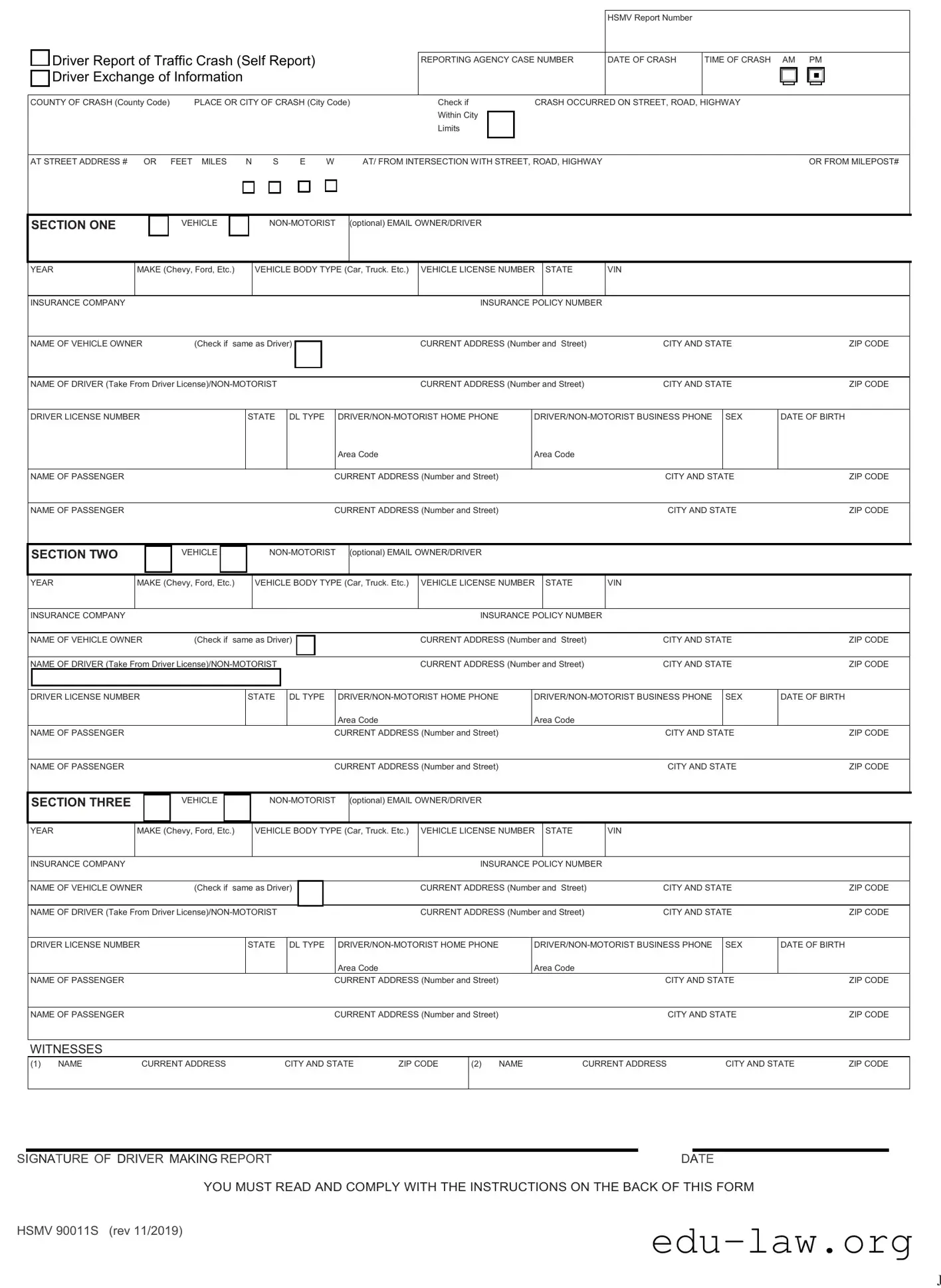
The Florida Traffic Crash Report form serves as a crucial document for drivers involved in traffic incidents. It is designed to capture essential details about the crash, including the date, time, and location of the event. The form requires the reporting driver to provide their personal information, such as name, address, and driver license number, as well as details about the vehicle involved, including make, model, and insurance information. Additional sections allow for the inclusion of passengers and witnesses, ensuring that all relevant parties are documented. Importantly, the form emphasizes the necessity of timely reporting, mandating submission within ten days if no law enforcement report is generated. Proper completion and submission of this form not only aids in legal compliance but also serves as a valuable record for insurance claims and future reference. Understanding the components of this report can significantly ease the process for those involved in a traffic crash.

Driver Report of Traffic Crash (Self Report) Driver Exchange of Information
|
HSMV Report Number |
|
|
|
|
REPORTING AGENCY CASE NUMBER |
DATE OF CRASH |
TIME OF CRASH AM PM |
|
|
|
|
COUNTY OF CRASH (County Code) |
PLACE OR CITY OF CRASH (City Code) |
|
Check if |
|
|
CRASH OCCURRED ON STREET, ROAD, HIGHWAY |
|
|
|
|||||||||||||
|
|
|
|
|
|
|
|
|
|
|
|
Within City |
|
|
|
|
|
|
|
|
|
|
|
|
|
|
|
|
|
|
|
|
|
|
|
Limits |
|
|
|
|
|
|
|
|
|
|
|
|
|
|
|
|
|
|
|
|
|
|
|
|
|
|
|
|
|
|
|
||||
|
AT STREET ADDRESS # |
OR |
FEET MILES |
N |
S |
|
E |
W |
|
AT/ FROM INTERSECTION WITH STREET, ROAD, HIGHWAY |
|
|
|
|
OR FROM MILEPOST# |
||||||||
|
|
|
|
|
|
|
|
|
|
|
|
|
|
|
|
|
|
|
|
|
|||
|
SECTION ONE |
|
VEHICLE |
|
|
(optional) EMAIL OWNER/DRIVER |
|
|
|
|
|
|
|
|
|
|
|||||||
|
|
|
|
|
|
|
|
|
|
|
|
|
|
|
|
|
|
||||||
|
YEAR |
MAKE (Chevy, Ford, Etc.) |
|
VEHICLE BODY TYPE (Car, Truck. Etc.) |
VEHICLE LICENSE NUMBER |
|
STATE |
VIN |
|
|
|
|
|||||||||||
|
|
|
|
|
|
|
|
|
|
|
|
|
|
|
|
|
|
|
|
|
|
|
|
|
INSURANCE COMPANY |
|
|
|
|
|
|
|
|
|
|
|
INSURANCE POLICY NUMBER |
|
|
|
|
|
|
|
|||
|
|
|
|
|
|
|
|
|
|
|
|
|
|
|
|
|
|||||||
|
NAME OF VEHICLE OWNER |
(Check if same as Driver) |
|
|
|
|
CURRENT ADDRESS (Number and Street) |
|
CITY AND STATE |
|
ZIP CODE |
||||||||||||
|
|
|
|
|
|
|
|
|
|
|
|
|
|
|
|
|
|||||||
|
NAME OF DRIVER (Take From Driver |
|
|
|
|
|
|
CURRENT ADDRESS (Number and Street) |
|
CITY AND STATE |
|
ZIP CODE |
|||||||||||
|
|
|
|
|
|
|
|
|
|
|
|
|
|
|
|||||||||
|
DRIVER LICENSE NUMBER |
|
STATE |
|
DL TYPE |
|
SEX |
DATE OF BIRTH |
|
|
|||||||||||||
|
|
|
|
|
|
|
|
|
Area Code |
|
|
|
Area Code |
|
|
|
|
|
|
|
|||
|
|
|
|
|
|
|
|
|
|
|
|
|
|
|
|
|
|
|
|||||
|
NAME OF PASSENGER |
|
|
|
|
|
|
|
CURRENT ADDRESS (Number and Street) |
|
|
|
|
CITY AND STATE |
|
ZIP CODE |
|||||||
|
|
|
|
|
|
|
|
|
|
|
|
|
|
|
|
|
|
||||||
|
NAME OF PASSENGER |
|
|
|
|
|
|
|
CURRENT ADDRESS (Number and Street) |
|
|
|
|
CITY AND STATE |
|
ZIP CODE |
|||||||
|
|
|
|
|
|
|
|
|
|
|
|
|
|
|
|
|
|
|
|
|
|||
|
SECTION TWO |
|
VEHICLE |
|
|
(optional) EMAIL OWNER/DRIVER |
|
|
|
|
|
|
|
|
|
|
|||||||
|
|
|
|
|
|
|
|
|
|
|
|
|
|
|
|||||||||
|
YEAR |
MAKE (Chevy, Ford, Etc.) |
|
VEHICLE BODY TYPE (Car, Truck. Etc.) |
VEHICLE LICENSE NUMBER |
|
STATE |
VIN |
|
|
|
|
|||||||||||
|
|
|
|
|
|
|
|
|
|
|
|
|
|
|
|
|
|
|
|
|
|
||
|
INSURANCE COMPANY |
|
|
|
|
|
|
|
|
|
|
|
INSURANCE POLICY NUMBER |
|
|
|
|
|
|
|
|||
|
|
|
|
|
|
|
|
|
|
|
|
|
|||||||||||
|
NAME OF VEHICLE OWNER |
(Check if same as Driver) |
|
|
|
|
CURRENT ADDRESS (Number and Street) |
|
CITY AND STATE |
|
ZIP CODE |
||||||||||||
|
|
|
|
|
|
|
|
|
|
|
|
|
|
||||||||||
|
NAME OF DRIVER (Take From Driver |
|
|
|
|
|
|
CURRENT ADDRESS (Number and Street) |
|
CITY AND STATE |
|
ZIP CODE |
|||||||||||
|
|
|
|
|
|
|
|
|
|
|
|
|
|
||||||||||
|
DRIVER LICENSE NUMBER |
|
STATE |
|
DL TYPE |
|
SEX |
DATE OF BIRTH |
|
|
|||||||||||||
|
|
|
|
|
|
|
|
|
Area Code |
|
|
|
Area Code |
|
|
|
|
|
|
|
|||
|
NAME OF PASSENGER |
|
|
|
|
|
|
|
CURRENT ADDRESS (Number and Street) |
|
|
|
|
CITY AND STATE |
|
ZIP CODE |
|||||||
|
|
|
|
|
|
|
|
|
|
|
|
|
|
|
|
|
|
||||||
|
NAME OF PASSENGER |
|
|
|
|
|
|
|
CURRENT ADDRESS (Number and Street) |
|
|
|
|
CITY AND STATE |
|
ZIP CODE |
|||||||
|
|
|
|
|
|
|
|
|
|
|
|
|
|
|
|
|
|
|
|||||
|
SECTION THREE |
|
VEHICLE |
|
|
(optional) EMAIL OWNER/DRIVER |
|
|
|
|
|
|
|
|
|
|
|||||||
|
|
|
|
|
|
|
|
|
|
|
|
|
|
|
|||||||||
|
YEAR |
MAKE (Chevy, Ford, Etc.) |
|
VEHICLE BODY TYPE (Car, Truck. Etc.) |
VEHICLE LICENSE NUMBER |
|
STATE |
VIN |
|
|
|
|
|||||||||||
|
|
|
|
|
|
|
|
|
|
|
|
|
|
|
|
|
|
|
|
|
|
||
|
INSURANCE COMPANY |
|
|
|
|
|
|
|
|
|
|
|
INSURANCE POLICY NUMBER |
|
|
|
|
|
|
|
|||
|
|
|
|
|
|
|
|
|
|
|
|
|
|||||||||||
|
NAME OF VEHICLE OWNER |
(Check if same as Driver) |
|
|
|
|
CURRENT ADDRESS (Number and Street) |
|
CITY AND STATE |
|
ZIP CODE |
||||||||||||
|
|
|
|
|
|
|
|
|
|
|
|
|
|
||||||||||
|
NAME OF DRIVER (Take From Driver |
|
|
|
|
|
|
CURRENT ADDRESS (Number and Street) |
|
CITY AND STATE |
|
ZIP CODE |
|||||||||||
|
|
|
|
|
|
|
|
|
|
|
|
|
|
||||||||||
|
DRIVER LICENSE NUMBER |
|
STATE |
|
DL TYPE |
|
SEX |
DATE OF BIRTH |
|
|
|||||||||||||
|
|
|
|
|
|
|
|
|
Area Code |
|
|
|
Area Code |
|
|
|
|
|
|
|
|||
|
NAME OF PASSENGER |
|
|
|
|
|
|
|
CURRENT ADDRESS (Number and Street) |
|
|
|
|
CITY AND STATE |
|
ZIP CODE |
|||||||
|
|
|
|
|
|
|
|
|
|
|
|
|
|
|
|
|
|
||||||
|
NAME OF PASSENGER |
|
|
|
|
|
|
|
CURRENT ADDRESS (Number and Street) |
|
|
|
|
CITY AND STATE |
|
ZIP CODE |
|||||||
|
|
|
|
|
|
|
|
|
|
|
|
|
|
|
|
|
|
|
|
|
|
|
|
|
WITNESSES |
|
|
|
|
|
|
|
|
|
|
|
|
|
|
|
|
|
|
|
|
|
|
|
(1) NAME |
CURRENT ADDRESS |
|
|
CITY AND STATE |
ZIP CODE |
(2) NAME |
|
|
CURRENT ADDRESS |
CITY AND STATE |
ZIP CODE |
|||||||||||
|
|
|
|
|
|
|
|
|
|
|
|
|
|
|
|
|
|
|
|
|
|
|
|
S |
|
|
|
|
|
|
|
|
|
|
|
|
|
|
|
|
|
|
|
|
|
|
|
IGNATURE OF DRIVER MAKING REPORT |
|
|
|
|
|
|
|
|
|
|
|
|
DATE |
|
|
|
|
||||||
YOU MUST READ AND COMPLY WITH THE INSTRUCTIONS ON THE BACK OF THIS FORM
HSMV 90011S (rev 11/2019)
J

IF YOU WERE TOLD TO COMPLETE AND FORWARD THIS REPORT TO THE DEPARTMENT, PLEASE REFER TO THE FOLLOWING INSTRUCTIONS AND EXAMPLE:
|
|
|
|
|
|
|
HSMV Report Number |
|
Driver Report of Traffic Crash (Self Report) |
|
|
|
|
||||
|
REPORTING AGENCY CASE NUMBER |
DATE OF CRASH |
TIME OF CRASH AM PM |
|||||
Driver Exchange of Information |
|
|
|
|
|
11:30 |
||
|
|
|
|
|
|
|
||
COUNTY OF CRASH (County Code) |
PLACE OR CITY OF CRASH (City Code) |
|
Check if |
CRASH OCCURRED ON STREET, ROAD, HIGHWAY |
||||
PINELLAS (04) |
ST. PETERSBURG (64) |
|
Within City |
2ND STREET SOUTH |
|
|||
|
|
|
|
|
Limits |
|
|
|
|
|
|
|
|
|
|
||
AT STREET ADDRESS # OR |
FEET MILES N |
S |
E W |
AT/ FROM INTERSECTION WITH STREET, ROAD, HIGHWAY |
|
OR FROM MILEPOST# |
||
0
U.S. 19
SECTION ONE
VEHICLE
YEAR |
MAKE (Chevy, Ford, Etc.) |
|
VEHICLE BODY TYPE (Car, Truck. Etc.) |
VEHICLE LICENSE NUMBER |
STATE |
VIN |
|
||||||
80 |
|
FORD |
|
|
|
CAR |
|
FL |
|
|
|
||
|
|
|
|
|
|
|
|
|
|
|
|
|
|
INSURANCE COMPANY |
|
|
|
|
|
|
|
INSURANCE POLICY NUMBER |
|
|
|
||
INSURANCE COMPANY OF FL |
|
|
|
|
|
I.C.F. 120000 |
|
|
|
||||
|
|
|
|
|
|
|
|
|
|
|
|||
NAME OF VEHICLE OWNER |
(Check if same as Driver) |
|
|
CURRENT ADDRESS (Number and Street) |
CITY AND STATE |
ZIP CODE |
|||||||
JOHN DOE |
|
|
|
|
|
|
|
1111 FIRST STREET NORTH |
PETERSBURG, FL |
33731 |
|||
|
|
|
|
|
|
|
|
|
|
||||
NAME OF DRIVER (Take From Driver |
|
|
CURRENT ADDRESS (Number and Street) |
CITY AND STATE |
ZIP CODE |
||||||||
BILL DOE |
|
|
|
|
|
|
|
SAME AS OWNER |
|
|
|
|
|
|
|
|
|
|
|
|
|
|
|||||
DRIVER LICENSE NUMBER |
|
STATE |
DL TYPE |
|
SEX |
DATE OF BIRTH |
|||||||
D 561345706000 |
|
FL |
|
|
|
|
|
|
|
M |
|||
|
|
|
|
|
|
|
|
|
|
|
|
|
|
NAME OF PASSENGER |
|
|
|
|
|
CURRENT ADDRESS (Number and Street) |
|
|
CITY AND STATE |
ZIP CODE |
|||
SALLEY DOE |
|
|
|
|
|
|
|
SAME AS OWNER |
|
|
|
|
|
|
|
|
|
|
|
|
|
|
|
|
|||
NAME OF PASSENGER |
|
|
|
|
|
CURRENT ADDRESS (Number and Street) |
|
|
CITY AND STATE |
ZIP CODE |
|||
|
|
|
|
|
|
|
|
|
|
|
|
|
|
Effective July 1, 2012, Section 316.066(1)(e),Florida Statute, requires that "The driver of a vehicle that was in any manner involved in a crash resulting in damage to a vehicle or other property which does not require a law enforcement report shall, within 10 days after the crash, submit a written report of the crash to the department. The report shall be submitted on a form approved by the department."
•Keep a copy of this report for your records and for insurance purposes.
•Sign the report at the bottom of the front page.
•Submit this via email to [email protected], OR;
•Mail this report to: Florida Highway Safety & Motor Vehicles Self Report Crash Team
2900 Apalachee Pkwy, MS 28 Tallahassee, Florida 32399
Please use this space for comments and for listing any witnesses and/or additional passengers, stating which vehicle the passenger was in. For additional vehicles or other involved parties, please add additional front pages for this Driver Report of Traffic Crash.
| Fact Name | Description |
|---|---|
| Form Purpose | The Florida Traffic Crash Report form is designed for drivers involved in a crash to report details about the incident, especially when no law enforcement report is required. |
| Governing Law | According to Section 316.066(1)(e) of the Florida Statutes, drivers must submit this report within 10 days if the crash caused damage but does not require a law enforcement report. |
| Submission Methods | Drivers can submit the completed report via email or by mailing it to the Florida Highway Safety & Motor Vehicles department. |
| Record Keeping | It is essential for drivers to keep a copy of the report for their records and for insurance purposes after submission. |
Completing the Florida Traffic Crash Report form is essential for documenting a traffic incident. It is important to provide accurate and thorough information. Follow these steps to fill out the form correctly.
After completing the form, make sure to keep a copy for your records. You can submit the report via email or mail it to the appropriate department. Ensure that all information is accurate and clear to avoid any complications.
What is the Florida Traffic Crash Report form?
The Florida Traffic Crash Report form is a document that drivers involved in a traffic crash must complete. It captures essential details about the incident, including the parties involved, vehicle information, and the circumstances of the crash. This form is especially important when a law enforcement report is not required.
Who needs to fill out this form?
Any driver involved in a traffic crash that results in damage to a vehicle or property must fill out this form. Florida law mandates that this report be submitted within 10 days of the crash if no law enforcement report is made.
How do I submit the form?
You can submit the completed form via email or by mail. To email, send it to [email protected]. If you prefer to mail it, send it to the Florida Highway Safety & Motor Vehicles Self Report Crash Team at 2900 Apalachee Pkwy, MS 28, Tallahassee, Florida 32399.
What information do I need to provide?
The form requires various details, including the date and time of the crash, the location, and information about all vehicles and drivers involved. You will also need to provide your insurance details and the names and addresses of any passengers or witnesses.
Is there a deadline for submitting the form?
Yes, the form must be submitted within 10 days of the crash. This is a legal requirement in Florida, so it’s essential to comply to avoid potential penalties.
What if I don’t have all the information?
While it’s best to provide as much information as possible, you should still complete the form to the best of your ability. If you are missing certain details, note that on the form and submit it. You can always follow up with additional information later.
Do I need to keep a copy of the report?
Yes, you should keep a copy of the report for your records and for insurance purposes. This can be crucial if there are disputes or claims related to the crash.
What happens if I fail to submit the report?
If you fail to submit the report within the required timeframe, you may face penalties. This could include fines or complications with insurance claims. It’s best to submit the report on time to avoid these issues.
Can I use the form for multiple vehicles involved in the crash?
The form can accommodate multiple vehicles, but if there are additional vehicles or parties involved, you should add extra front pages for each. Make sure to include all relevant details for each vehicle and driver.
What should I do if I have questions about filling out the form?
If you have questions while filling out the form, you can refer to the instructions on the back of the form. Additionally, you may contact the Florida Highway Safety & Motor Vehicles for further assistance.
Incomplete Information: Failing to fill out all required fields can lead to delays or rejection of the report. Ensure every section is complete, especially the date and time of the crash.
Incorrect Driver License Number: Providing an incorrect driver license number can cause confusion. Double-check this information against the driver’s license.
Missing Signatures: Not signing the report at the bottom can invalidate the submission. Always remember to sign before sending.
Wrong County or City Codes: Entering incorrect codes for the county or city of the crash can lead to processing issues. Verify the codes before submission.
Omitting Witness Information: Failing to include witness names and addresses may weaken the report. List all witnesses to provide a complete account of the incident.
Not Keeping a Copy: Forgetting to keep a copy of the report for personal records can lead to complications later. Always retain a copy for your files.
Incorrect Email Submission: Sending the report to the wrong email address can result in it not being received. Ensure you use the correct email: [email protected].
Neglecting to Read Instructions: Ignoring the instructions on the back of the form can lead to errors. Always read and comply with all provided instructions.
The Florida Traffic Crash Report form is essential for documenting vehicle accidents in the state. However, there are several other forms and documents that are often used in conjunction with it. Understanding these documents can help streamline the reporting process and ensure all necessary information is captured.
Utilizing these documents alongside the Florida Traffic Crash Report can help ensure a comprehensive approach to accident reporting. It is crucial to gather all relevant information promptly to facilitate any necessary follow-up actions.
The Driver Report of Traffic Crash (Self Report) is similar to the Florida Traffic Crash Report form in that both documents serve to record details of a traffic incident. They collect essential information such as the date, time, and location of the crash, as well as the identities of the drivers, passengers, and witnesses involved. Each form aims to provide a comprehensive account of the crash for insurance purposes and legal documentation. The self-report allows drivers to take the initiative in documenting the event, which can be particularly useful when a law enforcement report is not available.
The Driver Exchange of Information form is another document closely related to the Florida Traffic Crash Report. This form is used when drivers involved in a crash share their information with each other. It typically includes details like names, addresses, vehicle information, and insurance data. This exchange ensures that all parties have the necessary information to file claims or seek compensation. Both forms prioritize transparency and accountability among drivers after an incident.
The HSMV Report Number serves as a unique identifier for each traffic crash report, much like a case number in legal proceedings. This number allows for easy tracking and referencing of the report within the Florida Highway Safety and Motor Vehicles system. It ensures that all details associated with a specific crash can be retrieved efficiently, facilitating communication between drivers, insurance companies, and law enforcement agencies.
The Reporting Agency Case Number is another document that parallels the Florida Traffic Crash Report. This number indicates which agency is responsible for handling the report. It helps streamline the process of obtaining information about the crash and ensures that all relevant parties are aware of the agency involved. By providing a clear point of contact, it simplifies follow-up inquiries regarding the incident.
The Witness Statement form is similar in purpose to the Florida Traffic Crash Report, as it collects testimonies from individuals who observed the crash. Witness statements can provide crucial context and details that may not be captured in the main report. Both documents aim to establish a clear narrative of the events leading up to and following the crash, which can be vital for resolving disputes and determining liability.
The Insurance Claim Form also shares similarities with the Florida Traffic Crash Report. This document is used to file a claim with an insurance company after a crash. It typically requires information about the accident, including details about the vehicles involved, damages, and injuries. Both forms focus on gathering information that is essential for processing claims and ensuring that all parties receive appropriate compensation.
The Vehicle Registration Form is related to the Florida Traffic Crash Report in that it contains information about the vehicles involved in a crash. This form includes details such as the vehicle's make, model, and license plate number. Accurate vehicle information is critical in both documents for establishing ownership and liability. It helps ensure that the correct parties are held accountable for damages and injuries resulting from the crash.
Lastly, the Driver License Application shares a connection with the Florida Traffic Crash Report. Both documents require personal information about the driver, including their name, address, and date of birth. The driver’s license number is also a key element in both forms. This information helps verify the identity of the individuals involved in the crash, which is essential for legal and insurance purposes. Having accurate identification helps facilitate communication and resolution following a traffic incident.
When filling out the Florida Traffic Crash Report form, there are important guidelines to follow. Here are four things you should and shouldn't do:
Here are some common misconceptions about the Florida Traffic Crash Report form:
Filling out the Florida Traffic Crash Report form is an important step after a traffic incident. Here are key takeaways to help you navigate the process:
Being thorough and accurate when filling out the Florida Traffic Crash Report form can help ensure a smoother process for all parties involved. Take your time, and don’t hesitate to ask for help if needed.