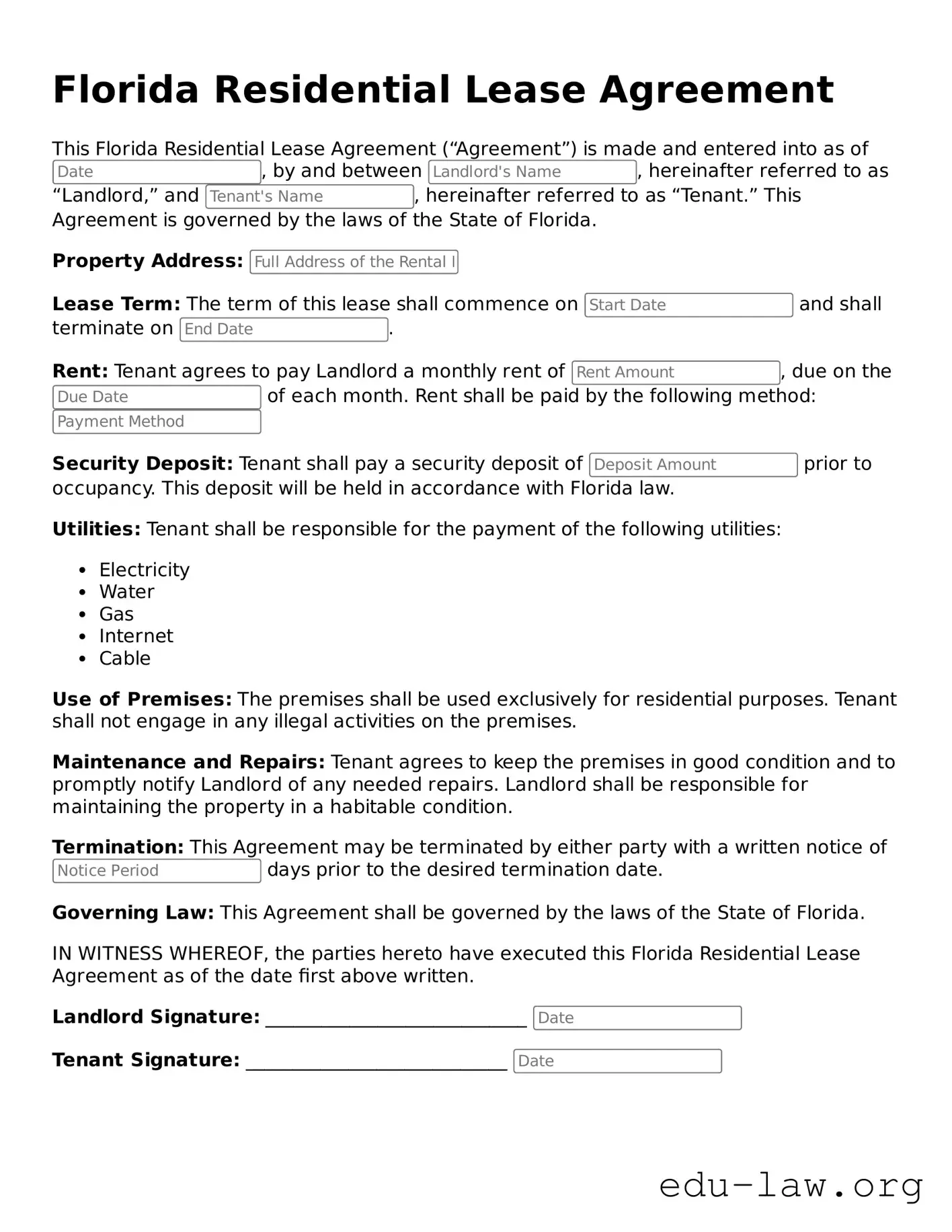
The Florida Residential Lease Agreement form serves as a crucial document in the rental process, outlining the rights and responsibilities of both landlords and tenants. This legally binding contract includes essential details such as the names of the parties involved, the property address, and the duration of the lease. It specifies the rental amount, payment due dates, and any security deposit requirements, ensuring that both parties understand their financial obligations. Additionally, the form addresses maintenance responsibilities, rules regarding pets, and policies on subletting, providing clarity on what is expected from each party. By detailing conditions for lease termination and renewal, the agreement helps to prevent disputes and fosters a smooth landlord-tenant relationship. Understanding the various components of this form is vital for anyone entering into a rental agreement in Florida, as it lays the groundwork for a secure and transparent living arrangement.
Florida Residential Lease Agreement
This Florida Residential Lease Agreement (“Agreement”) is made and entered into as of , by and between , hereinafter referred to as “Landlord,” and , hereinafter referred to as “Tenant.” This Agreement is governed by the laws of the State of Florida.
Property Address:
Lease Term: The term of this lease shall commence on and shall terminate on .
Rent: Tenant agrees to pay Landlord a monthly rent of , due on the of each month. Rent shall be paid by the following method:
Security Deposit: Tenant shall pay a security deposit of prior to occupancy. This deposit will be held in accordance with Florida law.
Utilities: Tenant shall be responsible for the payment of the following utilities:
Use of Premises: The premises shall be used exclusively for residential purposes. Tenant shall not engage in any illegal activities on the premises.
Maintenance and Repairs: Tenant agrees to keep the premises in good condition and to promptly notify Landlord of any needed repairs. Landlord shall be responsible for maintaining the property in a habitable condition.
Termination: This Agreement may be terminated by either party with a written notice of days prior to the desired termination date.
Governing Law: This Agreement shall be governed by the laws of the State of Florida.
IN WITNESS WHEREOF, the parties hereto have executed this Florida Residential Lease Agreement as of the date first above written.
Landlord Signature: ____________________________
Tenant Signature: ____________________________
| Fact Name | Description |
|---|---|
| Governing Law | The Florida Residential Lease Agreement is governed by the Florida Statutes, specifically Chapter 83, which covers residential tenancies. |
| Parties Involved | The agreement typically involves two parties: the landlord (lessor) and the tenant (lessee). |
| Lease Duration | The lease can be for a fixed term, such as one year, or on a month-to-month basis, depending on the agreement. |
| Rent Payment | The agreement specifies the amount of rent due, the payment method, and the due date each month. |
| Security Deposit | Florida law allows landlords to collect a security deposit, which is typically equal to one month's rent. |
| Maintenance Responsibilities | The lease outlines the responsibilities of both the landlord and tenant regarding property maintenance and repairs. |
| Termination Notice | Notice requirements for terminating the lease vary; a 15-day notice is required for month-to-month leases, while fixed-term leases may require different terms. |
| Late Fees | Landlords may charge late fees if rent is not paid on time, but these fees must be specified in the lease. |
| Pets Policy | The lease can include specific terms regarding pet ownership, including any restrictions or additional deposits required. |
| Dispute Resolution | The agreement may include clauses on how disputes will be resolved, such as mediation or arbitration, to avoid court intervention. |
Filling out the Florida Residential Lease Agreement form is a straightforward process. Follow these steps carefully to ensure that all necessary information is provided accurately.
After completing the form, both parties should keep a signed copy for their records. This ensures clarity and helps prevent disputes in the future.
What is a Florida Residential Lease Agreement?
A Florida Residential Lease Agreement is a legally binding contract between a landlord and tenant. This document outlines the terms and conditions under which a tenant can occupy a rental property. It typically includes details such as the rental amount, payment due dates, duration of the lease, and rules regarding the property. Having a written agreement helps protect the rights of both parties and ensures clarity in the rental relationship.
What essential terms should be included in the lease?
Key terms in a Florida Residential Lease Agreement should include the names of the parties involved, the property address, the lease term (start and end dates), the monthly rent amount, security deposit details, and maintenance responsibilities. Additionally, the agreement should specify any rules regarding pets, smoking, and alterations to the property. Clear terms help prevent misunderstandings and disputes later on.
How long is a typical lease agreement in Florida?
Lease agreements in Florida can vary in length, but they commonly range from six months to one year. Some landlords may offer month-to-month leases, which provide flexibility for tenants. It’s important to review the lease duration carefully, as breaking a lease early can lead to penalties or loss of the security deposit.
Can a landlord increase the rent during the lease term?
Generally, a landlord cannot increase the rent during the term of a lease unless the lease specifically allows for it. If the lease is month-to-month, the landlord may raise the rent by providing proper notice, typically 30 days in advance. Always check the lease terms for any clauses regarding rent increases.
What is a security deposit, and how is it handled?
A security deposit is a sum of money collected by the landlord to cover potential damages or unpaid rent. In Florida, the maximum amount a landlord can charge is typically one month’s rent. The landlord must hold the deposit in a separate account and return it within 15 days after the tenant moves out, minus any deductions for damages or unpaid rent. Clear documentation of the property’s condition can help avoid disputes over the security deposit.
What happens if either party wants to terminate the lease early?
If a tenant wishes to terminate the lease early, they should refer to the lease agreement for any early termination clauses. This may involve paying a fee or providing notice. For landlords, terminating a lease early usually requires a valid reason, such as non-payment of rent or breach of lease terms. Both parties should communicate openly to resolve any issues amicably.
Are there any specific laws that govern residential leases in Florida?
Yes, Florida has specific laws that govern residential leases, primarily outlined in the Florida Residential Landlord and Tenant Act. This law covers various aspects, including tenant rights, landlord responsibilities, and eviction procedures. It’s essential for both landlords and tenants to familiarize themselves with these laws to ensure compliance and protect their rights.
Incomplete Information: Many people forget to fill out all required fields. This includes the names of all tenants and the property address. Leaving out any details can lead to confusion later.
Incorrect Dates: Entering the wrong lease start and end dates is a common mistake. It’s crucial to double-check these dates to avoid any issues with tenancy.
Failure to Specify Rent Amount: Some individuals neglect to clearly state the monthly rent amount. This can create misunderstandings between landlords and tenants.
Ignoring Additional Terms: Not including any specific rules or conditions can lead to problems. It’s important to outline things like pet policies or maintenance responsibilities.
Missing Signatures: A common oversight is forgetting to sign the agreement. Both the landlord and tenant must sign for the lease to be valid.
When entering into a rental agreement in Florida, several additional forms and documents are commonly used alongside the Florida Residential Lease Agreement. These documents help clarify responsibilities, outline terms, and protect both landlords and tenants.
These documents play a crucial role in ensuring a smooth rental process. They help establish clear expectations and protect the rights of both parties involved in the lease agreement.
The Florida Residential Lease Agreement is similar to a Rental Agreement. Both documents outline the terms under which a tenant can occupy a property. They specify important details such as the rental amount, duration of the lease, and responsibilities of both the landlord and tenant. While a lease typically covers a longer period, a rental agreement may be used for shorter terms, often month-to-month. Both documents serve to protect the rights of both parties and ensure clarity in the rental relationship.
Another document similar to the Florida Residential Lease Agreement is the Commercial Lease Agreement. This type of lease is used for renting commercial properties, such as office spaces or retail locations. Like the residential lease, it includes terms regarding rent, duration, and responsibilities. However, commercial leases often involve more complex terms and negotiations, reflecting the different nature of business operations compared to residential living.
The Sublease Agreement is also comparable to the Florida Residential Lease Agreement. This document allows a tenant to rent out the property they are leasing to another person, known as the subtenant. The original tenant remains responsible to the landlord, while the sublease outlines the terms between the original tenant and the subtenant. Both agreements must comply with the original lease's terms, ensuring that the landlord’s rights are upheld.
Lastly, the Lease Addendum is another document that shares similarities with the Florida Residential Lease Agreement. An addendum is a supplementary document that modifies or adds specific terms to an existing lease. This can include changes in pet policies, maintenance responsibilities, or any other additional agreements made after the original lease was signed. Both documents work together to clarify the rental terms and ensure all parties are on the same page.
When filling out the Florida Residential Lease Agreement form, it's important to be thorough and careful. Here are some key dos and don'ts to keep in mind:
By following these guidelines, you can help ensure a smooth leasing experience in Florida.
Understanding the Florida Residential Lease Agreement form is essential for both landlords and tenants. However, several misconceptions can lead to confusion. Here are six common misconceptions:
Addressing these misconceptions can lead to better communication and a smoother rental experience for both landlords and tenants in Florida.
When filling out and using the Florida Residential Lease Agreement form, it is important to keep several key points in mind to ensure clarity and compliance. Below are essential takeaways that can guide you through the process.
By keeping these takeaways in mind, both landlords and tenants can navigate the lease agreement process more effectively, fostering a respectful and cooperative rental relationship.