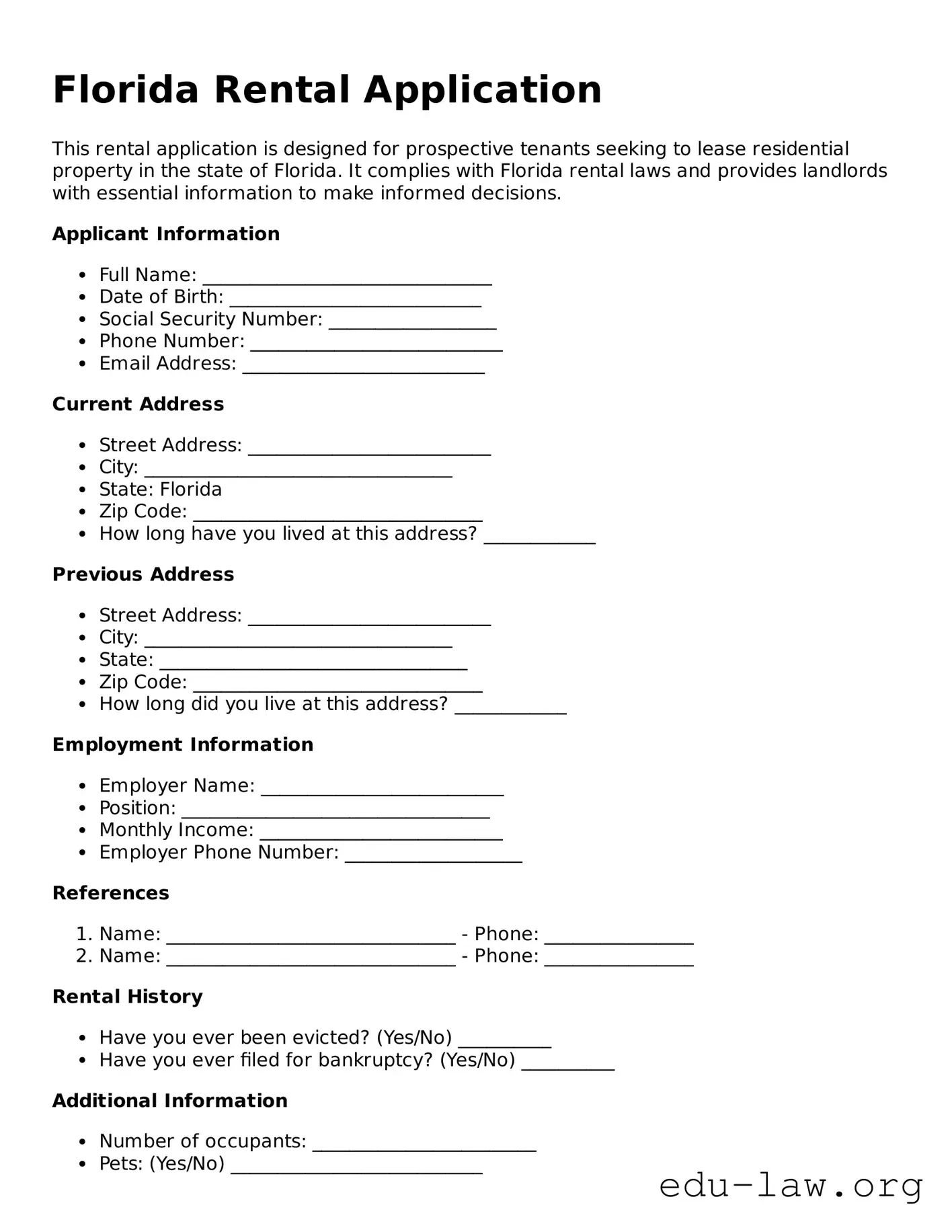
When seeking a rental property in Florida, prospective tenants often encounter the Florida Rental Application form, a crucial tool in the leasing process. This form serves multiple purposes, including collecting essential information about the applicant, verifying their background, and assessing their suitability as a tenant. Key components typically include personal details such as name, contact information, and social security number, which help landlords identify and communicate with potential renters. Additionally, the application may request employment history, income verification, and references to ensure the applicant has a stable financial background. Many landlords also incorporate consent for background checks, allowing them to review credit history and criminal records. By understanding the major aspects of the Florida Rental Application form, applicants can better prepare themselves for the rental process and enhance their chances of securing their desired home.
Florida Rental Application
This rental application is designed for prospective tenants seeking to lease residential property in the state of Florida. It complies with Florida rental laws and provides landlords with essential information to make informed decisions.
Applicant Information
Current Address
Previous Address
Employment Information
References
Rental History
Additional Information
Consent
By signing below, you authorize the landlord to conduct a background check and verify the information provided in this application.
Signature: ___________________________ Date: _______________
| Fact Name | Description |
|---|---|
| Purpose | The Florida Rental Application form is used by landlords to screen potential tenants. |
| Information Required | The form typically requires personal information, rental history, and employment details. |
| Application Fee | Landlords may charge an application fee to cover the cost of background checks. |
| Fair Housing Act | The application process must comply with the Fair Housing Act, prohibiting discrimination. |
| Background Checks | Landlords often conduct credit and criminal background checks based on the information provided. |
| Approval Time | Typically, landlords will notify applicants of their approval or denial within a few days. |
| Governing Law | The Florida Residential Landlord and Tenant Act governs rental applications in the state. |
Completing the Florida Rental Application form is an essential step in securing your rental property. Make sure to have all necessary information ready before you start. This will help streamline the process and ensure that your application is completed accurately.
After submitting your application, be prepared for a waiting period as the landlord or property manager reviews your information. They may contact you for further details or to schedule an interview.
What is a Florida Rental Application form?
The Florida Rental Application form is a document that potential tenants fill out when they want to rent a property in Florida. This form collects important information about the applicant, including personal details, employment history, rental history, and financial background. Landlords use this information to assess whether the applicant is a suitable tenant.
What information do I need to provide on the application?
You will typically need to provide your full name, contact information, Social Security number, and date of birth. Additionally, you may be asked for details about your current and previous addresses, employment information, income sources, and references. Some landlords may also request permission to conduct a background check.
Is there a fee to submit a rental application in Florida?
How long does it take to process a rental application?
The processing time for a rental application can vary depending on the landlord or property management company. Generally, it may take anywhere from a few hours to several days. If you have not heard back within a week, it’s a good idea to follow up to check on the status of your application.
What happens if my rental application is denied?
If your application is denied, the landlord is required to inform you of the decision and may provide a reason for the denial. Common reasons include insufficient income, poor credit history, or negative rental history. If you believe the denial was unjust, you can request a copy of your credit report or ask for clarification from the landlord.
Can I appeal a denied rental application?
Do I need to provide references on my rental application?
What should I do if I have a poor rental history?
If you have a poor rental history, it’s important to be honest on your application. You may also want to include a letter explaining any issues and how you have worked to resolve them. Providing evidence of steady employment and a reliable income can also help reassure landlords of your ability to pay rent consistently.
Is it legal for landlords to ask for my Social Security number on the application?
Incomplete Information: Many applicants fail to provide all necessary details. Missing sections can delay the application process or lead to rejection.
Incorrect Contact Information: Some people list outdated phone numbers or email addresses. This can hinder communication and may result in missed opportunities.
Failure to Disclose Rental History: Omitting previous addresses or landlords can raise red flags. Transparency is crucial for building trust with potential landlords.
Not Providing Proof of Income: Many applicants forget to include pay stubs or bank statements. Landlords often require this information to verify financial stability.
Neglecting to Sign the Application: Some individuals submit applications without a signature. An unsigned form is typically considered invalid.
Ignoring the Application Fee: Applicants sometimes overlook the requirement for a fee. Failing to pay this fee can result in immediate disqualification.
When renting a property in Florida, the rental application form is just one piece of the puzzle. Several other documents are commonly used to ensure a smooth leasing process. Understanding these forms can help both landlords and tenants navigate their responsibilities and rights effectively.
Having these documents in place can greatly enhance the renting experience for both landlords and tenants. Clear agreements and thorough checks help foster a respectful and professional relationship, ensuring that everyone understands their rights and obligations.
The Florida Rental Application form shares similarities with the standard lease agreement. Both documents serve as foundational elements in the landlord-tenant relationship. The lease agreement outlines the terms and conditions under which a tenant can occupy a property, including rent amount, duration of tenancy, and responsibilities of both parties. Like the rental application, the lease agreement requires personal information and may include background checks, ensuring that landlords have a clear understanding of who will be living in their property.
Another document closely related to the Florida Rental Application is the tenant screening report. This report is often generated after a rental application is submitted. It includes information such as credit history, rental history, and criminal background checks. Just as the rental application collects personal details, the tenant screening report provides landlords with a comprehensive view of a potential tenant's reliability and suitability for renting the property.
The move-in checklist is also comparable to the rental application. While the rental application assesses a tenant's qualifications, the move-in checklist documents the condition of the property at the time of occupancy. Both documents are crucial in protecting the interests of landlords and tenants. The checklist helps prevent disputes over property damage and maintenance issues, much like the application helps prevent issues with tenant reliability.
Next, the rental agreement addendum is another document that aligns with the rental application. An addendum modifies or adds to the original lease agreement and may include specific rules or conditions that tenants must follow. Just as the rental application collects important information about the tenant, the addendum can stipulate additional requirements based on that information, ensuring that both parties have a clear understanding of their obligations.
The eviction notice is another document that bears similarities to the Florida Rental Application. Although its purpose is different, both documents reflect the ongoing relationship between landlords and tenants. The eviction notice outlines the reasons for eviction and the steps the tenant must take to resolve the issue. Like the rental application, it relies on accurate information and clear communication to ensure that both parties understand their rights and responsibilities.
Finally, the security deposit receipt is akin to the rental application in that it establishes a financial agreement between the landlord and tenant. The rental application may include details about the security deposit, such as the amount and purpose. The security deposit receipt formalizes this arrangement, providing proof of payment and outlining the conditions under which the deposit may be withheld. Both documents play a crucial role in fostering transparency and trust in the rental process.
When filling out the Florida Rental Application form, it's important to follow certain guidelines. Here’s a list of things you should and shouldn’t do:
When it comes to renting a property in Florida, many people have misunderstandings about the rental application process. Here are six common misconceptions about the Florida Rental Application form:
Many believe that rental applications are standardized across all properties. In reality, each landlord or property management company may have their own specific requirements and forms. It's essential to review the application carefully to understand what information is needed.
Some applicants think that providing just their name and contact details is sufficient. However, most applications require additional information, such as employment history, income verification, and references. This helps landlords assess the applicant's ability to pay rent.
Many people assume that landlords may choose whether to conduct a background check. In fact, most landlords do perform background checks as part of their screening process. This helps them ensure the safety and reliability of their tenants.
Some applicants mistakenly believe that simply submitting a rental application will lead to approval. Approval depends on various factors, including credit history, rental history, and the landlord's criteria. Each application is evaluated individually.
Many applicants are surprised to learn that there may be fees involved in the application process. Landlords often charge an application fee to cover the cost of background checks and processing. It’s important to ask about any potential fees upfront.
Some individuals think that once they submit their application, they cannot make any changes. While it’s best to provide accurate information initially, applicants can often update their application if they realize they made a mistake. Communication with the landlord is key.
Understanding these misconceptions can help streamline the rental application process and improve the chances of securing a rental property in Florida.
Filling out the Florida Rental Application form is an important step in securing a rental property. Here are some key takeaways to consider:
Understanding these points can help you navigate the application process more effectively and increase your chances of securing a rental property in Florida.