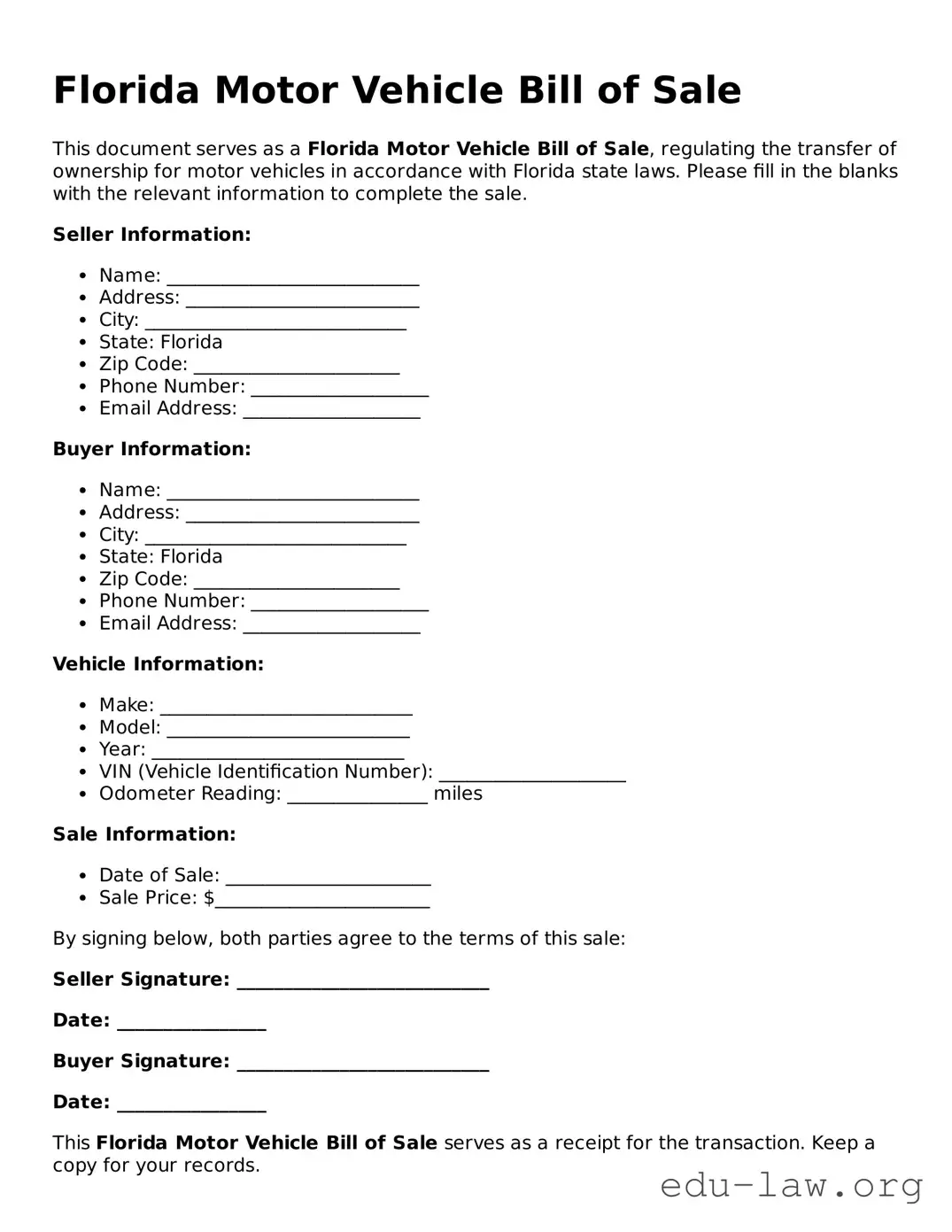
When it comes to buying or selling a vehicle in Florida, having the right paperwork is crucial to ensure a smooth transaction and protect the interests of both parties involved. Among these essential documents, the Florida Motor Vehicle Bill of Sale form stands out as a vital record that signifies the transfer of ownership from the seller to the buyer. This simple yet powerful form includes key details such as the vehicle identification number (VIN), make, model, year, and the agreed-upon sale price, making it a clear and concise record of the transaction. Additionally, it provides space for both the seller's and buyer's names and addresses, allowing for easy verification if necessary. Importantly, the form also includes a section for signatures, solidifying the agreement and providing legal backing should any disputes arise in the future. Overall, the Motor Vehicle Bill of Sale is not just a piece of paper; it’s a safeguard ensuring transparency and clarity, while also fulfilling the state's requirements in vehicle ownership transfers.
Florida Motor Vehicle Bill of Sale
This document serves as a Florida Motor Vehicle Bill of Sale, regulating the transfer of ownership for motor vehicles in accordance with Florida state laws. Please fill in the blanks with the relevant information to complete the sale.
Seller Information:
Buyer Information:
Vehicle Information:
Sale Information:
By signing below, both parties agree to the terms of this sale:
Seller Signature: ___________________________
Date: ________________
Buyer Signature: ___________________________
Date: ________________
This Florida Motor Vehicle Bill of Sale serves as a receipt for the transaction. Keep a copy for your records.
| Fact Name | Description |
|---|---|
| Definition | The Florida Motor Vehicle Bill of Sale is a legal document that records the transfer of ownership of a motor vehicle from one party to another. |
| Governing Laws | Florida Statutes Section 319.22 governs the transfer of ownership and the requirements for a Bill of Sale in Florida. |
| Required Information | The form must include details such as the names and addresses of both the buyer and the seller, the vehicle identification number (VIN), and a description of the vehicle. |
| Signature Requirement | Both the seller and buyer must sign the Bill of Sale to validate the transaction and ensure proper transfer of title. |
| Use of the Document | This document is typically needed when registering a vehicle with the Florida Department of Highway Safety and Motor Vehicles (DHSMV). |
| Sales Tax Implication | The seller may be obligated to collect sales tax on the sale price at the time of the transaction, depending on local laws. |
| Notarization | The Bill of Sale does not require notarization in Florida, but having it notarized can provide an extra layer of protection. |
| Storage and Copies | Both parties should retain a copy of the Bill of Sale for their records, as it serves as proof of the transaction. |
After acquiring the Florida Motor Vehicle Bill of Sale form, you'll need to fill it out accurately. This document will serve as proof of the transaction and is essential for registering the vehicle under your name. Follow these steps to complete the form correctly:
Once the form is completed, both parties should retain a copy for their records. This document will facilitate the transfer of ownership and is essential for the vehicle registration process.
What is a Florida Motor Vehicle Bill of Sale form?
The Florida Motor Vehicle Bill of Sale is a legal document used to record the sale of a motor vehicle. This form captures essential information about the buyer, seller, and the vehicle being sold. It serves as proof of the transaction and may be used for title transfer and registration purposes.
What information is required on the Bill of Sale?
The Bill of Sale must include the names and addresses of both the buyer and seller, the date of the sale, the purchase price, and a description of the vehicle. This description typically includes the make, model, year, Vehicle Identification Number (VIN), and odometer reading at the time of sale.
Is the Bill of Sale required to register a vehicle in Florida?
A Bill of Sale is not strictly required for every vehicle registration in Florida. However, it is highly recommended, especially for used vehicle transactions. The Bill of Sale can help establish proof of ownership and facilitate the title transfer process when registering the vehicle with the DMV.
Can I create my own Bill of Sale for a vehicle in Florida?
Yes, you can create your own Bill of Sale as long as it contains all necessary information about the transaction. However, using a standardized form may help ensure that you include all required details and comply with state laws. Pre-made forms are available through various online and local resources.
Do I need to have the Bill of Sale notarized?
Notarization of the Bill of Sale is not required in Florida. However, having it notarized adds an extra layer of authenticity to the document. It may provide both parties with additional peace of mind regarding the transaction.
What should I do with the Bill of Sale after the transaction?
After the transaction is completed, both the buyer and seller should keep a copy of the Bill of Sale for their records. The buyer may need the document for vehicle registration and title transfer, while the seller should keep a record to verify the sale. Both parties should store their copies securely.
Incorrect Vehicle Information: Many people do not provide the correct details about the vehicle. This includes the make, model, year, and Vehicle Identification Number (VIN). Double-checking this information is important, as inaccuracies can lead to issues with registration.
Missing Signatures: Both the seller and the buyer must sign the form. Failing to obtain signatures from both parties can render the document invalid. It is crucial to ensure all required parties have signed.
Omitting the Purchase Price: Some individuals forget to include the purchase price. This is an important detail that must be stated to avoid complications with taxes and registration.
Not Notarizing the Document: While notarization is not always required, it can add an extra layer of verification. Some people overlook this step. A notarized document may help prevent disputes in the future.
When engaging in the purchase or sale of a motor vehicle in Florida, it is essential to accompany the Florida Motor Vehicle Bill of Sale form with several other important documents. These documents ensure a smoother transaction and help protect the interests of both the buyer and the seller. Below are a few key forms commonly used alongside the Bill of Sale.
Having these documents prepared and in order can facilitate a smooth and efficient transfer of ownership. Whether you are buying or selling, understanding these essential forms will lead to a more transparent and secure transaction process.
The Florida Motor Vehicle Bill of Sale form shares similarities with the General Bill of Sale, which is used for various types of goods. Both documents serve as proof of transfer of ownership from one party to another. The General Bill of Sale includes details such as the buyer and seller's names, description of the item being sold, and the sale price. While the General Bill of Sale can apply to different items, the Motor Vehicle Bill of Sale is specifically tailored to vehicles, making it distinct in its requirements and terminology.
Another document akin to the Florida Motor Vehicle Bill of Sale is the Vehicle Title. While the Bill of Sale documents the transaction, the Vehicle Title serves as the official record of ownership. Parties involved in a sale will need to complete both documents for proper transfer of ownership. The Vehicle Title may contain more detailed information regarding prior ownership, vehicle identification numbers, and liens, whereas the Bill of Sale focuses primarily on the transaction itself.
The DMV Release of Liability form also bears resemblance to the Bill of Sale. This document notifies the Department of Motor Vehicles when a vehicle changes ownership. Both documents help protect the seller from future liabilities related to the vehicle, such as traffic violations or accidents that may occur after the sale. Unlike the Bill of Sale, the Release of Liability is not a proof of transaction but a notification to the government agency that records vehicle ownership.
Similarly, the Odometer Disclosure Statement is related to the Florida Motor Vehicle Bill of Sale. This document records the vehicle’s mileage at the time of the sale, serving to prevent fraud. Federal and state laws require this statement when transferring ownership, making it an essential part of the process alongside the Bill of Sale. While the Bill of Sale details the agreement between the parties, the Odometer Disclosure Statement focuses specifically on the odometer reading to ensure transparency during the sale.
The Sales Agreement form is another document that resembles the Motor Vehicle Bill of Sale. This kind of agreement outlines the terms and conditions of the sale, including payment terms and responsibilities of each party. While a Sales Agreement can be much more detailed and applicable in various transactions, it often includes elements found in the Bill of Sale, such as identification of the vehicle and signatures from both parties. The Bill of Sale is usually a simpler document focusing solely on the acknowledgment of sale.
The Affidavit of Heirship can be drawn in connection with a Motor Vehicle Bill of Sale when a vehicle is inherited. This legal document establishes the rightful heir to the vehicle after the original owner’s death. Like the Bill of Sale, the Affidavit serves to transfer ownership but does so without a traditional sale. It provides legal clarity regarding the transfer of the vehicle from the deceased owner to the heir and may be required when registering the vehicle in the heir's name.
Lastly, the Title Application is important in conjunction with the Motor Vehicle Bill of Sale. This application is submitted to the DMV when a vehicle’s title is to be issued or transferred after sale. The Title Application requires information found in the Bill of Sale, including buyer and seller details along with vehicle specifics. While the Bill of Sale is a record of the transaction, the Title Application is the necessary form used for formalizing ownership at the motor vehicle authority.
When filling out the Florida Motor Vehicle Bill of Sale form, it's important to be mindful of several key considerations. Adhering to best practices can make the process smoother and help prevent future complications. Below is a list of things you should and shouldn't do when completing this form.
Following these guidelines can help ensure that the Bill of Sale is both legally binding and useful for future reference or resale of the vehicle. Attention to detail is crucial in these transactions.
When it comes to the Florida Motor Vehicle Bill of Sale form, several misconceptions can lead to confusion. Understanding what the form actually entails is essential for all parties involved. Here are five common misconceptions about this important document:
By debunking these misconceptions, individuals can better navigate the process of buying and selling vehicles in Florida, ensuring all legal requirements are met and protecting their interests.
The Florida Motor Vehicle Bill of Sale form is an essential document when buying or selling a vehicle in the state of Florida. Here are some key takeaways to keep in mind:
Free Michigan Bill of Sale Template - Encourages ethical dealings and trust between buyers and sellers.
Ga Dmv Bill of Sale - Aids in preventing disputes over the sale details later on.