In the vibrant landscape of Florida's real estate and financial transactions, the Loan Agreement form plays a pivotal role in establishing clear terms between lenders and borrowers. This essential document outlines the specific details of the loan, including the principal amount, interest rate, repayment schedule, and any collateral involved. By clearly defining the responsibilities of both parties, the form helps to prevent misunderstandings and disputes down the line. Additionally, it often includes provisions for late fees, default consequences, and other critical terms that ensure both parties are protected throughout the loan process. Understanding this form is crucial for anyone looking to navigate the complexities of borrowing or lending in Florida, as it serves as the foundation for a legally binding agreement that can significantly impact financial futures.
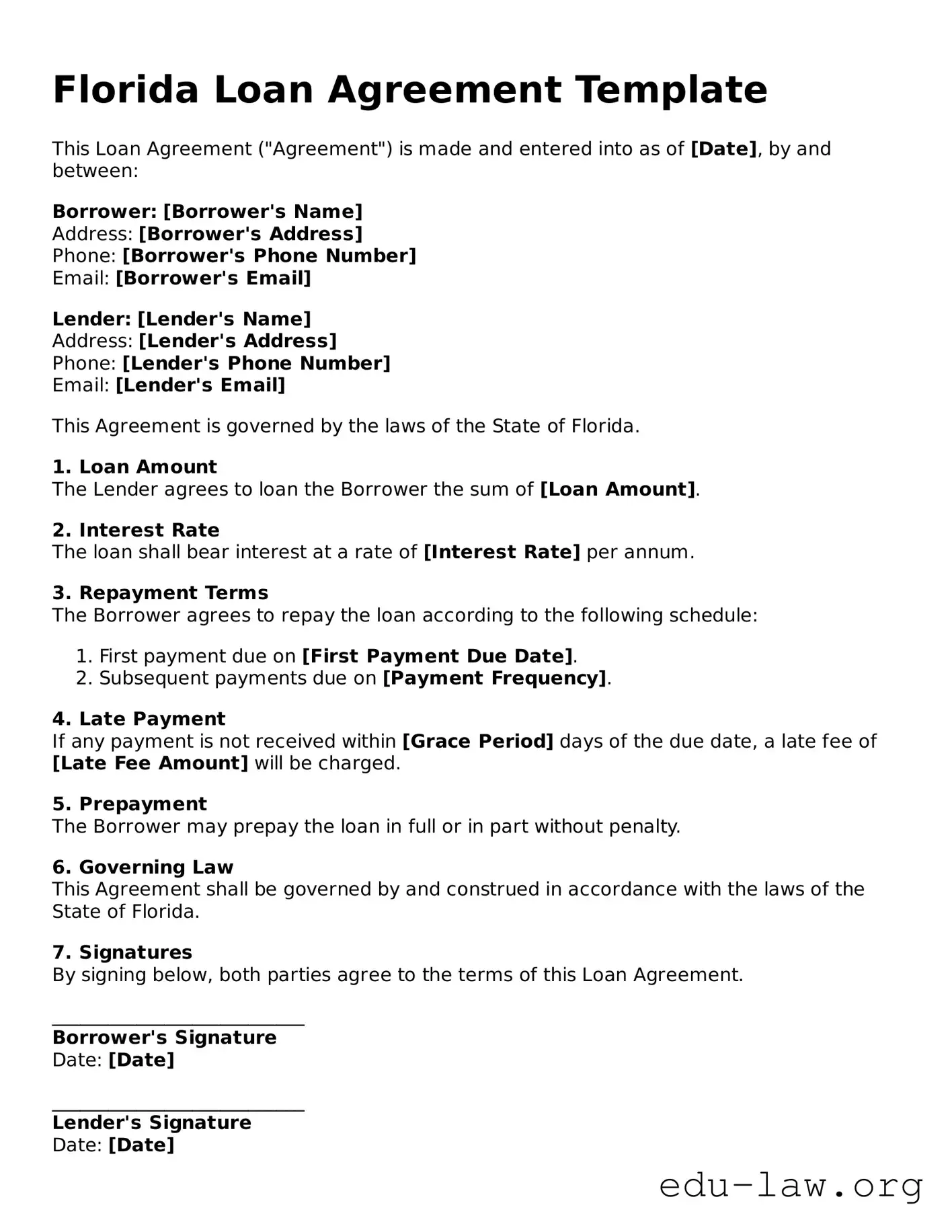
Florida Loan Agreement Template
This Loan Agreement ("Agreement") is made and entered into as of [Date], by and between:
Borrower: [Borrower's Name]
Address: [Borrower's Address]
Phone: [Borrower's Phone Number]
Email: [Borrower's Email]
Lender: [Lender's Name]
Address: [Lender's Address]
Phone: [Lender's Phone Number]
Email: [Lender's Email]
This Agreement is governed by the laws of the State of Florida.
1. Loan Amount
The Lender agrees to loan the Borrower the sum of [Loan Amount].
2. Interest Rate
The loan shall bear interest at a rate of [Interest Rate] per annum.
3. Repayment Terms
The Borrower agrees to repay the loan according to the following schedule:
4. Late Payment
If any payment is not received within [Grace Period] days of the due date, a late fee of [Late Fee Amount] will be charged.
5. Prepayment
The Borrower may prepay the loan in full or in part without penalty.
6. Governing Law
This Agreement shall be governed by and construed in accordance with the laws of the State of Florida.
7. Signatures
By signing below, both parties agree to the terms of this Loan Agreement.
___________________________
Borrower's Signature
Date: [Date]
___________________________
Lender's Signature
Date: [Date]
| Fact Name | Description |
|---|---|
| Purpose | The Florida Loan Agreement form is used to outline the terms and conditions of a loan between a lender and a borrower. |
| Governing Law | This agreement is governed by the laws of the State of Florida, specifically under Florida Statutes Chapter 687. |
| Parties Involved | The form requires the identification of both the lender and the borrower, including their legal names and contact information. |
| Loan Terms | Key terms such as the loan amount, interest rate, repayment schedule, and any fees must be clearly stated in the agreement. |
| Signatures | Both parties must sign the agreement to validate it, indicating their acceptance of the terms laid out in the document. |
Completing the Florida Loan Agreement form is essential for formalizing the terms of a loan. Follow these steps carefully to ensure all necessary information is accurately provided.
Once the form is filled out, review it for accuracy and completeness before signing. This will help prevent any misunderstandings in the future.
What is a Florida Loan Agreement form?
A Florida Loan Agreement form is a legal document that outlines the terms and conditions of a loan between a lender and a borrower in the state of Florida. It details the amount of money being borrowed, the interest rate, repayment schedule, and any collateral involved. This form serves to protect both parties by clearly stating their rights and responsibilities.
Who needs a Florida Loan Agreement form?
Anyone who is lending or borrowing money in Florida should consider using a Loan Agreement form. This includes individuals, businesses, or organizations. Having a formal agreement helps to prevent misunderstandings and provides legal protection in case of disputes.
What are the key components of a Florida Loan Agreement?
A typical Florida Loan Agreement includes several important components. These are the names and addresses of the lender and borrower, the loan amount, the interest rate, the repayment terms, and any collateral. Additionally, it may outline the consequences of defaulting on the loan and any fees associated with late payments.
Is a Florida Loan Agreement form legally binding?
Yes, a properly executed Florida Loan Agreement form is legally binding. Both parties must sign the document for it to be enforceable. It is advisable to have the agreement notarized to add an extra layer of authenticity and protection.
Can a Florida Loan Agreement be modified after it is signed?
Yes, a Florida Loan Agreement can be modified, but both parties must agree to the changes. It is best to document any modifications in writing and have both parties sign the updated agreement to avoid confusion later on.
What should I do if a borrower defaults on the loan?
If a borrower defaults on the loan, the lender should first review the terms of the Loan Agreement to understand their options. Depending on the agreement, the lender may have the right to pursue legal action or seek repayment through other means. It is often recommended to consult with a legal professional to determine the best course of action.
Failing to provide accurate personal information. Ensure that names, addresses, and Social Security numbers are correct. Small errors can lead to significant delays.
Not including all required signatures. Every party involved must sign the agreement. Missing signatures can render the document invalid.
Overlooking the loan terms. Carefully review the interest rates, repayment schedules, and any fees. Understanding these terms is crucial for financial planning.
Ignoring the disclosure statements. These documents provide essential information about the loan. Failing to read them can lead to unexpected obligations.
Submitting the form without a copy. Always keep a copy of the completed agreement for your records. This can be vital for future reference or disputes.
When entering into a loan agreement in Florida, several other forms and documents may be necessary to ensure a smooth and legally sound transaction. Understanding these documents can help both lenders and borrowers navigate the process with greater ease and confidence.
Familiarity with these documents can enhance your understanding of the loan process. By ensuring that all necessary paperwork is in order, both lenders and borrowers can foster a positive and transparent lending experience.
The Florida Loan Agreement form shares similarities with a Promissory Note, which is a written promise to pay a specified amount of money to a designated person or entity. Like the Loan Agreement, a Promissory Note outlines the terms of the loan, including the interest rate, repayment schedule, and any penalties for late payments. Both documents serve to protect the lender’s rights while clearly stating the borrower’s obligations, making them essential for formalizing the lending process.
Another document akin to the Florida Loan Agreement is a Mortgage Agreement. This legal document secures a loan by using the property as collateral. While the Loan Agreement details the terms of the loan, the Mortgage Agreement focuses on the security aspect. Both documents are crucial in real estate transactions, ensuring that lenders have recourse if borrowers default on their loans.
A Credit Agreement is also similar, as it establishes the terms under which credit is extended to a borrower. This document may cover various types of loans, including personal loans and business lines of credit. Like the Florida Loan Agreement, it specifies the loan amount, interest rates, and repayment terms, providing a clear framework for both parties involved.
The Loan Application form shares a connection with the Florida Loan Agreement as well. While the Loan Agreement finalizes the terms of the loan, the Loan Application is the initial step where the borrower requests funds. It collects essential information about the borrower’s financial status and creditworthiness, which ultimately influences the terms outlined in the Loan Agreement.
A Secured Loan Agreement is another document that resembles the Florida Loan Agreement. This type of agreement involves a loan backed by collateral, similar to a Mortgage Agreement. It specifies the collateral involved and outlines the terms of the loan. Both agreements protect the lender’s interests and ensure that borrowers understand their responsibilities in case of default.
The Installment Loan Agreement is also comparable, as it outlines a loan that is repaid in regular installments over a specified period. Similar to the Florida Loan Agreement, it details the repayment schedule, interest rates, and any fees associated with late payments. This structure helps borrowers manage their finances by breaking down the total loan amount into manageable payments.
A Business Loan Agreement is another document that mirrors the Florida Loan Agreement, particularly in the context of commercial lending. This agreement defines the terms under which a business can borrow funds, including the loan amount, interest rate, and repayment terms. Both agreements aim to protect the lender while providing clarity to the borrower regarding their obligations.
Finally, a Personal Loan Agreement can be seen as a close relative to the Florida Loan Agreement. This document is used for loans between individuals, often without the formalities of a financial institution. It outlines the loan amount, repayment terms, and any interest charged, similar to the Loan Agreement. Both documents serve to establish a clear understanding between the lender and borrower, reducing the potential for disputes.
When filling out the Florida Loan Agreement form, it is essential to follow certain guidelines to ensure accuracy and compliance. Here is a list of things to do and avoid:
Following these guidelines can help prevent misunderstandings and ensure that the loan process proceeds smoothly.
When it comes to the Florida Loan Agreement form, several misconceptions can lead to confusion. Here are eight common myths and the truths behind them:
Understanding these misconceptions can help you navigate the loan process more effectively. Always take the time to read and comprehend your loan agreement fully.
When filling out and using the Florida Loan Agreement form, it’s important to keep several key points in mind. Here are some essential takeaways:
By keeping these points in mind, both lenders and borrowers can ensure a smoother loan process and reduce the likelihood of disputes.