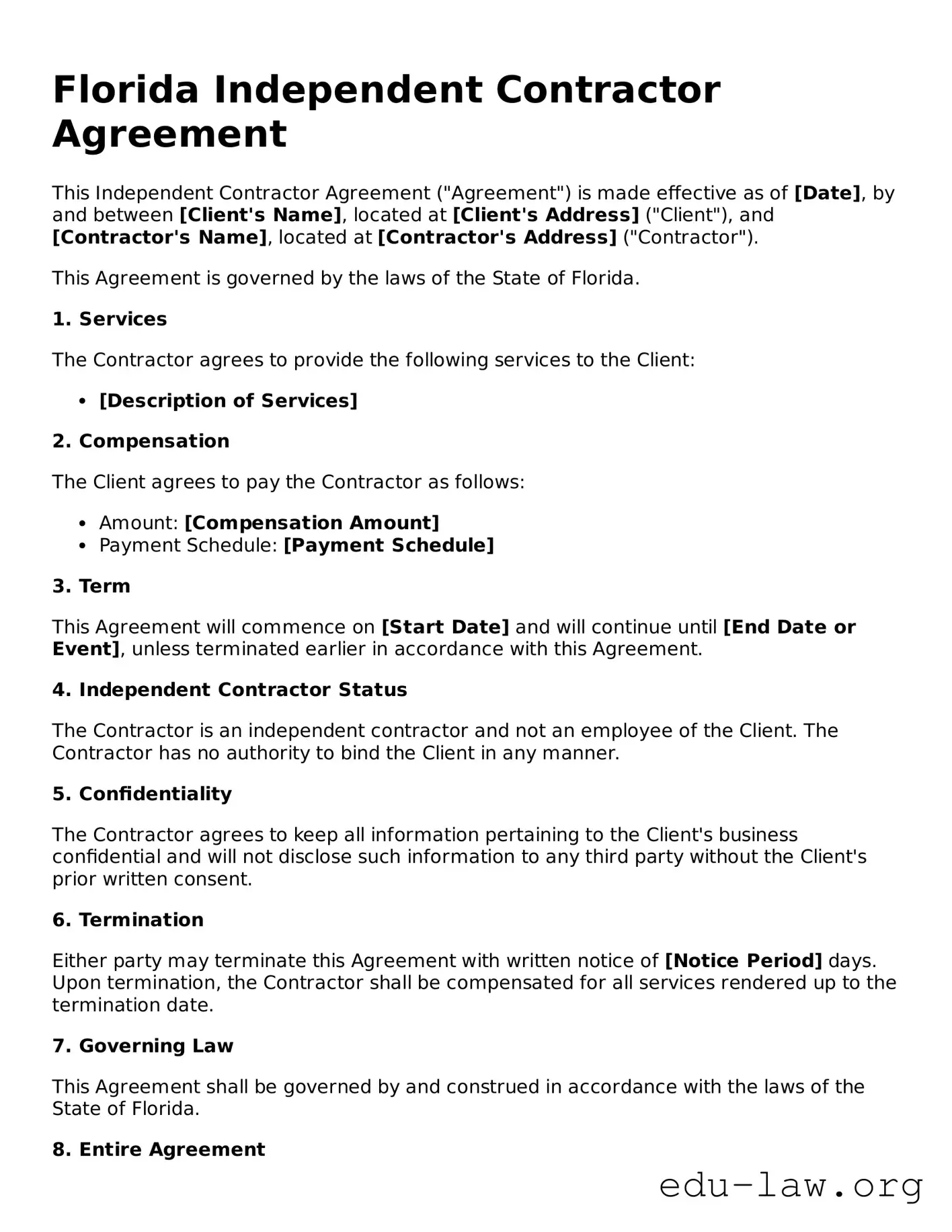
When engaging an independent contractor in Florida, it’s essential to have a clear and comprehensive agreement in place. The Florida Independent Contractor Agreement form serves as a vital tool for both parties, outlining the nature of the work, payment terms, and the expectations involved. This document typically includes key elements such as the scope of services to be provided, deadlines for deliverables, and confidentiality provisions to protect sensitive information. Additionally, it addresses the relationship between the contractor and the hiring party, clarifying that the contractor is not an employee, which has significant implications for tax and liability issues. By detailing the rights and responsibilities of each party, this agreement helps prevent misunderstandings and disputes down the line, ensuring a smoother working relationship. Understanding the nuances of this form can empower both contractors and businesses to navigate their professional engagements with confidence and clarity.
Florida Independent Contractor Agreement
This Independent Contractor Agreement ("Agreement") is made effective as of [Date], by and between [Client's Name], located at [Client's Address] ("Client"), and [Contractor's Name], located at [Contractor's Address] ("Contractor").
This Agreement is governed by the laws of the State of Florida.
1. Services
The Contractor agrees to provide the following services to the Client:
2. Compensation
The Client agrees to pay the Contractor as follows:
3. Term
This Agreement will commence on [Start Date] and will continue until [End Date or Event], unless terminated earlier in accordance with this Agreement.
4. Independent Contractor Status
The Contractor is an independent contractor and not an employee of the Client. The Contractor has no authority to bind the Client in any manner.
5. Confidentiality
The Contractor agrees to keep all information pertaining to the Client's business confidential and will not disclose such information to any third party without the Client's prior written consent.
6. Termination
Either party may terminate this Agreement with written notice of [Notice Period] days. Upon termination, the Contractor shall be compensated for all services rendered up to the termination date.
7. Governing Law
This Agreement shall be governed by and construed in accordance with the laws of the State of Florida.
8. Entire Agreement
This Agreement constitutes the entire agreement between the parties and supersedes all prior agreements and understandings, whether written or oral.
IN WITNESS WHEREOF, the parties have executed this Independent Contractor Agreement as of the date first above written.
Client Signature: ____________________________ Date: ________________
Contractor Signature: ________________________ Date: ________________
| Fact Name | Details |
|---|---|
| Definition | A Florida Independent Contractor Agreement outlines the terms of the relationship between a contractor and a client. |
| Purpose | This agreement clarifies the expectations, responsibilities, and compensation for the services provided. |
| Governing Law | The agreement is governed by the laws of the State of Florida. |
| Classification | It is crucial to properly classify the worker as an independent contractor to avoid misclassification issues. |
| Essential Elements | Key components include scope of work, payment terms, and duration of the agreement. |
| Tax Implications | Independent contractors are responsible for their own taxes, unlike employees. |
| Termination Clause | The agreement should include terms under which either party can terminate the contract. |
| Confidentiality | Including a confidentiality clause protects sensitive information shared during the contract. |
| Dispute Resolution | It is advisable to outline a process for resolving disputes, such as mediation or arbitration. |
| Signatures | Both parties must sign the agreement to make it legally binding. |
Once you have the Florida Independent Contractor Agreement form in hand, you are ready to complete it. This form is essential for outlining the terms of the working relationship between a contractor and a client. Carefully filling it out ensures that both parties are clear on their responsibilities and expectations.
What is a Florida Independent Contractor Agreement?
A Florida Independent Contractor Agreement is a legal document that outlines the relationship between a business and an independent contractor. It details the terms of the work to be performed, payment arrangements, and the rights and responsibilities of both parties. This agreement helps clarify expectations and protect both the contractor and the business.
Why should I use an Independent Contractor Agreement?
Using an Independent Contractor Agreement is important for several reasons. It sets clear expectations about the work to be done, payment terms, and deadlines. This document also helps protect your business from potential legal disputes by ensuring both parties understand their rights and obligations. Additionally, it can provide clarity on issues like confidentiality and ownership of work products.
What should be included in the agreement?
An Independent Contractor Agreement should include key details such as the scope of work, payment terms, deadlines, and any specific obligations of both parties. It should also address issues like confidentiality, intellectual property rights, and termination conditions. Ensuring these elements are clearly defined can prevent misunderstandings later on.
How does the payment structure work in this agreement?
The payment structure in an Independent Contractor Agreement can vary based on the nature of the work. It may include hourly rates, flat fees, or milestone payments. It’s crucial to specify how and when payments will be made, whether upon completion of work, on a regular schedule, or after certain milestones are achieved.
Can I terminate the agreement early?
Yes, you can terminate the agreement early, but it’s important to include termination clauses in the contract. These clauses should outline the conditions under which either party can end the agreement, notice periods required, and any consequences of early termination. Having this information in writing helps avoid confusion and potential disputes.
What happens if there is a dispute?
If a dispute arises, the Independent Contractor Agreement should outline the process for resolving it. This may include mediation or arbitration before taking legal action. Having a clear dispute resolution process can save time and money and help maintain a professional relationship between both parties.
Is it necessary to have a lawyer review the agreement?
While it’s not legally required to have a lawyer review the agreement, it’s highly recommended. A legal professional can ensure that the agreement complies with Florida laws and adequately protects your interests. This step can help prevent issues down the road and provide peace of mind.
Can the agreement be modified after it is signed?
Yes, the agreement can be modified after it is signed, but any changes should be documented in writing and signed by both parties. Verbal agreements are often difficult to enforce, so it’s best to keep all modifications formal. This practice helps maintain clarity and accountability.
How long does the agreement last?
The duration of the agreement can vary based on the terms set within it. Some agreements may be for a specific project, while others could last for a set period or until terminated by either party. It’s essential to specify the duration in the agreement to avoid any confusion about the timeline of the work.
Not Clearly Defining the Scope of Work: One common mistake is failing to specify the exact services the contractor will provide. Vague descriptions can lead to misunderstandings and disputes later on.
Ignoring Payment Terms: Some individuals overlook the importance of detailing payment terms. This includes the amount, frequency, and method of payment. Clear terms help prevent payment-related conflicts.
Neglecting to Include Deadlines: It’s crucial to set deadlines for deliverables. Without clear timelines, projects can stall, leading to frustration for both parties.
Failing to Address Termination Clauses: Many people forget to include conditions under which either party can terminate the agreement. This omission can create complications if the working relationship needs to end.
Overlooking Insurance and Liability Provisions: Not discussing insurance requirements can be a significant error. It’s important to clarify who is responsible for liability and whether the contractor needs to carry insurance.
Not Consulting Legal Advice: Finally, some individuals fill out the form without seeking legal counsel. Consulting with a lawyer can provide valuable insights and ensure that the agreement complies with Florida laws.
The Florida Independent Contractor Agreement is a crucial document that outlines the terms of engagement between a business and an independent contractor. However, it is often accompanied by other forms and documents that help clarify the relationship and protect the interests of both parties. Below are five commonly used forms that complement the Independent Contractor Agreement.
Each of these documents plays a vital role in establishing a clear and professional relationship between a business and an independent contractor. By utilizing them, both parties can ensure that their rights and responsibilities are well-defined, reducing the potential for misunderstandings and disputes.
The Florida Independent Contractor Agreement is similar to the Employment Agreement, which outlines the relationship between an employer and an employee. While the Employment Agreement typically includes benefits, job responsibilities, and other employment terms, the Independent Contractor Agreement focuses on the terms of service provided by the contractor. This document defines the scope of work, payment terms, and project deadlines, ensuring clarity in the contractor's role without establishing an employer-employee relationship.
Another document that shares similarities is the Consulting Agreement. This agreement is often used when a business seeks expert advice or specialized services. Like the Independent Contractor Agreement, it details the nature of the work to be performed, compensation, and confidentiality clauses. Both documents aim to protect the interests of both parties while clarifying expectations and deliverables.
The Service Agreement is also comparable. This document outlines the terms under which one party provides services to another. Similar to the Independent Contractor Agreement, it specifies the services to be rendered, payment structure, and duration of the agreement. It ensures that both parties are on the same page regarding the expectations and obligations involved in the service relationship.
A Freelance Agreement is another document that resembles the Independent Contractor Agreement. Freelancers often operate similarly to independent contractors, providing specific services without long-term commitments. The Freelance Agreement typically includes details about the project scope, payment terms, and deadlines, mirroring the structure and purpose of the Independent Contractor Agreement.
The Non-Disclosure Agreement (NDA) can also be seen as related. While it focuses primarily on confidentiality, it is often included alongside Independent Contractor Agreements to protect sensitive information shared during the course of work. Both documents work together to establish trust and protect intellectual property, ensuring that proprietary information remains confidential.
Additionally, the Partnership Agreement shares some similarities, especially in situations where independent contractors collaborate on a project. This document defines the terms of the partnership, including profit-sharing and responsibilities. While it typically pertains to a more formal partnership, aspects of it can overlap with the Independent Contractor Agreement when contractors work together towards a common goal.
The Letter of Agreement is another document that aligns closely with the Independent Contractor Agreement. This informal agreement outlines the basic terms of a working relationship, including services to be provided and compensation. While it may not have the same level of detail as an Independent Contractor Agreement, it serves a similar purpose in establishing expectations and responsibilities.
The Work for Hire Agreement also bears resemblance. This document is often used when a contractor creates work that the hiring party will own. It specifies that the contractor relinquishes rights to the work upon completion, similar to how an Independent Contractor Agreement defines ownership and usage rights of the services rendered.
Lastly, the Commission Agreement is relevant, especially for independent contractors working on a commission basis. This document outlines the terms under which a contractor earns commission for services rendered. Like the Independent Contractor Agreement, it details the scope of work, payment structure, and conditions that must be met, ensuring both parties understand their obligations and entitlements.
When filling out the Florida Independent Contractor Agreement form, it's important to approach the task with care. Here are nine essential do's and don'ts to keep in mind:
By following these guidelines, you can ensure that your Independent Contractor Agreement is filled out correctly and serves its intended purpose effectively.
Understanding the Florida Independent Contractor Agreement form is essential for both contractors and hiring parties. However, several misconceptions can lead to confusion. Here are five common misunderstandings:
Many believe that independent contractors receive no benefits whatsoever. While it is true that they do not receive traditional employee benefits, some contractors negotiate their own benefits, such as health insurance or retirement plans, with the hiring party.
While most independent contractors operate as self-employed individuals, some may work under a business entity, such as a corporation or LLC. This distinction can affect taxes and liability.
Some people think that these agreements hold no legal weight. In reality, a well-drafted independent contractor agreement is a binding contract that can be enforced in court, provided it meets the necessary legal requirements.
This misconception suggests that once hired, independent contractors have job security. However, contracts often include termination clauses that allow either party to end the agreement under specific conditions.
Some individuals believe that independent contractors can avoid tax reporting. In fact, independent contractors must report their income and may need to pay self-employment taxes, just like any other business owner.
By clarifying these misconceptions, both contractors and hiring parties can better navigate their agreements and ensure a smoother working relationship.
When filling out and using the Florida Independent Contractor Agreement form, keep these key takeaways in mind:
By following these guidelines, you can create a comprehensive and effective Independent Contractor Agreement in Florida.