In Florida, the General Power of Attorney form serves as a crucial legal document that allows individuals to appoint someone they trust to make decisions on their behalf. This form is particularly useful in situations where a person may be unable to manage their own affairs due to illness, absence, or other circumstances. It grants the designated agent broad authority to handle a variety of matters, including financial transactions, real estate decisions, and even legal actions. While the form provides significant power to the agent, it also requires careful consideration, as it can be difficult to revoke once executed. Understanding the implications of this document is essential for both the principal—who is granting the authority—and the agent, who will be responsible for acting in the principal's best interest. Additionally, the form must be signed and notarized to be legally binding, ensuring that the intentions of the principal are clear and enforceable. By exploring the key elements of the Florida General Power of Attorney form, individuals can make informed decisions that protect their interests and ensure their affairs are managed according to their wishes.
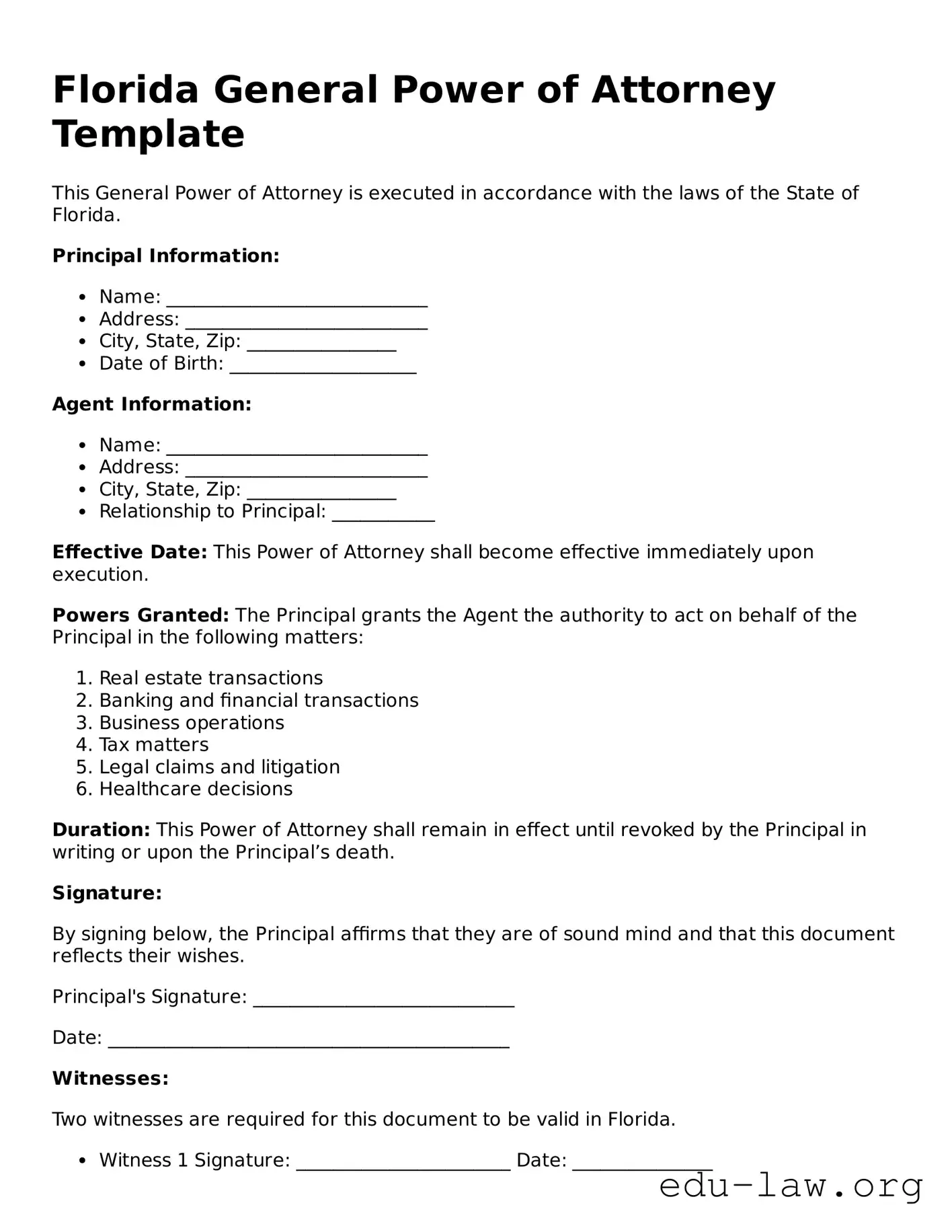
Florida General Power of Attorney Template
This General Power of Attorney is executed in accordance with the laws of the State of Florida.
Principal Information:
Agent Information:
Effective Date: This Power of Attorney shall become effective immediately upon execution.
Powers Granted: The Principal grants the Agent the authority to act on behalf of the Principal in the following matters:
Duration: This Power of Attorney shall remain in effect until revoked by the Principal in writing or upon the Principal’s death.
Signature:
By signing below, the Principal affirms that they are of sound mind and that this document reflects their wishes.
Principal's Signature: ____________________________
Date: ___________________________________________
Witnesses:
Two witnesses are required for this document to be valid in Florida.
Notary Public:
State of Florida, County of _______________
Subscribed and sworn to before me this ____ day of ____________, 20__.
Notary Public Signature: ______________________
My Commission Expires: ______________________
| Fact Name | Description |
|---|---|
| Definition | A Florida General Power of Attorney allows one person (the principal) to grant another person (the agent) the authority to act on their behalf in financial and legal matters. |
| Governing Law | This form is governed by Florida Statutes, Chapter 709, which outlines the powers and limitations of a power of attorney. |
| Durability | A General Power of Attorney can be durable, meaning it remains effective even if the principal becomes incapacitated, unless specified otherwise. |
| Agent's Authority | The agent can perform various tasks, such as managing bank accounts, signing checks, and handling real estate transactions, depending on the powers granted. |
| Revocation | The principal can revoke the power of attorney at any time, as long as they are competent to do so. |
| Witness Requirement | In Florida, the General Power of Attorney must be signed in the presence of two witnesses and a notary public to be valid. |
| Limitations | Some actions, like making healthcare decisions or creating a will, cannot be delegated through a General Power of Attorney. |
| Effective Date | The form can be effective immediately upon signing or can specify a future date or event when it becomes effective. |
| Fiduciary Duty | The agent has a fiduciary duty to act in the best interest of the principal, putting the principal's needs above their own. |
After you have gathered the necessary information and documents, you are ready to fill out the Florida General Power of Attorney form. This process is straightforward and requires careful attention to detail to ensure that all information is accurate.
What is a General Power of Attorney in Florida?
A General Power of Attorney is a legal document that allows one person, known as the principal, to grant another person, called the agent or attorney-in-fact, the authority to act on their behalf. This can include managing financial matters, making legal decisions, and handling various personal affairs. In Florida, this document must comply with specific state laws to be valid.
Who can create a General Power of Attorney in Florida?
Any adult who is mentally competent can create a General Power of Attorney in Florida. This means that the individual must understand the nature and consequences of the document they are signing. It is essential for the principal to choose someone they trust to act in their best interests.
What powers can be granted through a General Power of Attorney?
A General Power of Attorney can grant a wide range of powers to the agent. These may include managing bank accounts, paying bills, filing taxes, buying or selling property, and making healthcare decisions. However, the principal can specify limitations or restrictions on the powers granted, tailoring the document to their needs.
Does a General Power of Attorney need to be notarized in Florida?
Yes, in Florida, a General Power of Attorney must be signed in the presence of a notary public. This requirement adds a layer of protection and helps verify the identity of the principal. Additionally, if the document is to be used for real estate transactions, it may also need to be recorded with the appropriate county office.
Can a General Power of Attorney be revoked?
Yes, a General Power of Attorney can be revoked at any time by the principal, as long as they are mentally competent. To revoke the document, the principal should create a written revocation and notify the agent and any institutions or individuals that may have relied on the original document. This ensures that the agent no longer has authority to act on behalf of the principal.
What happens if the principal becomes incapacitated?
If the principal becomes incapacitated, a General Power of Attorney typically remains in effect unless it specifically states otherwise. This means that the agent can continue to act on behalf of the principal. However, if the principal wants to ensure that their agent can make healthcare decisions in the event of incapacity, they may also want to consider a separate healthcare power of attorney.
Can I use a General Power of Attorney for healthcare decisions?
While a General Power of Attorney can include some healthcare-related powers, it is generally advisable to use a specific healthcare power of attorney for medical decisions. This document is designed to address health-related matters and can outline the principal's wishes regarding medical treatment, end-of-life care, and other healthcare issues.
Is there a specific form for a General Power of Attorney in Florida?
Florida does not require a specific form for a General Power of Attorney, but it must meet state law requirements. Many individuals choose to use a standardized form to ensure compliance and clarity. It is important to review the document carefully and consider seeking legal advice to ensure it meets all necessary legal standards.
Can an agent be compensated for their services under a General Power of Attorney?
Yes, an agent can be compensated for their services if the principal specifies this in the General Power of Attorney document. If compensation is not mentioned, the agent is typically expected to act without payment. Clear communication about expectations can help prevent misunderstandings between the principal and the agent.
What should I consider before signing a General Power of Attorney?
Before signing a General Power of Attorney, it is crucial to consider the trustworthiness of the chosen agent, the scope of the powers being granted, and any potential future needs. It may also be beneficial to consult with a legal professional to ensure the document accurately reflects your wishes and complies with Florida law.
Not Specifying Powers Clearly: One common mistake is failing to clearly outline the powers granted to the agent. Vague language can lead to confusion about what the agent is authorized to do.
Choosing the Wrong Agent: Selecting someone who may not have the best interests of the principal in mind can lead to significant issues. It's essential to choose an agent who is trustworthy and capable.
Not Initialing Each Page: Some people overlook the requirement to initial each page of the form. This step is crucial as it confirms that the principal has reviewed and agrees to all terms.
Failing to Sign in Front of Witnesses: In Florida, the principal must sign the document in the presence of two witnesses. Neglecting this requirement can render the document invalid.
Not Including a Notary Public: While not always mandatory, having the document notarized adds an extra layer of authenticity. Many institutions prefer notarized documents for their validity.
Ignoring State-Specific Requirements: Each state has its own rules regarding powers of attorney. Failing to adhere to Florida's specific requirements can lead to complications.
Overlooking Revocation Procedures: Some individuals forget to include information on how to revoke the power of attorney. It’s vital to know how to cancel the authority granted if needed.
Assuming the Form is One-Size-Fits-All: Using a generic form without considering personal circumstances can lead to inadequate coverage. Each situation may require tailored provisions.
When creating a Florida General Power of Attorney, several other forms and documents may be necessary to ensure comprehensive legal coverage. Each of these documents serves a unique purpose, complementing the authority granted through the General Power of Attorney. Here’s a look at some commonly associated forms:
Understanding these additional forms can greatly enhance the effectiveness of a General Power of Attorney. Each document plays a vital role in ensuring that an individual’s wishes are respected and that their affairs are managed appropriately, especially during challenging times.
A Durable Power of Attorney is similar to a General Power of Attorney in that it grants authority to an agent to act on behalf of the principal. However, the key distinction lies in its durability. A Durable Power of Attorney remains effective even if the principal becomes incapacitated. This feature is crucial for individuals who want to ensure their financial and legal matters are managed without interruption during periods of incapacity.
A Medical Power of Attorney, also known as a Healthcare Proxy, allows an agent to make medical decisions on behalf of the principal. While a General Power of Attorney can cover financial matters, a Medical Power of Attorney specifically addresses healthcare decisions. This document is vital for individuals who wish to designate someone to make critical health-related choices when they are unable to do so themselves.
A Limited Power of Attorney is another document that shares similarities with the General Power of Attorney. However, it restricts the agent's authority to specific tasks or timeframes. For instance, a Limited Power of Attorney may be used for a single transaction, such as selling a property. This document offers more control for the principal, allowing them to specify the scope of the agent's powers.
A Springing Power of Attorney becomes effective only under certain conditions, typically when the principal becomes incapacitated. This is different from a General Power of Attorney, which is effective immediately upon signing. A Springing Power of Attorney provides a safeguard for individuals who want to maintain control over their affairs until a specific event occurs.
A Revocable Living Trust is a legal arrangement that allows a person to place their assets into a trust during their lifetime. While not a power of attorney, it serves a similar purpose by allowing a designated trustee to manage the assets if the trustor becomes incapacitated. Unlike a General Power of Attorney, a Revocable Living Trust can help avoid probate, making it an appealing option for estate planning.
An Advance Healthcare Directive combines elements of a Medical Power of Attorney and a living will. It allows individuals to outline their healthcare preferences and appoint an agent to make decisions if they cannot communicate their wishes. This document is critical for ensuring that personal healthcare choices are respected, similar to how a General Power of Attorney ensures financial decisions align with the principal's intentions.
A Guardianship document is established through a court process to appoint a guardian for an individual who is unable to care for themselves. While a General Power of Attorney allows an agent to act on behalf of the principal without court intervention, a Guardianship requires judicial oversight. This document is essential for protecting vulnerable individuals, though it is more restrictive than a General Power of Attorney.
When filling out the Florida General Power of Attorney form, it is crucial to follow specific guidelines to ensure the document is valid and effective. Here’s a list of things to do and avoid:
Understanding the Florida General Power of Attorney form is crucial for making informed decisions. However, several misconceptions can lead to confusion. Here are seven common misconceptions:
Being aware of these misconceptions can help individuals make better decisions regarding their legal and financial affairs.
When considering the Florida General Power of Attorney form, it is essential to understand its significance and implications. Here are key takeaways to guide you through the process: