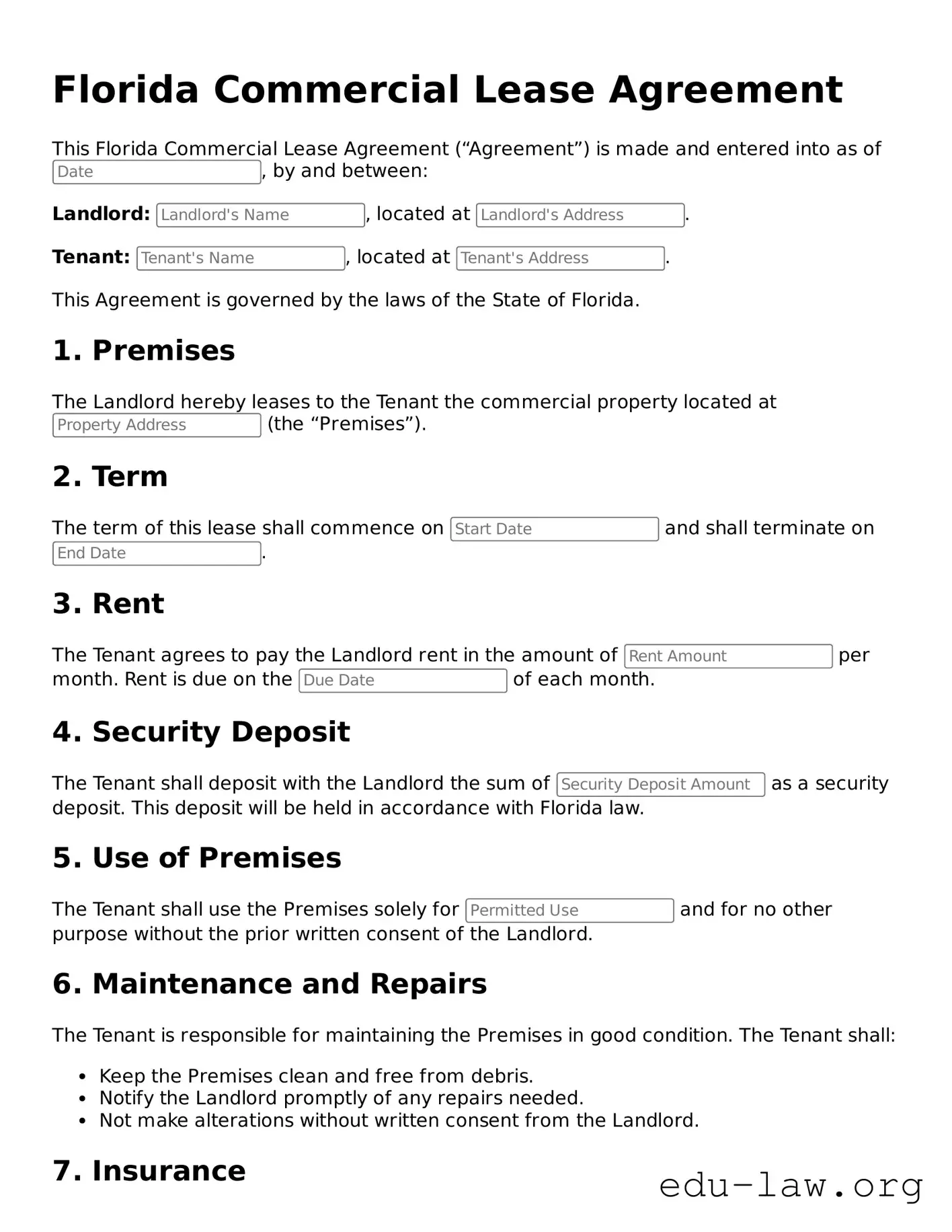
In the vibrant landscape of Florida's commercial real estate, the Commercial Lease Agreement form serves as a vital tool for landlords and tenants alike. This legally binding document outlines the terms and conditions under which a tenant can occupy a commercial space, ensuring that both parties understand their rights and responsibilities. Key aspects of the form include the duration of the lease, rental payment details, and provisions for maintenance and repairs. Additionally, it addresses the use of the property, any restrictions that may apply, and the procedures for renewing or terminating the lease. By clearly defining these elements, the agreement helps to prevent disputes and fosters a positive landlord-tenant relationship. Understanding the intricacies of this form is essential for anyone looking to navigate Florida’s commercial leasing landscape effectively.
Florida Commercial Lease Agreement
This Florida Commercial Lease Agreement (“Agreement”) is made and entered into as of , by and between:
Landlord: , located at .
Tenant: , located at .
This Agreement is governed by the laws of the State of Florida.
1. Premises
The Landlord hereby leases to the Tenant the commercial property located at (the “Premises”).
2. Term
The term of this lease shall commence on and shall terminate on .
3. Rent
The Tenant agrees to pay the Landlord rent in the amount of per month. Rent is due on the of each month.
4. Security Deposit
The Tenant shall deposit with the Landlord the sum of as a security deposit. This deposit will be held in accordance with Florida law.
5. Use of Premises
The Tenant shall use the Premises solely for and for no other purpose without the prior written consent of the Landlord.
6. Maintenance and Repairs
The Tenant is responsible for maintaining the Premises in good condition. The Tenant shall:
7. Insurance
The Tenant shall maintain insurance coverage for the Premises as required by the Landlord, including:
8. Termination
Either party may terminate this Agreement by providing written notice to the other party.
9. Governing Law
This Agreement shall be governed by and construed in accordance with the laws of the State of Florida.
10. Signatures
By signing below, both parties agree to the terms and conditions outlined in this Agreement.
Landlord Signature: ___________________________ Date: ____________
Tenant Signature: ___________________________ Date: ____________
| Fact Name | Description |
|---|---|
| Governing Law | The Florida Commercial Lease Agreement is governed by Florida state law, specifically under Chapter 83 of the Florida Statutes, which addresses landlord-tenant relationships. |
| Parties Involved | The agreement involves at least two parties: the landlord (lessor) and the tenant (lessee), both of whom must be clearly identified in the document. |
| Property Description | A detailed description of the leased commercial property must be included, specifying the address and any relevant identifying information. |
| Lease Term | The lease agreement should clearly outline the duration of the lease, including the start date and end date, as well as any renewal options. |
| Rent Payment Terms | Details regarding the rent amount, payment frequency, and acceptable payment methods must be specified to avoid any misunderstandings. |
| Security Deposit | The agreement typically requires a security deposit, which protects the landlord against potential damages or unpaid rent. The amount and conditions for return should be stated. |
| Maintenance Responsibilities | The lease should outline the responsibilities for property maintenance and repairs, specifying whether these duties fall to the landlord or the tenant. |
Completing the Florida Commercial Lease Agreement form requires careful attention to detail. Each section of the form must be filled out accurately to ensure that both parties understand their rights and responsibilities. Follow the steps below to fill out the form correctly.
Once the form is completed, both parties should retain a copy for their records. This ensures that everyone involved has access to the agreed-upon terms in the future.
What is a Florida Commercial Lease Agreement?
A Florida Commercial Lease Agreement is a legal document that outlines the terms and conditions between a landlord and a tenant for renting commercial property in Florida. This agreement typically includes details such as the lease duration, rental amount, payment terms, and responsibilities of both parties. It serves to protect the rights of both the landlord and the tenant and provides a clear framework for the rental relationship.
What should be included in a Florida Commercial Lease Agreement?
Essential elements of a Florida Commercial Lease Agreement include the names of the parties involved, a description of the property being leased, the length of the lease, the amount of rent, payment due dates, and any security deposit requirements. Additionally, the agreement should outline maintenance responsibilities, use of the property, and conditions for termination. Including clauses about renewal options and dispute resolution is also advisable to avoid future misunderstandings.
How long does a Florida Commercial Lease typically last?
The duration of a Florida Commercial Lease can vary widely, depending on the needs of the landlord and tenant. Leases can be short-term, lasting a few months, or long-term, extending for several years. Common lease lengths are one to five years, but terms can be negotiated. It's important for both parties to discuss their preferences and needs to establish a duration that works for everyone involved.
Can a Florida Commercial Lease be modified after it is signed?
Yes, a Florida Commercial Lease can be modified after it is signed, but both parties must agree to any changes. Modifications should be documented in writing and signed by both the landlord and tenant to ensure clarity and enforceability. Verbal agreements or informal changes may not hold up in a legal dispute, so it’s best to keep everything formal and documented.
Not providing accurate property details. Ensure the address and description of the property are correct.
Failing to specify the lease term. Clearly state the start and end dates of the lease to avoid confusion.
Neglecting to include rent payment details. Specify the amount, due date, and acceptable payment methods.
Overlooking maintenance responsibilities. Define who is responsible for repairs and maintenance of the property.
Not addressing security deposits. Clearly outline the amount required and conditions for its return.
Ignoring renewal options. Include terms for lease renewal or extension if desired.
Failing to include restrictions on use. Specify what activities are allowed or prohibited on the property.
Not understanding termination clauses. Clearly outline how either party can terminate the lease.
Leaving out signatures. Ensure all parties sign and date the agreement to make it legally binding.
When entering into a commercial lease agreement in Florida, several additional forms and documents may be necessary to ensure a clear understanding between the landlord and tenant. These documents help outline responsibilities, provide legal protections, and clarify terms. Below is a list of commonly used forms alongside the Florida Commercial Lease Agreement.
Understanding these documents can significantly aid in navigating the complexities of a commercial lease. Each form plays a crucial role in protecting the interests of both parties and ensuring a smooth leasing process.
The Florida Commercial Lease Agreement shares similarities with the Residential Lease Agreement. Both documents outline the terms and conditions under which a property is rented. They specify the duration of the lease, the amount of rent due, and the responsibilities of both the landlord and tenant. While the Commercial Lease is tailored for business purposes, the Residential Lease focuses on living arrangements. Despite these differences, both agreements aim to protect the rights of both parties and ensure a clear understanding of their obligations.
Another document akin to the Florida Commercial Lease Agreement is the Office Lease Agreement. This type of lease is specifically designed for businesses renting office space. Like the Commercial Lease, it details the rental amount, lease duration, and maintenance responsibilities. Additionally, it often includes clauses related to business operations, such as permitted uses of the space and restrictions on modifications. Both agreements serve to create a legally binding framework that governs the relationship between the landlord and the tenant.
The Retail Lease Agreement is also similar to the Florida Commercial Lease Agreement. Retail leases are tailored for businesses that operate in a retail environment, such as stores or restaurants. Both agreements include essential elements such as rent payment schedules, lease length, and tenant obligations. However, retail leases may incorporate specific provisions related to foot traffic, signage, and common area maintenance, reflecting the unique nature of retail operations. Thus, while the focus may differ, the underlying purpose remains the same: to establish clear expectations between the parties involved.
The Industrial Lease Agreement is another document that parallels the Florida Commercial Lease Agreement. This type of lease is used for industrial properties, such as warehouses or manufacturing facilities. Similar to the Commercial Lease, it outlines the terms of occupancy, including rent, duration, and maintenance duties. Industrial leases may also address specific operational needs, such as zoning requirements and environmental regulations. Both agreements aim to facilitate a productive relationship between landlords and tenants, ensuring that both parties understand their rights and responsibilities.
Lastly, the Ground Lease Agreement shares common features with the Florida Commercial Lease Agreement. A Ground Lease typically involves leasing land for a long term, allowing the tenant to develop the property. While the Commercial Lease focuses on existing structures, both agreements detail rental terms and responsibilities. Ground leases often include provisions for improvements made by the tenant, which can be an important aspect in commercial development. Despite their differences in property type and use, both agreements are designed to protect the interests of landlords and tenants alike.
When filling out the Florida Commercial Lease Agreement form, it’s important to keep certain best practices in mind. Here’s a list of things you should and shouldn’t do:
Understanding the Florida Commercial Lease Agreement form can be challenging due to various misconceptions. Here are seven common misunderstandings about this important document:
Being aware of these misconceptions can help tenants and landlords navigate the complexities of commercial leases more effectively.
When dealing with the Florida Commercial Lease Agreement, there are several important points to keep in mind. Here’s a straightforward list to help you navigate the process:
By keeping these key takeaways in mind, you can fill out and use the Florida Commercial Lease Agreement form more effectively. Always double-check your entries for accuracy and clarity.