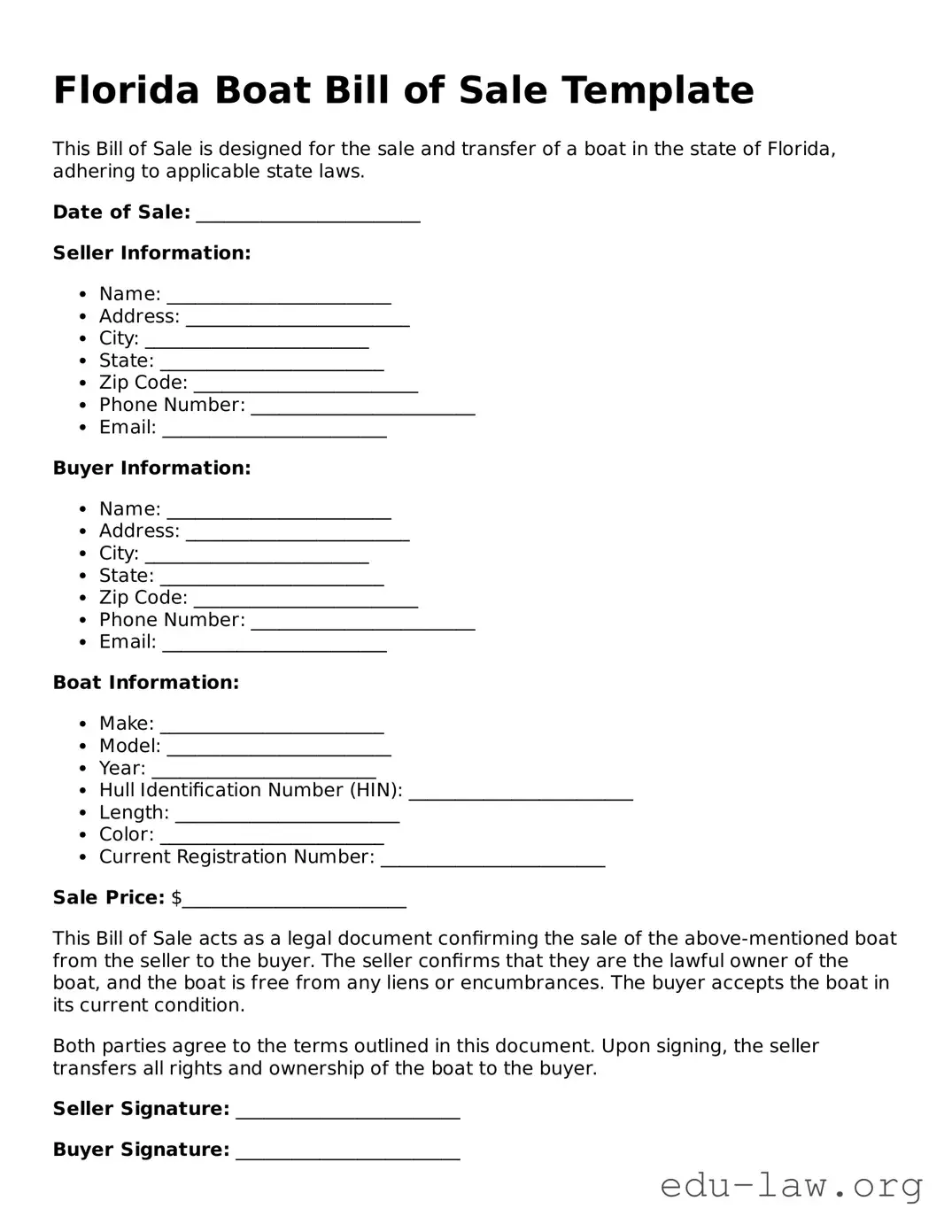
When purchasing or selling a boat in Florida, it is crucial to understand the importance of a Boat Bill of Sale form. This document serves as a legal record of the transaction, providing essential details about the vessel and the parties involved. Typically, the form includes the seller's and buyer’s names and contact information, a clear description of the boat—including its make, model, year, and identification number—and the sale price. In addition to these key components, the form often requires the seller to disclose any existing liens or encumbrances on the boat, thereby ensuring that all parties are aware of the boat's legal status. Furthermore, both the buyer and seller usually sign the document, affirming the transfer of ownership and protecting their interests in future disputes. Understanding the significance of this form is fundamental for anyone engaging in boat transactions in Florida, as it establishes a clear, documented account of the sale, enhancing trust between the buyer and seller.
Florida Boat Bill of Sale Template
This Bill of Sale is designed for the sale and transfer of a boat in the state of Florida, adhering to applicable state laws.
Date of Sale: ________________________
Seller Information:
Buyer Information:
Boat Information:
Sale Price: $________________________
This Bill of Sale acts as a legal document confirming the sale of the above-mentioned boat from the seller to the buyer. The seller confirms that they are the lawful owner of the boat, and the boat is free from any liens or encumbrances. The buyer accepts the boat in its current condition.
Both parties agree to the terms outlined in this document. Upon signing, the seller transfers all rights and ownership of the boat to the buyer.
Seller Signature: ________________________
Buyer Signature: ________________________
Date: ________________________
| Fact Name | Details |
|---|---|
| Purpose | The Florida Boat Bill of Sale is used to document the sale and transfer of ownership of a boat. |
| Governing Law | This form is governed by Florida Statutes, Chapter 328, relating to the regulation of vessels. |
| Required Information | Buyers and sellers need to provide their names, addresses, and contact information. |
| Boat Details | The form must include information about the boat, such as the make, model, year, and hull identification number (HIN). |
| Payment Terms | The agreed purchase price and payment terms should be clearly stated in the bill of sale. |
| Signatures | Both the buyer and seller must sign the document to validate the transfer of ownership. |
| Witnesses | It is not required to have witnesses, but having them can add an extra layer of assurance. |
| Notarization | While notarization is not mandatory, it can provide an extra level of verification. |
| Use for Registration | The completed bill of sale may be needed to register the boat with the Florida Fish and Wildlife Conservation Commission. |
| Retention | Both parties should keep a copy of the signed bill of sale for their records. |
After acquiring the Florida Boat Bill of Sale form, you will need to provide specific information about the transaction. Accurate completion of the form is crucial to ensure proper documentation for the sale or transfer of a boat. Below are the steps to fill out the form effectively.
Once the form is filled out and signed, it should be provided to the buyer. They may use it for registration purposes with local authorities. Keep a copy for your records as well.
What is a Florida Boat Bill of Sale?
A Florida Boat Bill of Sale is a legal document used when a boat is sold or transferred from one person to another in the state of Florida. This document serves as proof of ownership and outlines the details of the transaction, including information about the buyer, seller, the boat, and the sale price. Having a completed bill of sale helps protect both parties by providing clear evidence of the transfer, which can be essential for registration with the state or for potential future disputes.
Why do I need a Boat Bill of Sale in Florida?
In Florida, a Boat Bill of Sale is important for several reasons. First, it establishes a legal record that proves the transfer of ownership. This can be crucial if questions arise about who owns the boat in the future. Additionally, when registering the boat with the Florida Fish and Wildlife Conservation Commission, the registration process requires proof of ownership. Moreover, having a bill of sale can help in cases involving tax assessments, insurance claims, or if the boat is ever involved in legal matters.
What information should be included in the Florida Boat Bill of Sale?
To create a comprehensive Boat Bill of Sale, specific details are necessary. Start with the names and addresses of both the seller and the buyer. Include information about the boat, such as its make, model, year, hull identification number (HIN), and any other identifying features. Clearly state the sale price and the date of the transaction. It’s also wise to include any terms and conditions of the sale, as well as a declaration that the boat is free of liens or other claims, to ensure a smooth transfer of ownership.
Is the Florida Boat Bill of Sale form a legally binding document?
Yes, the Florida Boat Bill of Sale serves as a legally binding document once it has been signed by both parties involved in the transaction. By signing the bill of sale, both the seller and buyer agree to the terms outlined within it. Although it's not mandatory to have the document notarized, doing so can provide an extra layer of protection and authenticity, particularly if any disputes arise in the future. Always keep a copy of the completed bill of sale for your records, as it might be needed for future reference.
Incorrect Description of the Boat: One of the most common mistakes is failing to accurately describe the boat. Include details such as the make, model, year, and hull identification number (HIN). Missing or incorrect information can create problems later.
Missing Signatures: Make sure all required parties sign the document. Both the seller and buyer should sign to make the sale legally binding. Missing signatures can invalidate the transaction.
Omitting the Date: Forgetting to note the date of the sale is another frequent error. This information is crucial for establishing the timeline of ownership.
Not Including the Sale Price: Clearly stating the agreed-upon sale price is essential. Leaving this blank or writing an incorrect figure can lead to misunderstandings and potential disputes.
Inaccurate Personal Information: Mistakes in personal information, like names or addresses, can cause issues. Ensure names and addresses are accurate to avoid complications.
Failure to Include Additional Terms: If there are special arrangements or conditions related to the sale, include them in the bill of sale. Failing to do this may lead to disagreements later on.
Not Keeping Copies: After filling it out, don’t forget to make copies for both parties. Keeping records of the transaction is vital for future reference.
Improper Use of Ink: Using pencil or erasable ink can lead to issues. Always use permanent ink to ensure the document is legible and remains intact over time.
Ignoring State Requirements: Florida may have specific requirements for boat sales and transfers. Familiarize yourself with these laws to ensure compliance and avoid surprises.
Not Consulting with a Legal Expert: When in doubt, it’s wise to consult with a legal expert. They can help clarify any confusing aspects of the bill of sale and ensure it meets all legal standards.
When selling or buying a boat in Florida, several documents complement the Boat Bill of Sale. These forms help to ensure a smooth transaction and provide important legal protections for both parties. Below is a list of some key documents commonly associated with the sale of a boat.
Collecting and preparing these documents can help simplify the process of buying or selling a boat in Florida. They provide essential information and protections, ensuring both parties understand their rights and responsibilities in the transaction.
The Florida Boat Bill of Sale is akin to a vehicle bill of sale. Both documents serve as official records of a transaction between a seller and a buyer. They provide key details such as the sale price, identification of the item being sold, and both parties’ information. Just like with vehicles, it is important to document this sale to protect against future disputes and comply with state requirements for ownership transfers.
Another document similar to the Boat Bill of Sale is the motorcycle bill of sale. This form captures the essential aspects of a motorcycle sale, including the vehicle's identification number, make, model, and the conditions of the sale. Just as with boats, motorcycles require proper documentation to transfer ownership legally, ensuring that the buyer has a recognized claim to the vehicle.
A personal property bill of sale shares similarities with the Florida Boat Bill of Sale as well. It can be used to sell various personal items, including boats. It includes details about the item, the sale price, and signatures from both parties. Using this form creates a record of the transaction that can help resolve future disagreements regarding ownership or condition of the property.
Business owners often utilize an equipment bill of sale, which closely aligns with the Boat Bill of Sale in terms of functionality. When a piece of equipment is sold, this document outlines the transaction details, including serial numbers and condition notes. Ensuring you have such documentation helps safeguard against liability issues and establishes proof of sale for tax or accounting purposes.
A firearm bill of sale is another relevant document, as it also formalizes the transaction of a specific item. Both the Boat Bill of Sale and the firearm bill require identification of the item being sold, information about both the buyer and seller, and a signature acknowledging the transaction. This form is crucial for compliance with local laws governing firearm ownership and transfers, just as the Boat Bill ensures compliance with boating regulations.
It is important to consider a trailer bill of sale in conjunction with the Florida Boat Bill of Sale, as trailers often accompany boat sales. This document outlines the specifications of the trailer, including its make, model, and Vehicle Identification Number (VIN). Just like the boat itself, transferring ownership of the trailer requires documentation to establish clear ownership and provide a record of the transaction.
In the realm of consumer goods, a consignment bill of sale relates closely to the Boat Bill of Sale, particularly when boats are sold through consignment stores. This form details the terms under which the item is sold on behalf of the owner. It includes particulars of the item, the sale conditions, and the division of proceeds, similar to the Boat Bill's purpose of documenting a sale between two parties.
Art and collectible sales often make use of a bill of sale as well. This document is critical for transferring ownership of valuable items, just as it is for boats. Sellers can specify the details of the item being sold and confirm that the buyer accepts those terms. Documentation like this is essential in establishing provenance and protecting against future claims regarding ownership.
Finally, a lease-to-own agreement acts similarly to a Boat Bill of Sale, particularly in transactions involving boats. While it typically outlines the terms of leasing with an option to buy, it also captures important sale-related details. The agreement assures both parties understand payment timelines and conditions under which ownership will change, ensuring clarity in the transaction process.
When filling out the Florida Boat Bill of Sale form, it’s important to take special care to ensure the document is completed correctly. Here are some helpful dos and don’ts to guide you through the process.
By following these simple guidelines, you can help ensure that the Bill of Sale serves its purpose effectively and protects all parties involved.
Many people have misunderstandings regarding the Florida Boat Bill of Sale form. Here are some common misconceptions that can lead to confusion and potential issues:
Even if the boat is a gift, having a Bill of Sale protects both parties. It clarifies the transfer of ownership and can be essential for registration purposes.
While notarization can provide an extra layer of legitimacy, it’s not a requirement in Florida. The form is valid with just the signatures of both parties involved in the sale.
A formal Bill of Sale is recommended. It minimizes the likelihood of disputes and ensures all necessary information is included, such as details of the transaction.
Regardless of the size, a Bill of Sale is important for all transactions involving boats. It serves as proof of ownership and can be required for insurance and registration.
Ensure the form is filled out completely to provide clear proof of the transaction.
The Florida Boat Bill of Sale form legally documents the sale between the buyer and seller.
Include accurate details about the boat, such as its make, model, year, and identification number.
Both parties must sign the form to validate the transaction.
Keep a copy of the bill of sale for personal records and future reference.
Consider having the form notarized to add an extra layer of security.
Use the bill of sale for registration purposes with the Florida Fish and Wildlife Conservation Commission.
Be aware of any state-specific requirements that may affect the sale.
Utilize the bill of sale in case of disputes about ownership or condition of the boat.
The form can also be useful for tax purposes, helping to establish the sale price.
California Dmv Bill of Sale - Utilize this document to protect your rights during the buying or selling process.
Ga Boat Bill of Sale - The Boat Bill of Sale serves as proof of purchase and can be important for registration purposes.