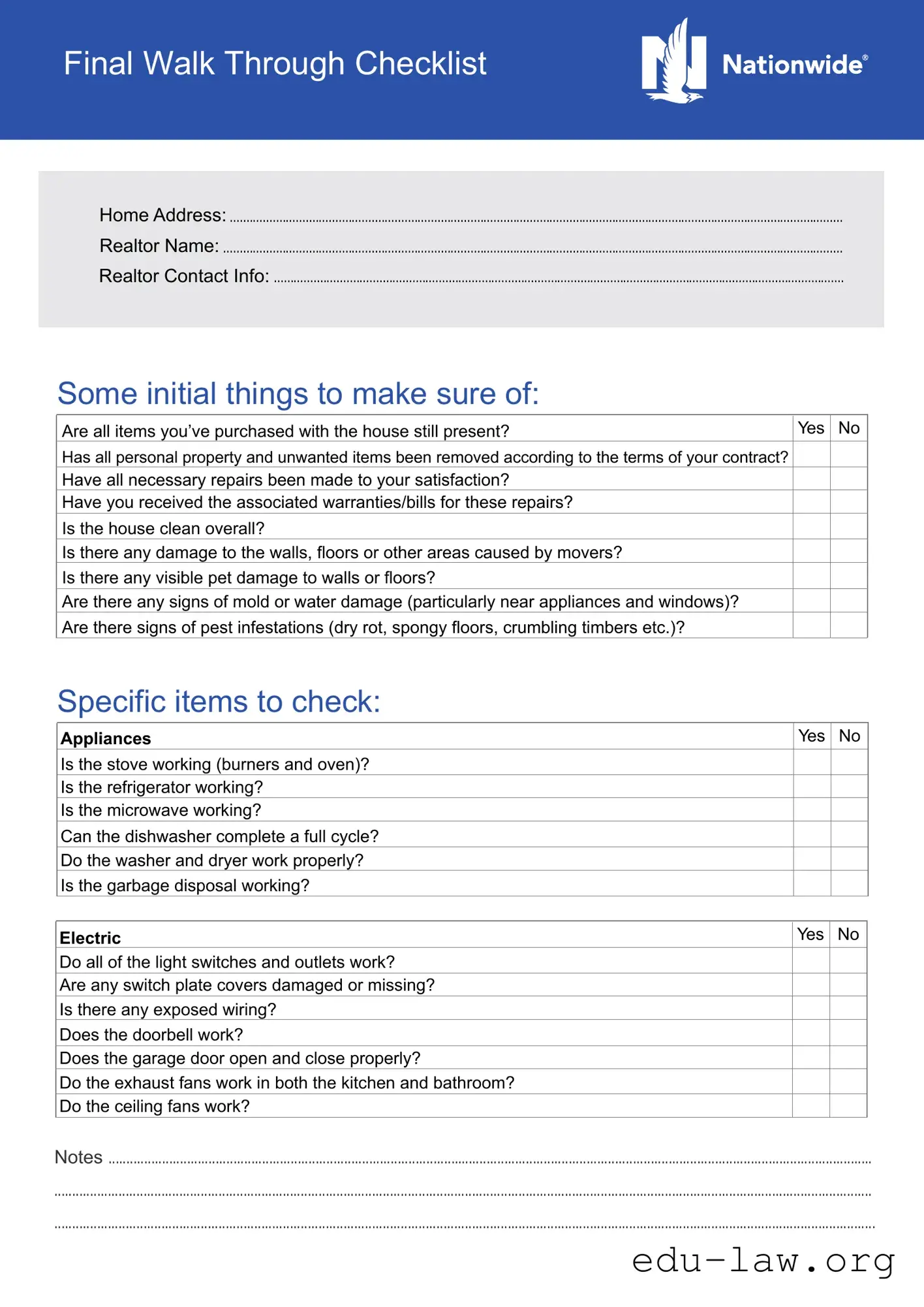
When preparing to finalize a home purchase, the Final Walk Through Checklist serves as an essential tool for buyers. This form helps ensure that everything is in order before the keys are handed over. Key aspects to check include the presence of all items purchased with the home and the removal of any personal property or unwanted items, in line with the contract terms. Buyers should verify that all necessary repairs have been completed to their satisfaction and that associated warranties and bills have been received. A thorough inspection of the home's cleanliness is crucial, as well as checking for any damage caused by movers or signs of pet damage. Water damage, mold, and pest infestations are also important to identify. Specific items such as appliances, electrical systems, plumbing, HVAC, and windows/doors require careful attention. Each section of the checklist prompts buyers to assess functionality and condition, ensuring that everything meets their expectations. The checklist also includes areas like the basement, attic, and outdoor spaces, making it a comprehensive guide for a successful final walkthrough.
Final Walk Through Checklist
Home Address: ..........................................................................................................................................................................................
Realtor Name: ............................................................................................................................................................................................
Realtor Contact Info: .............................................................................................................................................................................
Some initial things to make sure of:
Are all items you’ve purchased with the house still present? |
Yes No |
Has all personal property and unwanted items been removed according to the terms of your contract?
Have all necessary repairs been made to your satisfaction?
Have you received the associated warranties/bills for these repairs?
Is the house clean overall?
Is there any damage to the walls, floors or other areas caused by movers?
Is there any visible pet damage to walls or floors?
Are there any signs of mold or water damage (particularly near appliances and windows)?
Are there signs of pest infestations (dry rot, spongy floors, crumbling timbers etc.)?
Specific items to check:
Appliances
Is the stove working (burners and oven)?
Is the refrigerator working?
Is the microwave working?
Can the dishwasher complete a full cycle?
Do the washer and dryer work properly?
Is the garbage disposal working?
Electric
Do all of the light switches and outlets work?
Are any switch plate covers damaged or missing?
Is there any exposed wiring?
Does the doorbell work?
Does the garage door open and close properly?
Do the exhaust fans work in both the kitchen and bathroom?
Do the ceiling fans work?
Yes No
Yes No
Notes ......................................................................................................................................................................................................................
.....................................................................................................................................................................................................................................
......................................................................................................................................................................................................................................
Plumbing
Do the toilets flush properly (do they run or leak)?
Do the sinks, bathtubs and showers drain properly?
Is the water pressure sufficient?
Are there signs of leaking near faucets?
HVAC
Does the heating system work properly?
Does the air conditioning unit work properly?
Does the thermostat work?
Windows/Doors
Are there any signs of condensation or fog near
Are any windows broken or missing screens?
Do all windows open and close properly?
Do all doors open and close properly?
Do the locks and latches work?
Basement/Attic/Crawlspace
Have the spaces been cleared out and emptied?
Are there any signs of exposed plumbing?
Are there any signs of pests?
Outdoors
Is landscaping as you remembered?
Do the sprinklers work?
Yes No
Yes No
Yes No
Yes No
Yes No
Notes ......................................................................................................................................................................................................................
.....................................................................................................................................................................................................................................
.....................................................................................................................................................................................................................................
| Fact Name | Fact Description |
|---|---|
| Purpose | The Final Walk Through Checklist ensures that the property meets the buyer's expectations before closing. |
| Items Verification | Buyers confirm that all items purchased with the house are present and that personal property has been removed. |
| Condition of Repairs | Buyers check that all necessary repairs have been completed to their satisfaction and that warranties for these repairs are provided. |
| Cleanliness | The overall cleanliness of the house is assessed to ensure it meets the agreed-upon condition. |
| Damage Assessment | Buyers look for damage caused by movers, pet damage, mold, water damage, or pest infestations. |
| State-Specific Forms | Some states require specific forms for the final walk-through. Check local laws for compliance. |
| Appliance Functionality | Buyers verify that all appliances, such as the stove and refrigerator, are in working order. |
| Electrical Systems | All light switches, outlets, and doorbells must function properly and be free from damage. |
| Plumbing and HVAC | Buyers confirm that plumbing fixtures work correctly and that heating and air conditioning systems are functional. |
Completing the Final Walk Through Checklist is an essential step before finalizing your home purchase. This form helps ensure that everything is in order and that the property meets your expectations. After filling out the checklist, you will be prepared to address any concerns with your realtor or the seller before closing the deal.
What is the purpose of the Final Walk Through Checklist?
The Final Walk Through Checklist serves as a comprehensive guide for homebuyers to assess the condition of the property before closing. It ensures that all agreed-upon items are present, repairs have been completed, and that the home is in satisfactory condition. This checklist helps identify any potential issues that may need to be addressed before finalizing the purchase.
What should I check regarding appliances during the final walk-through?
During the final walk-through, ensure that all major appliances, such as the stove, refrigerator, microwave, dishwasher, washer, and dryer, are functioning properly. Test each appliance to confirm that they operate as expected. If any appliance is not working, it may be necessary to address this issue with the seller before closing.
How can I verify that repairs have been made to my satisfaction?
To verify repairs, review the terms of your contract and ensure that all necessary work has been completed. Check for any associated warranties or bills related to the repairs. If possible, inspect the quality of the work done. If you have concerns, discuss them with your realtor or consider requesting further repairs before closing.
What should I look for regarding the condition of the walls and floors?
Examine the walls and floors for any signs of damage, such as scratches, dents, or holes. Look for any evidence of damage caused by movers, such as scuff marks or broken trim. Additionally, check for visible pet damage, which may include stains or scratches. Addressing these issues before closing can help avoid disputes later.
Are there specific plumbing issues I should be aware of?
Yes, during the walk-through, check that toilets flush properly and do not leak. Test all sinks, bathtubs, and showers to ensure they drain effectively. Additionally, assess the water pressure in the home and look for any signs of leaks around faucets. Identifying plumbing issues early can save time and money after the purchase.
What electrical features should I test?
Test all light switches and outlets to confirm they are functioning correctly. Inspect switch plate covers for any damage and look for exposed wiring, which can be hazardous. Ensure that the doorbell, garage door, and exhaust fans in the kitchen and bathroom operate properly. Additionally, check that ceiling fans are working as expected.
How can I assess the HVAC system during the walk-through?
To assess the HVAC system, check that the heating system and air conditioning unit are functioning properly. Test the thermostat to ensure it responds accurately to temperature adjustments. This evaluation is crucial, as HVAC issues can lead to significant costs if not addressed before closing.
What outdoor features should I inspect?
Inspect the landscaping to ensure it is in the condition you remember. Check that sprinklers are working and that the yard is well-maintained. Look for any signs of damage or neglect that may require attention. A well-kept outdoor space can enhance your enjoyment of the property.
What if I find issues during the final walk-through?
If you discover any issues during the final walk-through, it is important to address them immediately. Contact your realtor to discuss your concerns and determine the best course of action. Depending on the severity of the issues, you may request repairs, negotiate a credit, or even delay closing until the problems are resolved.
Failing to Verify Presence of Purchased Items: Ensure that all items included in the sale are present. Missing items can lead to disputes.
Neglecting Personal Property Removal: Confirm that all personal belongings and unwanted items have been removed as per the contract. This can save time and additional costs.
Overlooking Repairs: Check that all agreed-upon repairs have been completed satisfactorily. Incomplete repairs can affect your living conditions.
Not Collecting Warranties: Ensure you receive warranties or bills for any repairs made. This documentation is crucial for future reference.
Ignoring Cleanliness: Assess the overall cleanliness of the house. A clean home is essential for a smooth transition.
Missing Damage Checks: Look for damage caused by movers, such as scratches or dents on walls and floors. Document any issues immediately.
Failing to Inspect for Pet Damage: Check for visible signs of pet damage. This includes scratches on floors and walls that may require repair.
Overlooking Mold and Water Damage: Look for signs of mold or water damage, especially near windows and appliances. Addressing these issues early is critical.
Neglecting Pest Infestations: Be vigilant for signs of pests, such as dry rot or crumbling timbers. Early detection can prevent costly repairs.
Inadequate Documentation of Findings: Take detailed notes on all findings during the walkthrough. This documentation is essential for negotiations and future reference.
The Final Walk Through Checklist is an essential tool for ensuring that all aspects of a property are in order before finalizing a home purchase. However, several other documents complement this checklist to provide a comprehensive overview of the property's condition and the terms of the sale. Below is a list of these important documents.
Understanding these documents is crucial for a smooth transaction. Ensure that you review each one carefully alongside the Final Walk Through Checklist to protect your investment and avoid any surprises after closing.
The Final Walk Through Checklist is similar to a Home Inspection Report. Both documents serve as a comprehensive evaluation of a property before finalizing a purchase. While the Home Inspection Report is typically conducted by a professional inspector, the Final Walk Through Checklist is completed by the buyer. Each document highlights critical areas of concern, such as structural integrity, plumbing, and electrical systems. However, the checklist focuses more on confirming that specific conditions are met and that the property is in the expected condition at the time of closing.
Another document that shares similarities is the Purchase Agreement. This legal contract outlines the terms of the sale, including contingencies related to the property's condition. The Final Walk Through Checklist ensures that these contingencies have been satisfied. For instance, if the Purchase Agreement states that certain repairs must be made, the checklist allows the buyer to confirm that those repairs were completed before the transaction is finalized.
The Seller's Disclosure Statement is also akin to the Final Walk Through Checklist. This document requires sellers to disclose any known issues with the property, such as past damage or repairs. During the final walkthrough, buyers can cross-reference the disclosures with the actual condition of the home. This helps ensure that there are no surprises after the sale, providing peace of mind to the buyer.
A Home Warranty Agreement is another related document. While it provides coverage for repairs after the sale, the Final Walk Through Checklist focuses on verifying that everything is in working order before the buyer takes possession. Both documents aim to protect the buyer's interests, but the checklist serves as a final assurance that the home meets expectations at the time of closing.
The Closing Disclosure form is also similar in purpose. It outlines the final terms of the mortgage, including closing costs and loan details. While the Final Walk Through Checklist is concerned with the physical state of the property, the Closing Disclosure ensures that the financial aspects of the transaction are clear. Both documents must be reviewed carefully to avoid any last-minute surprises.
Another document that aligns with the Final Walk Through Checklist is the Condition Report. This document provides a detailed account of the property's condition, often prepared by real estate professionals. Like the checklist, it emphasizes the importance of assessing various aspects of the home, such as appliances and systems. However, the Condition Report is typically more formal and may include professional assessments, while the checklist is more practical and straightforward for the buyer.
Moving into the realm of financing, the Loan Estimate is also relevant. This document provides a breakdown of loan costs and terms, similar to how the Final Walk Through Checklist outlines the state of the home. While the Loan Estimate focuses on financial obligations, the checklist ensures that the property itself is as expected, making both documents essential for a smooth closing process.
Lastly, the Repair Addendum can be compared to the Final Walk Through Checklist. This addendum outlines any repairs that the seller agrees to make before closing. The checklist serves as a tool for buyers to verify that these repairs have been completed satisfactorily. Both documents work together to ensure that the buyer is getting a home in the agreed-upon condition, thus reinforcing the buyer's rights and expectations.
When preparing to fill out the Final Walk Through Checklist, it’s essential to approach the process with care and attention. Here’s a helpful list of things to do and avoid:
By following these guidelines, you can ensure a thorough and effective final walk-through of your new home. This process is crucial for identifying any potential issues before finalizing your purchase. Take your time and be diligent; it will pay off in the long run.
Misconceptions about the Final Walk Through Checklist can lead to confusion during the home buying process. Here are four common misconceptions:
Utilizing the Final Walk Through Checklist form is crucial for ensuring that your new home meets your expectations. Here are key takeaways to consider:
Completing this checklist thoroughly can help prevent future issues and ensure a smooth transition into your new home.