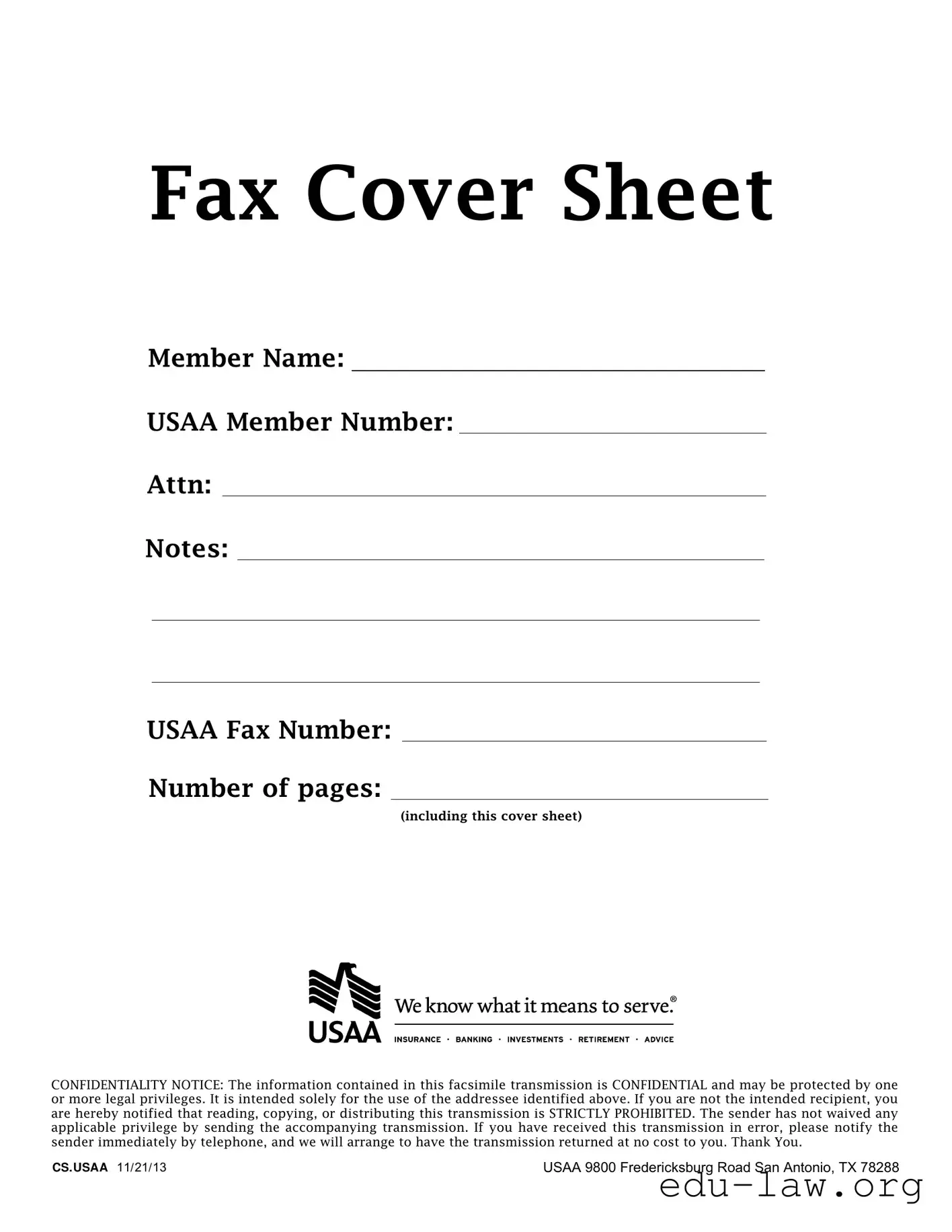
The Fax Cover Sheet serves as an essential introduction to any fax transmission, ensuring that the recipient has all the necessary information at a glance. This form includes vital details such as the member's name and USAA member number, allowing for quick identification and processing. It also specifies the intended recipient with an "Attn:" line, which helps direct the fax to the correct individual or department. Additionally, the cover sheet prompts the sender to note the total number of pages being sent, including the cover sheet itself, which is crucial for confirming that all documents have been received. A key feature of this form is the Confidentiality Notice, a critical statement that underscores the importance of privacy in communications. It clearly indicates that the information contained within the fax is confidential and intended solely for the designated recipient. If the fax is received in error, the notice instructs the unintended recipient on how to handle the situation, emphasizing the prohibition against reading, copying, or distributing the information. Overall, the Fax Cover Sheet not only organizes essential information but also protects sensitive data, making it a vital tool for effective communication.
Fax Cover Sheet
Member Name:
USAA Member Number:
Attn:
Notes:
USAA Fax Number:
Number of pages:
(including this cover sheet)
CONFIDENTIALITY NOTICE: The information contained in this facsimile transmission is CONFIDENTIAL and may be protected by one or more legal privileges. It is intended solely for the use of the addressee identified above. If you are not the intended recipient, you are hereby notified that reading, copying, or distributing this transmission is STRICTLY PROHIBITED. The sender has not waived any applicable privilege by sending the accompanying transmission. If you have received this transmission in error, please notify the sender immediately by telephone, and we will arrange to have the transmission returned at no cost to you. Thank You.
CS. USAA 11/ 21/ 13 |
USAA 9800 Fredericksburg Road San Antonio, TX 78288 |
| Fact Name | Description |
|---|---|
| Member Name | This field is used to identify the name of the USAA member sending the fax. |
| Member Number | The USAA member number is required for account identification and verification. |
| Attention Line | The "Attn" line specifies the intended recipient within the organization. |
| Notes Section | This area allows the sender to include any additional information or instructions. |
| USAA Fax Number | The fax number of USAA where the document will be sent is mandatory for successful transmission. |
| Page Count | Indicate the total number of pages being sent, including the cover sheet itself. |
| Confidentiality Notice | This notice emphasizes the confidential nature of the information contained in the fax. |
| Legal Privileges | The information may be protected under various legal privileges, safeguarding the sender's rights. |
| Contact for Errors | Instructions are provided for recipients who receive the fax in error, ensuring proper handling. |
Filling out a Fax Cover Sheet is a straightforward process that ensures your fax reaches the intended recipient with all necessary information. Follow these steps carefully to complete the form accurately.
Once you have completed the form, you can proceed to send your fax. Make sure to double-check all entries for accuracy before transmission to ensure smooth communication.
What is a Fax Cover Sheet?
A Fax Cover Sheet is a document that accompanies a fax transmission. It provides essential information about the sender and recipient, ensuring that the intended recipient receives the fax without confusion. It typically includes details such as the sender's name, contact information, and the number of pages being sent, including the cover sheet itself.
Why is a Fax Cover Sheet important?
The Fax Cover Sheet serves multiple purposes. It identifies the sender and recipient, which helps prevent miscommunication. Additionally, it includes a confidentiality notice, emphasizing that the information contained in the fax is private and should not be shared with unauthorized individuals. This notice protects sensitive information and ensures compliance with privacy regulations.
What information is required on the Fax Cover Sheet?
The Fax Cover Sheet requires several key pieces of information: the member name, USAA member number, the name of the person to whom the fax is addressed (Attn:), any additional notes relevant to the fax, the USAA fax number, and the total number of pages being sent, including the cover sheet itself. This information helps ensure that the fax reaches the correct person and is processed efficiently.
How do I fill out the Fax Cover Sheet?
To fill out the Fax Cover Sheet, start by entering your name and USAA member number at the top of the form. Next, indicate the name of the person you are sending the fax to in the "Attn:" section. If you have any specific notes or instructions, include them in the designated area. Finally, write the USAA fax number and count the total number of pages you are sending, including the cover sheet, and fill that in as well.
What should I do if I receive a fax by mistake?
If you receive a fax that was not intended for you, it is crucial to act promptly. According to the confidentiality notice, you should not read, copy, or distribute the fax. Instead, notify the sender immediately by telephone to inform them of the error. They will arrange for the return of the transmission at no cost to you.
Can I use a Fax Cover Sheet for non-confidential information?
While the Fax Cover Sheet is designed to protect confidential information, it can be used for non-confidential faxes as well. However, if the content is not sensitive, you may choose to omit the confidentiality notice. It's still good practice to include a cover sheet to provide context and ensure the fax is directed to the correct recipient.
Is there a standard format for a Fax Cover Sheet?
There is no universally mandated format for a Fax Cover Sheet, but it should include the essential elements mentioned earlier. Many organizations, including USAA, have their templates to ensure consistency and compliance. You can create your own format as long as it includes the necessary information to identify the sender, recipient, and the nature of the fax.
How can I obtain a Fax Cover Sheet template?
Fax Cover Sheet templates can be easily found online or may be provided by your organization. You can create your own using a word processing program or download a template that suits your needs. Ensure that any template you use includes all required information fields to facilitate effective communication.
What if I need to send multiple faxes?
If you need to send multiple faxes, it is advisable to use a separate Fax Cover Sheet for each transmission. This practice helps maintain clarity and organization, ensuring that each recipient understands the context of the fax. Additionally, it prevents any mix-up regarding the contents of each fax.
Omitting the Member Name. This is crucial for identifying the sender and ensuring the recipient understands who the fax is from.
Failing to include the USAA Member Number. Without this number, the recipient may have difficulty locating the sender's account or information.
Not specifying the Attn: line. This section directs the fax to the appropriate person or department, which helps avoid delays in processing.
Leaving out the Number of pages field. Including this information is important for the recipient to know how many pages to expect, including the cover sheet.
Ignoring the USAA Fax Number. Sending the fax to an incorrect number can lead to a breach of confidentiality and miscommunication.
Disregarding the Confidentiality Notice. This notice is essential as it informs the recipient about the sensitive nature of the information contained in the fax.
When sending a fax, a Fax Cover Sheet is just one of the important documents that can accompany your transmission. Each of the following forms serves a specific purpose and helps ensure that your communication is clear and effective. Understanding these documents can enhance your faxing experience and help maintain professionalism.
By familiarizing yourself with these documents, you can enhance your communication and ensure that your faxing process runs smoothly. Each form plays a role in conveying your message effectively and maintaining professionalism in your correspondence.
The Fax Cover Sheet is similar to a cover letter, which is often used in business communications to introduce documents being sent. A cover letter typically includes the sender's contact information, the recipient's details, and a brief explanation of the enclosed documents. Like the Fax Cover Sheet, a cover letter serves as an introduction, providing context and clarity. Both documents prioritize the confidentiality of the information being shared, although a cover letter may not always include a formal confidentiality notice.
An invoice is another document that shares similarities with the Fax Cover Sheet. Invoices are used to request payment for goods or services and often include sender and recipient information, a description of the items or services provided, and the total amount due. Both documents serve specific purposes in communication, with invoices requiring clear and concise details to ensure proper processing. Additionally, invoices may include confidentiality statements, especially when sensitive financial information is involved.
Finally, a letter of transmittal is akin to a Fax Cover Sheet in that it accompanies other documents and serves to inform the recipient about their contents. A transmittal letter usually outlines what is being sent, its purpose, and any necessary instructions or notes. Both documents aim to facilitate communication and ensure that the recipient understands the context of the information being provided. Additionally, letters of transmittal often include confidentiality notices, similar to those found on Fax Cover Sheets, to protect sensitive information.
When filling out a Fax Cover Sheet, following certain guidelines can help ensure your message is clear and effective. Here are ten things to do and not to do:
Many people have misconceptions about the Fax Cover Sheet form. Understanding these can help ensure proper use and compliance. Here are five common misconceptions:
Here are some key takeaways about filling out and using the Fax Cover Sheet form:
Using the Fax Cover Sheet correctly helps ensure that your documents are received and handled appropriately.