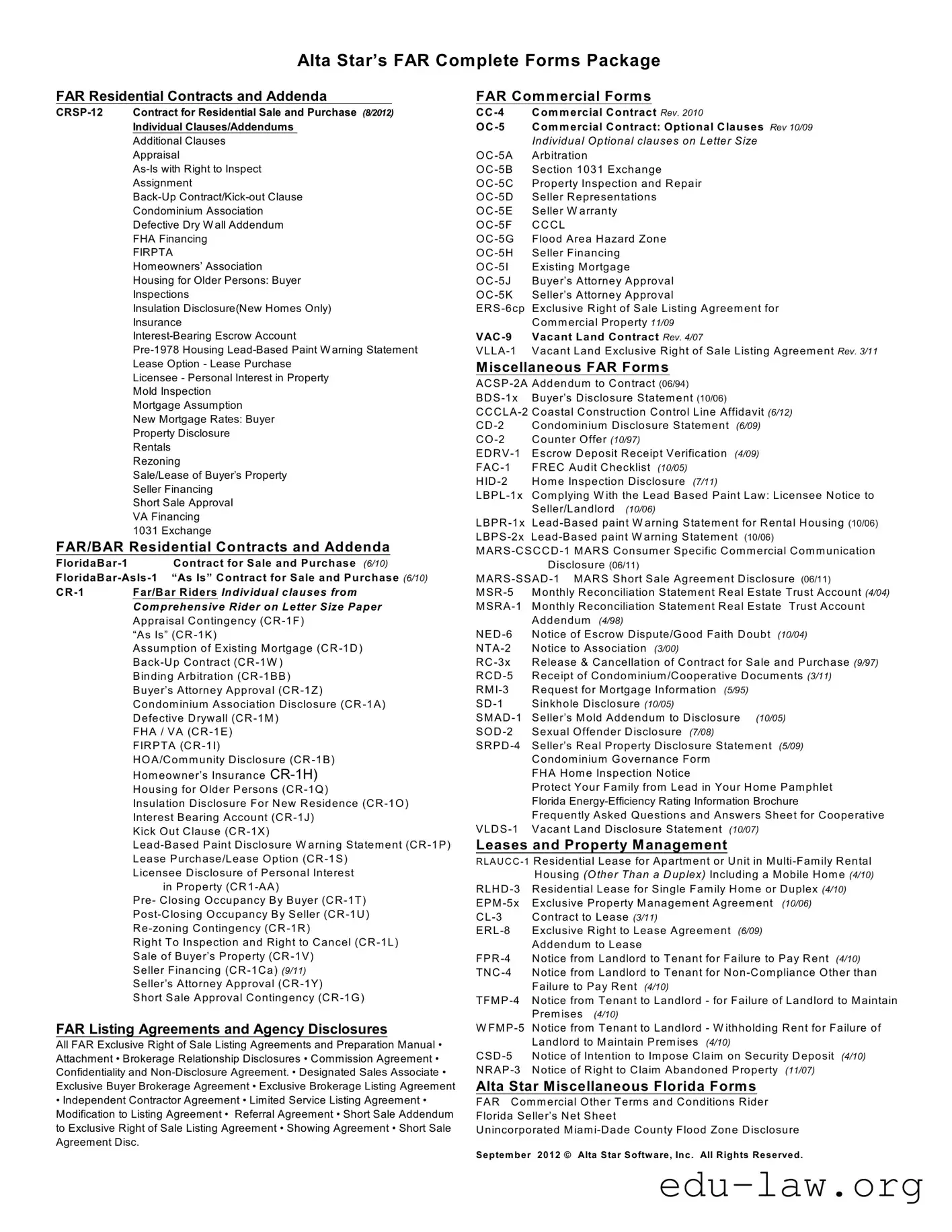
The FAR Contract form is an essential tool for real estate transactions in Florida, streamlining the process for buyers and sellers alike. This comprehensive package includes various contracts and addenda tailored for residential sales, ensuring that all parties are well-informed and protected throughout the process. Among its key components are the CRSP-12 Contract for Residential Sale and Purchase, which outlines the fundamental terms of the agreement, and a series of individual clauses and addendums that address specific scenarios such as appraisal contingencies, seller financing, and inspections. The form also incorporates provisions for FHA and VA financing, as well as disclosures related to lead-based paint and homeowners’ associations. With options for back-up contracts and kick-out clauses, the FAR Contract form offers flexibility to accommodate the unique needs of each transaction. Furthermore, the package includes FAR/BAR contracts and various commercial forms, making it a versatile resource for real estate professionals. By utilizing the FAR Contract form, individuals can navigate the complexities of real estate transactions with greater confidence and clarity.

Alta Star’s FAR Complete Forms Package
FAR Residential Contracts and Addenda
Individual Clauses/Addendums
Additional Clauses Appraisal
FIRPTA
Homeowners’ Association Housing for Older Persons: Buyer Inspections
Insulation Disclosure(New Homes Only) Insurance
Licensee - Personal Interest in Property Mold Inspection
Mortgage Assumption
New Mortgage Rates: Buyer Property Disclosure Rentals
Rezoning
Sale/Lease of Buyer’s Property Seller Financing
Short Sale Approval VA Financing
1031 Exchange
FAR/BAR Residential Contracts and Addenda
Appraisal Contingency
Assumption of Existing Mortgage
Binding Arbitration
FHA / VA
FIRPTA
HOA/Community Disclosure
Insulation Disclosure For New Residence
Kick Out Clause
Licensee Disclosure of Personal Interest in Property
Pre- Closing Occupancy By Buyer
Right To Inspection and Right to Cancel
Seller Financing
Short Sale Approval Contingency
FAR Listing Agreements and Agency Disclosures
All FAR Exclusive Right of Sale Listing Agreements and Preparation Manual • Attachment • Brokerage Relationship Disclosures • Commission Agreement • Confidentiality and
• Independent Contractor Agreement • Limited Service Listing Agreement • Modification to Listing Agreement • Referral Agreement • Short Sale Addendum to Exclusive Right of Sale Listing Agreement • Showing Agreement • Short Sale Agreement Disc.
FAR Commercial Forms
Commercial Contract Rev. 2010 |
|
|
Commercial Contract: Optional Clauses Rev 10/09 |
||
|
Individual Optional clauses on Letter Size |
|
Arbitration |
|
|
Section 1031 Exchange |
|
|
Property Inspection and Repair |
|
|
Seller Representations |
|
|
Seller W arranty |
|
|
CCCL |
|
|
Flood Area Hazard Zone |
|
|
Seller Financing |
|
|
Existing Mortgage |
|
|
Buyer’s Attorney Approval |
|
|
Seller’s Attorney Approval |
|
|
Exclusive Right of Sale Listing Agreement for |
||
|
Commercial Property 11/09 |
|
Vacant Land Contract Rev. 4/07 |
|
|
Vacant Land Exclusive Right of Sale Listing Agreement Rev. 3/11 |
||
Miscellaneous FAR Forms |
|
|
Addendum to Contract (06/94) |
|
|
Buyer’s Disclosure Statement (10/06) |
|
|
Coastal Construction Control Line Affidavit (6/12) |
||
Condominium Disclosure Statement |
(6/09) |
|
Counter Offer (10/97) |
|
|
Escrow Deposit Receipt Verification |
(4/09) |
|
FREC Audit Checklist (10/05) |
|
|
Home Inspection Disclosure (7/11) |
|
|
Complying W ith the Lead Based Paint Law: Licensee Notice to |
||
|
Seller/Landlord (10/06) |
|
|
Disclosure (06/11) |
|
Monthly Reconciliation Statement Real Estate Trust Account (4/04) |
||
Monthly Reconciliation Statement Real Estate Trust Account |
||
|
Addendum (4/98) |
|
Notice of Escrow Dispute/Good Faith Doubt (10/04) |
||
Notice to Association (3/00) |
|
|
Release & Cancellation of Contract for Sale and Purchase (9/97) |
||
Receipt of Condominium/Cooperative Documents (3/11) |
||
Request for Mortgage Information (5/95) |
||
Sinkhole Disclosure (10/05) |
|
|
Seller’s Mold Addendum to Disclosure (10/05) |
||
Sexual Offender Disclosure (7/08) |
|
|
Seller’s Real Property Disclosure Statement (5/09) |
||
|
Condominium Governance Form |
|
|
FHA Home Inspection Notice |
|
|
Protect Your Family from Lead in Your Home Pamphlet |
|
|
Florida |
|
|
Frequently Asked Questions and Answers Sheet for Cooperative |
|
Vacant Land Disclosure Statement |
(10/07) |
|
Leases and Property Management
|
Housing (Other Than a Duplex) Including a Mobile Home (4/10) |
Residential Lease for Single Family Home or Duplex (4/10) |
|
Exclusive Property Management Agreement (10/06) |
|
Contract to Lease (3/11) |
|
Exclusive Right to Lease Agreement (6/09) |
|
|
Addendum to Lease |
Notice from Landlord to Tenant for Failure to Pay Rent (4/10) |
|
Notice from Landlord to Tenant for |
|
|
Failure to Pay Rent (4/10) |
W
Alta Star Miscellaneous Florida Forms
FAR Commercial Other Terms and Conditions Rider Florida Seller’s Net Sheet
Unincorporated
September 2012 © Alta Star Software, Inc. All Rights Reserved.
| Fact Name | Description |
|---|---|
| Form Purpose | The FAR Contract form is used for residential real estate transactions in Florida. |
| Governing Law | The FAR Contract is governed by the laws of the State of Florida. |
| Types of Contracts | Includes contracts for sale and purchase, as well as addenda for various contingencies. |
| As-Is Clause | The form allows for an "As Is" sale, meaning the buyer accepts the property in its current condition. |
| Inspection Rights | Buyers have the right to inspect the property before finalizing the sale. |
| FIRPTA Compliance | Includes provisions to comply with the Foreign Investment in Real Property Tax Act (FIRPTA). |
| Seller Financing | Offers options for seller financing, providing flexibility in payment arrangements. |
| Short Sale Approval | Contains clauses for short sale approvals, which can expedite the sale process. |
| Lead-Based Paint Disclosure | Requires sellers to disclose any known lead-based paint hazards in properties built before 1978. |
| Multiple Addenda | The form includes various addenda, such as for mold inspections and homeowners’ association disclosures. |
Completing the FAR Contract form requires careful attention to detail. The following steps will guide you through the process of filling out the form accurately.
Following these steps will help ensure that the FAR Contract form is filled out correctly, paving the way for a smoother transaction process.
What is the FAR Contract form?
The FAR Contract form, developed by the Florida Association of Realtors, is a standardized document used for real estate transactions in Florida. It outlines the terms and conditions of a sale, ensuring that both buyers and sellers understand their rights and obligations. This contract can include various addenda and clauses tailored to specific situations, such as financing options or property disclosures.
What types of properties can the FAR Contract be used for?
The FAR Contract is versatile and can be used for residential properties, commercial properties, and vacant land. Whether you are buying a single-family home, a condo, or a piece of land for development, there’s a FAR Contract variant that suits your needs. Each type of property may have specific clauses or addenda that are relevant to that category.
What are addenda, and why are they important?
Addenda are additional documents that modify or clarify the terms of the main contract. They are crucial because they address specific issues that may not be covered in the standard contract. For example, if a buyer wants to include a financing clause or a home inspection contingency, these would be outlined in an addendum. This helps protect both parties and ensures that all concerns are addressed before the sale is finalized.
Can I customize the FAR Contract?
Yes, the FAR Contract is designed to be flexible. You can customize it by including various addenda that suit your specific transaction. For instance, if you are purchasing a home that requires inspections or has unique financing needs, you can add clauses that reflect those requirements. Always ensure that any modifications comply with local real estate laws and regulations.
What is the significance of the "As Is" clause?
The "As Is" clause in the FAR Contract indicates that the seller is selling the property in its current condition, without any obligation to make repairs or improvements. This clause can be beneficial for sellers looking to sell quickly, but buyers should proceed with caution. It’s essential to conduct thorough inspections to understand the property's condition before agreeing to an "As Is" sale.
How does financing work in a FAR Contract?
Financing terms are an essential part of the FAR Contract. Buyers can specify how they plan to finance the purchase, whether through conventional loans, FHA, VA, or seller financing. The contract can include clauses that outline contingencies based on loan approval, ensuring that the buyer is not obligated to proceed if financing falls through.
What happens if one party wants to back out of the contract?
If one party wishes to back out of the FAR Contract, the terms of the contract will dictate the consequences. Typically, there are contingencies that allow for cancellation under certain conditions, such as failure to secure financing or unsatisfactory inspection results. However, if a party wishes to cancel without valid grounds, they may face penalties, including the potential loss of earnest money deposits.
How can I ensure I’m using the most current version of the FAR Contract?
To ensure you are using the most current version of the FAR Contract, it is best to obtain it directly from the Florida Association of Realtors or a licensed real estate professional. They regularly update the forms to reflect changes in laws and practices, so accessing the latest version will help you avoid using outdated information.
Incomplete Information: One common mistake is failing to fill in all required fields. Each section of the FAR Contract form is designed to capture important details about the transaction. Missing information can lead to delays or complications in the process.
Incorrect Dates: Entering the wrong dates is another frequent error. Dates are crucial for establishing timelines for contingencies, inspections, and closing. A simple mistake in this area can create confusion and potentially jeopardize the agreement.
Misunderstanding Clauses: Many individuals overlook the importance of understanding the clauses included in the contract. Each clause serves a specific purpose and can affect rights and obligations. It is essential to read and comprehend these clauses to avoid unintended consequences.
Signatures and Initials: Failing to provide necessary signatures or initials is a critical oversight. Each party involved must sign and initial where required. Without these, the contract may not be considered valid, leading to further complications.
When working with the FAR Contract form, several other documents often come into play. These forms help clarify terms, outline responsibilities, and protect the interests of all parties involved in a real estate transaction. Understanding these documents can streamline the process and ensure a smoother experience.
Each of these documents plays a crucial role in the overall transaction process. By familiarizing yourself with them, you can better navigate the complexities of real estate contracts and make informed decisions.
The FAR Residential Contract for Sale and Purchase (CRSP-12) is similar to the FloridaBar-1 Contract for Sale and Purchase. Both documents serve as foundational agreements for real estate transactions, outlining the terms and conditions under which a property will be sold. Each contract includes essential elements such as purchase price, closing date, and contingencies. However, the FloridaBar-1 may include specific clauses that cater to the legal standards set by the Florida Bar, providing additional protections and requirements that may not be present in the FAR form.
The FAR/BAR Residential Contracts and Addenda also share similarities with the FAR Complete Forms Package. Both sets of documents are designed to facilitate residential real estate transactions in Florida. They encompass a variety of addenda and clauses tailored to address specific situations, such as financing options and property disclosures. While the FAR Complete Forms Package includes a broader range of forms, the FAR/BAR contracts focus on providing a comprehensive framework for the sale process, ensuring both parties are adequately protected.
The FHA Financing addendum is comparable to the VA Financing addendum. Both documents cater to specific types of financing available to buyers, outlining the requirements and implications of using these government-backed loans. They help clarify the responsibilities of both the buyer and seller when financing through FHA or VA programs, ensuring that all parties understand the terms and conditions associated with these financing options.
The As-Is with Right to Inspect addendum is similar to the Home Inspections clause found in various contracts. Both documents allow buyers to evaluate the condition of the property before finalizing the purchase. They provide a framework for inspections and address the buyer's rights to negotiate repairs or price adjustments based on the findings. The key difference lies in the emphasis on the property's current condition, with the As-Is addendum indicating that the seller will not make repairs.
The Lease Option - Lease Purchase agreement shares characteristics with the Seller Financing document. Both options provide alternative pathways for buyers to acquire property. The Lease Option allows a tenant to purchase the property at a later date, while Seller Financing enables the buyer to pay the seller directly over time. Each document outlines specific terms, such as payment schedules and conditions for final purchase, catering to buyers who may not qualify for traditional financing.
The Short Sale Approval Contingency is similar to the Back-Up Contract/Kick-out Clause. Both documents are designed to address situations where the sale of a property is contingent upon certain conditions being met. The Short Sale Approval Contingency allows the seller to seek approval from the lender for a sale below the mortgage balance, while the Back-Up Contract ensures that if the primary contract fails, another buyer is ready to step in. Both clauses protect the interests of the seller while providing options for buyers.
The Lead-Based Paint Warning Statement is akin to the Insulation Disclosure for New Homes Only. Both documents serve to inform buyers about potential issues related to property safety and compliance. The Lead-Based Paint Warning Statement is particularly important for homes built before 1978, while the Insulation Disclosure addresses energy efficiency in new constructions. Each disclosure aims to protect the buyer by ensuring they are aware of specific risks associated with the property.
The Property Disclosure Statement is similar to the Seller’s Real Property Disclosure Statement. Both documents require sellers to disclose known issues with the property that may affect its value or safety. They are designed to promote transparency in real estate transactions, helping buyers make informed decisions. The main distinction lies in the specific requirements and formats mandated by different jurisdictions or governing bodies.
The Exclusive Right of Sale Listing Agreement is comparable to the Exclusive Buyer Brokerage Agreement. Both agreements establish a formal relationship between a client and a real estate professional. The Exclusive Right of Sale Listing Agreement allows the agent to represent the seller in marketing the property, while the Exclusive Buyer Brokerage Agreement ensures that the agent represents the buyer's interests in the home-buying process. Each agreement outlines the terms of representation and the commission structure.
The Commercial Contract (CC-4) shares similarities with the FAR Residential Contracts in that both documents are used to facilitate real estate transactions. While the FAR contracts focus on residential properties, the Commercial Contract addresses the sale and purchase of commercial real estate. Each contract includes essential terms, conditions, and contingencies relevant to their respective property types, ensuring that both buyers and sellers are protected throughout the transaction.
When filling out the FAR Contract form, it is essential to follow certain guidelines to ensure accuracy and compliance. Here is a list of things to do and avoid:
By following these guidelines, you can help ensure that your FAR Contract form is filled out correctly and efficiently.
Here are some common misconceptions about the FAR Contract form:
When filling out and using the FAR Contract form, it’s essential to understand several key aspects to ensure a smooth transaction. Here are some important takeaways:
By keeping these points in mind, you can effectively utilize the FAR Contract form and help facilitate a successful real estate transaction.