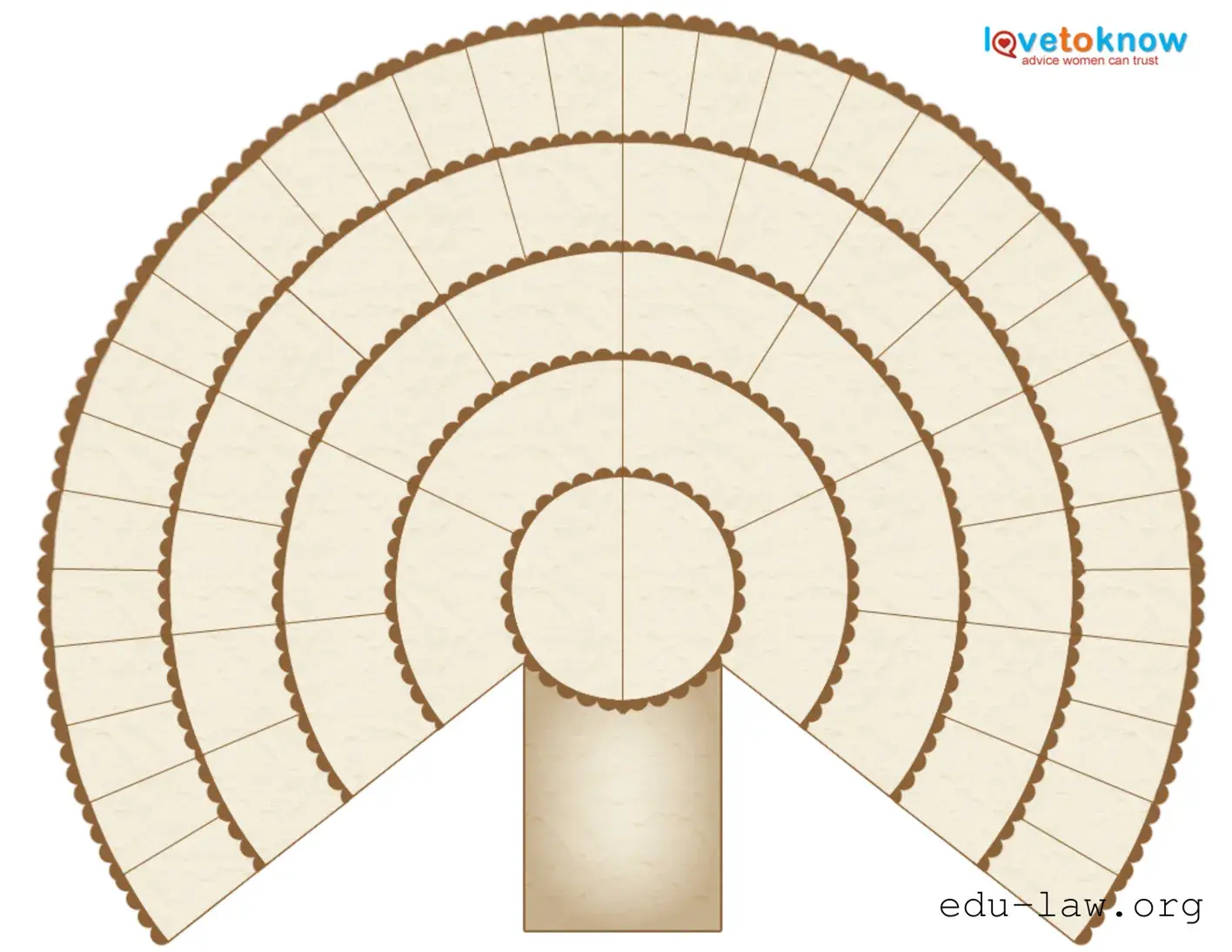
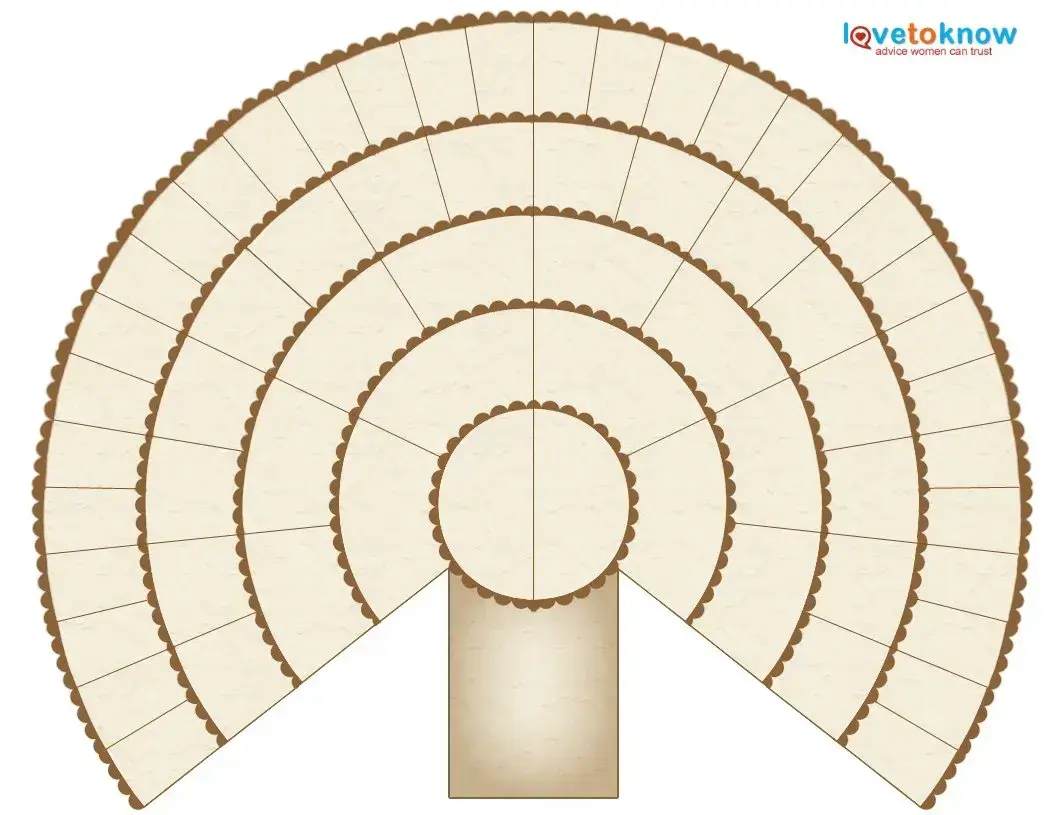
The Fan Genealogy form serves as a valuable tool for anyone interested in tracing their family history. This unique format visually represents an individual's ancestral lineage in a fan-like design, making it easier to see connections across multiple generations. At the bottom center of the form, the individual filling it out is positioned as the starting point. From there, each successive row radiates outward, illustrating the family tree's various branches. This layout not only simplifies the process of mapping family connections but also accommodates several generations, enabling users to list parents, grandparents, great-grandparents, and beyond. The fan shape allows for a clear and organized view, making it an effective method for genealogical research and family history exploration.
| Fact Name | Details |
|---|---|
| Visual Representation | The Fan Genealogy form presents an individual's ancestral lineage in a fan-like format. |
| Purpose | This form is used in genealogy to help individuals map their family history. |
| Central Starting Point | The individual filling out the form is typically positioned at the bottom center. |
| Generational Layout | Each row of the form radiates outward, representing different generations of ancestors. |
| Multi-Generational Accommodation | The form is designed to accommodate multiple generations, including parents, grandparents, and great-grandparents. |
| Common Usage | Genealogists frequently use this format to visualize family connections clearly. |
| Ease of Understanding | The fan shape allows for a straightforward view of family relationships. |
| State-Specific Forms | Some states may have specific guidelines or laws governing the use of genealogy forms. |
| Research Tool | The form serves as a valuable tool for individuals conducting genealogical research. |
| Historical Context | The fan format has been traditionally used in genealogy for many years, aiding in the preservation of family histories. |
Once you have the Fan Genealogy form in front of you, you are ready to begin documenting your family history. This process will help you visualize your ancestry in a clear and organized manner. Follow these steps to fill out the form accurately.
After completing the form, you will have a comprehensive visual representation of your ancestry, making it easier to explore your family history further.
What is the Fan Genealogy form?
The Fan Genealogy form is a tool used to display an individual's family history in a fan-like format. This visual representation helps you see your ancestral lineage clearly, making it easier to understand your family connections across multiple generations.
How is the Fan Genealogy form organized?
The form is designed with a central starting point, usually the individual completing the form, located at the bottom center. From this point, rows extend outward, each representing a different generation of ancestors. This layout allows you to see your family tree in a structured way.
How many generations can I include on the form?
The Fan Genealogy form typically accommodates multiple generations. You can list your parents, grandparents, great-grandparents, and potentially even further back, depending on the space available on the form.
Why should I use the Fan Genealogy form?
This form is beneficial for anyone interested in tracing their family history. It provides a clear visual representation that can help you identify relationships and connections among your ancestors, making it a useful tool for genealogical research.
Can I customize the Fan Genealogy form?
Is the Fan Genealogy form suitable for beginners?
Absolutely! The Fan Genealogy form is user-friendly and suitable for beginners. Its visual format simplifies the process of mapping out your family tree, making it accessible for anyone, regardless of their experience level in genealogy.
Where can I find the Fan Genealogy form?
The Fan Genealogy form can often be found online through genealogy websites or local historical societies. You may also find printable versions in genealogy books or resources dedicated to family history research.
Incomplete Information: One common mistake is failing to provide complete details for each ancestor. Ensure that names, birth dates, and places are filled out for every individual.
Incorrect Generation Placement: Some individuals place ancestors in the wrong generation. Double-check that parents are listed directly above their children and that grandparents are above parents.
Omitting Spousal Information: Many people forget to include spouses. Each individual should have their partner listed to provide a complete picture of family connections.
Neglecting to Verify Facts: Failing to verify names and dates can lead to inaccuracies. Always cross-check your information with reliable sources before finalizing the form.
The Fan Genealogy form serves as a valuable tool for individuals seeking to trace their family history. It provides a clear visual representation of ancestral lineage, but it is often used in conjunction with several other forms and documents that enhance genealogical research. Below is a list of these related documents, each serving a unique purpose in the quest for understanding one's heritage.
Utilizing these forms and documents in conjunction with the Fan Genealogy form can significantly enhance an individual's understanding of their family history. Each document contributes unique information that can help paint a fuller picture of one's ancestry.
The Pedigree Chart is a fundamental document in genealogy that serves a similar purpose to the Fan Genealogy form. Like the Fan form, the Pedigree Chart organizes an individual’s lineage, but it does so in a linear format. The chart starts with the individual at the base and branches upward, showing parents, grandparents, and further ancestors. This straightforward layout allows for easy tracking of direct lineage, making it a popular choice for genealogists who prefer a more traditional representation of ancestry.
The Family Group Sheet also shares similarities with the Fan Genealogy form. This document focuses on a single family unit, capturing detailed information about parents and their children. While the Fan form emphasizes multiple generations in a broad view, the Family Group Sheet provides in-depth information about one family, including birth dates, marriage details, and other pertinent facts. This focused approach allows researchers to delve deeper into specific family branches.
The Descendant Chart is quite different from the Fan Genealogy form in its focus but serves a similar purpose of illustrating family connections. This chart begins with an ancestor and branches out to show their descendants. While the Fan form highlights ancestors, the Descendant Chart emphasizes the lineage that follows, making it an essential tool for understanding family growth over generations.
The Research Log is a practical document that complements the Fan Genealogy form. Although it does not visually represent lineage, it serves as a record of research efforts and findings. Users can track sources, notes, and discoveries related to their family history. This document is essential for organizing research and ensuring that all information is accounted for, allowing for a more thorough exploration of one’s genealogy.
When filling out the Fan Genealogy form, attention to detail is crucial. The following list outlines important actions to take and avoid during this process.
Following these guidelines will help create a clear and informative representation of your family history, making it easier to understand your ancestral lineage.
Understanding the Fan Genealogy form can be challenging, and several misconceptions often arise. Below is a list of common misunderstandings, along with clarifications to help individuals navigate this useful tool.
By addressing these misconceptions, individuals can better utilize the Fan Genealogy form to explore and document their family history.
Filling out the Fan Genealogy form can be a meaningful way to connect with your family history. Here are some key takeaways to keep in mind: