When individuals turn to family or friends for financial assistance, the emotional ties can complicate what is essentially a business transaction. To navigate this delicate balance, a Family (Friends) Personal Loan Agreement form serves as a crucial tool. This document outlines the terms of the loan, ensuring that all parties have a clear understanding of their rights and responsibilities. Key components typically include the loan amount, interest rate, repayment schedule, and any collateral involved. Additionally, the agreement may specify the consequences of late payments or defaults, helping to prevent misunderstandings that could strain personal relationships. By formalizing the arrangement, the form not only protects the lender's investment but also provides the borrower with a structured plan for repayment. Ultimately, this agreement fosters transparency and accountability, allowing friends and family to support one another financially while minimizing the potential for conflict.
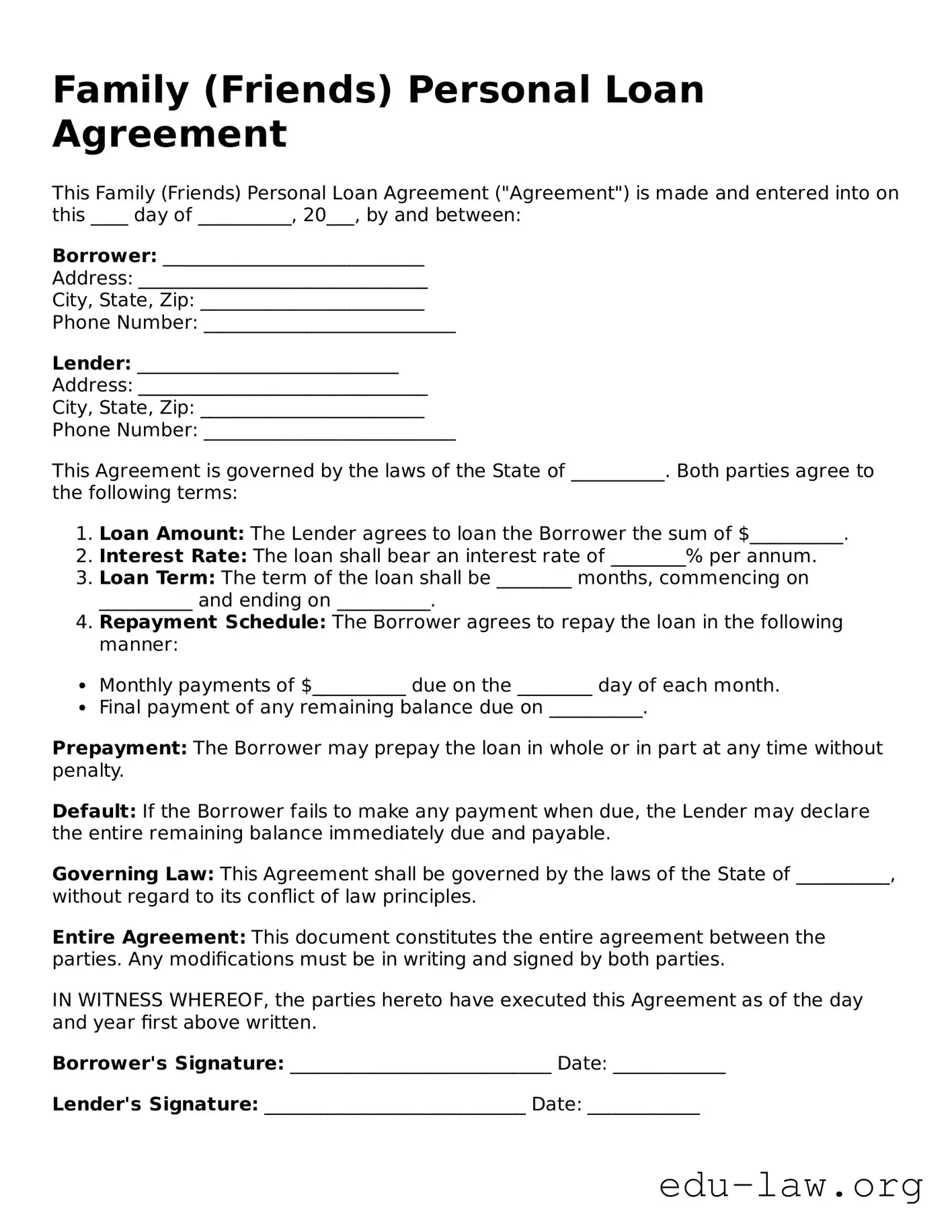
Family (Friends) Personal Loan Agreement
This Family (Friends) Personal Loan Agreement ("Agreement") is made and entered into on this ____ day of __________, 20___, by and between:
Borrower: ____________________________
Address: _______________________________
City, State, Zip: ________________________
Phone Number: ___________________________
Lender: ____________________________
Address: _______________________________
City, State, Zip: ________________________
Phone Number: ___________________________
This Agreement is governed by the laws of the State of __________. Both parties agree to the following terms:
Prepayment: The Borrower may prepay the loan in whole or in part at any time without penalty.
Default: If the Borrower fails to make any payment when due, the Lender may declare the entire remaining balance immediately due and payable.
Governing Law: This Agreement shall be governed by the laws of the State of __________, without regard to its conflict of law principles.
Entire Agreement: This document constitutes the entire agreement between the parties. Any modifications must be in writing and signed by both parties.
IN WITNESS WHEREOF, the parties hereto have executed this Agreement as of the day and year first above written.
Borrower's Signature: ____________________________ Date: ____________
Lender's Signature: ____________________________ Date: ____________
| Fact Name | Description |
|---|---|
| Definition | A Family (Friends) Personal Loan Agreement is a written document outlining the terms of a loan between individuals who are friends or family members. |
| Purpose | This agreement helps to clarify the expectations and responsibilities of both the lender and the borrower. |
| Loan Amount | The specific amount of money being loaned should be clearly stated in the agreement. |
| Interest Rate | The document should specify whether the loan will incur interest and, if so, the applicable rate. |
| Repayment Terms | Details regarding the repayment schedule, including due dates and payment methods, must be included. |
| Governing Law | The agreement should indicate the state laws that will govern the loan, which may vary by state. |
| Default Conditions | It is important to outline what constitutes a default on the loan and the potential consequences. |
| Signatures | Both parties must sign the agreement to make it legally binding, which provides evidence of consent. |
| Amendments | The agreement should include provisions for any changes to the terms, requiring written consent from both parties. |
Completing the Family (Friends) Personal Loan Agreement form is an important step to ensure clarity and understanding between the borrower and the lender. This agreement helps outline the terms of the loan, making expectations clear for both parties. Once the form is filled out, both parties should review it carefully before signing to ensure mutual agreement on all terms.
What is a Family (Friends) Personal Loan Agreement?
A Family (Friends) Personal Loan Agreement is a written document that outlines the terms of a loan between family members or friends. This agreement helps clarify the expectations of both the lender and the borrower. It can cover details such as the loan amount, interest rate, repayment schedule, and what happens if the borrower cannot repay the loan.
Why should I use a written agreement for a personal loan?
Using a written agreement for a personal loan helps prevent misunderstandings and conflicts. It provides a clear record of the terms agreed upon by both parties. This can be especially important in personal relationships, where emotions may run high. A written agreement can also serve as a legal document if disputes arise in the future.
What key details should be included in the agreement?
The agreement should include the loan amount, interest rate (if applicable), repayment schedule, and due dates. It’s also important to specify any consequences for late payments or defaulting on the loan. Additionally, both parties should sign and date the agreement to confirm their acceptance of the terms.
Can I charge interest on a personal loan to a family member or friend?
Yes, you can charge interest on a personal loan to a family member or friend. However, it’s essential to ensure that the interest rate is reasonable and complies with local laws. Charging too high an interest rate could lead to legal issues. It’s wise to discuss and agree on the interest rate upfront and include it in the loan agreement.
What happens if the borrower cannot repay the loan?
If the borrower cannot repay the loan, the agreement should outline the steps that will be taken. This may include renegotiating the repayment terms or setting up a payment plan. In some cases, it may involve legal action, but this can strain personal relationships. Clear communication and understanding are crucial in these situations.
Is it necessary to have the agreement notarized?
While it is not strictly necessary to have the agreement notarized, doing so can add an extra layer of protection for both parties. A notary can verify the identities of those signing the document, which can help prevent disputes about whether the agreement was signed willingly. If you want to ensure the agreement holds up in court, having it notarized is a good idea.
Incomplete Information: Many people forget to fill out all required fields. Missing details like names, addresses, or loan amounts can lead to confusion later. Always double-check that every section is completed.
Vague Loan Terms: It's common for individuals to use unclear language when describing the loan terms. Be specific about the interest rate, repayment schedule, and any other conditions. This clarity helps prevent misunderstandings.
Not Documenting the Purpose: Some borrowers neglect to state the purpose of the loan. Including this information can clarify the intent and may influence how the loan is repaid.
Forgetting Signatures: It's easy to overlook signatures, but both parties must sign the agreement for it to be valid. Without signatures, the document may not hold up if any disputes arise.
When entering into a personal loan agreement with family or friends, it is essential to have the right supporting documents. These documents help clarify the terms of the loan and protect the interests of both parties involved. Below are four commonly used forms and documents that often accompany a Family (Friends) Personal Loan Agreement.
Having these documents in place not only fosters transparency but also helps maintain healthy relationships among friends and family. Clear agreements can prevent misunderstandings and ensure that both parties are on the same page regarding the loan terms.
The Family (Friends) Personal Loan Agreement form shares similarities with a Promissory Note. A Promissory Note is a written promise to pay a specified amount of money to a designated party at a certain time or on demand. Like the Family Loan Agreement, it outlines the terms of repayment, including interest rates, payment schedules, and consequences for default. Both documents serve to formalize a loan arrangement, providing clarity and security for both the lender and the borrower.
Another document that resembles the Family (Friends) Personal Loan Agreement is a Loan Agreement. A Loan Agreement is typically more comprehensive and may be used for larger sums of money or more formal lending situations. It includes similar elements, such as the amount borrowed, interest rates, and repayment terms. However, it may also cover additional details like collateral and warranties. Both documents aim to protect the interests of both parties involved in the transaction.
The Credit Agreement also bears a resemblance to the Family Loan Agreement. This document is often used in commercial lending but can apply to personal loans as well. A Credit Agreement specifies the terms of credit extended to a borrower, including limits, fees, and repayment terms. Like the Family Loan Agreement, it serves to clarify the obligations of both parties and provides a framework for the loan relationship.
A Mortgage Agreement is another document that shares similarities with the Family (Friends) Personal Loan Agreement. While typically used for real estate transactions, a Mortgage Agreement outlines the terms under which a borrower receives funds secured by property. Both documents detail the amount borrowed, repayment terms, and the consequences of default. They serve to protect the lender’s interests and ensure the borrower understands their obligations.
Lastly, a Secured Loan Agreement is similar to the Family Loan Agreement in that it involves borrowing money with collateral. This document specifies the collateral used to secure the loan, the amount borrowed, and the repayment terms. Both agreements provide a clear understanding of the borrower's obligations and the lender's rights in case of default, ensuring that both parties are aware of the risks and responsibilities involved.
When filling out a Family (Friends) Personal Loan Agreement form, it is important to approach the process with care and consideration. Below are ten essential dos and don'ts to guide you.
By following these guidelines, you can help ensure that the loan agreement is clear and fair for everyone involved.
When it comes to borrowing money from family or friends, misunderstandings can easily arise. Here are ten common misconceptions about the Family (Friends) Personal Loan Agreement form that you should be aware of:
Understanding these misconceptions can help foster better relationships and ensure that personal loans are handled smoothly. Clear communication and documentation are key to maintaining trust and avoiding potential conflicts.
When considering a personal loan agreement with family or friends, it's essential to approach the process with clarity and mutual understanding. Here are some key takeaways to keep in mind:
By following these guidelines, both lenders and borrowers can foster a more positive and transparent lending experience, helping to maintain relationships while managing financial responsibilities.