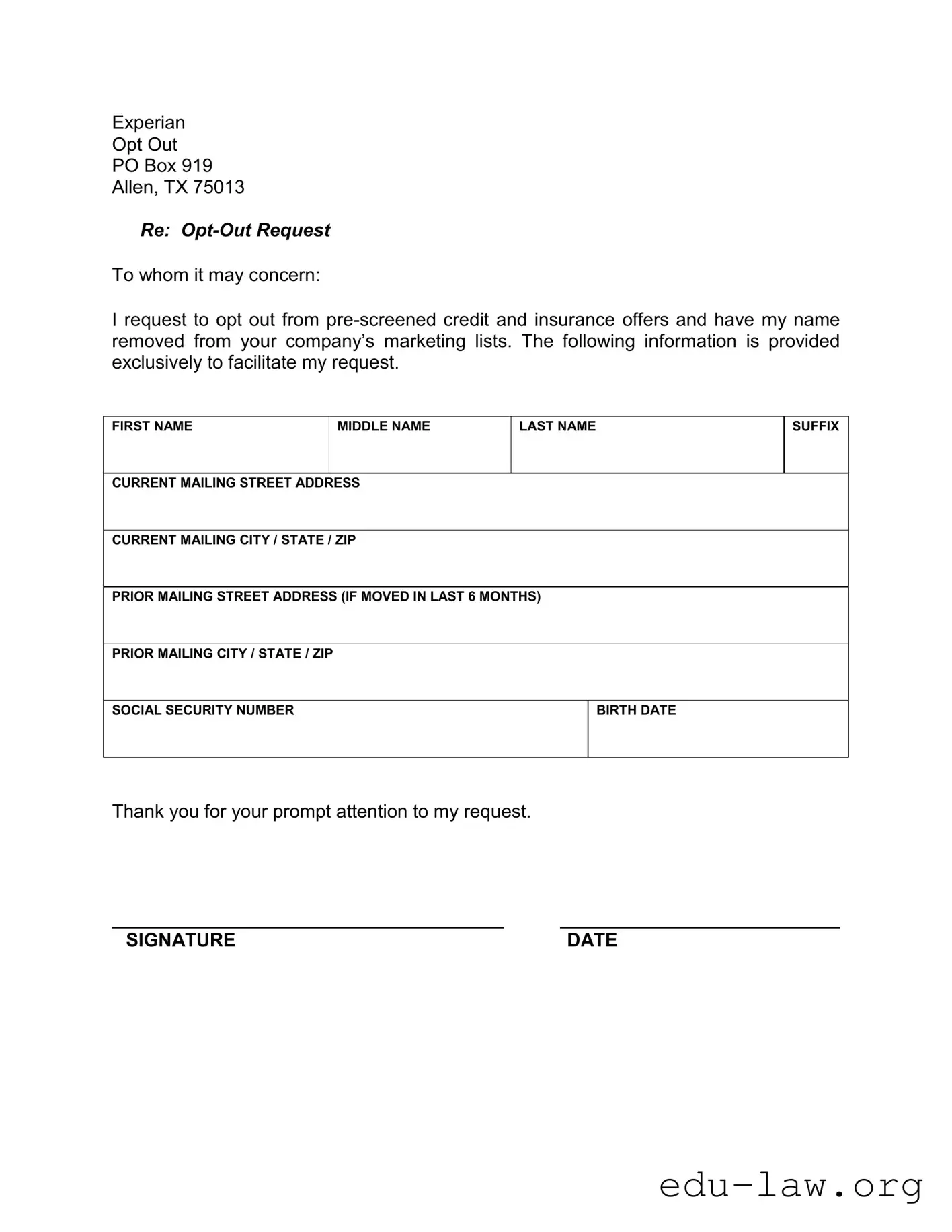
The Experian P Box 919 Allen, TX 75013 form is an essential tool for individuals seeking to protect their personal information from unsolicited credit and insurance offers. This form allows you to officially request that your name be removed from Experian's marketing lists, thereby opting out of pre-screened offers. By providing specific details, such as your first name, last name, and current mailing address, you can ensure that your request is processed efficiently. Additionally, if you have recently moved, including your prior mailing address helps to further verify your identity. The form also requires your Social Security number and date of birth for accurate identification purposes. After filling out the necessary information, signing, and dating the form, you can send it to the designated address. This process helps to enhance your privacy and gives you greater control over the types of communications you receive.

Experian
Opt Out
PO Box 919
Allen, TX 75013
Re:
To whom it may concern:
I request to opt out from
FIRST NAME |
MIDDLE NAME |
LAST NAME |
|
|
|
CURRENT MAILING STREET ADDRESS |
|
|
CURRENT MAILING CITY / STATE / ZIP
PRIOR MAILING STREET ADDRESS (IF MOVED IN LAST 6 MONTHS)
PRIOR MAILING CITY / STATE / ZIP
SOCIAL SECURITY NUMBER |
BIRTH DATE |
|
|
SUFFIX
Thank you for your prompt attention to my request.
SIGNATURE |
DATE |
| Fact Name | Details |
|---|---|
| Purpose | This form is used to opt out of pre-screened credit and insurance offers. |
| Address | All requests should be sent to Experian Opt Out, PO Box 919, Allen, TX 75013. |
| Information Required | The form requires personal details such as name, address, Social Security number, and birth date. |
| Response Time | Experian is expected to process opt-out requests promptly, although specific timelines may vary. |
| Governing Law | The Fair Credit Reporting Act (FCRA) governs the use of this opt-out process. |
| Signature Requirement | A signature and date are required to validate the request for opting out. |
Filling out the Experian P Box 919 Allen, TX 75013 form requires careful attention to detail. This form is used to request removal from pre-screened credit and insurance offers. Once completed, it should be sent to the specified address for processing.
Once you have completed the form, review it for accuracy. Ensure all information is correct before mailing it to the address provided. This will help facilitate a smooth processing of your request.
What is the purpose of the Experian P Box 919 Allen TX 75013 form?
This form is used to request the removal of your name from Experian's marketing lists. By submitting this form, you can opt out of receiving pre-screened credit and insurance offers, helping to protect your privacy and reduce unsolicited mail.
What information do I need to provide on the form?
You will need to provide your first name, middle name, last name, current mailing address, city, state, and ZIP code. If you have moved within the last six months, you should also include your prior mailing address. Additionally, your social security number, birth date, and suffix (if applicable) are required to process your request accurately.
How do I submit the form to Experian?
Once you have completed the form, you should mail it to the address specified: Experian Opt Out, PO Box 919, Allen, TX 75013. Ensure that you sign and date the form before sending it to confirm your request.
How long does it take for my opt-out request to be processed?
Typically, Experian processes opt-out requests promptly. However, it may take up to several weeks for your name to be removed from their marketing lists. You may continue to receive offers during this time, but they should cease once your request has been fully processed.
Will opting out affect my credit score?
No, opting out will not impact your credit score. This process only affects marketing offers and does not influence your credit report or your ability to obtain credit in the future.
Can I opt out for someone else?
Generally, you can only submit an opt-out request for yourself. If you wish to opt out on behalf of someone else, they must complete and sign their own form. This ensures that the request is authorized and complies with privacy regulations.
Incomplete Information: Failing to provide all required fields can lead to delays. Ensure that first name, last name, and mailing address are fully completed.
Incorrect Social Security Number: Entering an incorrect Social Security number can hinder the processing of your request. Double-check for accuracy.
Missing Signature: Not signing the form will result in an automatic rejection. Always sign and date the form before submission.
Outdated Address: Using an old mailing address can cause confusion. If you have moved recently, provide both your current and prior addresses.
Neglecting to Include a Birth Date: Omitting your birth date can complicate the verification process. Make sure to include this information.
Submitting Without Review: Failing to review the completed form for errors can lead to mistakes. Take a moment to check all entries before sending it off.
When submitting the Experian P Box 919 Allen, TX 75013 form to opt out of pre-screened credit and insurance offers, several other documents may also be relevant. These documents can support your request or provide additional context. Here is a list of common forms and documents that are often used alongside the Experian opt-out request.
Using these documents in conjunction with the Experian opt-out request can help streamline the process and provide additional security for your personal information. Always keep copies of your submissions for your records.
The National Do Not Call Registry form is similar to the Experian Opt Out form in that both allow individuals to control the types of solicitations they receive. The National Do Not Call Registry enables consumers to opt out of unsolicited telemarketing calls. By registering their phone numbers, individuals can reduce unwanted interruptions and maintain privacy. Both forms require personal information to process the request, ensuring that the right individuals are opting out.
The Credit Report Freeze Request form also shares similarities with the Experian Opt Out form. This document allows consumers to restrict access to their credit reports, making it more difficult for identity thieves to open accounts in their names. Like the Experian form, the Credit Report Freeze Request requires personal identification details, including Social Security numbers and addresses, to verify the identity of the requester and prevent unauthorized access.
The Unsubscribe form for email marketing lists functions in a manner akin to the Experian Opt Out form. Individuals can use this document to remove their email addresses from commercial mailing lists. Both processes aim to minimize unwanted communications, and require personal information to ensure that the unsubscribe request is valid and correctly processed.
The Privacy Act Request form is another document that parallels the Experian Opt Out form. Under the Privacy Act, individuals can request access to their personal information held by federal agencies. This form allows individuals to assert their rights regarding personal data and seek to limit how their information is used. Both forms emphasize the importance of personal data control and require specific identifying information.
The Direct Marketing Association (DMA) Mail Preference Service form provides a similar function to the Experian Opt Out form. By submitting this form, individuals can opt out of receiving unsolicited mail from DMA members. Both documents focus on consumer choice and privacy, requiring personal details to ensure that the request is processed accurately and effectively.
The Fair Credit Reporting Act (FCRA) Request for Information form is comparable to the Experian Opt Out form in that it allows individuals to request information about their credit reports and how their data is used. This form helps consumers understand their rights under the FCRA and can lead to opting out of certain data uses. Both require personal information to validate the request and protect consumer rights.
The Telemarketing Sales Rule (TSR) Complaint form is similar as it enables consumers to report violations of telemarketing regulations. While the Experian Opt Out form seeks to prevent unwanted offers, the TSR Complaint form addresses issues that arise from unwanted calls. Both empower consumers to take control of their interactions with marketers and require specific identifying details for processing.
The Opt-Out Notice for Insurance Companies serves a purpose similar to the Experian Opt Out form by allowing individuals to refuse certain marketing practices in the insurance sector. By submitting this notice, consumers can prevent their information from being shared with third parties for marketing purposes. Both documents focus on consumer privacy and require personal information to process the opt-out request effectively.
The Consumer Credit Protection form allows individuals to assert their rights regarding credit reporting and marketing practices. This form is similar to the Experian Opt Out form as it seeks to protect consumers from unwanted solicitations. Both documents require personal identification details to ensure that the requests are legitimate and secure.
Finally, the Online Privacy Policy Consent form is akin to the Experian Opt Out form in that it allows individuals to express their preferences regarding how their personal information is collected and used online. This form emphasizes consumer control over personal data, similar to the opt-out request. Both require personal information to validate the request and ensure that consumer preferences are respected.
When filling out the Experian Opt-Out form, consider the following guidelines:
Many people have misconceptions about the Experian P Box 919 Allen, TX 75013 form. Understanding these misconceptions can help individuals navigate the opt-out process more effectively. Here are six common misunderstandings:
By clarifying these misconceptions, individuals can make informed decisions about their privacy and marketing preferences.
When filling out the Experian P Box 919 Allen, TX 75013 form, it’s important to keep a few key points in mind. Here are some essential takeaways to help you navigate the process:
By keeping these points in mind, you can effectively manage your opt-out request and take control of your personal information.