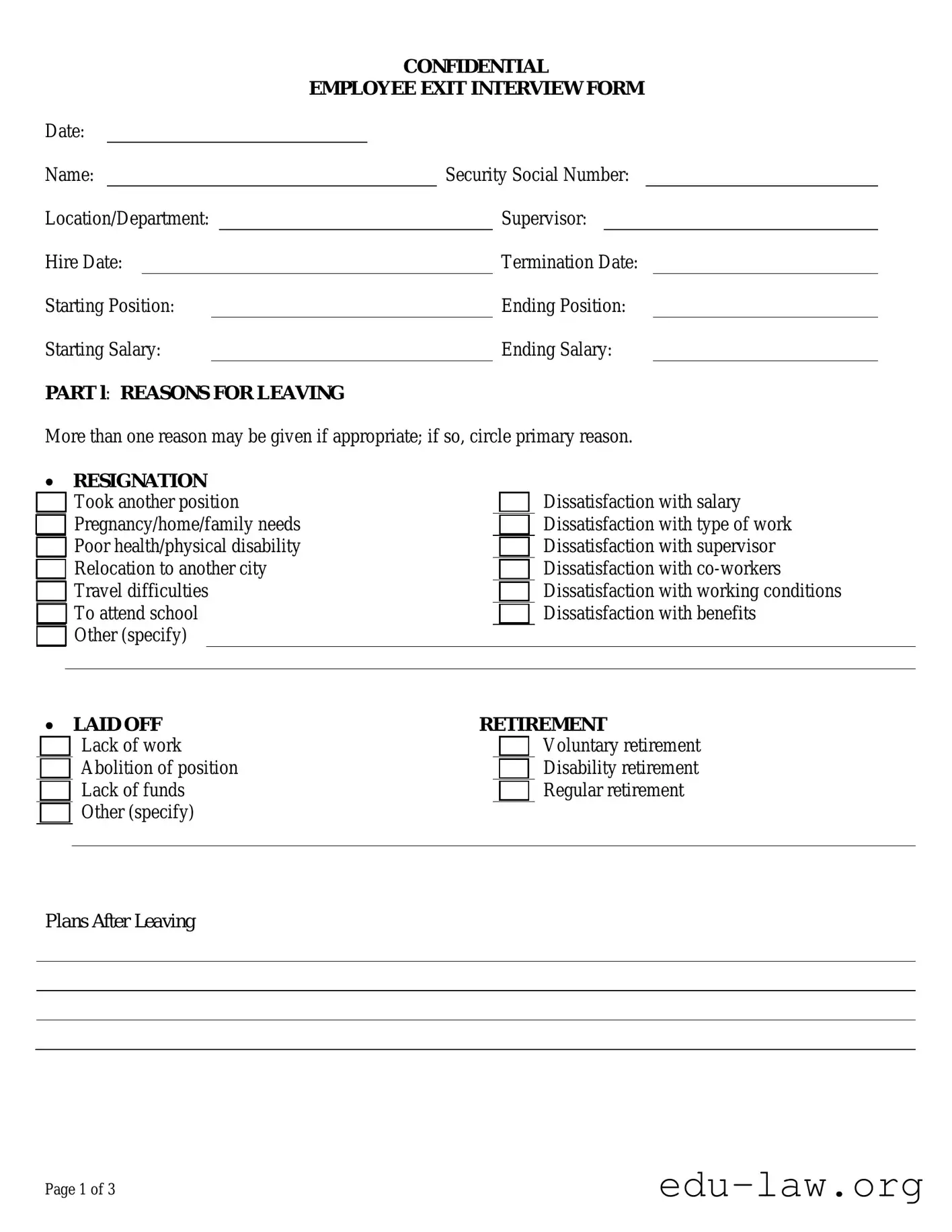
The Exit Interview form serves as a crucial tool in the employee transition process, facilitating a structured dialogue between departing employees and their employers. This form typically encompasses a range of topics, including the reasons for departure, overall job satisfaction, and feedback on workplace culture. By gathering insights on these aspects, organizations can identify areas for improvement and enhance employee retention strategies. Additionally, the form often includes questions about the effectiveness of management, opportunities for professional development, and the adequacy of resources provided to employees. Understanding the responses collected through this form can aid companies in addressing systemic issues and fostering a more positive work environment. Ultimately, the Exit Interview form not only provides valuable feedback for the organization but also offers departing employees a chance to voice their experiences, contributing to a culture of openness and continuous improvement.

CONFIDENTIAL
EMPLOYEE EXIT INTERVIEW FORM
Date: |
|
|
|
|
|
|
|
|||
Name: |
|
|
Security Social Number: |
|
||||||
Location/Department: |
|
|
|
Supervisor: |
|
|||||
Hire Date: |
|
|
|
Termination Date: |
|
|||||
Starting Position: |
|
|
|
Ending Position: |
|
|||||
Starting Salary: |
|
|
|
Ending Salary: |
|
|||||
PART l: REASONS FOR LEAVING |
|
|
|
|
|
|
||||
More than one reason may be given if appropriate; if so, circle primary reason.
|
|
RESIGNATION |
|
|
|
|
|
Took another position |
|
Dissatisfaction with salary |
|
|
|
Pregnancy/home/family needs |
|
Dissatisfaction with type of work |
|
|
|
Poor health/physical disability |
|
Dissatisfaction with supervisor |
|
|
|
Relocation to another city |
|
Dissatisfaction with |
|
|
|
Travel difficulties |
|
Dissatisfaction with working conditions |
|
|
|
To attend school |
|
Dissatisfaction with benefits |
|
|
|
Other (specify) |
|
|
|
|
|
|
|
|
|
|
|
LAID OFF |
RETIREMENT |
||
|
|
Lack of work |
|
|
Voluntary retirement |
|
|
Abolition of position |
|
|
Disability retirement |
|
|
Lack of funds |
|
|
Regular retirement |
|
|
Other (specify) |
|
|
|
|
|
|
|
|
|
Plans After Leaving
Page 1 of 3
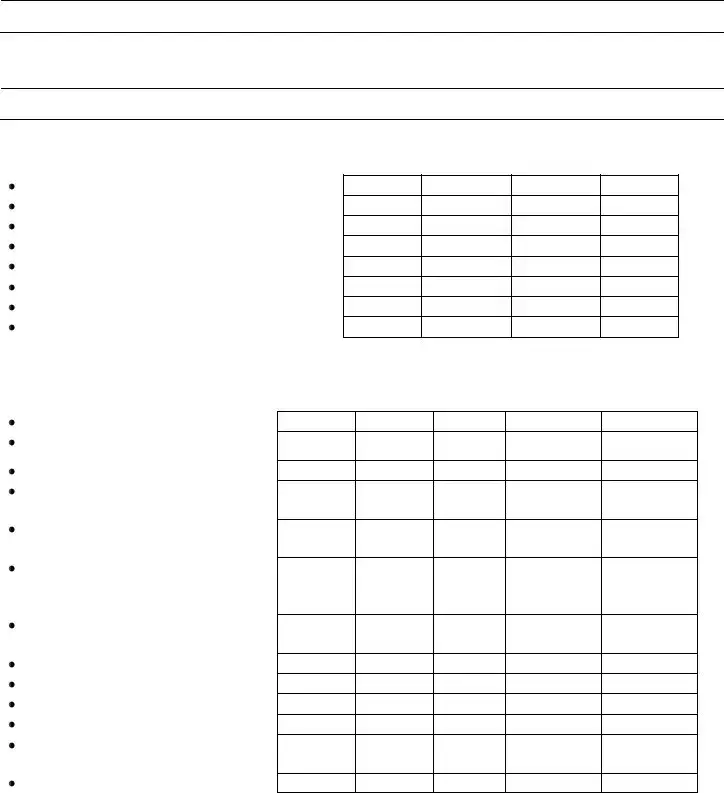
PART ll: COMMENTS/SUGGESTIONS FOR IMPROVEMENT
We are interested in what our employees have to say about their work experience with us. Please complete this form.
1.What did you like most about your job?
2.What did you like least about your job?
3.How did you feel about the pay and benefits?
Excellent Good Fair Poor
Rate of pay for your job
Paid holidays
Paid vacations
Retirement plan
Medical coverage for self
Medical coverage for dependents
Life insurance
Sick leave
4. How did you feel about the following:
Very |
Slightly |
Slightly |
Very |
Satisfied |
Satisfied |
Neutral Dissatisfied |
Dissatisfied |
Opportunity to use your abilities
Recognition for the work you did
Training you received
Your supervisor’s management methods
The opportunity to talk with your supervisor
The information you received on policies, programs, projects and problems
The information you received on departmental structure Promotion policies and practices Discipline policies and practices Job transfer policies and practices Overtime policies and practices Performance review policies and practices
Physical working conditions
Page 2 of 3

COMMENTS:
5.a) If you are taking another job, what kind of work will you be doing?
b)What has your new place of employment offered you that is more attractive than your present job?
6.Could we have made any improvements that might have influenced you to stay on the job?
Other remarks (optional):
_____________________________________________________ |
__________________________ |
|
|
Employee’s Signature |
Date |
DO NOT WRITE BELOW THIS LINE. OFFICE USE ONLY. |
|
|
( ) Discussed with employee |
|
|
( |
) Right to file for unemployment benefits |
|
( |
) Conversion of benefits |
|
( |
) If retiring, state option for payment of unused leave ____________________________________________ |
|
______________________________________________________ |
__________________________ |
|
|
Interviewer’s Signature |
Date |
Page 3 of 3
| Fact Name | Description |
|---|---|
| Purpose | The Exit Interview form is used to gather feedback from employees who are leaving the organization. |
| Confidentiality | Responses are typically kept confidential to encourage honest feedback. |
| Common Questions | Questions often include reasons for leaving, job satisfaction, and suggestions for improvement. |
| State-Specific Forms | Some states may require specific forms or disclosures based on employment laws. |
| Governing Laws | In California, for example, the form must comply with the Fair Employment and Housing Act. |
| Follow-Up | Employers may use the feedback to improve workplace culture and retention strategies. |
Once you have your Exit Interview form ready, it’s time to fill it out. Completing this form is an important step in the process of leaving your position. You will provide feedback that can help improve the workplace for others. Follow the steps below to ensure you fill it out correctly.
Once you have completed the form, submit it to your HR department or the designated person. They will review your feedback and may reach out for further discussion if needed. Your insights can contribute to positive changes within the organization.
What is an Exit Interview form?
An Exit Interview form is a tool used by organizations to gather feedback from employees who are leaving the company. It typically includes questions about the employee's experience, reasons for leaving, and suggestions for improvement. This form aims to help employers understand the workplace environment and identify areas that may need attention or enhancement. By collecting this information, organizations can work towards improving employee retention and overall job satisfaction.
Why is it important to complete the Exit Interview form?
Completing the Exit Interview form is crucial for both the departing employee and the organization. For the employee, it provides an opportunity to voice opinions and share experiences that may influence future workplace practices. For the organization, the insights gained from these interviews can be invaluable. They can highlight patterns in employee turnover, reveal underlying issues, and inform strategies to foster a healthier work culture. Ultimately, this feedback can lead to positive changes that benefit current and future employees.
What types of questions are typically included in an Exit Interview form?
Exit Interview forms usually contain a mix of open-ended and closed-ended questions. Common topics include reasons for leaving, job satisfaction, relationships with colleagues and supervisors, and overall company culture. Some specific questions might ask about the employee's experience with training and development opportunities, workload, and whether they would recommend the organization to others. This variety allows for both quantitative data and qualitative insights.
Is participation in the Exit Interview mandatory?
Participation in the Exit Interview is generally voluntary, but it is highly encouraged. While employees are not obligated to complete the form, doing so can contribute to a more comprehensive understanding of the workplace dynamics. Employers often emphasize the importance of this feedback, as it can lead to meaningful improvements. Employees should feel empowered to share their thoughts, but they also have the right to decline participation if they choose.
How is the information from the Exit Interview form used?
The information collected from Exit Interviews is analyzed to identify trends and areas for improvement within the organization. Human resources teams may compile this data to create reports that highlight common themes or issues. This analysis can inform decision-making processes, influence policy changes, and guide initiatives aimed at enhancing employee satisfaction and retention. Importantly, the data is usually aggregated and anonymized to protect individual privacy.
Can I provide feedback anonymously in the Exit Interview?
Many organizations offer the option for employees to provide feedback anonymously during the Exit Interview process. This anonymity can encourage more honest and candid responses, as employees may feel more comfortable sharing their true thoughts without fear of repercussions. If anonymity is a priority for you, it is advisable to check with your HR department to understand how your feedback will be handled and whether anonymous submissions are accepted.
Incomplete Responses: Many individuals leave sections of the form blank, which can lead to misunderstandings or missed opportunities for feedback.
Vague Feedback: Providing unclear or ambiguous comments can make it difficult for the organization to understand the reasons for departure.
Emotional Responses: Allowing emotions to influence answers may result in overly negative or biased feedback that does not accurately reflect experiences.
Failure to Provide Suggestions: Not offering constructive suggestions for improvement can limit the organization's ability to make necessary changes.
Ignoring Confidentiality: Some individuals may forget that their feedback is confidential, leading them to hold back important insights.
Neglecting to Review: Skipping the review of answers before submission can result in typos or inaccuracies that detract from the overall message.
Not Being Honest: Some may feel pressured to soften their responses, which can hinder the effectiveness of the exit interview process.
Overlooking Follow-Up Information: Failing to provide contact information for potential follow-up questions can impede further clarification of feedback.
The Exit Interview form is a crucial document used when an employee leaves a company. It helps gather feedback about the employee's experience and reasons for departure. In addition to the Exit Interview form, several other documents are often utilized in this process. Below is a list of these forms and their brief descriptions.
These documents collectively assist in ensuring a smooth transition for both the employee and the employer during the exit process. Each form serves a specific purpose, contributing to the overall management of employee departures.
The Exit Interview form shares similarities with the Employee Satisfaction Survey. Both documents aim to gather feedback from employees regarding their experiences within the organization. While the Exit Interview focuses on reasons for leaving, the Employee Satisfaction Survey assesses overall job satisfaction. Each document provides insights that can help organizations improve workplace conditions and retain talent.
Another document akin to the Exit Interview form is the Stay Interview. Stay Interviews are conducted with current employees to understand what keeps them engaged and satisfied in their roles. Like the Exit Interview, this document seeks to elicit honest feedback, but it does so with the intention of retaining employees rather than assessing those who are departing.
The Performance Review form is also similar in its goal of evaluating employee experiences and perspectives. While the Performance Review assesses an employee's work performance over a specific period, the Exit Interview provides insights into the broader organizational environment. Both documents can inform management about areas needing improvement.
The Onboarding Survey is another related document. This survey is administered to new employees to gather feedback on their initial experiences with the organization. While the Exit Interview focuses on the end of an employee's journey, the Onboarding Survey captures the beginning, making both documents essential for understanding the employee lifecycle.
The Grievance Form parallels the Exit Interview in that both seek to uncover issues affecting employee satisfaction. Employees use the Grievance Form to report specific problems they encounter, while the Exit Interview allows departing employees to discuss their overall experiences. Both documents can highlight systemic issues within the workplace.
Similar to the Exit Interview form is the Employee Engagement Survey. This survey measures how committed and motivated employees feel toward their work and the organization. While the Exit Interview focuses on those leaving, the Employee Engagement Survey assesses the current workforce's sentiments, providing valuable data for improving retention strategies.
The Retention Strategy Questionnaire also shares common ground with the Exit Interview. This document is designed to gather information about the factors that contribute to employee retention. It seeks to identify what keeps employees satisfied and engaged, much like the insights gained from Exit Interviews, which highlight what might drive employees away.
Lastly, the Job Satisfaction Questionnaire is comparable to the Exit Interview form. This document assesses how satisfied employees are with various aspects of their jobs. While the Exit Interview focuses on the reasons for leaving, the Job Satisfaction Questionnaire aims to understand current levels of satisfaction, providing organizations with a comprehensive view of employee sentiment.
When filling out the Exit Interview form, it’s important to be mindful of your responses. Follow these guidelines to ensure your feedback is effective and constructive.
Following these guidelines will help you complete the Exit Interview form effectively. Your input is valuable and can contribute to future improvements.
Exit interviews are a common practice in many organizations, but several misconceptions surround their purpose and effectiveness. Below is a list of nine common misconceptions about exit interview forms, along with explanations to clarify these misunderstandings.
Many people believe that exit interviews serve solely the interests of the employer. In reality, they can also provide valuable feedback for employees, allowing them to voice concerns and share experiences that may help improve the workplace for current and future employees.
Not all exit interviews follow a standard format. Different organizations may have varying approaches, and the questions asked can differ significantly based on company culture and objectives.
Participation in exit interviews is typically voluntary. Employees may choose to decline if they feel uncomfortable or believe it will not be beneficial.
While exit interviews often occur when an employee leaves due to dissatisfaction, they can also be conducted for positive departures, such as retirements or career advancements, to gain insights into what worked well in the organization.
While organizations strive to maintain confidentiality, there may be limitations. Some information may be shared with management to address systemic issues, so employees should be aware of this possibility.
Feedback gathered from exit interviews can lead to meaningful changes within an organization. Many companies use this information to improve retention, enhance workplace culture, and refine their hiring processes.
Although Human Resources often leads exit interviews, managers or team leaders may also conduct them, especially in smaller organizations, to ensure a comprehensive understanding of the employee's experience.
Many employees fear repercussions for providing honest feedback during exit interviews. However, most organizations encourage candid responses to foster a culture of improvement and do not retaliate against departing employees.
Some individuals view exit interviews as unnecessary. However, when conducted effectively, they can yield valuable insights that contribute to a better working environment and lower turnover rates.
When filling out and using the Exit Interview form, consider the following key takeaways: