The Existing Home Observation Checklist form serves as a vital tool for individuals assessing the condition of a property before making a purchase. It outlines key areas of focus, including structural integrity, plumbing, electrical systems, and overall safety features. This checklist ensures that potential buyers can systematically evaluate essential components of a home, identifying any necessary repairs or maintenance issues. By utilizing this form, buyers can make informed decisions, negotiate repairs, or adjust their offers based on the home's condition. Furthermore, the checklist promotes transparency between buyers and sellers, fostering trust throughout the transaction process. Ultimately, this document plays a crucial role in protecting the interests of all parties involved in a real estate transaction.
|
After Recording Return to: |
) |
|
|
) |
|
|
) |
|
|
) |
|
|
) |
|
|
) |
|
|
) |
|
|
) |
|
|
|
|
|
|
STATE OF GEORGIA |
|
|
COUNTY OF _________________ |
|
|
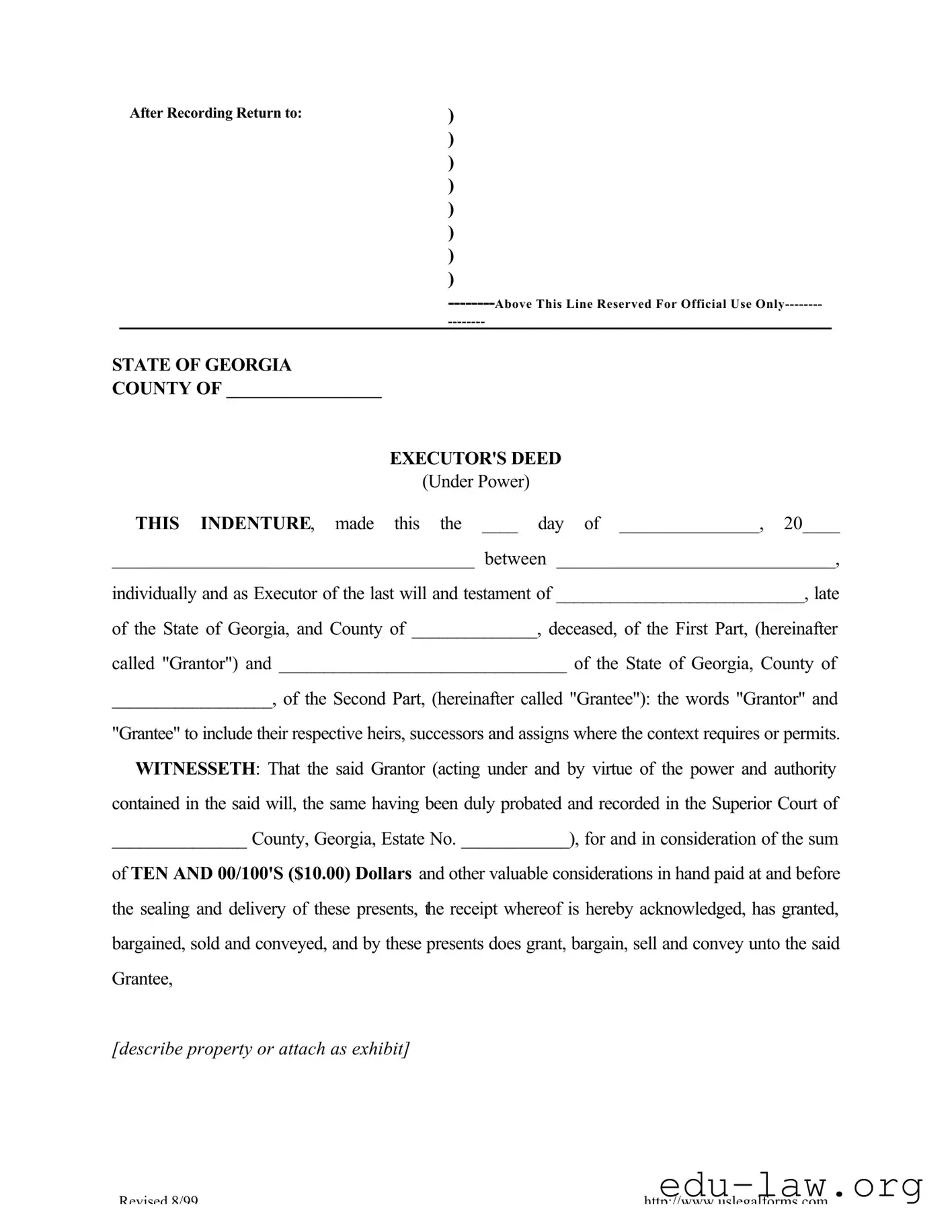
EXECUTOR'S DEED
(Under Power)
THIS INDENTURE, made this the ____ day of _______________, 20____
_______________________________________ between ______________________________,
individually and as Executor of the last will and testament of ____________________________, late
of the State of Georgia, and County of ______________, deceased, of the First Part, (hereinafter
called "Grantor") and ________________________________ of the State of Georgia, County of
__________________, of the Second Part, (hereinafter called "Grantee"): the words "Grantor" and
"Grantee" to include their respective heirs, successors and assigns where the context requires or permits. WITNESSETH: That the said Grantor (acting under and by virtue of the power and authority contained in the said will, the same having been duly probated and recorded in the Superior Court of
_______________ County, Georgia, Estate No. ____________), for and in consideration of the sum
of TEN AND 00/100'S ($10.00) Dollars and other valuable considerations in hand paid at and before the sealing and delivery of these presents, the receipt whereof is hereby acknowledged, has granted, bargained, sold and conveyed, and by these presents does grant, bargain, sell and convey unto the said Grantee,
[describe property or attach as exhibit]
Revised 8/99 |
http://www.uslegalforms.com |
TO HAVE AND TO HOLD the said tract or parcel of land, with all and singular the rights, members and appurtenances thereto, to the being, belonging, or in anywise appertaining, to the only proper use, benefit and behoof of the said grantee forever. IN FEE SIMPLE: In as full and ample a manner as the same was held. Possessed and enjoyed, or might have been held, possessed and enjoyed, by the said deceased.
IN WITNESS WHEREOF, each grantor herein has hereunto set hand and seal, the day and year
first above written.
Signed, sealed and delivered
In the presence of:
____________________________ |
|
(Witness) |
___________________________ (Seal) |
|
(Grantor), Individually and As Aforesaid |
_____________________________ |
|
(Notary Public) |
|
|
___________________________ (Seal) |
|
(Grantor), Executrix and As Aforesaid |
| Fact Name | Description |
|---|---|
| Governing Law | The Executor's Deed in Georgia is governed by Georgia Code Title 44, Chapter 5, which outlines the laws related to property conveyance. |
| Parties Involved | The form identifies two primary parties: the Grantor (the seller or executor) and the Grantee (the buyer). Each party's role is clearly defined. |
| Consideration | The deed specifies a nominal consideration of ten dollars, which is often used to satisfy legal requirements for a valid transaction. |
| Property Description | The form requires a description of the property being conveyed, ensuring clarity about what is included in the transfer. |
Completing the Existing Home Observation Checklist form is a straightforward process that requires careful attention to detail. By following the steps outlined below, you can ensure that all necessary information is accurately recorded.
What is the purpose of the Existing Home Observation Checklist form?
The Existing Home Observation Checklist form is designed to help individuals assess the condition of a home before making a purchase. It provides a structured way to document observations about various aspects of the property, ensuring that potential issues are noted and can be addressed. This checklist can serve as a useful tool for both buyers and sellers during the transaction process.
Who should complete the Existing Home Observation Checklist?
The checklist should be completed by anyone interested in evaluating the condition of a home. This includes prospective buyers, real estate agents, and home inspectors. By filling out the checklist, individuals can identify areas that may require further inspection or repair, which can be crucial in negotiations.
What types of observations should be included in the checklist?
The checklist typically includes observations related to the home's structure, roof, plumbing, electrical systems, and overall cleanliness. It may also prompt users to note any signs of water damage, pest infestations, or other maintenance issues. Each section is designed to guide users in making thorough assessments.
Is the Existing Home Observation Checklist legally binding?
No, the Existing Home Observation Checklist is not legally binding. It is a tool for documentation and assessment rather than a formal contract. While it can help identify issues, it does not replace the need for professional inspections or legal advice. Buyers and sellers should still seek expert guidance when navigating real estate transactions.
How should I use the observations recorded in the checklist?
Once you have completed the checklist, review your observations carefully. Use this information to inform your decisions regarding the property. If you notice significant issues, consider discussing them with a real estate agent or a home inspector. This can help you determine the next steps, whether it’s negotiating repairs or reconsidering your offer.
Can I modify the Existing Home Observation Checklist?
When completing the Existing Home Observation Checklist form, individuals often make several common mistakes. Here are seven of those mistakes:
By being mindful of these common mistakes, individuals can ensure that their Existing Home Observation Checklist is completed accurately and effectively.
When dealing with real estate transactions, several forms and documents often accompany the Existing Home Observation Checklist. Each of these documents serves a specific purpose, ensuring that all aspects of the transaction are properly documented and legally binding. Below is a list of commonly used forms.
These documents are essential for ensuring a smooth transaction process. Each plays a critical role in protecting the interests of both buyers and sellers. Always review them carefully and consult with a professional if you have questions.
The Existing Home Observation Checklist form shares similarities with a Home Inspection Report. Both documents serve to evaluate the condition of a property. A home inspection report details the findings of a professional inspector, highlighting issues such as structural integrity, plumbing, and electrical systems. Similarly, the checklist allows homeowners or potential buyers to note observations about the home's condition, ensuring that all necessary areas are reviewed before making a decision.
Another related document is the Property Condition Disclosure Statement. This form is often provided by sellers to inform buyers about known issues with the home. Like the Existing Home Observation Checklist, it aims to promote transparency in real estate transactions. Both documents help to protect the interests of buyers by ensuring they are aware of any potential problems before finalizing their purchase.
The Seller's Disclosure Statement also aligns closely with the Existing Home Observation Checklist. This document is filled out by the seller to disclose any material defects or issues with the property. While the checklist is more of a personal observation tool, both documents ultimately aim to provide a clear picture of the home's condition, helping buyers make informed decisions.
A Comparative Market Analysis (CMA) can also be considered similar. While it focuses on property values and market trends, a CMA often includes insights about the physical condition of homes in the area. The Existing Home Observation Checklist complements this by providing a detailed look at an individual property’s condition, which can affect its market value.
The Lease Agreement is another document that shares some characteristics. While it primarily outlines the terms of renting a property, it often includes clauses about property maintenance and condition. The checklist can be useful for landlords and tenants to document the property's condition at the start of a lease, ensuring both parties have a mutual understanding of its state.
The Appraisal Report is yet another document that parallels the Existing Home Observation Checklist. An appraisal assesses a property's value based on various factors, including its condition. While the checklist focuses on observations made by individuals, both documents ultimately contribute to understanding a property's worth and condition.
The Maintenance Log is similar in that it records the upkeep of a property over time. While the Existing Home Observation Checklist captures observations at a specific moment, a maintenance log tracks ongoing repairs and improvements. Both documents are essential for maintaining the property's value and ensuring it remains in good condition.
The Home Warranty Agreement also shares some common ground. This document outlines the coverage for repairs and replacements of home systems and appliances. While it does not assess the home’s condition directly, it provides peace of mind to homeowners, similar to how the checklist helps identify areas that may need attention.
Lastly, the Title Report is another document that has relevance. Although it focuses on the legal ownership of the property, it can also reveal any issues that may affect the property's value. The Existing Home Observation Checklist complements this by providing a physical assessment of the property, ensuring that buyers are aware of both legal and physical aspects before proceeding with a purchase.
When filling out the Existing Home Observation Checklist form, consider the following guidelines to ensure accuracy and completeness.
Misconceptions about the Existing Home Observation Checklist form can lead to confusion and misunderstandings. Here are four common misconceptions:
When using the Existing Home Observation Checklist form, consider the following key takeaways: