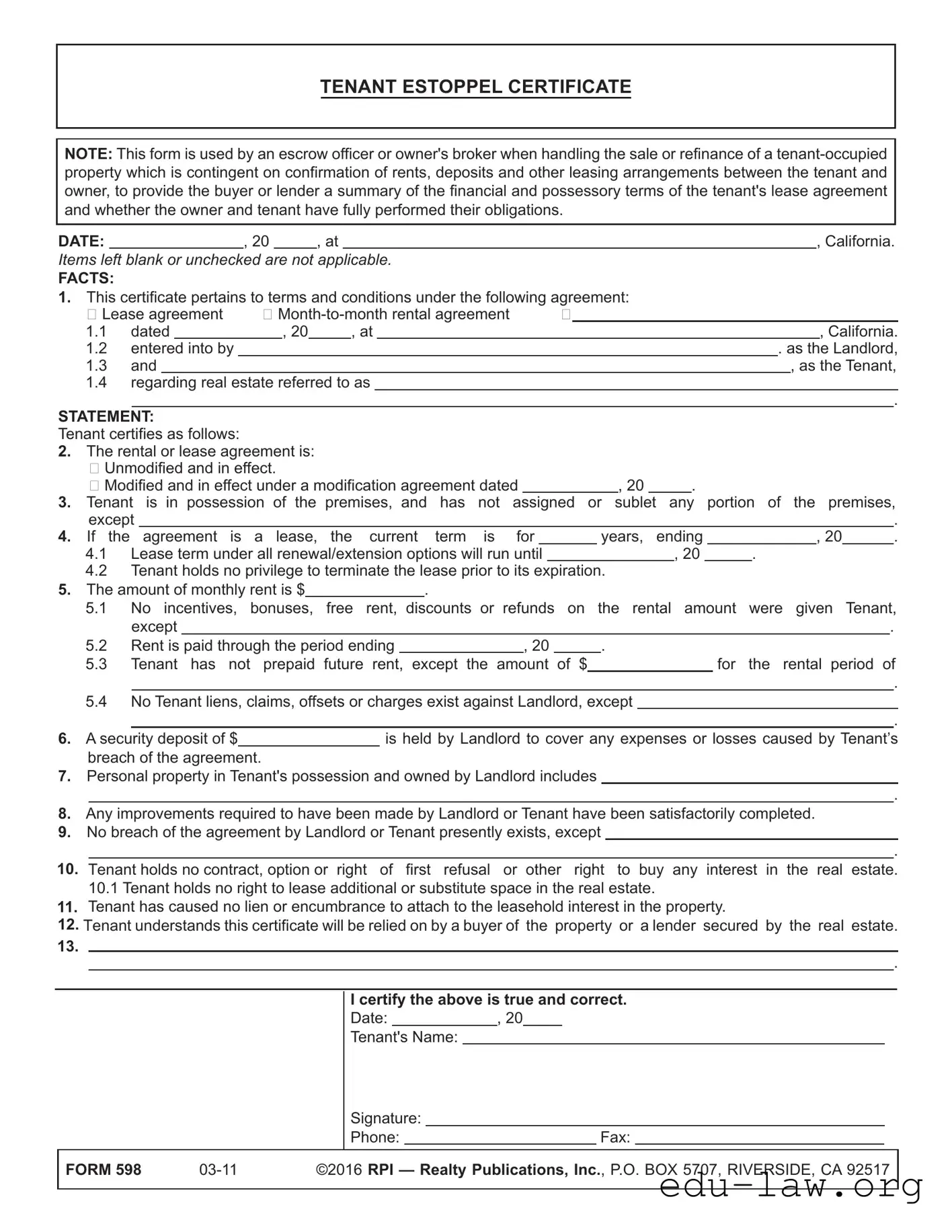
The Estoppel Certificate form plays a crucial role in real estate transactions, particularly when a property is tenant-occupied. This document serves as a vital tool for escrow officers and brokers during the sale or refinance process. It provides a clear summary of the tenant's lease agreement, including essential details such as rental amounts, security deposits, and any modifications to the lease. The form confirms whether both the landlord and tenant have met their obligations. It also outlines the current status of the lease, including the term length and any rights the tenant may hold regarding the property. By certifying the accuracy of this information, the tenant helps ensure that potential buyers or lenders can make informed decisions based on the financial and possessory terms of the lease. This certificate is not just a formality; it carries significant weight in the transaction process, making it imperative for all parties involved to understand its contents thoroughly.

TENANT ESTOPPEL CERTIFICATE
NOTE: This form is used by an escrow officer or owner's broker when handling the sale or refinance of a
property which is contingent on confirmation of rents, deposits and other leasing arrangements between the tenant and owner, to provide the buyer or lender a summary of the financial and possessory terms of the tenant's lease agreement and whether the owner and tenant have fully performed their obligations.
DATE: |
, 20 |
, at |
|
, California. |
||
|
|
|
|
|
|
|
Items left blank or unchecked are not applicable.
FACTS:
1.This certificate pertains to terms and conditions under the following agreement:
� Lease agreement |
� |
� |
|||||||||
1.1 |
dated |
|
, 20 |
, at |
|
|
|
, California. |
|||
1.2 |
entered |
|
|
|
|
|
|
|
|
|
|
into by |
|
|
|
|
|
|
. as the Landlord, |
||||
1.3 |
and |
|
|
|
|
|
|
|
, as the Tenant, |
||
1.4regarding real estate referred to as
.
STATEMENT: |
|
|
Tenant certifies as follows: |
|
|
2. The rental or lease agreement is: |
|
|
� Unmodified and in effect. |
|
|
� Modified and in effect under a modification agreement dated |
, 20 |
. |
3.Tenant is in possession of the premises, and has not assigned or sublet any portion of the premises,
except |
|
|
|
. |
||||
4. If the |
agreement is a lease, the current term is for |
years, ending |
, 20 |
|
. |
|||
4.1 Lease term under all renewal/extension options will run until |
|
, 20 |
. |
|
|
|
|
|
4.2Tenant holds no privilege to terminate the lease prior to its expiration.
5. The amount of monthly rent is $ |
|
. |
5.1No incentives, bonuses, free rent, discounts or refunds on the rental amount were given Tenant,
5.2 |
except |
|
|
|
|
. |
||||||
|
|
|
|
|
|
|
|
|||||
Rent is paid through the period ending |
|
, 20 |
|
. |
|
|
|
|||||
5.3 |
|
|
|
|
|
|
|
|
for the rental period of |
|||
Tenant has not prepaid future rent, |
except the amount of $ |
|
|
|||||||||
|
|
|
|
|
|
|
|
|
. |
|||
5.4No Tenant liens, claims, offsets or charges exist against Landlord, except
|
|
|
|
|
. |
6. A security deposit of $ |
|
is held by Landlord to cover any expenses or losses caused by Tenant’s |
|||
breach of the agreement. |
|
|
|
||
7.Personal property in Tenant's possession and owned by Landlord includes
.
8.Any improvements required to have been made by Landlord or Tenant have been satisfactorily completed.
9.No breach of the agreement by Landlord or Tenant presently exists, except
.
10. Tenant holds no contract, option or right of first refusal or other right to buy any interest in the real estate. 10.1 Tenant holds no right to lease additional or substitute space in the real estate.
11. Tenant has caused no lien or encumbrance to attach to the leasehold interest in the property.
12. Tenant understands this certificate will be relied on by a buyer of the property or a lender secured by the real estate.
13.
.
I certify the above is true and correct.
Date:, 20
Tenant's Name:
Signature:
Phone:Fax:
FORM 598 |
©2016 RPI — Realty Publications, Inc., P.O. BOX 5707, RIVERSIDE, CA 92517 |
| Fact Name | Fact Description |
|---|---|
| Purpose | The Estoppel Certificate form confirms the terms of a tenant's lease for buyers or lenders during property sales or refinancing. |
| Applicable Agreements | This certificate applies to lease agreements, month-to-month rental agreements, and any modifications made to them. |
| Possession Status | The tenant certifies they are in possession of the premises and have not assigned or sublet any part of it. |
| Lease Term | The current lease term is specified, including any renewal or extension options that may exist. |
| Rent Details | The form requires the tenant to disclose the monthly rent amount and any applicable discounts or incentives. |
| Security Deposit | The landlord holds a security deposit to cover any potential breaches of the lease agreement by the tenant. |
| Improvements | Any required improvements by either party must be completed satisfactorily before the certificate is signed. |
| Breach Status | The tenant must confirm that no breaches of the lease agreement currently exist by either the landlord or tenant. |
| Buyer/Lender Reliance | This certificate is relied upon by buyers or lenders, ensuring they have accurate information about the lease. |
| California Law | The Estoppel Certificate form is governed by California law, ensuring compliance with state regulations. |
Completing the Estoppel Certificate form is a straightforward process. This document is essential for confirming the terms of your lease agreement and ensuring that all parties involved have a clear understanding of the current rental situation. Follow these steps to fill out the form accurately.
What is an Estoppel Certificate?
An Estoppel Certificate is a document used primarily in real estate transactions. It confirms the terms of a lease agreement between a tenant and a landlord. This certificate provides essential information about the lease, including rental amounts, security deposits, and any modifications to the original agreement. Buyers or lenders often require this document to ensure they understand the financial and possessory terms before completing a sale or refinance of a property.
Who typically completes the Estoppel Certificate?
The Estoppel Certificate is usually completed by the tenant. However, it may also be facilitated by an escrow officer or the owner’s broker. Their role is to ensure that the information provided is accurate and reflects the current status of the lease agreement. This helps protect the interests of both the tenant and the buyer or lender.
What information is included in the Estoppel Certificate?
The Estoppel Certificate includes several key pieces of information. It outlines the type of rental agreement, the current rental amount, any modifications to the lease, and details about security deposits. Additionally, it confirms whether the tenant has assigned or sublet any portion of the premises and if any breaches of the agreement exist. This comprehensive summary helps clarify the relationship between the tenant and landlord.
Why is an Estoppel Certificate important?
This document is crucial for buyers and lenders because it provides a clear picture of the lease obligations. It helps prevent misunderstandings and disputes regarding the tenant's rights and responsibilities. By relying on the Estoppel Certificate, buyers and lenders can make informed decisions about the property, reducing the risk of future legal issues.
How does the Estoppel Certificate affect tenants?
For tenants, signing an Estoppel Certificate is a way to affirm their lease terms. It confirms that they are in compliance with the agreement and that no issues exist that could affect their tenancy. However, tenants should ensure that all information is accurate before signing, as this document may be used in future transactions involving the property.
What happens if there are discrepancies in the Estoppel Certificate?
If there are discrepancies in the Estoppel Certificate, it could lead to significant issues for both the tenant and the landlord. Misrepresentations may result in legal disputes or financial losses. It is essential for all parties to carefully review the information provided and resolve any inconsistencies before the document is finalized.
Is the Estoppel Certificate legally binding?
Yes, once signed, the Estoppel Certificate can be legally binding. It serves as a formal declaration of the lease terms and conditions. If the information within the certificate is later found to be inaccurate, the party that relied on the certificate may have grounds for legal action. Therefore, it is vital for all parties involved to ensure the accuracy of the information before signing.
Leaving Fields Blank: One common mistake is failing to fill out all required fields. Each section needs to be completed to provide a full picture of the lease terms.
Incorrect Dates: Entering the wrong dates can lead to confusion. Ensure that all dates, especially those related to the lease agreement and modifications, are accurate.
Missing Signatures: Not signing the certificate is a significant oversight. The tenant's signature is essential to validate the information provided.
Inaccurate Rent Amount: Listing the incorrect monthly rent can create issues. Double-check the rent amount and any incentives or discounts that may apply.
Omitting Lease Modifications: If there have been modifications to the lease, failing to mention them can lead to misunderstandings. Always disclose any changes made to the original agreement.
Ignoring Tenant Rights: Tenants often overlook their rights to terminate or renew the lease. Be clear about any privileges related to lease termination or extensions.
Not Understanding the Purpose: Some tenants may not fully grasp the purpose of the estoppel certificate. It’s vital to understand that this document is used to confirm the terms of the lease for potential buyers or lenders.
When dealing with real estate transactions, particularly those involving tenant-occupied properties, several documents accompany the Estoppel Certificate to ensure a comprehensive understanding of the leasing arrangements. Each of these documents serves a unique purpose, facilitating clear communication between landlords, tenants, buyers, and lenders.
Understanding these associated documents can streamline the transaction process and mitigate potential disputes. Each form plays a vital role in clarifying the relationship between the involved parties and ensuring compliance with legal obligations.
The Tenant Estoppel Certificate serves a specific purpose in real estate transactions, but it shares similarities with several other documents. One such document is the Lease Agreement. A Lease Agreement outlines the terms under which a tenant occupies a property, including rent, duration, and responsibilities of both parties. While the Lease Agreement provides detailed terms, the Estoppel Certificate summarizes these terms to confirm their accuracy for a buyer or lender, ensuring that all parties are on the same page regarding the lease's current status.
Another document that resembles the Estoppel Certificate is the Rent Roll. A Rent Roll is a detailed report listing all tenants in a property, including their lease terms, rental amounts, and payment status. Like the Estoppel Certificate, it provides essential information to prospective buyers or lenders, helping them assess the financial health of the property. However, the Rent Roll focuses more on a broader overview of all tenants, whereas the Estoppel Certificate pertains to the confirmation of specific lease terms with an individual tenant.
The Subordination Agreement also shares characteristics with the Estoppel Certificate. This document establishes the priority of liens on a property, particularly in situations where there are multiple claims. Both documents are often used in financing transactions to clarify the relationship between tenants and property owners. While the Subordination Agreement deals with the hierarchy of claims, the Estoppel Certificate focuses on affirming the terms of the tenant's lease and the status of the tenant's obligations.
The Tenant's Affidavit is another document similar to the Estoppel Certificate. This affidavit is a sworn statement by the tenant affirming specific facts about their tenancy, such as the existence of the lease and the payment of rent. Like the Estoppel Certificate, it is used to verify information for potential buyers or lenders. However, the Tenant's Affidavit may provide more detailed personal statements, while the Estoppel Certificate is a standardized form focusing on the lease's terms.
The Confirmation of Lease is also akin to the Estoppel Certificate. This document serves to confirm the existence and terms of a lease agreement between a landlord and tenant. It is often used in conjunction with financing or sales transactions. Both documents aim to provide assurance to third parties regarding the status of the lease, but the Confirmation of Lease is typically a more straightforward acknowledgment of the lease's existence without the detailed financial disclosures found in the Estoppel Certificate.
The Lease Assignment Agreement bears similarities to the Estoppel Certificate as well. This document allows a tenant to transfer their lease obligations to another party. In the context of real estate transactions, both documents provide crucial information regarding the tenant's rights and obligations. However, while the Lease Assignment Agreement focuses on transferring lease rights, the Estoppel Certificate confirms the current state of the lease and the tenant's compliance with its terms.
The Rent Payment History is another document that can be compared to the Estoppel Certificate. This record details the payments made by a tenant over a specified period. While the Estoppel Certificate summarizes the current lease terms and confirms that payments are up to date, the Rent Payment History provides a more granular view of the tenant's payment behavior. Both documents are essential for assessing the financial reliability of a tenant in a property sale or refinance scenario.
The Security Deposit Agreement is also relevant in this context. This document outlines the terms under which a security deposit is held by the landlord. Similar to the Estoppel Certificate, it provides information about the tenant's financial obligations. However, the Security Deposit Agreement focuses specifically on the deposit's amount and conditions for its return, while the Estoppel Certificate encompasses a broader range of lease-related confirmations.
The Tenant's Disclosure Statement can also be likened to the Estoppel Certificate. This document is often required by landlords to ensure tenants disclose any issues or claims related to the property. Both documents serve to provide clarity and assurance to potential buyers or lenders regarding the tenant's position. However, the Tenant's Disclosure Statement is more focused on revealing potential problems, while the Estoppel Certificate affirms the accuracy of the lease terms.
Finally, the Lease Termination Agreement is another document that has similarities with the Estoppel Certificate. This agreement outlines the terms under which a lease is terminated, including any obligations that remain. Both documents are used in the context of real estate transactions to clarify the status of a tenant's rights and responsibilities. However, the Lease Termination Agreement focuses on ending the lease, while the Estoppel Certificate confirms the lease's current validity and terms prior to any potential sale or refinance.
When filling out the Estoppel Certificate form, it is important to follow specific guidelines to ensure accuracy and compliance. Below are five things you should and should not do.
Understanding the Estoppel Certificate form can help tenants and landlords navigate their leasing agreements more effectively. However, several misconceptions often arise regarding this important document. Here are eight common misunderstandings:
By addressing these misconceptions, both tenants and landlords can better understand the role of the Estoppel Certificate in their leasing relationships. Clear communication and accurate documentation are key to a successful tenancy.
When filling out and using the Estoppel Certificate form, it is essential to understand its purpose and the information it requires. This document serves as a verification tool during the sale or refinancing of a property that is currently occupied by a tenant. Here are some key takeaways to consider:
By paying close attention to these details, tenants can ensure that the Estoppel Certificate accurately reflects their leasing situation, protecting their interests in the process.