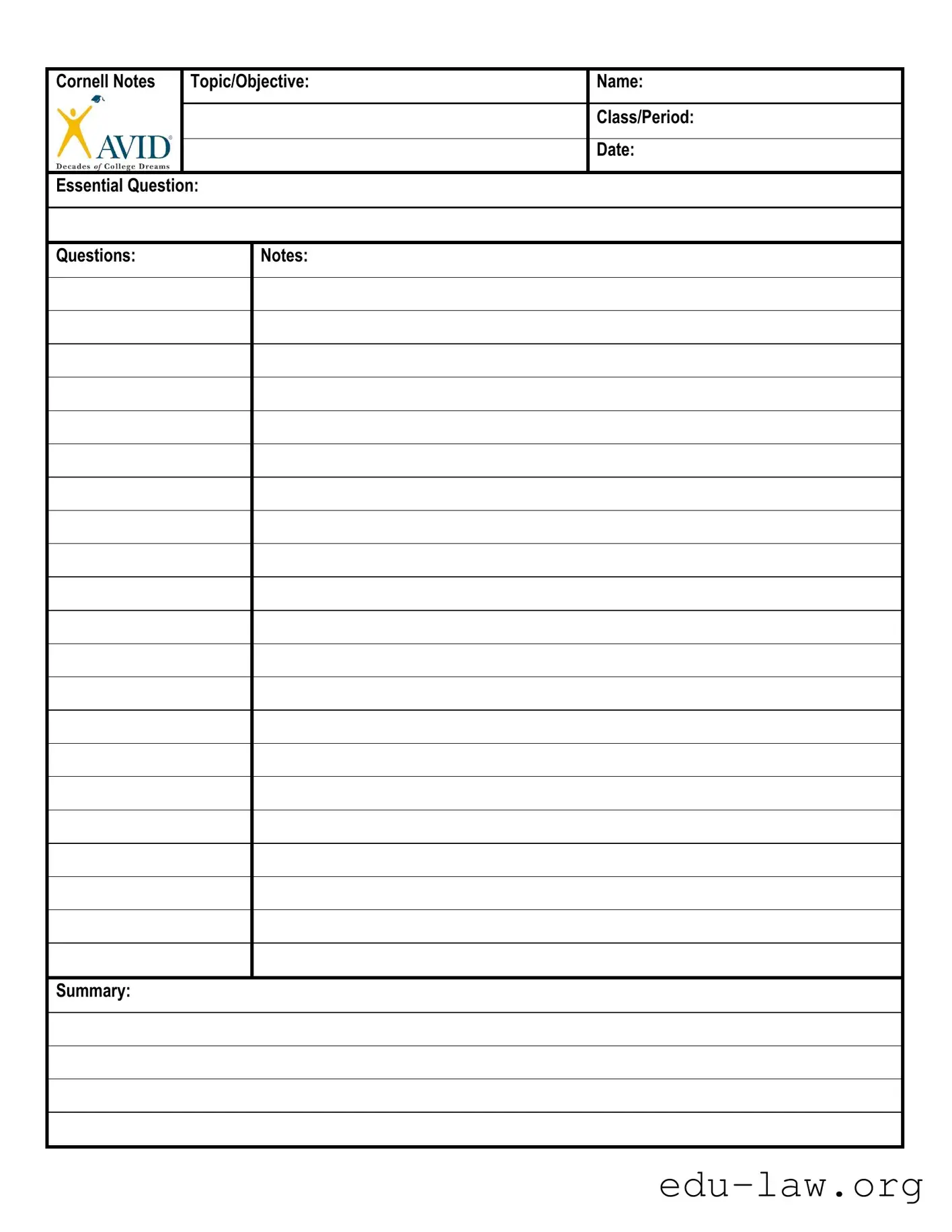
The Essential Question Cornell form serves as a structured tool for students to engage deeply with their learning material. Designed to enhance comprehension and retention, this format encourages critical thinking by prompting learners to formulate essential questions that guide their study. The form includes sections for the topic or objective, student name, class or period, and date, providing a clear context for the notes taken. Students are encouraged to jot down questions that arise during their study, which can help focus their understanding and facilitate discussion. The notes section allows for detailed recording of key concepts, while a summary section encourages reflection on the material learned. By organizing information in this way, students can more effectively synthesize knowledge and prepare for assessments, making the Essential Question Cornell form a valuable resource in educational settings.
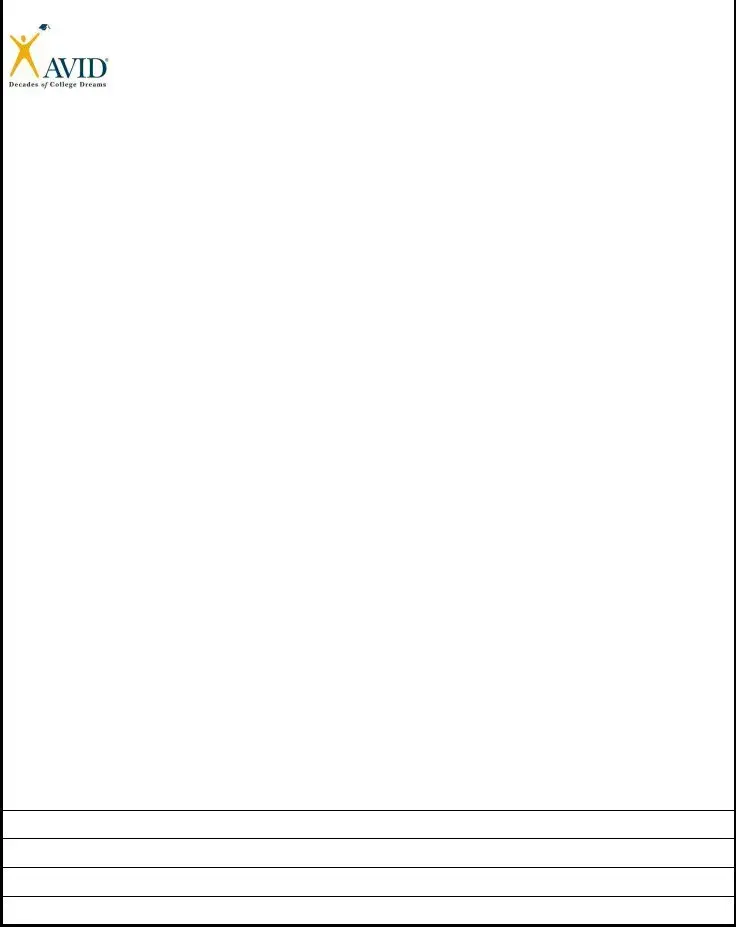
Cornell Notes |
Topic/Objective: |
Name: |
|
|
|
|
|
|
|
|
Class/Period: |
|
|
|
|
|
|
|
Date: |
|
|
|
|
Essential Question: |
|
||
|
|
|
|
|
|
|
|
Questions: |
|
Notes: |
|
|
|
|
|
|
|
|
|
|
|
|
|
|
|
|
|
|
|
|
|
|
|
|
|
|
|
|
|
|
|
|
|
|
|
|
|
|
|
|
|
|
|
|
|
|
|
|
|
|
|
|
|
|
|
|
|
|
|
|
|
|
|
|
|
|
|
|
|
|
|
|
|
|
|
|
|
|
|
|
|
|
|
|
|
|
|
|
|
Summary:
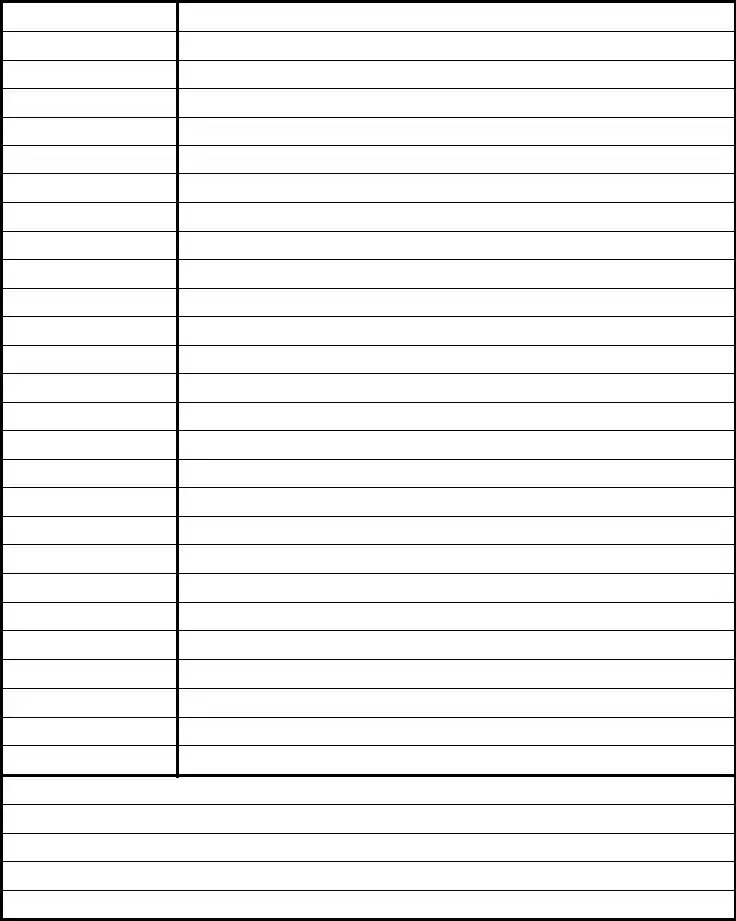
Questions:
Notes:
Summary:
| Fact Name | Description |
|---|---|
| Purpose | The Essential Question Cornell form is designed to help students organize their thoughts and enhance their understanding of a topic through structured note-taking. |
| Structure | The form includes sections for the topic, name, class/period, date, essential question, questions, notes, and summary, allowing for comprehensive documentation of learning. |
| Essential Question | This section encourages students to formulate a central question that guides their inquiry and focus during the learning process. |
| Notes Section | Students can record key points, ideas, and details related to the essential question, which aids in retention and comprehension. |
| Summary | At the end of the note-taking process, students summarize their learning, reinforcing the material and enhancing recall. |
| State-Specific Forms | Some states may have specific educational guidelines or requirements for note-taking formats, but the Cornell method is widely accepted across various educational institutions. |
| Governing Laws | While there are no specific laws governing the use of Cornell notes, educational standards and best practices in states like California or Texas may influence their implementation in classrooms. |
| Adaptability | The Cornell method can be adapted for various subjects and learning styles, making it a versatile tool for educators and students alike. |
Completing the Essential Question Cornell form is crucial for organizing your thoughts and enhancing your understanding of the material. Follow these steps carefully to ensure you fill out the form accurately and effectively.
What is the Essential Question Cornell form?
The Essential Question Cornell form is a structured note-taking tool designed to help students engage with and understand key concepts in their studies. It allows students to identify an essential question related to a topic, jot down relevant questions, take notes, and summarize their learning effectively.
How is the form structured?
The form consists of several sections: Topic/Objective, Name, Class/Period, Date, Essential Question, Questions, Notes, and Summary. Each section serves a specific purpose, guiding students through the process of inquiry and reflection on the material.
What is the purpose of the Essential Question?
The Essential Question helps focus the student's learning by prompting them to think critically about the subject matter. It encourages deeper exploration and understanding, guiding the direction of their notes and discussions.
How can students use the Questions section?
In the Questions section, students can list inquiries that arise as they engage with the material. This section encourages curiosity and can lead to further research or discussion with peers and instructors.
What should students include in the Notes section?
The Notes section is for recording key information, ideas, and insights related to the Essential Question and the listed inquiries. Students should aim to capture relevant details that will aid in their understanding and retention of the topic.
How can the Summary section be utilized?
The Summary section allows students to synthesize their learning. After reviewing their notes and responses to the Essential Question, they can write a brief summary that encapsulates their understanding and reflections on the topic.
Who can benefit from using the Essential Question Cornell form?
Students of all ages and educational levels can benefit from this form. It is particularly useful for those who want to enhance their note-taking skills, improve comprehension, and develop critical thinking abilities.
Is the Essential Question Cornell form suitable for group work?
Yes, the form can be adapted for group work. Groups can collaboratively fill out the form, discussing the Essential Question, generating collective inquiries, and summarizing their findings together, which fosters teamwork and shared learning.
Where can students find the Essential Question Cornell form?
The Essential Question Cornell form can typically be provided by educators, found in educational resources, or downloaded from various educational websites. Students should check with their teachers or online educational platforms for access.
Failing to clearly define the Essential Question. This question should be concise and directly related to the topic or objective. A vague question can lead to confusion and ineffective notes.
Neglecting to include the Topic/Objective. Without a clear topic, the notes may lack direction and focus, making it difficult to understand the context later.
Forgetting to write down their Name, Class/Period, and Date. These details are essential for organization and easy reference, especially when reviewing notes at a later time.
Not separating Questions from Notes. Mixing these sections can create confusion, making it hard to differentiate between what needs further inquiry and what has already been learned.
Omitting Summaries. A summary at the end of each section helps reinforce learning and ensures that the key points are understood and retained.
Using too much text in the Notes section. Notes should be concise and to the point. Bullet points or short phrases are often more effective than long paragraphs.
Ignoring the need for clarity in handwriting or typing. If the notes are difficult to read, they will not be helpful when reviewing them later.
Failing to review the completed form regularly. Regular review helps reinforce the material and ensures that the notes remain fresh in memory.
Not personalizing the format. While the Cornell method has a structure, individuals should feel free to adjust it to better suit their learning style, as long as the essential components are included.
The Essential Question Cornell form is a valuable tool for organizing thoughts and learning. It often works best when paired with other documents that enhance the learning process. Below is a list of forms and documents frequently used alongside the Essential Question Cornell form, each serving a unique purpose.
Utilizing these documents in conjunction with the Essential Question Cornell form can significantly enhance the learning experience. Each form serves a specific function, contributing to a more comprehensive understanding of the material.
The Essential Question Cornell form is similar to the traditional Cornell Notes system, which was developed by Walter Pauk at Cornell University. This method divides a sheet of paper into two columns, with cues on one side and notes on the other. The format encourages students to engage with the material actively, promoting better retention and understanding. Both systems emphasize summarization and reflection, which are essential for deeper learning.
Another document that shares similarities is the KWL chart, which stands for "Know, Want to know, and Learned." This chart helps students organize their thoughts before, during, and after a lesson. Like the Cornell form, it encourages inquiry and reflection. Students begin by listing what they already know about a topic, what they wish to learn, and finally, what they have learned after instruction. This structure promotes active engagement with the material.
The Mind Map is also comparable to the Essential Question Cornell form. This visual tool allows students to organize information in a non-linear format, connecting ideas and concepts. While the Cornell form emphasizes note-taking and summarization, a mind map encourages creativity and visual representation of knowledge. Both tools facilitate comprehension and retention, albeit through different methods.
Another similar document is the Graphic Organizer. This tool provides a structured way to visually represent information and relationships between concepts. Like the Cornell form, graphic organizers encourage critical thinking and synthesis of information. They can take various forms, such as Venn diagrams or flowcharts, but all aim to help students organize their thoughts and enhance understanding.
The Reflection Journal is another document that aligns with the principles of the Essential Question Cornell form. In a reflection journal, students write about their learning experiences, thoughts, and feelings regarding the material. This practice encourages metacognition, allowing students to think about their own thinking. Like the Cornell form, it fosters a deeper connection to the content and personalizes the learning experience.
The Concept Map is similar to the Essential Question Cornell form in that it visually represents relationships between concepts. Students create a diagram that shows how different ideas are interconnected. This method encourages students to think critically about the material and how it fits into a larger context, similar to how the Cornell form organizes notes and questions.
The Study Guide serves a purpose akin to that of the Essential Question Cornell form. A study guide outlines key concepts, terms, and questions that students should focus on while preparing for assessments. Both documents aim to clarify important information and encourage active engagement with the material, helping students to study effectively and retain information.
Another document is the Learning Log, which allows students to track their learning progress over time. In a learning log, students regularly record what they have learned, questions they have, and reflections on their understanding. This process is similar to the Cornell form's emphasis on summarization and questioning, promoting continuous engagement with the learning material.
The Exit Ticket is also comparable to the Essential Question Cornell form. Typically used at the end of a lesson, an exit ticket asks students to respond to a specific question or summarize what they learned. This quick assessment encourages reflection and helps teachers gauge student understanding. Both documents serve as tools for reflection and assessment, reinforcing key concepts.
Finally, the Interactive Notebook is similar in that it combines note-taking with creative expression. Students use this notebook to organize notes, drawings, and reflections on their learning. Like the Cornell form, it promotes active engagement and allows for personal interpretation of the material, making learning more meaningful and memorable.
When filling out the Essential Question Cornell form, it is important to follow certain guidelines to ensure clarity and effectiveness. Here are four things you should and shouldn't do:
The Essential Question Cornell form is a popular tool for organizing notes and enhancing learning. However, several misconceptions can cloud its effectiveness. Here are ten common misunderstandings about this form, along with clarifications to set the record straight.
Understanding these misconceptions can help students and educators make the most of the Essential Question Cornell form, ultimately enhancing the learning experience.
Filling out the Essential Question Cornell form can enhance your learning experience. Here are some key takeaways to keep in mind: