When employees seek financial assistance from their employers, an Employee Loan Agreement form plays a crucial role in establishing the terms of the loan. This form outlines the specific amount being borrowed and details the repayment schedule, including any interest that may accrue over time. It ensures clarity regarding the purpose of the loan, which could range from medical expenses to education costs. The agreement may also specify conditions for default, outlining responsibilities if payments are missed. Additionally, it protects both parties by detailing the consequences of not fulfilling these obligations. Beyond financial specifics, this document fosters transparency, strengthening the employer-employee relationship through open communication about financial support. Understanding and completing this form accurately is essential for a smooth loan process, safeguarding the rights and expectations of both the employer and the employee involved.
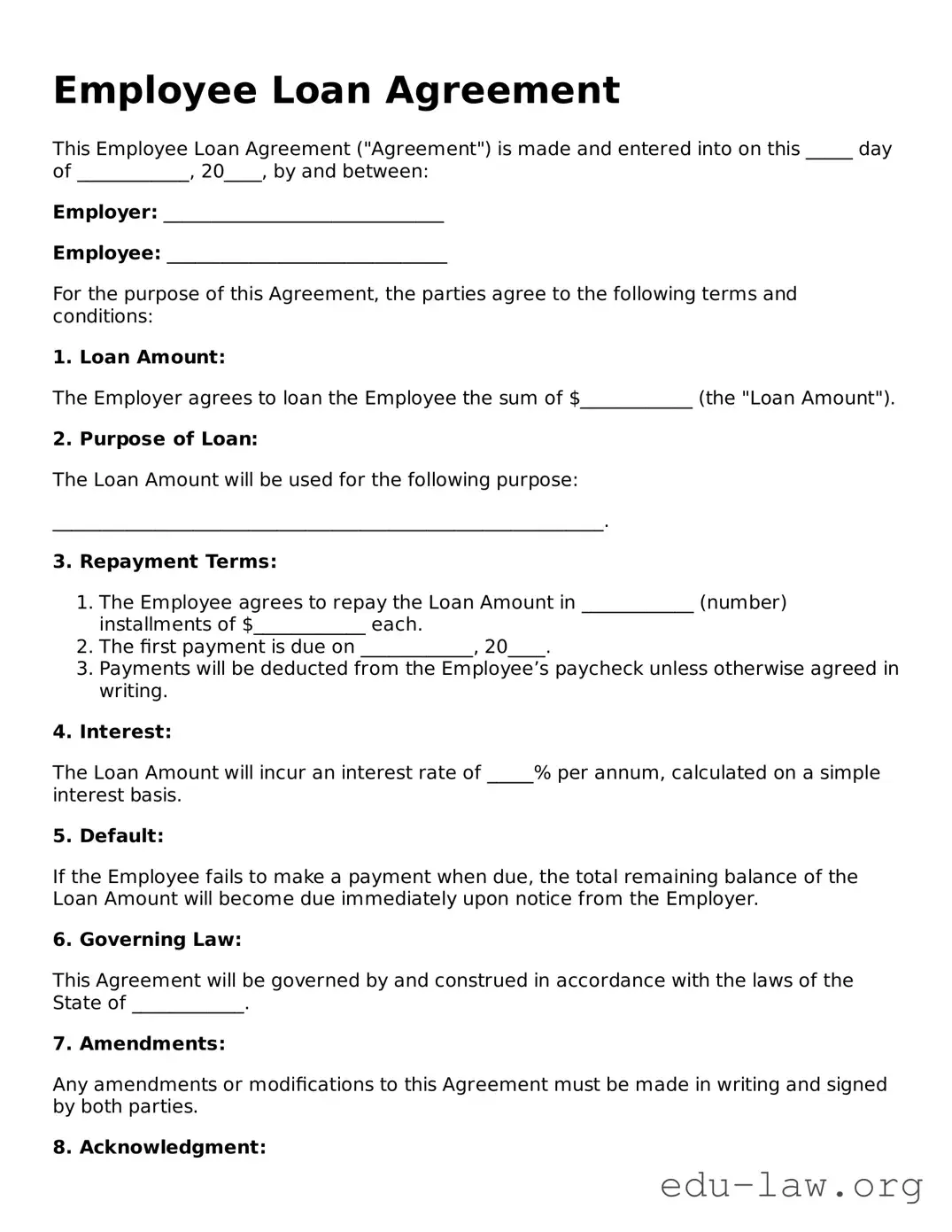
Employee Loan Agreement
This Employee Loan Agreement ("Agreement") is made and entered into on this _____ day of ____________, 20____, by and between:
Employer: ______________________________
Employee: ______________________________
For the purpose of this Agreement, the parties agree to the following terms and conditions:
1. Loan Amount:
The Employer agrees to loan the Employee the sum of $____________ (the "Loan Amount").
2. Purpose of Loan:
The Loan Amount will be used for the following purpose:
___________________________________________________________.
3. Repayment Terms:
4. Interest:
The Loan Amount will incur an interest rate of _____% per annum, calculated on a simple interest basis.
5. Default:
If the Employee fails to make a payment when due, the total remaining balance of the Loan Amount will become due immediately upon notice from the Employer.
6. Governing Law:
This Agreement will be governed by and construed in accordance with the laws of the State of ____________.
7. Amendments:
Any amendments or modifications to this Agreement must be made in writing and signed by both parties.
8. Acknowledgment:
By signing this Agreement, the Employee acknowledges that they have read, understood, and agreed to the terms herein.
IN WITNESS WHEREOF, the parties hereto have executed this Employee Loan Agreement as of the day and year first above written.
Employer Signature: ____________________________ Date: ____________
Employee Signature: ____________________________ Date: ____________
| Fact Name | Description |
|---|---|
| Purpose | The Employee Loan Agreement form is designed to outline the terms and conditions under which an employer extends a loan to an employee. |
| Amount | This form specifies the loan amount granted to the employee, ensuring clarity on the financial obligation. |
| Repayment Terms | Repayment terms, including the frequency and method of payments, are detailed within the agreement to avoid misunderstandings. |
| Interest Rates | The agreement may detail whether interest will be charged on the loan, including the rate and how it will be calculated. |
| Governing Law | This form is subject to the laws of the specific state governing employee loans, such as California's Employment Code or New York's General Obligations Law. |
| Default Clause | In the event of non-payment, the agreement outlines the consequences, which may include deductions from future wages. |
| Signature Requirement | Both parties must sign the agreement to ensure that all understand and agree to the terms, making it a binding document. |
After gathering the necessary personal and employment information, proceed to fill out the Employee Loan Agreement form accurately. Ensure all details are correct to avoid any delays in processing.
What is an Employee Loan Agreement?
An Employee Loan Agreement is a formal document outlining the terms and conditions under which an employer lends money to an employee. This agreement specifies the amount, interest rate (if applicable), repayment schedule, and any conditions or required collateral. It helps protect both parties by clearly defining their rights and responsibilities regarding the loan.
Who should use an Employee Loan Agreement?
This agreement is useful for employers who want to provide financial assistance to their employees. It's particularly relevant for businesses looking to support their staff during times of financial need or to encourage loyalty. Employees who accept such loans should also use the agreement to understand their obligations fully, ensuring they are aware of repayment terms and any potential impacts on their employment status.
What are the key components of an Employee Loan Agreement?
Several important elements are typically included in an Employee Loan Agreement. These components include the loan amount, purpose of the loan, interest rate, repayment terms (including the due date), and any penalties for late payments. Additionally, the agreement may outline any consequences of defaulting on the loan and conditions under which the loan could be forgiven or converted to a grant.
How does the repayment process work?
The repayment process is outlined in the agreement and usually involves regular deductions from the employee’s paycheck. This automatic deduction can help ensure timely payments. Employees must be aware of the frequency and amount of each deduction. If any changes occur—such as adjustments to employment status or termination—both parties should discuss how these affect the loan repayment.
Can the terms of the Employee Loan Agreement be modified?
Yes, the terms of an Employee Loan Agreement can be modified, but changes necessitate mutual consent. Both the employer and employee should discuss any necessary modifications and document them in writing. Having a clear record of any amendments helps avoid misunderstandings and reinforces the integrity of the agreement as a legal document.
Inaccurate Personal Information: One common mistake is providing incorrect or outdated personal details, such as name, address, or contact number. This can lead to delays in processing the loan and complications in future communications.
Failure to Specify the Loan Amount: Many individuals neglect to clearly state the amount of money they are requesting. Failing to provide an exact figure can result in misunderstandings and may lead to the denial of the loan request.
Lack of Purpose for the Loan: Some borrowers do not explain the purpose of the loan adequately. Providing context can help in the consideration of the application and demonstrates the necessity of the loan.
Ignoring Repayment Terms: Failing to understand or outline repayment terms is a frequent oversight. Clarity on the repayment schedule, interest rate (if applicable), and consequences for late payments is crucial for both parties.
Missing Signatures: A signature is required to validate the agreement. Individuals sometimes forget to sign the document or overlook requiring an authorized signature from a supervisor or HR representative.
Not Retaining a Copy: After submission, individuals often do not keep a copy of the completed Employee Loan Agreement. Retaining a copy is important for reference and to ensure both parties have a mutual understanding of the terms agreed upon.
When an Employee Loan Agreement is established, several other documents may be necessary to ensure a clear understanding between the employer and employee regarding the terms and conditions of the loan. These documents are important for promoting transparency and protecting both parties' rights. Below is a list of commonly used forms that accompany an Employee Loan Agreement.
These documents play a crucial role in supporting the Employee Loan Agreement. They create a framework that enhances mutual understanding and minimizes potential misunderstandings. Being familiar with each of these forms can lead to a smoother borrowing experience for both employers and employees.
The Employment Contract is a formal document between an employer and an employee defining their work relationship. Similar to an Employee Loan Agreement, it lays out the terms and conditions under which both parties operate. This includes job responsibilities, salary, work hours, and other vital employment aspects. Both documents serve to protect the rights and expectations of each party, ensuring clarity in their roles.
A Confidentiality Agreement, or Non-Disclosure Agreement (NDA), is designed to protect sensitive information between parties. Like an Employee Loan Agreement, it requires signatures from both sides. It outlines what constitutes confidential information and the obligations of the parties involved. This ensures that sensitive business information remains secure and is not disclosed without permission.
The Promissory Note is a straightforward financial document where one party promises to pay a specific sum to another party. Much like an Employee Loan Agreement, it includes details such as the loan amount, interest rate, repayment schedule, and consequences of default. Both documents clearly indicate the terms of the financial obligation and create a legally enforceable commitment.
An Interest Rate Agreement outlines the terms surrounding the interest charged on borrowed funds. This document is closely related to the Employee Loan Agreement because it often specifies the interest applicable to the amount borrowed. It serves a similar purpose in clarifying the financial expectations and responsibilities of the borrowing party.
A Repayment Plan is an arrangement detailing how a borrower will pay back a loan over a specific duration. Similar to an Employee Loan Agreement, it maps out the schedule of payments and terms for settling the debt. This ensures that both parties are clear on the repayment structure and can avoid misunderstandings.
The Loan Forgiveness Agreement details the circumstances under which a borrower may not have to repay a portion or all of the loan. Like the Employee Loan Agreement, it specifies conditions and terms which must be met for the forgiveness to apply. This creates transparency about the potential for relief from financial obligations under specific scenarios.
An Expense Reimbursement Form allows employees to seek repayment for out-of-pocket expenses incurred while performing their job. This document is similar to an Employee Loan Agreement in that it sets clear expectations regarding financial transactions between employer and employee. It outlines the necessary supporting documents and approval processes, ensuring employees receive the compensation they are owed.
The Severance Agreement defines the terms under which an employee will be compensated upon leaving a company, often detailing financial payouts or benefits. Comparable to an Employee Loan Agreement, it is a legal document outlining payment terms and conditions for the departing employee, safeguarding both parties’ interests and expectations during an employment termination.
The Offer Letter serves as a formal job proposal from an employer to a potential employee. Similar to an Employee Loan Agreement, it outlines terms and conditions—yet focuses more on starting employment than financial obligations. Both documents help clarify expectations and establish a mutual understanding before any commitments are made.
The Partnership Agreement typically outlines the responsibilities, financial obligations, and other operational details between business partners. It is similar to an Employee Loan Agreement as it creates a legal framework governing the relationships and financial interactions of the parties involved. Clarity and understanding are key in ensuring all partners have aligned expectations.
When filling out an Employee Loan Agreement form, it’s important to approach the task with care. Here are some essential dos and don’ts:
Understanding the Employee Loan Agreement form is crucial for both employers and employees. However, several misconceptions persist regarding this type of document. Here are four common misconceptions and clarifications for each.
Filling out and using the Employee Loan Agreement form is an important process that requires careful attention. The following key takeaways can serve as a guide for both employers and employees.
Navpers 1336 3 - Any changes in the request details must be communicated promptly through updates on the form.
Bill of Sale for Guns - Shows agreed-upon price and terms of sale.
Writing a Letter to a Judge on Behalf of Someone - This letter acknowledges the defendant's efforts towards rehabilitation.