In today's workplace, maintaining a safe and productive environment is paramount, and one effective tool for achieving this is the Employee Drug Test Consent form. This essential document serves as a formal agreement between employers and employees regarding the administration of drug tests, outlining the rights and responsibilities of both parties. It typically includes details about the types of substances that may be tested, the procedures for testing, and the consequences of refusing to comply or testing positive. Employees are often informed about the confidentiality of their results and the circumstances under which the tests may be conducted, such as pre-employment screenings, random testing, or post-accident evaluations. By signing this consent form, employees acknowledge their understanding of the testing process and agree to comply with the employer's policies. Ultimately, the form plays a crucial role in fostering transparency and trust while ensuring that all employees are aware of the implications of drug testing in their workplace.
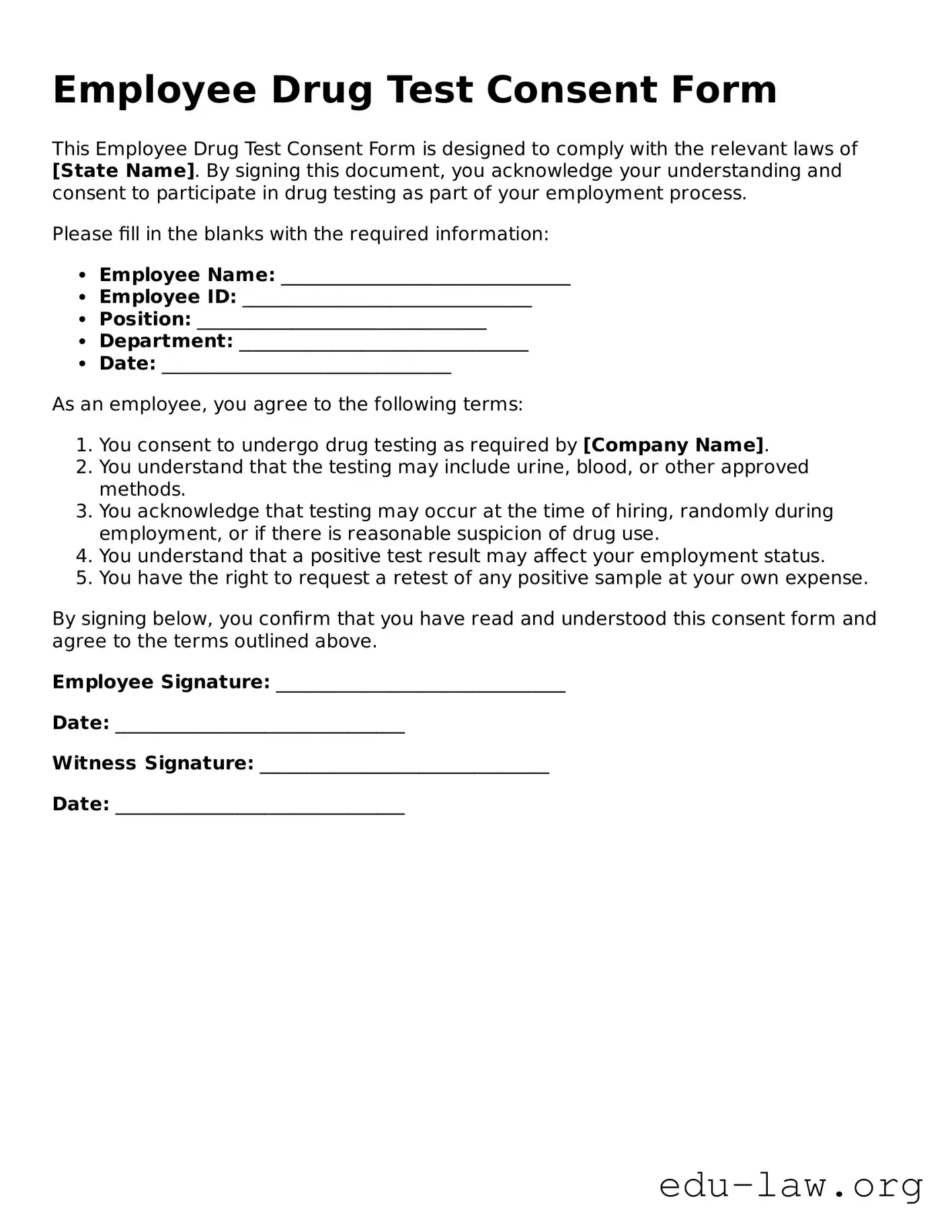
Employee Drug Test Consent Form
This Employee Drug Test Consent Form is designed to comply with the relevant laws of [State Name]. By signing this document, you acknowledge your understanding and consent to participate in drug testing as part of your employment process.
Please fill in the blanks with the required information:
As an employee, you agree to the following terms:
By signing below, you confirm that you have read and understood this consent form and agree to the terms outlined above.
Employee Signature: _______________________________
Date: _______________________________
Witness Signature: _______________________________
Date: _______________________________
| Fact Name | Details |
|---|---|
| Purpose of the Form | The Employee Drug Test Consent Form is designed to obtain permission from employees for drug testing as part of workplace policies. |
| Employee Rights | Employees have the right to understand the testing process and the substances being tested for before signing the consent form. |
| Confidentiality | Results from drug tests are confidential and should only be shared with authorized personnel in compliance with privacy laws. |
| State-Specific Laws | Each state may have specific regulations governing drug testing. For example, in California, the governing law is the Fair Employment and Housing Act. |
| Testing Procedures | The form outlines the procedures that will be followed during the drug testing, ensuring transparency in the process. |
| Consequences of Refusal | Employees should be aware that refusing to sign the consent form may result in disciplinary action, including termination of employment. |
Completing the Employee Drug Test Consent form is a straightforward process. Once you have the form in hand, you'll be ready to provide your consent for the drug testing procedure required by your employer. Follow these steps carefully to ensure everything is filled out correctly.
After completing these steps, submit the form to your HR department or the designated person in charge of handling drug testing. Make sure to keep a copy for your records if permitted.
What is an Employee Drug Test Consent form?
The Employee Drug Test Consent form is a document that employees must sign to give their permission for drug testing. This form outlines the testing process, the substances being tested for, and the rights of the employee. By signing, the employee acknowledges that they understand the testing procedures and agree to participate.
Why is a drug test required?
Employers may require drug tests to ensure a safe and productive work environment. Testing helps to prevent workplace accidents and injuries that can occur due to substance abuse. Additionally, it can protect the company’s reputation and reduce liability risks associated with drug-related incidents.
What substances are typically tested for?
Common substances tested in drug screenings include marijuana, cocaine, opiates, amphetamines, and phencyclidine (PCP). Some employers may also test for alcohol or other specific substances depending on their industry and workplace policies.
What happens if an employee refuses to sign the consent form?
If an employee refuses to sign the consent form, they may face consequences. Many employers have policies that state refusal to participate in drug testing can result in disciplinary action, which may include termination. It is essential for employees to understand their employer's policies regarding drug testing.
How is the confidentiality of the test results maintained?
Employers are required to keep drug test results confidential. Typically, only designated personnel have access to the results, and they must handle the information with care. Employees should inquire about their employer’s specific confidentiality policies to understand how their information will be protected.
Can an employee contest a positive drug test result?
Yes, employees have the right to contest a positive drug test result. Many employers allow employees to request a retest or provide evidence to support their case. It is advisable for employees to familiarize themselves with the company’s procedures for contesting test results to ensure their rights are upheld.
Inaccurate Personal Information: One common mistake is providing incorrect or outdated personal information. This includes names, addresses, or contact numbers. Always double-check these details to ensure accuracy.
Failure to Read the Consent: Some individuals rush through the form without fully understanding the consent language. It’s essential to read each section carefully to grasp the implications of consenting to the drug test.
Not Notifying About Medications: If you are taking any prescription or over-the-counter medications, failing to disclose this information can lead to misunderstandings. Always list any medications to avoid false positives.
Ignoring the Signature Requirement: Some people forget to sign the form. A signature is typically required to validate consent. Without it, the form may be considered incomplete.
Neglecting to Ask Questions: If there are any uncertainties about the form or the testing process, not asking questions can lead to confusion. Don’t hesitate to seek clarification from HR or the testing administrator.
Assuming Privacy is Guaranteed: Some individuals mistakenly believe that their results will remain completely confidential. While there are protections in place, it’s important to understand the limits of privacy regarding drug test results.
Submitting the Form Late: Timing is crucial. Delaying the submission of the consent form can lead to complications or missed testing opportunities. Be mindful of deadlines to ensure compliance.
When preparing for employee drug testing, several forms and documents may be necessary to ensure compliance and clarity. Each document serves a specific purpose, helping both employers and employees navigate the process smoothly.
These documents work together to create a clear framework for drug testing in the workplace. By ensuring that both employers and employees understand their rights and responsibilities, the process can be managed effectively and respectfully.
The Employee Drug Test Consent form shares similarities with the Medical Release Authorization form. Both documents require an individual’s permission to disclose sensitive information. In the case of the Medical Release Authorization, the focus is on medical records, while the Employee Drug Test Consent specifically pertains to the results of drug testing. Both forms emphasize the importance of informed consent and ensure that individuals understand the implications of sharing their information.
Another document akin to the Employee Drug Test Consent form is the Background Check Authorization form. Like the drug test consent, this form seeks an individual’s approval before conducting a background check. It ensures that the individual is aware of what information will be reviewed and the purpose behind it. Both documents aim to protect the rights of the individual while allowing employers to verify important aspects of a candidate’s history.
The Confidentiality Agreement is another similar document. This agreement protects sensitive information shared between parties. While the Employee Drug Test Consent form focuses on the results of drug tests, the Confidentiality Agreement covers a broader scope of confidential information. Both documents require clear acknowledgment from the individual about the importance of maintaining privacy and confidentiality in the employment context.
The Release of Liability form also bears resemblance to the Employee Drug Test Consent form. Both documents require individuals to acknowledge risks associated with certain actions. The Release of Liability often pertains to physical activities or events, while the Employee Drug Test Consent form addresses the potential consequences of drug testing. In both cases, individuals must understand and accept the risks involved before proceeding.
The Non-Disclosure Agreement (NDA) is another document that shares common ground with the Employee Drug Test Consent form. An NDA protects proprietary information from being disclosed to unauthorized parties. Similarly, the Employee Drug Test Consent form ensures that the results of drug tests remain confidential. Both documents highlight the importance of safeguarding sensitive information in a professional environment.
Additionally, the Employment Application form is similar in that it collects personal information from candidates. Both documents require individuals to provide consent for the employer to use their information. However, while the Employment Application focuses on qualifications and experiences, the Employee Drug Test Consent form deals specifically with drug testing. Both forms play a crucial role in the hiring process and help employers make informed decisions.
The Offer Letter can also be compared to the Employee Drug Test Consent form. An Offer Letter outlines the terms of employment, including any conditions that must be met before starting a job. One such condition may be successful completion of a drug test. Both documents serve as critical components of the hiring process, ensuring that candidates are aware of and agree to the necessary conditions of employment.
The Release for Medical Treatment form is another document that aligns with the Employee Drug Test Consent form. This form gives permission for medical professionals to provide treatment in case of an emergency. While the focus is different, both forms require consent for handling sensitive health-related matters. They ensure that individuals are informed about the implications of their decisions regarding health and safety.
Lastly, the I-9 Employment Eligibility Verification form shares similarities with the Employee Drug Test Consent form in that both are essential for employment verification. The I-9 form confirms an individual’s eligibility to work in the United States, while the Employee Drug Test Consent form verifies the candidate's compliance with workplace drug policies. Both documents are vital in the hiring process and help ensure that employers adhere to legal requirements.
When filling out the Employee Drug Test Consent form, it’s crucial to approach the process with care. Here are five essential dos and don'ts to keep in mind:
Completing this form accurately is essential for maintaining compliance and protecting your rights. Ensure you follow these guidelines to avoid any potential issues.
Many people have questions and concerns about the Employee Drug Test Consent form. Understanding the common misconceptions can help clarify the process and protect your rights. Here are eight misconceptions:
By addressing these misconceptions, you can navigate the drug testing process with greater confidence and understanding.
When dealing with the Employee Drug Test Consent form, it's essential to understand its significance and the proper way to complete it. Here are some key takeaways: