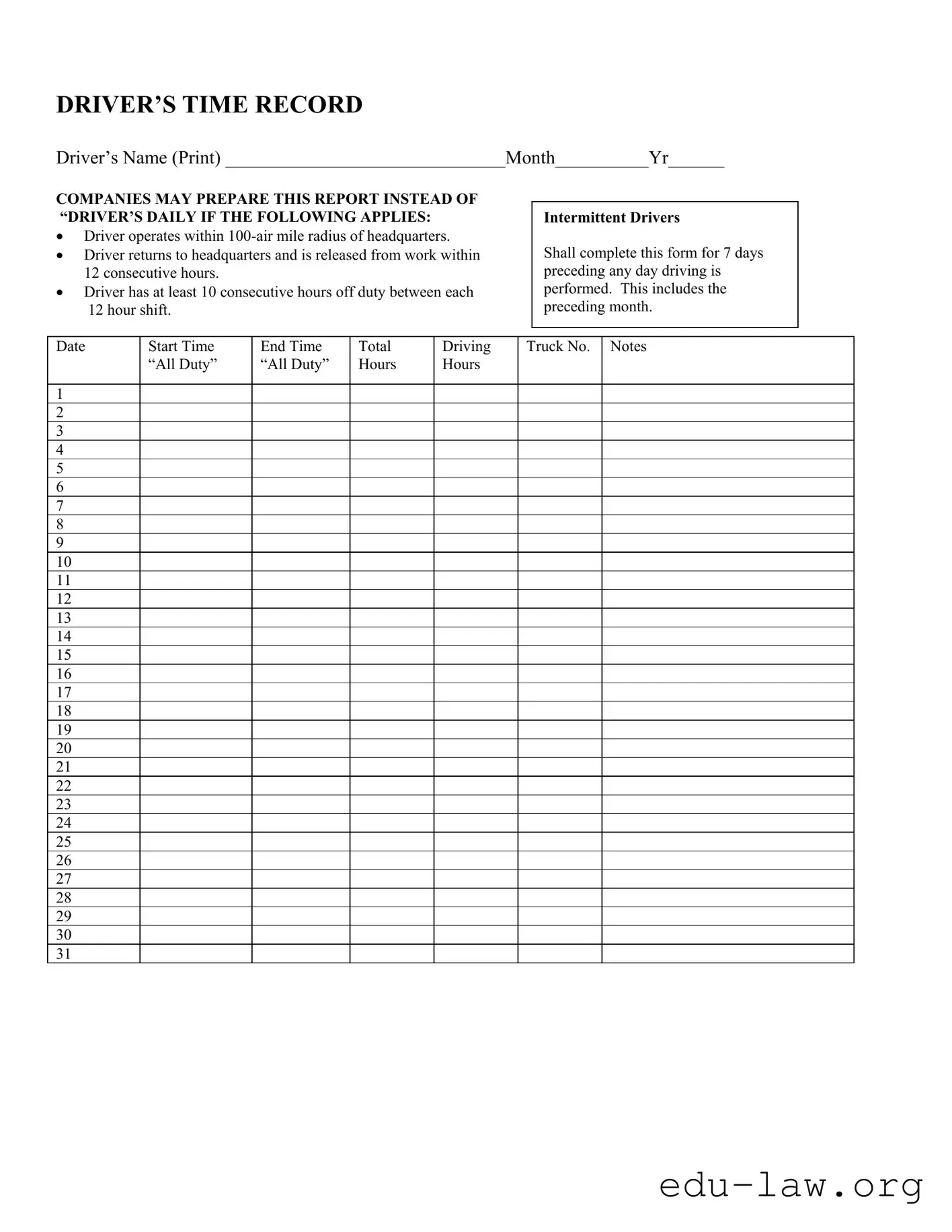
The Driver Time Record form is an essential tool for tracking the hours and activities of commercial drivers. It is designed for use by drivers operating within a 100-air mile radius of their headquarters, who return home and complete their work within a 12-hour period. To ensure compliance with regulations, drivers must also have at least 10 consecutive hours off duty between shifts. This form serves as a comprehensive record, requiring drivers to log their daily start and end times, total driving hours, and truck number. Intermittent drivers are particularly required to complete this form for the seven days leading up to any driving day, including the previous month. The structured layout allows for easy documentation of each day’s activities, ensuring that all duty hours are accounted for. By maintaining accurate records, drivers not only adhere to safety standards but also facilitate smoother operations for their companies.

DRIVER’S TIME RECORD
Driver’s Name (Print) ______________________________Month__________Yr______
COMPANIES MAY PREPARE THIS REPORT INSTEAD OF “DRIVER’S DAILY IF THE FOLLOWING APPLIES:
•Driver operates within
•Driver returns to headquarters and is released from work within 12 consecutive hours.
•Driver has at least 10 consecutive hours off duty between each 12 hour shift.
INTERMITTENT DRIVERS
Shall complete this form for 7 days preceding any day driving is performed. This includes the preceding month.
Date |
Start Time |
End Time |
Total |
Driving |
Truck No. |
Notes |
|
“All Duty” |
“All Duty” |
Hours |
Hours |
|
|
|
|
|
|
|
|
|
1 |
|
|
|
|
|
|
2 |
|
|
|
|
|
|
3 |
|
|
|
|
|
|
4 |
|
|
|
|
|
|
5 |
|
|
|
|
|
|
6 |
|
|
|
|
|
|
7 |
|
|
|
|
|
|
8 |
|
|
|
|
|
|
9 |
|
|
|
|
|
|
10 |
|
|
|
|
|
|
11 |
|
|
|
|
|
|
12 |
|
|
|
|
|
|
13 |
|
|
|
|
|
|
14 |
|
|
|
|
|
|
15 |
|
|
|
|
|
|
16 |
|
|
|
|
|
|
17 |
|
|
|
|
|
|
18 |
|
|
|
|
|
|
19 |
|
|
|
|
|
|
20 |
|
|
|
|
|
|
21 |
|
|
|
|
|
|
22 |
|
|
|
|
|
|
23 |
|
|
|
|
|
|
24 |
|
|
|
|
|
|
25 |
|
|
|
|
|
|
26 |
|
|
|
|
|
|
27 |
|
|
|
|
|
|
28 |
|
|
|
|
|
|
29 |
|
|
|
|
|
|
30 |
|
|
|
|
|
|
31 |
|
|
|
|
|
|

| Fact Name | Description |
|---|---|
| Form Purpose | The Driver Time Record form is used to document a driver's hours of service, specifically for those operating within certain conditions. |
| Eligibility Criteria | Drivers can use this form if they operate within a 100-air mile radius, return to headquarters within 12 consecutive hours, and have at least 10 consecutive hours off duty between shifts. |
| Intermittent Drivers | Intermittent drivers must complete this form for the seven days preceding any day they perform driving duties, including the previous month. |
| Required Information | Each entry must include the date, start time, end time, total driving hours, truck number, and any relevant notes. |
| Regulatory Compliance | The use of this form is governed by federal regulations under the Federal Motor Carrier Safety Administration (FMCSA) guidelines. |
| Record Keeping | Drivers and their employers are required to maintain these records for a specified period to ensure compliance with hours of service regulations. |
| Submission Requirements | While this form can be prepared by companies, it must be made available for inspection by regulatory authorities upon request. |
Once you have the Driver Time Record form in hand, you can begin filling it out. This form is essential for accurately tracking driving hours, ensuring compliance with regulations, and maintaining safety standards. Follow the steps outlined below to complete the form efficiently.
What is the purpose of the Driver Time Record form?
The Driver Time Record form is designed to help drivers keep track of their driving hours and ensure compliance with regulations. It allows drivers to document their start and end times, total driving hours, and any notes relevant to their driving activities. This record is essential for maintaining accurate logs, especially for those who operate within specific guidelines.
Who is required to fill out the Driver Time Record form?
Any driver who operates within a 100-air mile radius of their headquarters and meets certain conditions must complete this form. Specifically, this applies to drivers who return to their headquarters and are released from work within 12 consecutive hours and have at least 10 consecutive hours off duty between each 12-hour shift. Additionally, intermittent drivers must fill out the form for the 7 days preceding any day they perform driving duties.
What information do I need to provide on the form?
On the Driver Time Record form, you will need to provide your name, the month and year, as well as details for each day you are driving. This includes the date, start time, end time, total driving hours, truck number, and any notes. It’s crucial to fill out each section accurately to ensure compliance and maintain a reliable record.
How do I calculate total driving hours?
Total driving hours are calculated by subtracting the start time from the end time for each driving session. For instance, if you start driving at 8:00 AM and finish at 4:00 PM, you would record 8 hours of driving. Make sure to account for any breaks or interruptions during your driving time when calculating your total hours.
What should I do if I don't drive every day?
If you do not drive every day, you still need to complete the Driver Time Record form for the 7 days preceding any day you do drive. This includes documenting any days in the previous month where you were active. It’s important to keep a comprehensive record, even on days without driving, to ensure compliance with regulations.
Are there any specific regulations I need to be aware of?
Yes, there are specific regulations regarding driving hours and rest periods that drivers must adhere to. For instance, drivers must have at least 10 consecutive hours off duty before starting a new 12-hour shift. Familiarizing yourself with these regulations is essential to avoid violations and ensure safe driving practices.
What happens if I fail to complete the Driver Time Record form?
Failing to complete the Driver Time Record form can lead to compliance issues and potential penalties. Accurate records are vital for safety and legal reasons. In the event of an audit or inspection, incomplete records may raise concerns and could result in fines or other consequences. Therefore, it is crucial to fill out the form diligently and maintain accurate logs.
Failing to print the driver's name clearly. A legible name is essential for proper identification.
Not specifying the correct month and year. This can lead to confusion and misreporting.
Omitting dates for each driving day. Each day must be accounted for to ensure compliance.
Incorrectly filling in start and end times. Accurate times are crucial for calculating total driving hours.
Neglecting to record total driving hours. This information is vital for tracking work hours and ensuring safety.
Using incomplete or incorrect truck numbers. Each truck should be properly identified to maintain accurate records.
Failing to add notes when necessary. Any additional information can provide context and clarify the record.
When keeping track of a driver's hours and activities, several forms and documents may be required alongside the Driver Time Record form. These documents help ensure compliance with regulations and provide a clear record of driving activities. Below is a list of commonly used forms that may accompany the Driver Time Record.
Using these forms together with the Driver Time Record form can help maintain accurate records and ensure compliance with industry standards. It is important to keep these documents organized and up to date for both safety and legal reasons.
The Driver's Daily Log is a document that captures the daily activities of a driver, similar to the Driver Time Record form. It includes details such as the date, start and end times, and total hours driven. Both forms serve the purpose of tracking driving hours and ensuring compliance with federal regulations. The Driver's Daily Log is typically more detailed, often requiring additional information about rest breaks and vehicle inspections, making it essential for long-haul drivers who need to adhere to stricter regulations regarding driving time and rest periods.
The Vehicle Inspection Report is another document that complements the Driver Time Record. This report focuses on the condition of the vehicle before and after a trip. While the Driver Time Record emphasizes the driver's hours and work schedule, the Vehicle Inspection Report ensures that the vehicle is safe and roadworthy. Both documents are crucial for maintaining safety standards and regulatory compliance, but they address different aspects of the driving experience.
The Hours of Service (HOS) Compliance Form is similar in purpose to the Driver Time Record, as it tracks a driver's working hours to ensure they adhere to federal regulations. The HOS Compliance Form includes sections for recording driving time, rest periods, and off-duty hours. While the Driver Time Record can be used under specific conditions for shorter trips, the HOS Compliance Form is more comprehensive and is required for long-distance drivers to prevent fatigue and ensure safety on the road.
The Trip Log is another related document that drivers may use alongside the Driver Time Record. This log details the specific routes taken, including starting and ending locations, mileage, and any stops made along the way. While the Driver Time Record focuses primarily on hours worked, the Trip Log provides a broader view of the trip itself, helping companies track routes and optimize logistics.
The Delivery Receipt is a document that confirms the successful delivery of goods. Although its primary function is different from the Driver Time Record, both documents share a common goal: to ensure accountability in transportation. The Delivery Receipt provides proof of delivery, while the Driver Time Record tracks the time spent on the job, both of which are essential for proper record-keeping and operational efficiency.
The Fuel Purchase Receipt is another document that can be associated with the Driver Time Record. This receipt records fuel purchases made during trips, which is vital for expense tracking and budgeting. Both documents are necessary for fleet management, as they help companies monitor fuel efficiency and overall operating costs, contributing to better financial planning.
The Maintenance Log is similar in its focus on vehicle upkeep, which is indirectly related to the Driver Time Record. This log tracks any maintenance or repairs performed on the vehicle, ensuring it remains in safe operating condition. While the Driver Time Record focuses on hours worked, the Maintenance Log emphasizes the importance of vehicle safety, both of which are critical for a successful transportation operation.
Finally, the Incident Report serves a different but equally important role. It documents any accidents or incidents that occur during driving. While the Driver Time Record tracks hours and work schedule, the Incident Report provides a detailed account of events that may impact safety and liability. Both documents are essential for regulatory compliance and help companies manage risk effectively.
When filling out the Driver Time Record form, it's important to follow certain guidelines to ensure accuracy and compliance. Here are some things to do and avoid:
Following these tips will help ensure that your Driver Time Record form is filled out correctly and efficiently.
Here are some common misconceptions about the Driver Time Record form:
Filling out the Driver Time Record form accurately is essential for compliance and safety. Here are some key takeaways to help ensure you complete this form correctly:
By following these guidelines, you can ensure that your Driver Time Record form is filled out correctly and efficiently, helping to maintain safety and compliance on the road.