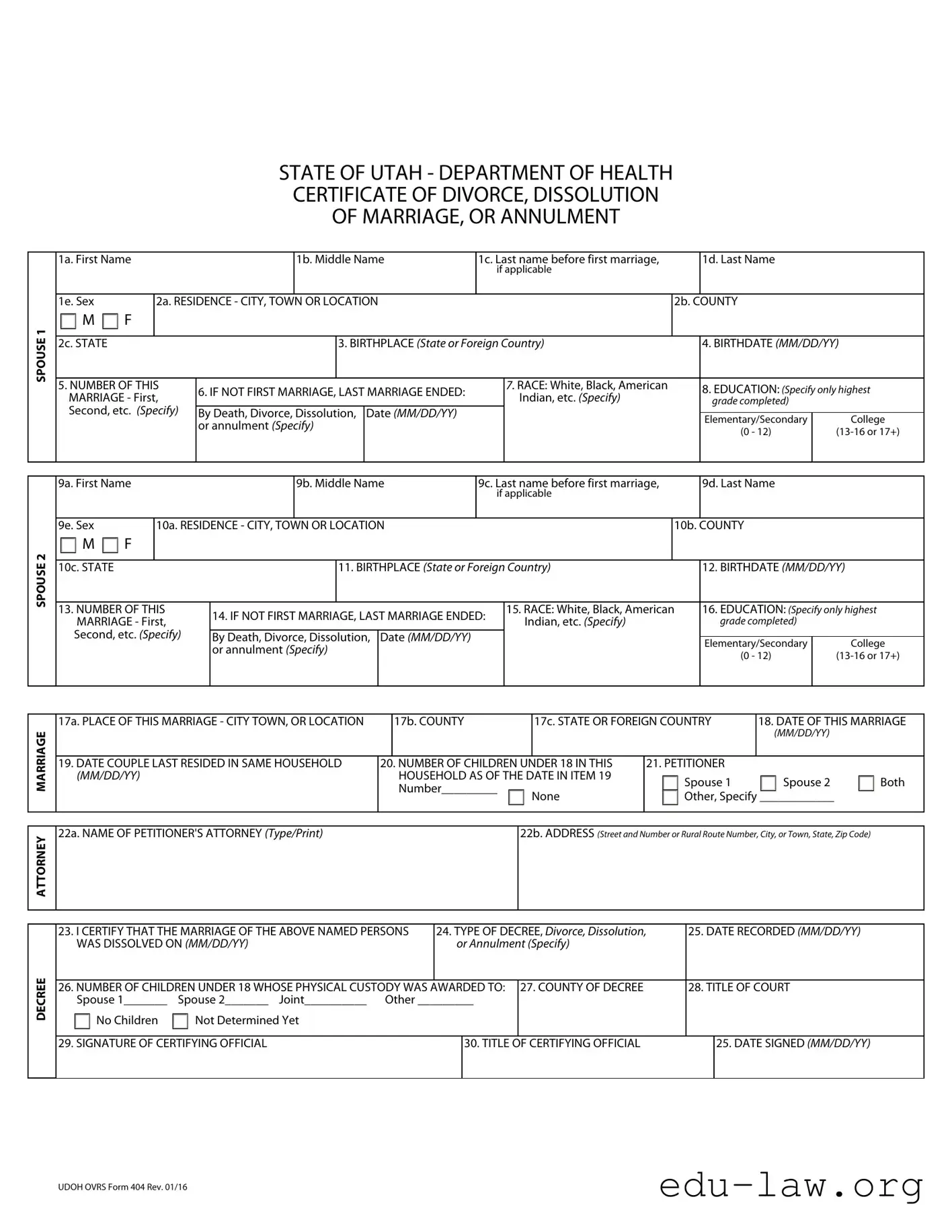
The Divorce Certificate form is an essential document that plays a significant role in the dissolution of a marriage, capturing vital information about both spouses involved. This form, specifically designed for the State of Utah, requires detailed entries regarding each spouse, including their full names, birthdates, and places of residence. Additionally, it addresses marital history, asking whether this is the first marriage for each spouse and the circumstances surrounding any previous marriages. The form also collects demographic information such as race and education level, which may be relevant for statistical purposes. Furthermore, it outlines the specifics of the marriage being dissolved, including the date and location of the marriage, the date the couple last resided together, and the number of children under 18 living in the household at the time of the divorce. Legal representation is also acknowledged on the form, ensuring that the petitioner’s attorney is identified. Finally, the form culminates in a certification section, where an official confirms the dissolution of the marriage and records the decree's details. Each of these elements serves to create a comprehensive record that is vital for legal and personal purposes, offering clarity and closure to those navigating the complexities of divorce.
STATE OF UTAH - DEPARTMENT OF HEALTH CERTIFICATE OF DIVORCE, DISSOLUTION OF MARRIAGE, OR ANNULMENT
SPOUSE 1
1a. First Name |
|
1b. Middle Name |
1c. Last name before first marriage, |
|
1d. Last Name |
|
||||||||
|
|
|
|
|
|
|
|
|
|
if applicable |
|
|
|
|
|
|
|
|
|
|
|
|
|
|
|
|
|
|
|
1e. Sex |
|
2a. RESIDENCE - CITY, TOWN OR LOCATION |
|
|
2b. COUNTY |
|
||||||||
|
|
|
|
|
|
|
|
|
|
|
|
|
|
|
|
|
M |
|
F |
|
|
|
|
|
|
|
|
|
|
|
|
|
|
|
|
|
|
|
|
|
|
|
|
|
2c. STATE |
|
|
|
|
3. BIRTHPLACE (State or Foreign Country) |
|
4. BIRTHDATE (MM/DD/YY) |
|||||||
|
|
|
|
|
|
|
|
|
|
|
|
|
|
|
5. NUMBER OF THIS |
6. IF NOT FIRST MARRIAGE, LAST MARRIAGE ENDED: |
|
7. RACE: White, Black, American |
|
8. EDUCATION: (Specify only highest |
|||||||||
|
MARRIAGE - First, |
|
Indian, etc. (Specify) |
|
||||||||||
|
|
|
grade completed) |
|
||||||||||
|
|
|
|
|
|
|
|
|||||||
|
Second, etc. (Specify) |
By Death, Divorce, Dissolution, |
Date (MM/DD/YY) |
|
|
|
|
|
||||||
|
|
|
|
|
|
or annulment (Specify) |
|
|
|
|
Elementary/Secondary |
College |
||
|
|
|
|
|
|
|
|
|
|
(0 - 12) |
||||
|
|
|
|
|
|
|
|
|
|
|
|
|
||
|
|
|
|
|
|
|
|
|
|
|
|
|
|
|
SPOUSE 2
9a. First Name |
|
9b. Middle Name |
9c. Last name before first marriage, |
|
9d. Last Name |
|
|||||||||
|
|
|
|
|
|
|
|
|
|
|
if applicable |
|
|
|
|
|
|
|
|
|
|
|
|
|
|
|
|
|
|
|
|
9e. Sex |
|
10a. RESIDENCE - CITY, TOWN OR LOCATION |
|
|
|
10b. COUNTY |
|
||||||||
|
|
|
F |
|
|
|
|
|
|
|
|
|
|
|
|
|
|
M |
|
|
|
|
|
|
|
|
|
|
|
|
|
|
|
|
|
|
|
|
|
|
|
|
|
|
|
|
|
10c. STATE |
|
|
|
|
11. BIRTHPLACE (State or Foreign Country) |
|
12. BIRTHDATE (MM/DD/YY) |
||||||||
|
|
|
|
|
|
|
|
|
|
|
|
|
|
||
13. NUMBER OF THIS |
14. IF NOT FIRST MARRIAGE, LAST MARRIAGE ENDED: |
|
15. RACE: White, Black, American |
16. EDUCATION: (Specify only highest |
|||||||||||
|
|
MARRIAGE - First, |
|
Indian, etc. (Specify) |
|
grade completed) |
|
||||||||
|
|
|
|
|
|
|
|
|
|
||||||
|
Second, etc. (Specify) |
By Death, Divorce, Dissolution, |
Date (MM/DD/YY) |
|
|
|
|
|
|
||||||
|
|
|
|
|
|
or annulment (Specify) |
|
|
|
|
|
Elementary/Secondary |
College |
||
|
|
|
|
|
|
|
|
|
|
|
(0 - 12) |
||||
|
|
|
|
|
|
|
|
|
|
|
|
|
|
||
|
|
|
|
|
|
|
|
|
|
|
|
|
|
|
|
MARRIAGE
17a. PLACE OF THIS MARRIAGE - CITY TOWN, OR LOCATION |
|
17b. COUNTY |
17c. STATE OR FOREIGN COUNTRY |
18. DATE OF THIS MARRIAGE |
|||||||||
|
|
|
|
|
|
|
|
|
|
(MM/DD/YY) |
|
|
|
|
|
|
|
|
|
|
|
|
|
|
|
|
|
19. DATE COUPLE LAST RESIDED IN SAME HOUSEHOLD |
20. NUMBER OF CHILDREN UNDER 18 IN THIS |
21. PETITIONER |
|
|
|
|
|
||||||
(MM/DD/YY) |
|
HOUSEHOLD AS OF THE DATE IN ITEM 19 |
|
|
Spouse 1 |
|
|
Spouse 2 |
|
Both |
|||
|
|
|
|
|
|
||||||||
|
|
Number_________ |
|
|
|
|
|
|
|
|
|||
|
|
|
|
|
|
|
|
|
|
|
|
|
|
|
|
|
|
None |
|
|
Other, Specify ____________ |
|
|
||||
|
|
|
|
|
|
|
|
|
|||||
|
|
|
|
|
|
|
|
|
|
|
|
|
|
|
|
|
|
|
|
|
|
|
|
|
|
|
|
ATTORNEY
22a. NAME OF PETITIONER'S ATTORNEY (Type/Print)
22b. ADDRESS (Street and Number or Rural Route Number, City, or Town, State, Zip Code)
DECREE
23. I CERTIFY THAT THE MARRIAGE OF THE ABOVE NAMED PERSONS |
24. TYPE OF DECREE, Divorce, Dissolution, |
25. DATE RECORDED (MM/DD/YY) |
|||||||
|
WAS DISSOLVED ON (MM/DD/YY) |
or Annulment (Specify) |
|
|
|||||
|
|
|
|
|
|
|
|
|
|
26. NUMBER OF CHILDREN UNDER 18 WHOSE PHYSICAL CUSTODY WAS AWARDED TO: |
27. COUNTY OF DECREE |
28. TITLE OF COURT |
|||||||
|
Spouse 1_______ |
Spouse 2_______ Joint__________ Other _________ |
|
|
|
||||
|
|
No Children |
|
Not Determined Yet |
|
|
|
|
|
|
|
|
|
|
|
|
|
||
|
|
|
|
|
|
|
|
|
|
|
|
|
|
|
|
|
|
|
|
29. SIGNATURE OF CERTIFYING OFFICIAL |
|
30. TITLE OF CERTIFYING OFFICIAL |
|
25. DATE SIGNED (MM/DD/YY) |
|||||
|
|
|
|
|
|
|
|
|
|
UDOH OVRS Form 404 Rev. 01/16
| Fact Name | Details |
|---|---|
| Governing Law | The Divorce Certificate form in Utah is governed by the Utah Code Title 30, Chapter 3, which outlines the legal requirements for divorce and dissolution of marriage. |
| Required Information | The form requires detailed information about both spouses, including names, birth dates, and previous marriage details, ensuring all relevant data is collected for the divorce record. |
| Children Under 18 | The form specifically asks for the number of children under 18 living in the household, which is important for custody considerations and child support arrangements. |
| Certifying Official | A certifying official must sign the form, confirming that the marriage has been legally dissolved, which adds an official layer to the document's validity. |
| Submission Requirements | The completed form must be submitted to the Utah Department of Health, ensuring that the divorce is officially recorded in the state’s vital records. |
Once you have gathered all necessary information, you can begin filling out the Divorce Certificate form. Make sure to provide accurate details to ensure the form is processed correctly. After completing the form, it will need to be submitted to the appropriate authorities for recording.
What is a Divorce Certificate?
A Divorce Certificate is an official document that verifies the dissolution of a marriage. It contains essential details such as the names of both spouses, the date of the divorce, and the court that issued the decree. This certificate serves as proof that a marriage has legally ended.
Who needs a Divorce Certificate?
Individuals who have gone through a divorce may need a Divorce Certificate for various reasons. Common situations include applying for a new marriage license, updating personal records, or providing proof of marital status for legal matters. It can also be required for financial institutions or government agencies.
How do I obtain a Divorce Certificate in Utah?
To obtain a Divorce Certificate in Utah, you can request it through the Utah Department of Health. You may need to complete a specific application form and provide identification. There may be a fee associated with the request, and processing times can vary, so it's advisable to check current guidelines on the official website.
What information is required to complete the Divorce Certificate form?
The Divorce Certificate form requires detailed information about both spouses. This includes full names, birthdates, places of residence, race, and education levels. Additionally, you will need to provide information about the marriage, such as the date and location, as well as details about any children involved.
Is a Divorce Certificate the same as a Divorce Decree?
No, a Divorce Certificate is not the same as a Divorce Decree. The Divorce Decree is the court's official order that finalizes the divorce, while the Divorce Certificate is a document that serves as proof that the divorce has occurred. The Decree contains more detailed legal information and terms of the divorce.
Can I get a Divorce Certificate if I was not the one who filed for divorce?
Yes, you can obtain a Divorce Certificate even if you were not the petitioner in the divorce. Both spouses have the right to request this document. However, you may need to provide some personal information and proof of identity to access the certificate.
How long does it take to receive a Divorce Certificate?
The time it takes to receive a Divorce Certificate can vary based on the method of request and the volume of applications being processed. Generally, it may take a few days to several weeks. For the most accurate information, it is best to consult the Utah Department of Health's website or contact their office directly.
Are there any fees associated with obtaining a Divorce Certificate?
Yes, there are typically fees associated with obtaining a Divorce Certificate. The amount can vary, so it's important to check the current fee schedule on the Utah Department of Health's website. Payment methods may also differ, so be sure to review the accepted forms of payment when making your request.
Incorrect Names: Failing to provide the correct first, middle, or last names for both spouses can lead to significant issues. Ensure that all names match official documents.
Missing Dates: Omitting important dates, such as birthdates or the date of the marriage, can delay processing. Double-check all date fields for accuracy.
Improper Format: Not adhering to the required date format (MM/DD/YY) can result in confusion. Always use the specified format to avoid errors.
Incomplete Education Information: Leaving out the highest grade completed for either spouse can lead to incomplete records. Provide all necessary educational details.
Failure to Specify Previous Marriages: Not indicating if either spouse has been previously married can complicate the record. Clearly state the details of any prior marriages.
Neglecting to List Children: Omitting information about children under 18 can affect custody and support decisions. Be sure to include the number of children in the household.
Signature Issues: Not signing the form or having an unauthorized person sign can invalidate the certificate. Ensure that the appropriate parties provide their signatures.
When navigating the divorce process, several important documents accompany the Divorce Certificate form. Each serves a specific purpose and helps ensure that all legal aspects of the divorce are properly addressed.
Understanding these documents can help individuals feel more prepared and informed as they go through the divorce process. Each form plays a crucial role in ensuring that the divorce is handled legally and equitably.
A Marriage Certificate is a document that serves as official proof of a marriage between two individuals. It typically includes the names of the spouses, the date of the marriage, and the location where the marriage took place. Like a Divorce Certificate, it is a vital record that establishes a legal relationship. Both documents require personal information about the individuals involved, such as their names and birthdates, and are often necessary for various legal purposes, including changing names or applying for benefits.
A Birth Certificate is another important legal document that records the birth of an individual. It contains essential details such as the person’s name, date of birth, and place of birth. Similar to a Divorce Certificate, a Birth Certificate is often required for identification purposes, such as applying for a passport or enrolling in school. Both documents are maintained by government agencies and serve as official records that can be used to establish identity and legal status.
A Death Certificate is a formal document that records the time, place, and cause of an individual's death. It is similar to a Divorce Certificate in that it is a critical legal record that may be required for settling estates or claiming benefits. Both documents involve the verification of personal information and may require signatures from officials to be considered valid. They serve as essential tools for legal and administrative processes following significant life events.
A Custody Agreement is a legal document that outlines the terms of child custody arrangements following a divorce or separation. While a Divorce Certificate marks the end of a marriage, a Custody Agreement focuses on the welfare of children involved. Both documents are vital in family law and can affect the rights and responsibilities of the parties involved. They often require detailed information about the individuals and may be enforced by the court.
A Separation Agreement is a written contract between spouses who have decided to live apart but are not yet divorced. This document details the terms of the separation, including division of assets, child custody, and support obligations. Similar to a Divorce Certificate, it is a legal document that outlines the terms agreed upon by both parties. Both documents can be essential in resolving disputes and providing clarity on the responsibilities of each spouse during and after the separation process.
When filling out the Divorce Certificate form, it is important to approach the task with care and attention to detail. Here are some key points to consider:
By following these guidelines, you can help facilitate a smoother process as you complete your Divorce Certificate form. It is natural to feel overwhelmed during this time, but being organized and thorough can make a significant difference.
When it comes to the Divorce Certificate form, misconceptions can lead to confusion. Here are nine common myths, along with the truths that debunk them.
The Divorce Certificate is a summary of the divorce, while the divorce decree is the official court document detailing the terms of the divorce.
A Divorce Certificate is issued after the divorce is finalized, not at the time of filing.
Both spouses' information is typically required on the Divorce Certificate form, ensuring accuracy and completeness.
While it is often required for legal matters, such as remarriage, it can also be needed for personal reasons like updating records.
Completing all sections is crucial, even if some do not apply, as incomplete forms may be rejected.
Both parties can request a copy of the Divorce Certificate, ensuring access for all involved.
Regardless of children, a Divorce Certificate is still necessary for legal documentation of the marriage dissolution.
Each state has its own requirements, and typically, you need a Divorce Certificate issued by the state where the divorce occurred.
It’s wise to keep a copy for your records, as you may need it for future legal or personal matters.
Understanding these misconceptions can help you navigate the process more smoothly. Knowledge is power, especially when dealing with important documents like the Divorce Certificate.
When filling out the Divorce Certificate form, it is essential to ensure accuracy and completeness. Here are five key takeaways: