When it comes to managing your dental health, access to your dental records is crucial. The Dental Records Release form serves as an essential tool that allows patients to obtain their dental history and share it with other healthcare providers or new dental practices. This form typically includes important details such as the patient's name, contact information, and the specific records being requested. It also requires the signature of the patient or their legal guardian, confirming consent for the release of sensitive information. Understanding the purpose and requirements of this form can empower individuals to take charge of their oral health and ensure continuity of care. Whether you are moving to a new city, changing dentists, or seeking a second opinion, knowing how to properly fill out and submit the Dental Records Release form can streamline the process and facilitate better communication between healthcare providers.
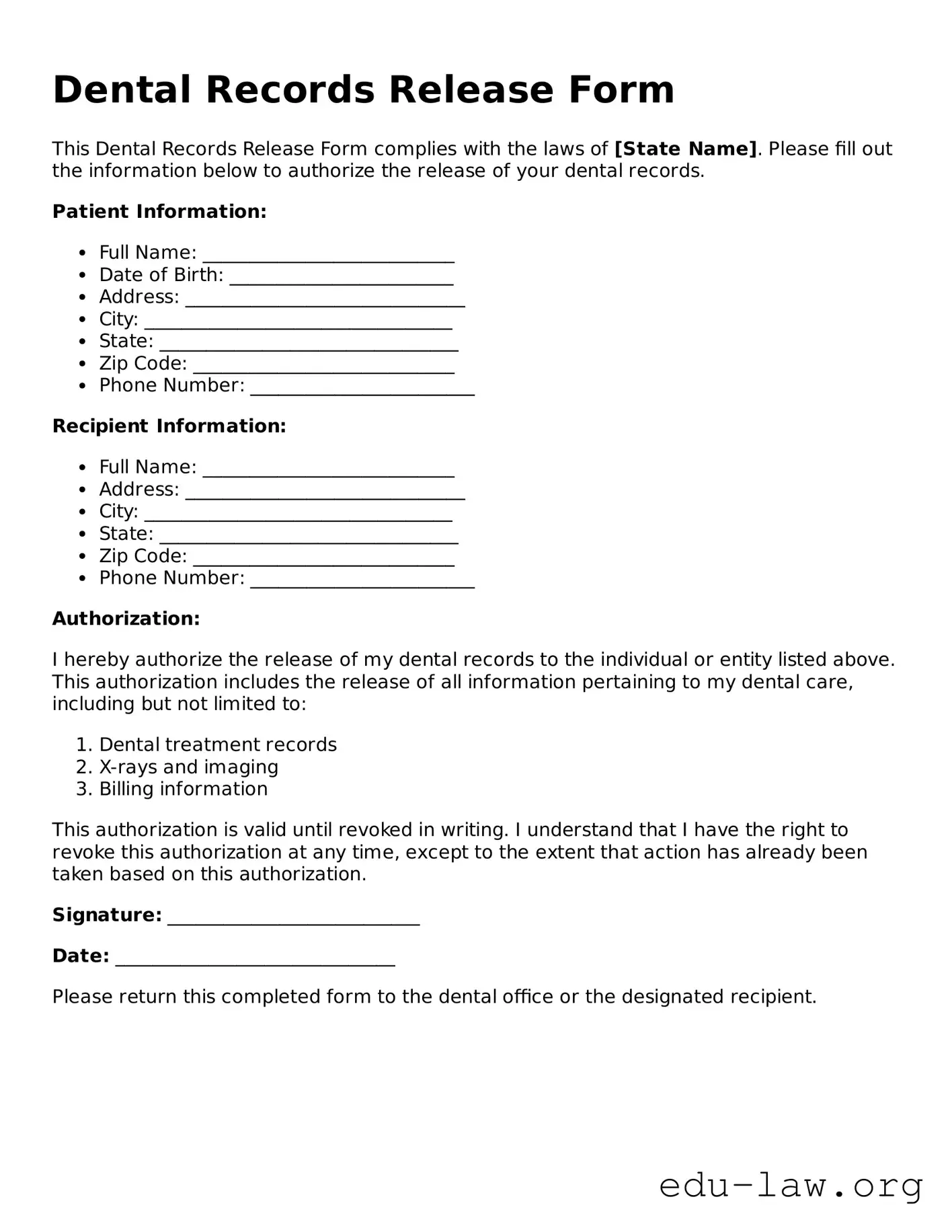
Dental Records Release Form
This Dental Records Release Form complies with the laws of [State Name]. Please fill out the information below to authorize the release of your dental records.
Patient Information:
Recipient Information:
Authorization:
I hereby authorize the release of my dental records to the individual or entity listed above. This authorization includes the release of all information pertaining to my dental care, including but not limited to:
This authorization is valid until revoked in writing. I understand that I have the right to revoke this authorization at any time, except to the extent that action has already been taken based on this authorization.
Signature: ___________________________
Date: ______________________________
Please return this completed form to the dental office or the designated recipient.
| Fact Name | Description |
|---|---|
| Purpose | The Dental Records Release form allows patients to authorize the release of their dental records to another party. |
| Patient Information | The form typically requires the patient's full name, address, and contact information to identify the individual whose records are being released. |
| Recipient Details | It is essential to include the name and contact information of the individual or entity receiving the dental records. |
| Specific Records | The form may specify which records are to be released, such as X-rays, treatment history, or billing information. |
| Duration of Authorization | Patients can set a time limit on how long the authorization for release is valid, often ranging from a few months to several years. |
| Revocation Rights | Patients have the right to revoke their authorization at any time, provided they do so in writing. |
| State-Specific Forms | Some states require specific forms or language to comply with local laws governing patient privacy and record release. |
| Governing Laws | In the U.S., the Health Insurance Portability and Accountability Act (HIPAA) governs the privacy of health records, including dental records. |
| Signature Requirement | The form must be signed and dated by the patient or their legal representative to be valid. |
| Fees | Some dental practices may charge a fee for copying and sending dental records, which is regulated by state law. |
After you have gathered your Dental Records Release form, it’s time to fill it out accurately. Completing this form allows your dental provider to share your records with the designated party. Follow these steps carefully to ensure all necessary information is provided.
Once you have completed the form, review it for accuracy. Ensure all required fields are filled out before submitting it to your dental provider or the designated recipient.
What is a Dental Records Release form?
A Dental Records Release form is a document that allows patients to authorize their dental care providers to share their dental records with another individual or organization. This could be another dental office, a specialist, or even an insurance company. The form ensures that patient privacy is maintained while allowing for the necessary transfer of important health information.
Why would I need to fill out a Dental Records Release form?
You may need to complete this form if you are moving to a new dentist, seeking a second opinion, or if your insurance company requires your dental records for claims processing. By filling out this form, you give explicit permission for your dental records to be shared, ensuring that your new provider has the information they need to deliver appropriate care.
How do I obtain a Dental Records Release form?
Most dental offices provide a Dental Records Release form either in person or on their website. If you are unsure where to find it, simply ask your dental office for assistance. They can guide you through the process of obtaining and completing the form.
What information do I need to provide on the form?
Typically, you will need to provide your personal information, such as your name, address, and date of birth. Additionally, you will need to specify which records you wish to be released and to whom. It's important to be as clear and detailed as possible to avoid any confusion during the transfer process.
Is my consent required for the release of my dental records?
Yes, your consent is essential. The Dental Records Release form serves as your official authorization for the release of your records. Without your signature, dental offices cannot legally share your information, as patient confidentiality is a fundamental principle in healthcare.
Can I revoke my consent after signing the form?
Yes, you can revoke your consent at any time. If you decide to withdraw your authorization, it is important to do so in writing and to notify both your current and previous dental offices. However, keep in mind that revoking consent does not affect any actions taken prior to your request.
How long does it take to process a Dental Records Release request?
The time it takes to process your request can vary depending on the dental office’s policies and workload. Generally, offices aim to fulfill requests within a few business days. If you need your records urgently, it’s best to communicate this to the office when you submit your request.
Are there any fees associated with obtaining my dental records?
Some dental offices may charge a fee for copying or transferring records, especially if the request is for a large volume of documents. It's advisable to check with your dental office beforehand to understand any potential costs involved in obtaining your records.
What should I do if I encounter issues with my Dental Records Release form?
If you experience any difficulties or have questions about the form, reach out directly to your dental office. They are there to help you navigate the process and can provide guidance on how to resolve any issues. Remember, your dental health is important, and clear communication is key to ensuring you receive the care you need.
Not providing complete information: Many individuals forget to fill in all required fields, such as their full name, date of birth, and contact information. This omission can delay the processing of the request.
Missing signature: Some people overlook the importance of signing the form. Without a signature, the request cannot be processed, leading to frustration and delays.
Incorrect recipient details: It’s crucial to ensure that the recipient's name and address are accurate. Providing incorrect information can result in records being sent to the wrong place.
Not specifying the purpose: Failing to indicate why the records are needed can create confusion. It’s helpful to include a brief explanation to facilitate the process.
Neglecting to check for expiration dates: Some forms may have a validity period. If the form is outdated, it may not be accepted, requiring a new submission.
Forgetting to include a phone number: Providing a contact number can be beneficial. If there are questions or issues, the dental office can reach out directly.
Not reviewing for errors: Before submitting, it’s wise to double-check the form for typos or mistakes. Small errors can lead to significant delays.
Ignoring privacy concerns: Some individuals may not consider how their information will be handled. Understanding privacy policies is essential for protecting personal data.
Failing to follow up: After submitting the request, it’s a good idea to follow up with the dental office. This ensures that the request is being processed and helps address any potential issues.
The Dental Records Release form is an important document that allows patients to authorize the sharing of their dental records with other healthcare providers or organizations. However, several other forms and documents often accompany this process. Understanding these related documents can help streamline communication and ensure that all necessary information is shared effectively.
Being familiar with these forms can enhance the experience for both patients and dental professionals. Each document plays a vital role in ensuring clear communication and efficient care throughout the dental treatment process.
The Medical Records Release form serves a similar purpose to the Dental Records Release form. Both documents allow patients to authorize the sharing of their medical information with other healthcare providers or entities. This ensures that the receiving party has access to necessary health information for continued care. Patients must sign these forms, which typically include details about what information can be shared, who can receive it, and the duration of the authorization.
The Authorization to Release Health Information form is another document akin to the Dental Records Release form. This form is used to obtain permission from patients to disclose their health information. Like the Dental Records Release form, it outlines the specific information being released, the purpose of the release, and the parties involved. This ensures transparency and protects patient privacy while facilitating communication among healthcare professionals.
The Patient Consent for Treatment form is also comparable. While it primarily focuses on obtaining consent for medical procedures, it often includes sections where patients can agree to share their medical records as part of their treatment. This form ensures that patients are informed about their treatment options and the implications of sharing their health information, similar to the Dental Records Release form.
The HIPAA Authorization form is crucial in the realm of health information privacy. It allows patients to authorize the release of their health information in compliance with the Health Insurance Portability and Accountability Act (HIPAA). Both this form and the Dental Records Release form require explicit consent from the patient, ensuring that personal health information is handled appropriately and shared only with authorized individuals.
The Release of Information form is another document that shares similarities with the Dental Records Release form. This form is often used in various healthcare settings to request the release of patient information. It specifies what information is being requested, who is requesting it, and for what purpose. Like the Dental Records Release form, it emphasizes the importance of patient consent and confidentiality.
The Third-Party Authorization form is also relevant. It allows patients to designate a third party, such as a family member or legal representative, to access their health information. This form mirrors the Dental Records Release form by requiring patient consent and detailing the scope of information that can be shared with the designated third party.
Finally, the Insurance Claim Authorization form is similar as well. This document enables healthcare providers to submit claims to insurance companies on behalf of patients. Like the Dental Records Release form, it requires patient consent and specifies what information can be shared with the insurance provider. This helps streamline the claims process while ensuring that patients remain informed about who has access to their health information.
When filling out a Dental Records Release form, it is important to follow certain guidelines to ensure the process goes smoothly. Here are five things to do and five things to avoid:
Many people have misunderstandings about the Dental Records Release form. Here are four common misconceptions:
While it is common to use the form when switching dental providers, it is also needed for various situations, such as sharing records for a specialist consultation or insurance purposes.
Dental practices typically require a written request for records. This ensures proper documentation and protects patient privacy.
Some dental offices may charge a fee for copying and transferring records. It’s important to check with the specific practice for their policy.
The Dental Records Release form grants access only to the specified parties and for the stated purpose. It does not allow for unrestricted access to all patient information.
When filling out and using the Dental Records Release form, consider the following key takeaways: