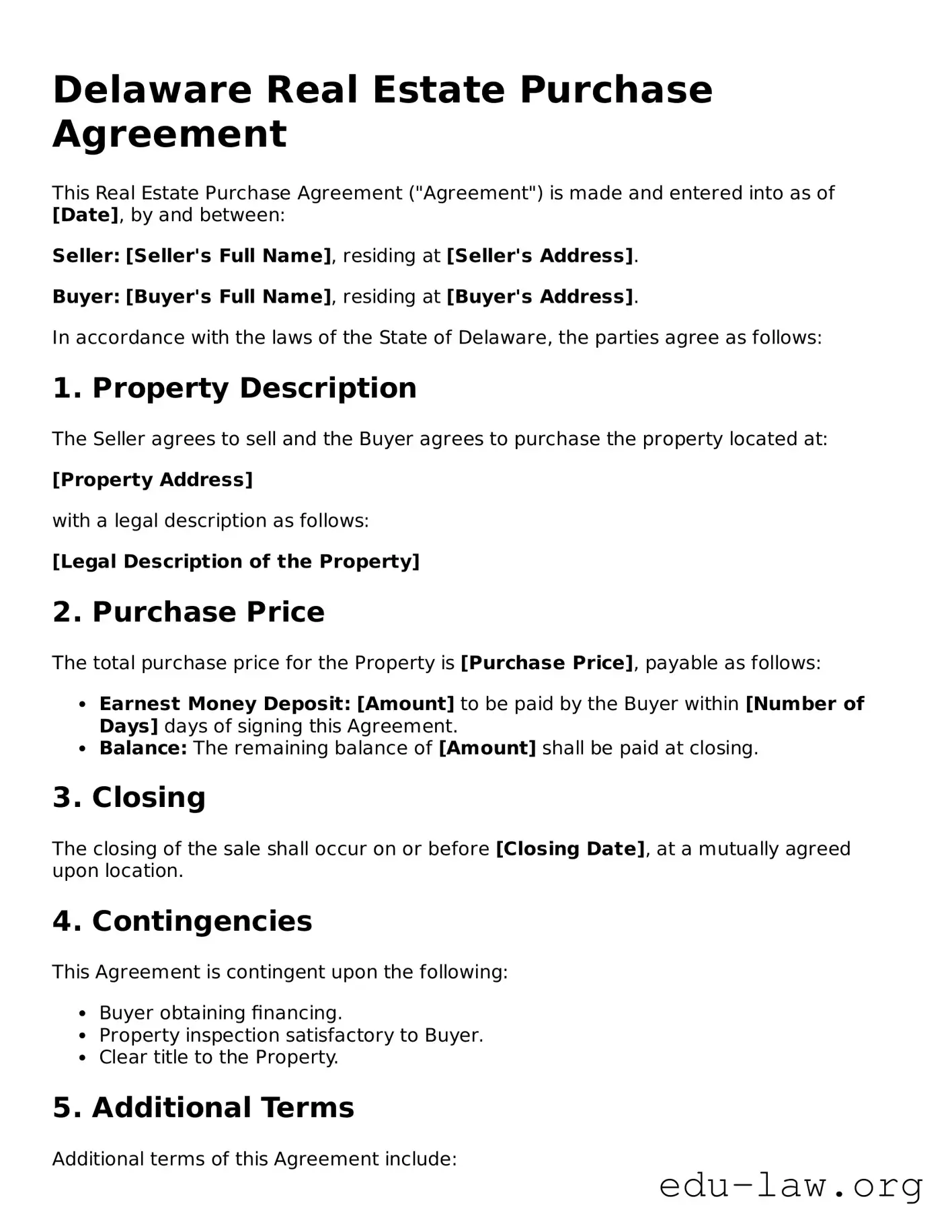
When navigating the process of buying or selling property in Delaware, one essential document comes into play: the Real Estate Purchase Agreement. This form serves as the foundation for the transaction, outlining the terms and conditions agreed upon by both the buyer and the seller. Key components of the agreement include the purchase price, financing details, and the closing date. Additionally, it specifies any contingencies that must be met, such as inspections or the securing of financing. Both parties must also consider the inclusion of personal property, like appliances or fixtures, which may be part of the sale. Furthermore, the agreement addresses the responsibilities of each party, ensuring that everyone understands their obligations leading up to the closing. By clearly detailing these aspects, the Delaware Real Estate Purchase Agreement helps to protect the interests of both buyers and sellers, facilitating a smoother transaction process.
Delaware Real Estate Purchase Agreement
This Real Estate Purchase Agreement ("Agreement") is made and entered into as of [Date], by and between:
Seller: [Seller's Full Name], residing at [Seller's Address].
Buyer: [Buyer's Full Name], residing at [Buyer's Address].
In accordance with the laws of the State of Delaware, the parties agree as follows:
1. Property Description
The Seller agrees to sell and the Buyer agrees to purchase the property located at:
[Property Address]
with a legal description as follows:
[Legal Description of the Property]
2. Purchase Price
The total purchase price for the Property is [Purchase Price], payable as follows:
3. Closing
The closing of the sale shall occur on or before [Closing Date], at a mutually agreed upon location.
4. Contingencies
This Agreement is contingent upon the following:
5. Additional Terms
Additional terms of this Agreement include:
6. Governing Law
This Agreement shall be governed by the laws of the State of Delaware.
7. Signatures
IN WITNESS WHEREOF, the parties hereto have executed this Agreement as of the date first above written.
______________________________
Seller's Signature
______________________________
Buyer's Signature
| Fact Name | Description |
|---|---|
| Governing Law | The Delaware Real Estate Purchase Agreement is governed by the laws of the State of Delaware. |
| Purpose | This form outlines the terms and conditions for the purchase of real estate in Delaware. |
| Parties Involved | The agreement typically includes the buyer, seller, and any agents involved in the transaction. |
| Deposit Requirement | A deposit is usually required to secure the buyer's intent to purchase the property. |
| Contingencies | Common contingencies may include financing, inspections, and the sale of the buyer's current home. |
Filling out the Delaware Real Estate Purchase Agreement form is an important step in the home buying process. This form outlines the terms of the sale between the buyer and seller. After completing the form, both parties will need to review it carefully before signing.
Once completed, make sure both parties receive a copy of the signed agreement for their records. This will help ensure everyone is on the same page as the transaction moves forward.
What is a Delaware Real Estate Purchase Agreement?
A Delaware Real Estate Purchase Agreement is a legal document that outlines the terms and conditions under which a buyer agrees to purchase a property from a seller. This agreement serves as a binding contract once both parties have signed it, ensuring that the transaction is conducted fairly and according to the agreed-upon terms. It typically includes details such as the purchase price, property description, closing date, and any contingencies that must be met before the sale can be finalized.
What key elements should be included in the agreement?
Several essential elements should be included in a Delaware Real Estate Purchase Agreement. These include the names and addresses of both the buyer and seller, a detailed description of the property being sold, the purchase price, and the terms of payment. Additionally, it is important to outline any contingencies, such as financing or inspection requirements, that must be satisfied before the sale can proceed. Lastly, the agreement should specify the closing date and any other important deadlines.
What contingencies can be included in the agreement?
Contingencies are conditions that must be met for the sale to proceed. Common contingencies in a Delaware Real Estate Purchase Agreement may include financing contingencies, which allow the buyer to back out if they cannot secure a mortgage, and inspection contingencies, which permit the buyer to withdraw if the property does not pass an inspection. Other contingencies might involve the sale of the buyer's current home or the seller's obligation to make certain repairs before closing.
How can disputes be resolved if they arise?
If disputes arise regarding the terms of the Delaware Real Estate Purchase Agreement, there are several avenues for resolution. First, the parties may attempt to negotiate a solution directly. If this is unsuccessful, mediation or arbitration may be considered as alternative dispute resolution methods. These approaches can be less formal and more cost-effective than litigation. Should these methods fail, the parties may ultimately need to seek resolution through the court system, where a judge will make a binding decision.
Is it necessary to have a lawyer review the agreement?
Incomplete Information: One common mistake is leaving sections of the form blank. Buyers and sellers must provide complete details about the property, including the address, purchase price, and any contingencies. Omitting information can lead to misunderstandings or disputes later on.
Incorrect Dates: Failing to enter the correct dates can cause confusion. It’s essential to specify the date of the agreement, the closing date, and any deadlines for contingencies. Inaccurate dates may result in missed opportunities or legal complications.
Not Understanding Contingencies: Many individuals do not fully grasp the contingencies included in the agreement. These clauses protect buyers and sellers, allowing them to back out under certain conditions. Ignoring these can lead to significant issues if circumstances change.
Failure to Review Terms: Lastly, not thoroughly reviewing the terms can lead to problems. Each party should carefully read the entire agreement to understand their rights and obligations. Overlooking specific clauses may result in unintended consequences.
When engaging in real estate transactions in Delaware, several important documents accompany the Real Estate Purchase Agreement. Each document plays a critical role in ensuring that the transaction is clear, legally binding, and protects the interests of both parties involved. Below is a list of commonly used forms and documents.
Understanding these documents is essential for anyone participating in a real estate transaction. Each form serves a unique purpose and contributes to a smooth and legally sound process. Being well-informed can help buyers and sellers navigate the complexities of real estate deals with confidence.
The Delaware Real Estate Purchase Agreement is similar to the Purchase and Sale Agreement used in many states. Both documents outline the terms and conditions under which a buyer agrees to purchase property from a seller. They typically include details such as the purchase price, property description, and any contingencies that must be met before the sale can be finalized. This agreement serves as a binding contract once both parties sign it, ensuring that both the buyer and seller are clear on their obligations.
Another related document is the Residential Lease Agreement. While primarily focused on rental situations, it also outlines terms between a landlord and tenant. This agreement specifies the duration of the lease, rental amount, and responsibilities for maintenance. Unlike the Purchase Agreement, it does not transfer ownership but sets the framework for the rental relationship, highlighting the importance of clear terms in any property transaction.
The Option to Purchase Agreement is another document that shares similarities with the Real Estate Purchase Agreement. This agreement gives a potential buyer the right to purchase a property at a predetermined price within a specific timeframe. It outlines the terms under which the buyer can exercise this option, including any fees paid for the right to purchase. Like the Purchase Agreement, it is a legally binding document that protects both parties' interests.
The Listing Agreement is also comparable, as it involves the sale of real estate. This document is typically signed between a seller and a real estate agent. It grants the agent the authority to market and sell the property. The Listing Agreement includes details about the commission structure and the duration of the listing, ensuring that both the seller and agent have clear expectations about their roles in the sale process.
The Seller Disclosure Statement is another document closely related to the Real Estate Purchase Agreement. This form requires the seller to disclose any known issues with the property, such as structural problems or past pest infestations. It is crucial for buyers, as it provides transparency and helps them make informed decisions. This document works alongside the Purchase Agreement to ensure that all parties are aware of the property's condition before the sale is finalized.
The Title Report is similar in that it addresses ownership and rights related to the property. This document outlines the legal status of the property, including any liens or encumbrances. It is often reviewed during the purchase process to ensure that the seller has the right to sell the property. The Title Report is essential for protecting the buyer’s investment and ensuring a smooth transaction.
Lastly, the Closing Statement is a document that comes into play at the end of the real estate transaction. It summarizes all financial aspects of the sale, including the purchase price, closing costs, and any adjustments. Both the buyer and seller review this document before finalizing the sale. It ensures that all parties understand their financial obligations and confirms that the transaction is completed accurately.
When filling out the Delaware Real Estate Purchase Agreement form, certain practices can help ensure a smooth process. Here are five things you should do, as well as five things to avoid.
Things You Should Do:
Things You Shouldn't Do:
When it comes to the Delaware Real Estate Purchase Agreement form, several misconceptions often arise. These misunderstandings can lead to confusion for buyers and sellers alike. Below are four common misconceptions, along with clarifications to help demystify the process.
Understanding these misconceptions can empower individuals involved in real estate transactions in Delaware. Clarity about the agreement can lead to smoother negotiations and a more successful closing process.
When navigating the Delaware Real Estate Purchase Agreement form, it’s essential to understand several key aspects to ensure a smooth transaction. Here are some important takeaways:
By focusing on these key areas, you can navigate the Delaware Real Estate Purchase Agreement with greater confidence and clarity.