The Delaware Power of Attorney form serves as a vital legal document that empowers individuals to designate someone they trust to make decisions on their behalf. This form is particularly important for managing financial matters, healthcare choices, and other significant affairs when one is unable to act independently. It allows the appointed agent to handle a variety of tasks, such as signing documents, accessing bank accounts, and making medical decisions, ensuring that the principal's wishes are respected and upheld. In Delaware, there are specific requirements and guidelines that govern the creation and execution of this form, including the necessity for the principal to be of sound mind at the time of signing. Understanding the nuances of the Power of Attorney is crucial, as it not only provides peace of mind but also safeguards the principal's interests during times of incapacity or absence. With the right knowledge, individuals can make informed decisions about whom to appoint and the extent of the authority granted, ultimately ensuring that their personal and financial matters are handled according to their preferences.
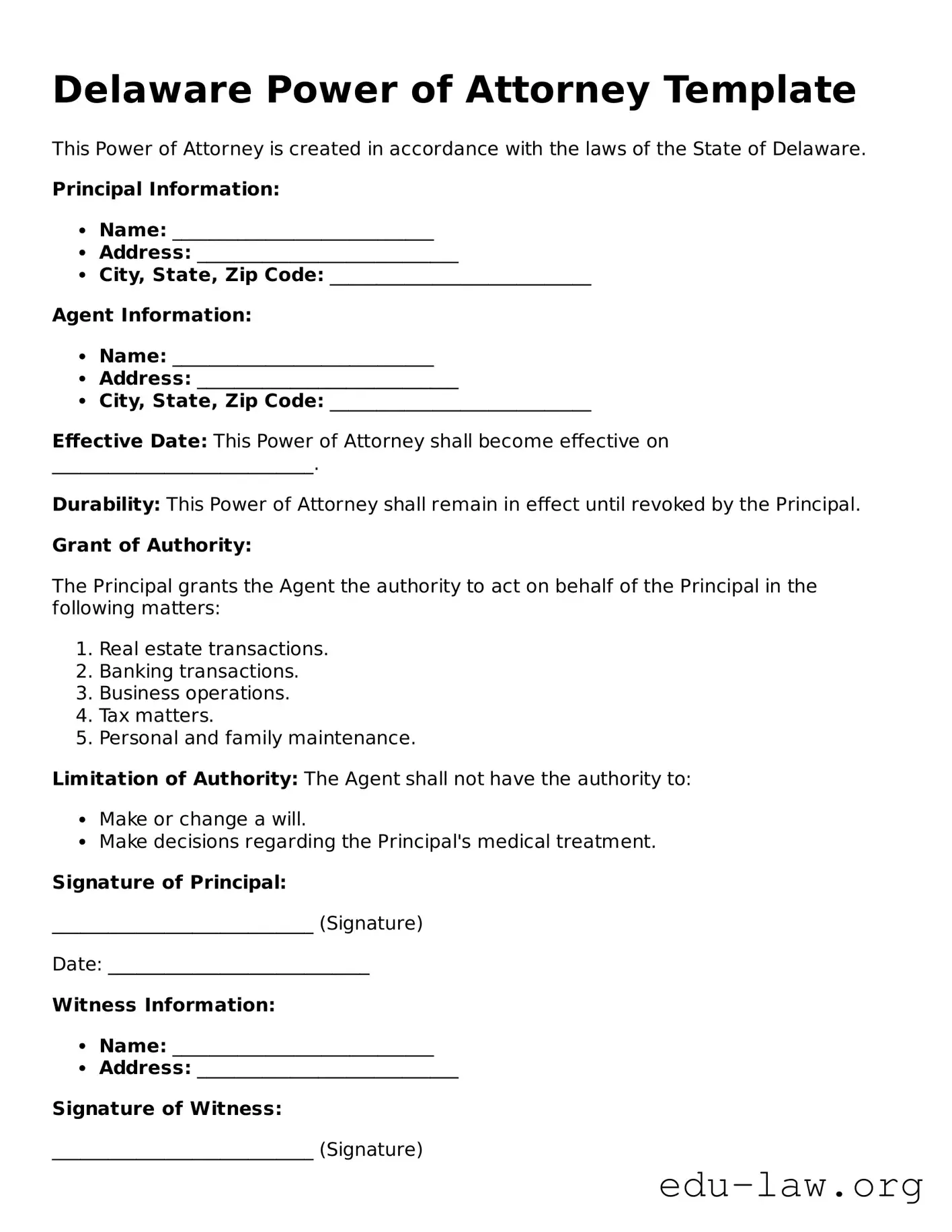
Delaware Power of Attorney Template
This Power of Attorney is created in accordance with the laws of the State of Delaware.
Principal Information:
Agent Information:
Effective Date: This Power of Attorney shall become effective on ____________________________.
Durability: This Power of Attorney shall remain in effect until revoked by the Principal.
Grant of Authority:
The Principal grants the Agent the authority to act on behalf of the Principal in the following matters:
Limitation of Authority: The Agent shall not have the authority to:
Signature of Principal:
____________________________ (Signature)
Date: ____________________________
Witness Information:
Signature of Witness:
____________________________ (Signature)
Date: ____________________________
This document must be signed in the presence of a notary public to be valid.
Notary Public:
State of Delaware
County of ____________________________
On this ____ day of ____________, 20__, before me, a notary public, personally appeared ____________________________, known to me to be the person who executed the foregoing Power of Attorney.
____________________________ (Notary Public Signature)
My commission expires: ____________________________
| Fact Name | Details |
|---|---|
| Definition | A Power of Attorney in Delaware allows an individual to designate another person to make decisions on their behalf, especially in financial or legal matters. |
| Governing Law | The Delaware Power of Attorney is governed by Title 18, Chapter 170 of the Delaware Code. |
| Durability | This form can be durable, meaning it remains effective even if the principal becomes incapacitated, unless specified otherwise. |
| Revocation | The principal can revoke the Power of Attorney at any time, provided they are of sound mind, by notifying the agent and any relevant institutions. |
Filling out the Delaware Power of Attorney form requires careful attention to detail. After completing the form, you will need to ensure that it is signed and witnessed properly to make it legally binding.
What is a Power of Attorney in Delaware?
A Power of Attorney (POA) is a legal document that allows one person to grant another person the authority to act on their behalf. In Delaware, this can include making financial decisions, handling real estate transactions, and managing other personal affairs. The person granting authority is known as the "principal," while the person receiving authority is called the "agent" or "attorney-in-fact."
Why should I consider creating a Power of Attorney?
Creating a Power of Attorney can provide peace of mind. It ensures that someone you trust can make decisions for you if you become unable to do so yourself due to illness, injury, or other circumstances. It can help avoid complications and delays in managing your affairs during difficult times.
What types of Power of Attorney are available in Delaware?
Delaware offers several types of Power of Attorney. The most common are the General Power of Attorney, which grants broad powers to the agent, and the Limited Power of Attorney, which restricts the agent's authority to specific tasks or timeframes. Additionally, a Durable Power of Attorney remains effective even if the principal becomes incapacitated.
How do I create a Power of Attorney in Delaware?
To create a Power of Attorney in Delaware, you need to complete a written document that clearly outlines the powers you wish to grant. It must be signed by the principal and witnessed by two individuals or notarized. Make sure to follow the specific requirements outlined in Delaware law to ensure your document is valid.
Can I revoke a Power of Attorney in Delaware?
Yes, you can revoke a Power of Attorney at any time as long as you are mentally competent. To do so, you should create a written revocation document and notify your agent and any relevant third parties. This ensures that your wishes are clear and legally recognized.
What happens if my agent abuses their power?
If your agent abuses their authority or acts against your best interests, you can take legal action against them. It’s crucial to choose someone you trust. If you suspect abuse, consult with a legal professional to discuss your options for addressing the situation.
Do I need an attorney to create a Power of Attorney?
While it is not required to hire an attorney to create a Power of Attorney in Delaware, it is highly recommended. An attorney can help ensure that the document meets all legal requirements and accurately reflects your wishes, reducing the risk of complications in the future.
Can I use a Power of Attorney created in another state in Delaware?
Generally, a Power of Attorney created in another state may be recognized in Delaware, but it’s important to ensure that it complies with Delaware laws. If you plan to use an out-of-state POA, consider having it reviewed by a Delaware attorney to confirm its validity.
Is there a specific form I must use for a Power of Attorney in Delaware?
Delaware does not require a specific form for a Power of Attorney, but it does have recommended language and guidelines. Using a form that complies with these guidelines can help ensure that your document is legally valid and enforceable.
Failing to choose the right agent. It’s essential to select someone trustworthy and capable of handling your affairs. Not everyone is suited for this responsibility.
Not specifying the powers granted. The form allows you to outline specific powers. Leaving this section vague can lead to confusion and misuse of authority.
Overlooking the need for witnesses. In Delaware, having witnesses can be crucial. Neglecting this requirement can invalidate the document.
Not signing the document in the correct order. The agent must sign after you, and the order matters for the document's validity.
Using outdated forms. Laws change, and so do forms. Always ensure you are using the most current version of the Power of Attorney form.
Failing to date the document. A date is necessary for clarity and to establish when the powers begin. Without it, there could be disputes.
Not considering a successor agent. Life is unpredictable, and your first choice may not always be available. Designating a backup can prevent complications.
Ignoring state-specific requirements. Each state has its own rules regarding Power of Attorney. Familiarize yourself with Delaware’s regulations to avoid mistakes.
Not discussing the decision with the chosen agent. Open communication ensures that your agent understands your wishes and is willing to accept the role.
Failing to keep copies of the signed document. It’s important to retain copies for your records and to provide them to your agent. This ensures everyone is on the same page.
When creating a Power of Attorney in Delaware, it’s important to consider other related documents that may enhance or clarify your intentions. These forms can help ensure that your wishes are clearly communicated and legally recognized. Below are five commonly used forms and documents that often accompany a Power of Attorney.
By considering these documents alongside your Power of Attorney, you can create a comprehensive plan that addresses both your healthcare and financial needs. This proactive approach can provide peace of mind for you and your loved ones.
The Delaware Power of Attorney form shares similarities with the General Power of Attorney. Both documents grant an individual the authority to make decisions on behalf of another person. This includes financial matters, property transactions, and legal affairs. The key difference lies in the scope of authority; a general power of attorney can be broad and cover many areas, while the Delaware version may be tailored to specific needs or limitations set by the principal.
Another related document is the Durable Power of Attorney. This type of power of attorney remains effective even if the principal becomes incapacitated. Like the Delaware Power of Attorney, it allows an agent to act on behalf of the principal. However, the durable version explicitly states that the authority continues under certain circumstances, providing an added layer of assurance for the principal and their family.
The Medical Power of Attorney is also similar, focusing specifically on healthcare decisions. This document allows an agent to make medical choices for the principal if they are unable to do so. While the Delaware Power of Attorney may include healthcare provisions, a Medical Power of Attorney is dedicated solely to health-related matters, ensuring clarity in medical decision-making.
A Limited Power of Attorney is another variant that resembles the Delaware form. This document grants authority for specific tasks or a limited time frame. For instance, it may allow an agent to handle a real estate transaction while not permitting broader financial decisions. This specificity helps the principal maintain control over their affairs while still enabling assistance where needed.
The Springing Power of Attorney is similar in that it only becomes effective under certain conditions, typically when the principal becomes incapacitated. This type of document provides peace of mind, as it ensures that the agent's authority is not active until it is truly necessary. The Delaware Power of Attorney can also include springing provisions, allowing for flexibility based on the principal’s needs.
The Financial Power of Attorney focuses specifically on financial matters, allowing an agent to manage the principal's financial affairs. This document is similar to the Delaware Power of Attorney but is often more narrowly defined to cover only financial transactions, such as banking, investments, and real estate management, rather than broader legal or personal decisions.
A Healthcare Proxy is another document that aligns with the Delaware Power of Attorney, particularly in the realm of medical decisions. This document allows an individual to appoint someone to make healthcare decisions on their behalf. While it serves a similar purpose to the Medical Power of Attorney, it may differ in terms of the specific powers granted and the circumstances under which those powers are exercised.
Lastly, the Revocation of Power of Attorney document is related as it serves to cancel any previously granted powers. This document is essential for individuals who wish to change their designated agent or revoke authority entirely. It complements the Delaware Power of Attorney by providing a clear process for ending an agent's authority, ensuring that the principal's wishes are respected at all times.
When filling out the Delaware Power of Attorney form, it’s important to follow certain guidelines to ensure the document is valid and effective. Here are five things you should and shouldn’t do:
Understanding the Delaware Power of Attorney form is crucial for effective legal planning. However, several misconceptions can lead to confusion. Here are seven common misconceptions:
Many believe a Power of Attorney is limited to financial decisions. In reality, it can also cover health care, property management, and other important areas.
Some think that once a Power of Attorney is created, it cannot be changed. However, the principal can revoke or alter the document at any time, as long as they are mentally competent.
People often assume that Power of Attorney forms are interchangeable. Each state has specific requirements, and Delaware's form may differ from those in other states.
While notarization is recommended, Delaware law allows for a Power of Attorney to be valid without a notary if it is signed by two witnesses.
Many think that only legal professionals can draft this document. In Delaware, individuals can prepare their own Power of Attorney as long as they follow the legal requirements.
This misconception suggests that only older individuals need a Power of Attorney. In truth, anyone can benefit from having one, regardless of age, especially in planning for unexpected events.
Some believe that having a will eliminates the need for a Power of Attorney. However, a will only takes effect after death, while a Power of Attorney is crucial for decisions made during a person's lifetime.
Addressing these misconceptions helps individuals make informed decisions about their legal documents and personal affairs.
When considering the Delaware Power of Attorney form, it is essential to understand its implications and proper use. Here are some key takeaways: