The Delaware Notice to Quit form is an important document in the landlord-tenant relationship, serving as a formal notice that a tenant must vacate a rental property. This form is typically used when a tenant has violated the terms of their lease or has not paid rent on time. It outlines the reasons for the eviction and specifies a deadline by which the tenant must leave the premises. Understanding the Notice to Quit is crucial for both landlords and tenants, as it helps clarify the rights and responsibilities of each party. The form should be completed accurately and delivered properly to ensure that the eviction process proceeds smoothly. Familiarity with this form can help avoid misunderstandings and potential disputes, making it a vital tool in managing rental agreements in Delaware.
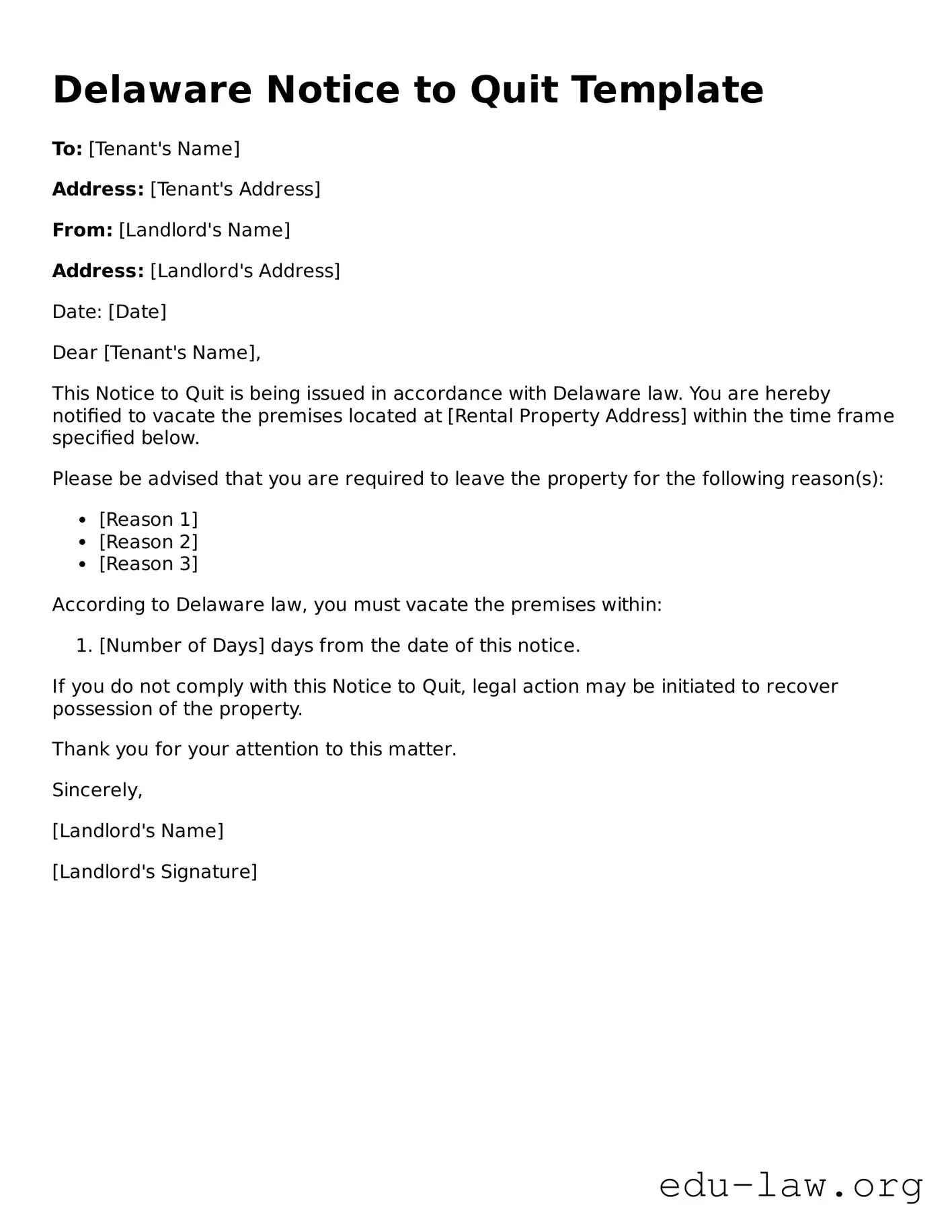
Delaware Notice to Quit Template
To: [Tenant's Name]
Address: [Tenant's Address]
From: [Landlord's Name]
Address: [Landlord's Address]
Date: [Date]
Dear [Tenant's Name],
This Notice to Quit is being issued in accordance with Delaware law. You are hereby notified to vacate the premises located at [Rental Property Address] within the time frame specified below.
Please be advised that you are required to leave the property for the following reason(s):
According to Delaware law, you must vacate the premises within:
If you do not comply with this Notice to Quit, legal action may be initiated to recover possession of the property.
Thank you for your attention to this matter.
Sincerely,
[Landlord's Name]
[Landlord's Signature]
| Fact Name | Description |
|---|---|
| Purpose | The Delaware Notice to Quit form is used by landlords to notify tenants of their intent to terminate a lease agreement. |
| Governing Law | This form is governed by Delaware Code Title 25, Chapter 5501-5504, which outlines landlord-tenant relations. |
| Delivery Method | The notice can be delivered in person, by certified mail, or by posting on the tenant's door. |
| Notice Period | Typically, the notice period is 5 days for non-payment of rent and 60 days for other lease violations. |
| Required Information | The form must include the tenant's name, address, and the reason for termination. |
| Signature Requirement | The landlord or an authorized agent must sign the Notice to Quit for it to be valid. |
| Effect on Eviction | Issuing a Notice to Quit is often the first step in the eviction process, but it does not guarantee immediate removal. |
| Tenant's Rights | Tenants have the right to respond to the Notice to Quit and may contest the eviction in court. |
| Legal Consequences | Failure to comply with the Notice may lead to legal proceedings and potential eviction. |
| Form Availability | The Delaware Notice to Quit form can often be found online or through local legal aid organizations. |
Once you have the Delaware Notice to Quit form, you will need to fill it out accurately. This form is an important step in the eviction process. Make sure to have all necessary information ready before you start.
After filling out the form, deliver it to the tenant. This can be done in person or via certified mail. Keep a record of how and when you delivered the notice. This documentation may be important for any future legal proceedings.
What is the Delaware Notice to Quit form?
The Delaware Notice to Quit form is a legal document that a landlord uses to formally notify a tenant to vacate the rental property. This notice is typically issued when a tenant has violated the terms of their lease agreement, such as failing to pay rent or engaging in illegal activities on the premises. The form serves as an official warning and outlines the reasons for the eviction, as well as the time frame in which the tenant must leave the property.
How does the Notice to Quit process work in Delaware?
In Delaware, the Notice to Quit process begins when a landlord determines that a tenant must be evicted. The landlord must complete the Notice to Quit form, providing specific details about the lease violation. Once the form is filled out, it must be delivered to the tenant, either in person or via certified mail. The tenant is typically given a minimum of five days to vacate the property, depending on the reason for the notice. If the tenant does not comply, the landlord can then proceed with legal action to initiate eviction proceedings.
What are the legal requirements for a Notice to Quit in Delaware?
The Notice to Quit must include certain essential information to be considered valid. This includes the name of the tenant, the address of the rental property, the specific reason for the eviction, and the date by which the tenant must vacate. It is also important that the notice is signed and dated by the landlord. Failure to adhere to these requirements may result in delays or complications in the eviction process.
Can a tenant contest a Notice to Quit?
Yes, a tenant has the right to contest a Notice to Quit. If a tenant believes that the notice was issued unfairly or that they have not violated the lease terms, they can respond to the landlord. It is advisable for the tenant to document their case and seek legal assistance if necessary. If the situation escalates to court, the tenant can present their arguments during the eviction hearing, and the judge will make a determination based on the evidence provided.
What happens if a tenant does not leave after receiving a Notice to Quit?
If a tenant fails to vacate the property by the deadline specified in the Notice to Quit, the landlord may file for eviction in the local court. This process involves submitting the necessary paperwork and may include a hearing where both parties can present their cases. If the court rules in favor of the landlord, a judgment will be issued, allowing law enforcement to assist in removing the tenant from the property if they still refuse to leave. It is crucial for tenants to take the notice seriously and respond accordingly to avoid further legal complications.
Incorrect Tenant Information: Many individuals mistakenly fill in the tenant's name or address incorrectly. This can lead to delays or complications in the eviction process.
Improper Date: Failing to include the correct date on the Notice to Quit can invalidate the notice. It's essential to ensure that the date is accurate and reflects when the notice is being served.
Missing Signatures: Some forget to sign the form. A signature is crucial as it shows that the landlord is formally initiating the eviction process.
Not Specifying the Reason for Termination: Leaving out the reason for the notice can lead to confusion. Clear communication about why the notice is being issued is important for legal clarity.
Failure to Follow Delivery Requirements: Not adhering to the proper method of delivering the notice can render it ineffective. Delaware law specifies how the notice should be served, and it's vital to follow those guidelines.
Ignoring Local Laws: Some individuals overlook local regulations that may affect the Notice to Quit. Always check for any additional requirements that may apply in your specific area.
When dealing with landlord-tenant issues in Delaware, several forms and documents often accompany the Notice to Quit. Understanding these documents can help both landlords and tenants navigate the process more effectively. Below is a list of commonly used forms that may be relevant.
By familiarizing yourself with these documents, you can better understand your rights and responsibilities as a landlord or tenant. Each form plays a crucial role in ensuring a smooth process during rental disputes or evictions.
The Delaware Notice to Quit form is similar to the Eviction Notice, which is commonly used in many states. Both documents serve as a formal notification to a tenant that they must vacate the rental property. The Eviction Notice typically outlines the reason for the eviction, such as non-payment of rent or lease violations, and specifies a deadline for the tenant to leave. While the Notice to Quit is often a preliminary step in the eviction process, the Eviction Notice is more directly linked to legal proceedings. Both documents emphasize the importance of adhering to lease agreements and provide a clear timeline for action.
Another document that resembles the Delaware Notice to Quit is the Pay or Quit Notice. This notice is specifically used when a tenant has failed to pay rent. It informs the tenant that they must either pay the overdue rent or vacate the property within a specified time frame. Like the Notice to Quit, the Pay or Quit Notice serves as a warning and provides the tenant with an opportunity to remedy the situation before further legal action is taken. Both documents highlight the landlord's right to reclaim their property while giving tenants a chance to comply with their obligations.
The Cure or Quit Notice is another similar document. This notice is issued when a tenant violates a term of their lease agreement, other than failing to pay rent. It outlines the specific violation and gives the tenant a set period to correct the issue. If the tenant fails to remedy the violation within the specified time, they must vacate the property. The Cure or Quit Notice, like the Notice to Quit, serves to protect the landlord's interests while ensuring that tenants have a clear understanding of their responsibilities.
The Three-Day Notice to Pay Rent or Quit is also akin to the Delaware Notice to Quit. This document is used in various jurisdictions to inform tenants that they have three days to either pay their overdue rent or face eviction proceedings. The urgency of this notice is similar to the Notice to Quit, which requires tenants to act quickly to avoid losing their housing. Both documents aim to prompt immediate action from the tenant to resolve the issue at hand.
The 30-Day Notice to Terminate Tenancy is another document that shares similarities with the Notice to Quit. This notice is often used when a landlord wishes to end a month-to-month lease agreement. It provides the tenant with a 30-day period to vacate the property, effectively terminating their tenancy. While the Notice to Quit may focus on specific lease violations or non-payment issues, the 30-Day Notice serves as a broader termination of the rental relationship, giving tenants a clear timeframe to find alternative housing.
The Notice of Lease Violation is also comparable to the Delaware Notice to Quit. This document is issued when a tenant breaches specific terms of their lease, such as unauthorized pets or excessive noise. The notice details the violation and typically allows the tenant a chance to correct the issue. Both the Notice of Lease Violation and the Notice to Quit aim to address tenant behavior while providing a pathway for resolution before more serious actions, such as eviction, are pursued.
The Notice of Default is another document that shares characteristics with the Notice to Quit. This notice is often used in the context of mortgages but can also apply to rental agreements. It informs the tenant that they have defaulted on their obligations, such as failing to pay rent. Similar to the Notice to Quit, it serves as a warning that further action may be taken if the issue is not resolved promptly. Both documents aim to communicate serious concerns regarding compliance with the terms of the agreement.
The Termination of Tenancy Notice is similar in function to the Delaware Notice to Quit. This document is used to formally inform a tenant that their lease will not be renewed or that they must vacate the property. It often provides a specific timeframe for the tenant to leave. While the Notice to Quit may be more focused on immediate violations, the Termination of Tenancy Notice typically addresses the end of a rental agreement and allows tenants to prepare for their next steps.
The Demand for Possession is another document that bears resemblance to the Notice to Quit. This legal notice is often issued after a landlord has initiated eviction proceedings. It demands that the tenant vacate the property, usually following a court ruling. While the Notice to Quit serves as an initial warning, the Demand for Possession is a more formal step in the eviction process, reinforcing the landlord's right to reclaim their property.
Lastly, the Notice to Vacate is similar to the Delaware Notice to Quit in that it serves as a formal request for a tenant to leave a rental property. This document may be issued for various reasons, including the end of a lease term or non-compliance with lease terms. Both notices provide tenants with a clear directive and a timeframe to vacate, ensuring that landlords can manage their properties effectively while giving tenants the opportunity to address any issues or find new housing.
When filling out the Delaware Notice to Quit form, it's important to follow certain guidelines to ensure the process goes smoothly. Here are some key do's and don'ts.
Many people have misunderstandings about the Delaware Notice to Quit form. Here are ten common misconceptions and clarifications for each:
The Notice to Quit is not an eviction notice. It is a formal request for tenants to leave the property, but it does not mean the eviction process has started.
A Notice to Quit can only be issued for specific reasons, such as non-payment of rent or lease violations, not just any reason.
Tenants typically have a specific period to respond or vacate the property, which is usually outlined in the notice.
Landlords must adhere to state laws and regulations when issuing a Notice to Quit, including proper notice periods and acceptable reasons.
There are specific methods for delivering a Notice to Quit, such as personal delivery or certified mail, which must be followed to ensure it is valid.
Landlords can choose to withdraw the Notice to Quit before the eviction process begins, but they must communicate this clearly to the tenant.
The Notice to Quit can apply to both residential and commercial leases, depending on the situation.
Each state has its own rules and forms for a Notice to Quit. Delaware’s form may differ from those in other states.
Tenants have the right to contest a Notice to Quit in court, especially if they believe it was issued improperly.
Issuing a Notice to Quit does not guarantee eviction. The landlord must still go through the legal process to evict a tenant.
When dealing with rental agreements in Delaware, understanding the Notice to Quit form is crucial for both landlords and tenants. Here are some key takeaways to keep in mind:
By understanding these key points, both landlords and tenants can navigate the Notice to Quit process more effectively, promoting a smoother resolution to rental disputes.