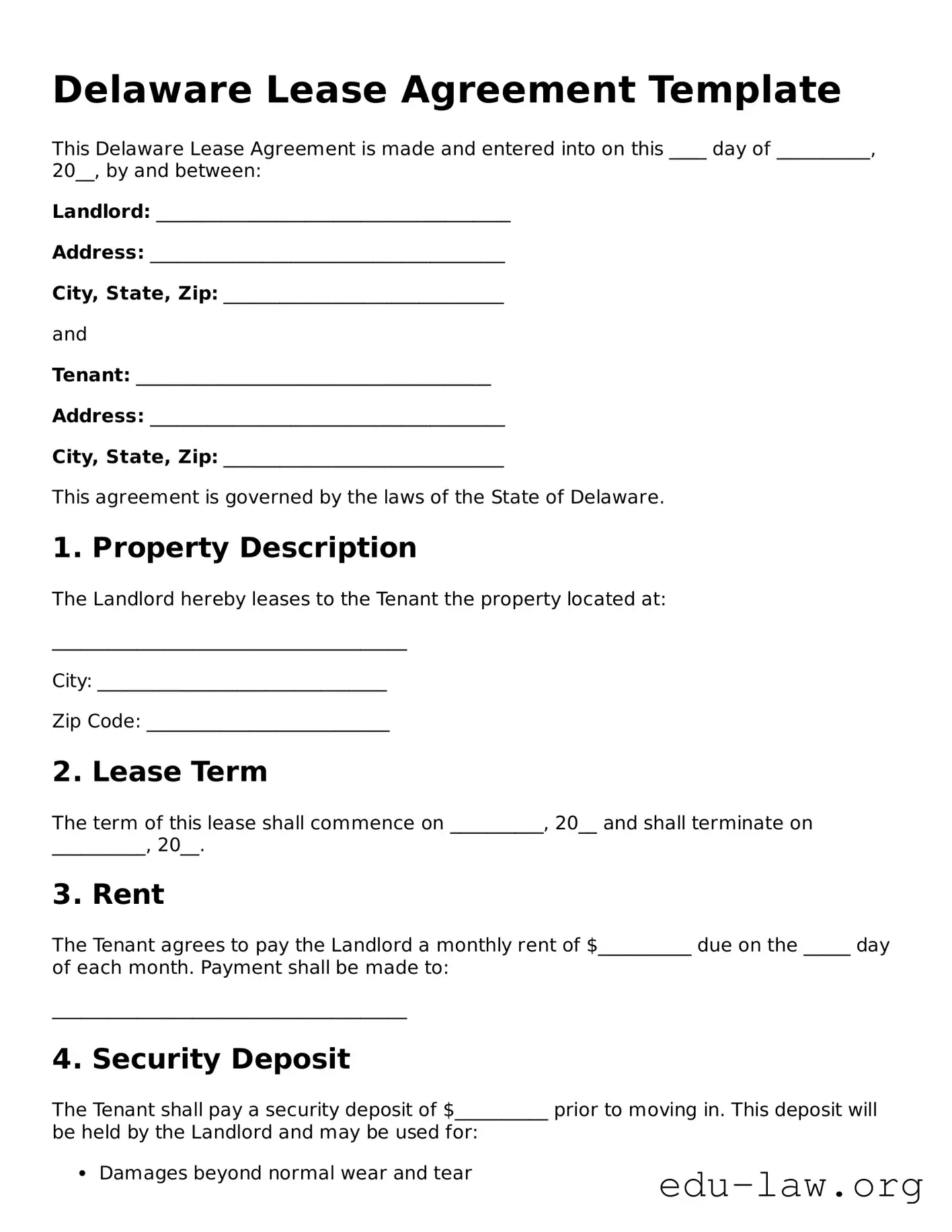
The Delaware Lease Agreement form serves as a crucial document in the realm of real estate transactions, outlining the terms and conditions under which a property is rented. This form typically includes essential information such as the names of the landlord and tenant, the property address, and the duration of the lease. It specifies the rent amount, payment due dates, and the acceptable methods of payment. Additionally, the agreement addresses security deposits, maintenance responsibilities, and rules regarding property use. Both parties are informed about their rights and obligations, which helps prevent disputes. Furthermore, the form may include provisions for lease termination, renewal options, and any specific clauses pertinent to the property or local laws. By clearly delineating these aspects, the Delaware Lease Agreement provides a framework that facilitates a smooth rental experience for both landlords and tenants.
Delaware Lease Agreement Template
This Delaware Lease Agreement is made and entered into on this ____ day of __________, 20__, by and between:
Landlord: ______________________________________
Address: ______________________________________
City, State, Zip: ______________________________
and
Tenant: ______________________________________
Address: ______________________________________
City, State, Zip: ______________________________
This agreement is governed by the laws of the State of Delaware.
1. Property Description
The Landlord hereby leases to the Tenant the property located at:
______________________________________
City: _______________________________
Zip Code: __________________________
2. Lease Term
The term of this lease shall commence on __________, 20__ and shall terminate on __________, 20__.
3. Rent
The Tenant agrees to pay the Landlord a monthly rent of $__________ due on the _____ day of each month. Payment shall be made to:
______________________________________
4. Security Deposit
The Tenant shall pay a security deposit of $__________ prior to moving in. This deposit will be held by the Landlord and may be used for:
5. Utilities
The Tenant is responsible for the following utilities:
6. Maintenance and Repairs
The Tenant shall maintain the premises in good condition. The Landlord is responsible for:
7. Termination
Either party may terminate this lease by providing written notice at least _____ days prior to the intended termination date.
8. Governing Law
This Lease Agreement shall be governed by the laws of the State of Delaware.
IN WITNESS WHEREOF, the parties have executed this Lease Agreement as of the date first above written.
Landlord Signature: ___________________________ Date: ____________
Tenant Signature: ____________________________ Date: ____________
| Fact Name | Description |
|---|---|
| Governing Law | The Delaware Lease Agreement is governed by the laws of the State of Delaware. |
| Parties Involved | The lease agreement typically includes the landlord and the tenant as the primary parties. |
| Property Description | The agreement must clearly describe the rental property, including its address and type. |
| Lease Term | The duration of the lease should be specified, whether it's month-to-month or a fixed term. |
| Rent Payment | The lease must outline the rent amount, payment method, and due date. |
| Security Deposit | Delaware law regulates the amount and handling of security deposits within the lease. |
| Maintenance Responsibilities | The agreement should specify the maintenance duties of both the landlord and tenant. |
| Termination Conditions | The lease must detail the conditions under which either party can terminate the agreement. |
Completing the Delaware Lease Agreement form is an important step in establishing the terms of a rental arrangement. This document outlines the responsibilities and rights of both the landlord and the tenant. Following the steps below will help ensure that all necessary information is accurately provided.
What is a Delaware Lease Agreement?
A Delaware Lease Agreement is a legal document that outlines the terms and conditions under which a landlord rents property to a tenant in the state of Delaware. This agreement includes details such as the rental amount, duration of the lease, responsibilities of both parties, and any rules or regulations that must be followed. It serves to protect the rights of both the landlord and the tenant, ensuring that everyone is on the same page regarding expectations and obligations.
What should be included in a Delaware Lease Agreement?
Essential elements of a Delaware Lease Agreement typically include the names of the landlord and tenant, the property address, the lease term (start and end dates), rental payment details, security deposit requirements, maintenance responsibilities, and any specific rules regarding pets, smoking, or alterations to the property. It’s also wise to include provisions for terminating the lease and handling disputes.
How long is a typical lease term in Delaware?
In Delaware, lease terms can vary widely. Most residential leases are typically for one year, but shorter or longer terms are also common. Some landlords may offer month-to-month leases, which provide flexibility for tenants who may not want to commit to a long-term agreement. Always review the lease duration to ensure it meets your needs.
Are there any specific laws regarding security deposits in Delaware?
Yes, Delaware has specific laws governing security deposits. Landlords may charge a security deposit that cannot exceed one month's rent for leases of one year or less. For longer leases, the deposit can be up to two months' rent. Additionally, landlords are required to return the security deposit within 20 days after the tenant vacates the property, minus any deductions for damages or unpaid rent.
Can a lease agreement be modified after it has been signed?
Yes, a lease agreement can be modified after it has been signed, but both the landlord and tenant must agree to the changes. Any modifications should be documented in writing and signed by both parties to ensure that the changes are legally binding. Verbal agreements may not hold up in court, so it’s always best to have everything in writing.
What happens if a tenant wants to break the lease early?
If a tenant wishes to break the lease early, they should first review the lease agreement for any specific terms regarding early termination. Many leases include a clause that allows tenants to terminate the lease early under certain conditions, often requiring a notice period or a fee. If there is no such clause, the tenant may still be responsible for rent until the lease ends or until a new tenant is found. Open communication with the landlord can sometimes lead to a mutually agreeable solution.
Incomplete Information: One of the most common mistakes is failing to fill out all required fields. Leaving out essential details can lead to misunderstandings later on.
Incorrect Dates: People often enter wrong dates for the lease term. Double-checking the start and end dates is crucial to avoid disputes.
Misunderstanding Terms: Many individuals overlook the definitions of key terms in the lease. It's important to fully understand what each term means to ensure compliance.
Not Including Rent Payment Details: Failing to specify the amount of rent and payment schedule can lead to confusion. Clearly outline when and how payments should be made.
Ignoring Maintenance Responsibilities: Some people neglect to clarify who is responsible for maintenance and repairs. This can lead to disputes if issues arise.
Forgetting to Sign: It may seem obvious, but forgetting to sign the lease is a frequent oversight. Ensure that all parties involved sign the document to make it legally binding.
Not Reviewing Local Laws: Many individuals fail to consider local rental laws. Being aware of these regulations can help avoid legal issues down the line.
Neglecting to Discuss Pet Policies: If pets are involved, it's essential to outline the pet policy clearly. This avoids potential conflicts later on.
Assuming All Leases Are the Same: Some people mistakenly believe that all lease agreements are similar. Each lease can have unique terms, so it’s important to read and understand each one thoroughly.
When entering into a rental arrangement in Delaware, it’s essential to have all the necessary documents in place. Alongside the Delaware Lease Agreement, several other forms can help clarify terms and protect the rights of both landlords and tenants. Here’s a look at some commonly used documents that complement the lease agreement.
Having these documents in order not only streamlines the rental process but also fosters a clear understanding between landlords and tenants. By ensuring that all necessary forms are completed and exchanged, both parties can enjoy a smoother and more positive rental experience.
The Delaware Lease Agreement form is similar to a Rental Agreement, which outlines the terms under which a tenant rents a property from a landlord. Both documents specify the duration of the tenancy, the amount of rent due, and the responsibilities of both parties. While a lease agreement typically covers a longer term, often a year or more, a rental agreement may be more flexible, allowing for shorter terms, such as month-to-month arrangements. Each document serves to protect the rights of both the tenant and the landlord, ensuring that all parties understand their obligations.
Another document akin to the Delaware Lease Agreement is the Commercial Lease Agreement. This type of lease is specifically tailored for commercial properties, such as retail spaces or office buildings. Similar to a residential lease, a commercial lease outlines the rental terms, payment schedules, and maintenance responsibilities. However, it often includes additional clauses specific to business operations, such as zoning laws and permitted use of the property. Both agreements aim to create a clear understanding between the landlord and tenant, minimizing potential disputes.
The Delaware Lease Agreement also shares similarities with a Sublease Agreement. A sublease occurs when a tenant rents out their leased property to another individual, known as the subtenant. Like the primary lease, a sublease agreement details the terms of occupancy, including rent amount and duration. It is crucial for the original tenant to obtain permission from the landlord before entering into a sublease, as both agreements must align with the original lease terms. This document provides a framework for the relationship between the original tenant and the subtenant, ensuring that all parties are aware of their rights and responsibilities.
Lastly, the Delaware Lease Agreement can be compared to a Month-to-Month Lease Agreement. This type of lease provides flexibility for both landlords and tenants, allowing either party to terminate the agreement with proper notice. Similar to a standard lease, it includes essential elements such as rent amount, payment dates, and property maintenance obligations. However, the month-to-month lease typically does not have a fixed end date, making it ideal for those who may require short-term housing solutions. Both agreements serve to establish clear expectations and legal protections for all involved.
When filling out a Delaware Lease Agreement form, it’s essential to approach the task carefully. Here’s a list of things to do and avoid to ensure the process goes smoothly.
Many people have misunderstandings about the Delaware Lease Agreement form. Here are seven common misconceptions:
This is not true. Lease agreements can vary significantly based on the specific terms negotiated between the landlord and tenant.
While it is a common practice to use this form, it is not legally required. Parties can create their own agreements as long as they comply with state laws.
While verbal agreements can be enforceable, having a written lease is strongly recommended to avoid disputes and misunderstandings.
Not all leases have automatic renewal clauses. It is essential to review the terms of the lease to understand renewal conditions.
Delaware law does regulate security deposits, including limits on the amount and requirements for returning them.
Tenants do have rights. Landlords are generally required to maintain the property in a habitable condition.
This is incorrect. Most leases require a notice period before termination, which varies based on the lease terms.
When filling out and using the Delaware Lease Agreement form, it is crucial to pay attention to several key aspects to ensure a smooth leasing process. Here are some important takeaways to consider:
By keeping these points in mind, both landlords and tenants can navigate the leasing process more effectively and avoid common pitfalls.