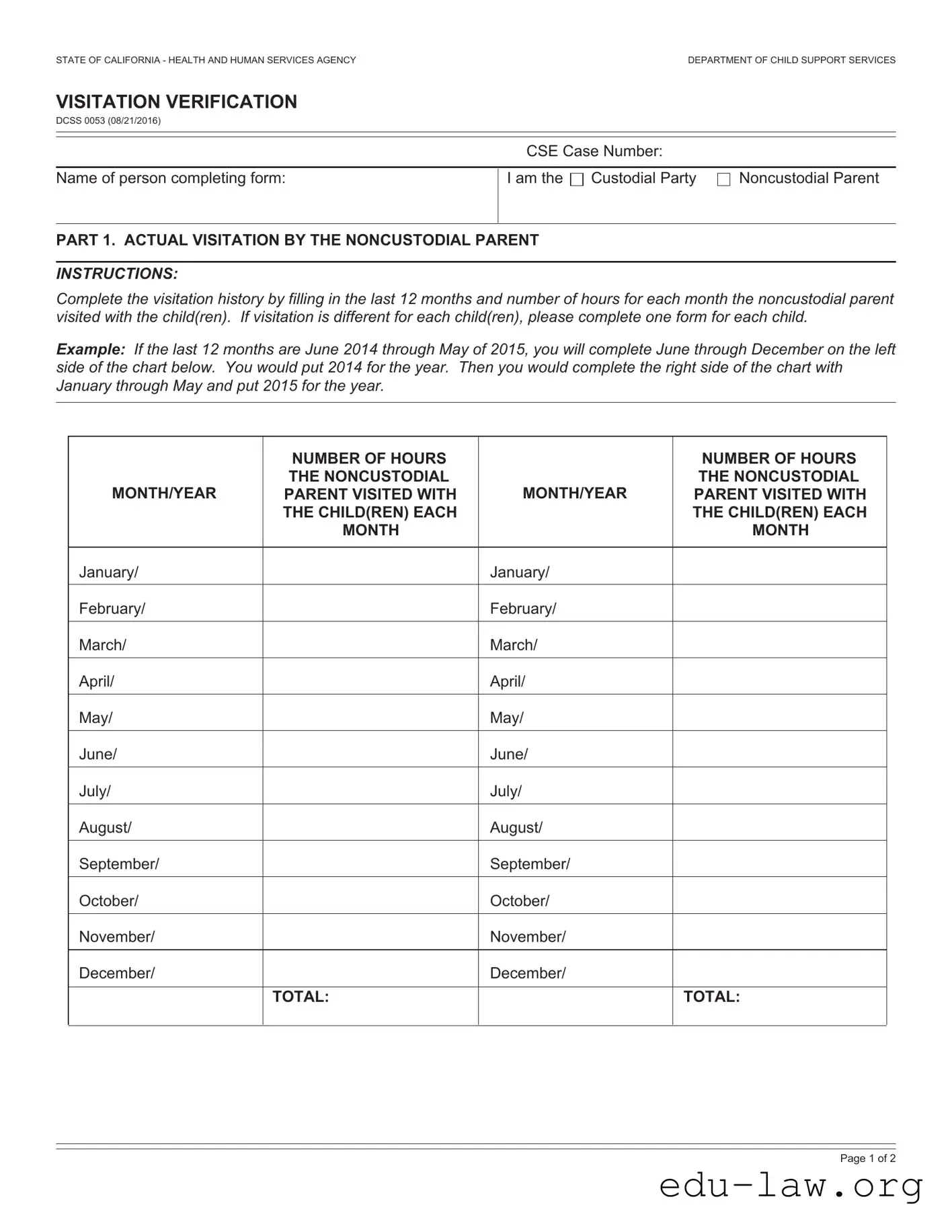
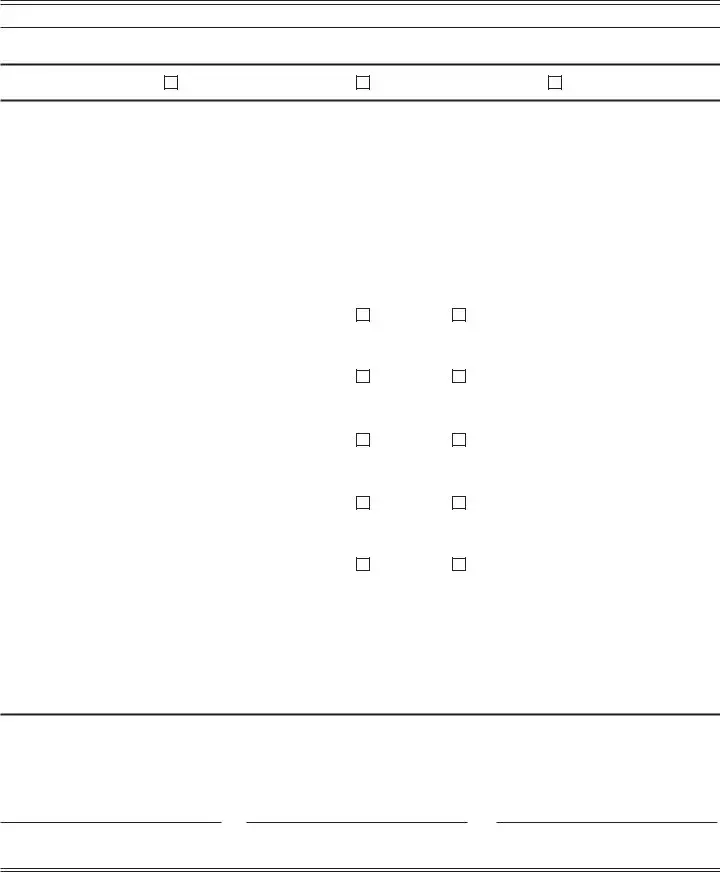
The DCSS 0053 form, officially titled "Visitation Verification," is a critical document utilized by the California Department of Child Support Services. This form serves to record and verify the visitation history of a noncustodial parent with their child or children over the past year. It requires the person completing the form to specify whether they are the custodial party or the noncustodial parent. The first section of the form demands a detailed account of actual visitation, where users must fill in the number of hours spent with the child each month for the last twelve months. In instances where visitation varies by child, separate forms must be submitted. The second part addresses shared custody and visitation arrangements, allowing the individual to indicate the type of visitation—whether regular, vacation, summer, holiday, or overnight—along with the corresponding dates and times. Additionally, the form includes a declaration of truthfulness, emphasizing the importance of accuracy in the information provided, as it may be shared with the other parent for verification purposes. Proper completion of the DCSS 0053 is essential for ensuring that visitation rights and responsibilities are clearly documented and upheld.
STATE OF CALIFORNIA - HEALTH AND HUMAN SERVICES AGENCY |
DEPARTMENT OF CHILD SUPPORT SERVICES |
VISITATION VERIFICATION
DCSS 0053 (08/21/2016)
CSE Case Number:
Name of person completing form: |
I am the |
Custodial Party |
Noncustodial Parent |
|
|
|
|
PART 1. ACTUAL VISITATION BY THE NONCUSTODIAL PARENT
INSTRUCTIONS:
Complete the visitation history by filling in the last 12 months and number of hours for each month the noncustodial parent visited with the child(ren). If visitation is different for each child(ren), please complete one form for each child.
Example: If the last 12 months are June 2014 through May of 2015, you will complete June through December on the left side of the chart below. You would put 2014 for the year. Then you would complete the right side of the chart with January through May and put 2015 for the year.
|
NUMBER OF HOURS |
|
NUMBER OF HOURS |
|
THE NONCUSTODIAL |
|
THE NONCUSTODIAL |
MONTH/YEAR |
PARENT VISITED WITH |
MONTH/YEAR |
PARENT VISITED WITH |
|
THE CHILD(REN) EACH |
|
THE CHILD(REN) EACH |
|
MONTH |
|
MONTH |
|
|
|
|
January/ |
|
January/ |
|
|
|
|
|
February/ |
|
February/ |
|
|
|
|
|
March/ |
|
March/ |
|
|
|
|
|
April/ |
|
April/ |
|
|
|
|
|
May/ |
|
May/ |
|
|
|
|
|
June/ |
|
June/ |
|
|
|
|
|
July/ |
|
July/ |
|
|
|
|
|
August/ |
|
August/ |
|
|
|
|
|
September/ |
|
September/ |
|
|
|
|
|
October/ |
|
October/ |
|
|
|
|
|
November/ |
|
November/ |
|
|
|
|
|
December/ |
|
December/ |
|
|
|
|
|
|
TOTAL: |
|
TOTAL: |
|
|
|
|
Page 1 of 2
STATE OF CALIFORNIA - HEALTH AND HUMAN SERVICES AGENCY |
DEPARTMENT OF CHILD SUPPORT SERVICES |
VISITATION VERIFICATION
DCSS 0053 (08/21/2016)
PART 2. SHARED CUSTODY/VISITATION
CHECK ONE:
Shared Custody
Visitation Only
Neither
VISITATION HOURS:
Regular Visitation:
From (specify day of the week) |
at (specify time) |
To (specify day of the week) |
at (specify time) |
Vacation Visitation: |
Yes |
If Yes, please specify dates/times: |
|
Summer Visitation: |
Yes |
If Yes, please specify dates/times: |
|
Holiday Visitation: |
Yes |
If Yes, please specify dates/times: |
|
Overnight Visitation: |
Yes |
If Yes, please specify dates/times: |
|
(Circle one) a.m./p.m.
(Circle one) a.m./p.m.
No
No
No
No
Yes
No
Additional Information:
I declare to the best of my knowledge and belief that the above information is true and correct. I am aware that this information may be provided to the other parent for their verification and that either party may be required to provide documentation.
PRINT NAME |
SIGNATURE |
DATE |
Page 2 of 2
| Fact Name | Details |
|---|---|
| Form Purpose | The DCSS 0053 form is used to verify visitation between a noncustodial parent and child. |
| Governing Law | This form is governed by California Family Code Section 3020. |
| Filing Requirement | It must be completed for each child if visitation differs among them. |
| Time Frame | The form requires a history of visitation for the last 12 months. |
| Signature Requirement | The person completing the form must sign and date it, affirming the truthfulness of the information. |
| Shared Custody Option | There is a section to indicate if there is shared custody or visitation only. |
| Visitation Hours | Specific hours for regular, vacation, summer, holiday, and overnight visitation must be provided. |
| Documentation | Either party may be required to provide documentation to support the information given. |
| Version Date | The current version of the form is dated August 21, 2016. |
Filling out the DCSS 0053 form is an essential step in documenting visitation details for child support cases. After completing the form, you will need to submit it to the appropriate child support agency for processing. Ensure all information is accurate to avoid any delays.
What is the purpose of the DCSS 0053 form?
The DCSS 0053 form serves as a visitation verification document utilized by the California Department of Child Support Services. Its primary purpose is to record the visitation history of a noncustodial parent with their child or children over the past twelve months. This form helps establish the amount of time the noncustodial parent has spent with the child, which can be significant in matters of child support and custody arrangements.
Who should complete the DCSS 0053 form?
The form should be completed by either the custodial party or the noncustodial parent. The individual filling out the form must indicate their relationship to the child by selecting the appropriate option. Accurate completion of the form is crucial, as it reflects the visitation history and can impact ongoing custody and support discussions.
How is the visitation history recorded on the form?
To record visitation history, the form includes a chart where the individual must fill in the number of hours the noncustodial parent visited with the child each month for the last twelve months. This requires careful attention to detail, as the visitation may vary month by month. If there are multiple children, a separate form must be completed for each child to ensure clarity and accuracy in reporting.
What information is required in Part 2 of the form?
Part 2 of the DCSS 0053 form focuses on shared custody or visitation arrangements. The individual must check one of the boxes to indicate whether the arrangement is shared custody, visitation only, or neither. Additionally, the form requires details about regular visitation hours, vacation visitation, summer visitation, holiday visitation, and overnight visitation. Each section asks for specific days, times, and any relevant dates that apply, ensuring a comprehensive overview of the visitation schedule.
What does the declaration at the end of the form signify?
The declaration at the end of the form is a statement affirming that the information provided is true and correct to the best of the individual's knowledge. By signing this declaration, the individual acknowledges that the information may be shared with the other parent for verification purposes. It is important to note that either party may be asked to provide supporting documentation to validate the reported visitation hours.
Are there any consequences for providing false information on the DCSS 0053 form?
Providing false information on the DCSS 0053 form can lead to serious consequences. Misrepresentation of visitation hours or any other details may result in legal repercussions, including potential penalties in child support or custody arrangements. It is vital for individuals to ensure that the information they provide is accurate and truthful, as the integrity of the form is essential for fair and just proceedings.
How can I obtain the DCSS 0053 form?
The DCSS 0053 form can be obtained through the California Department of Child Support Services website or by visiting a local child support office. The form is available for download in PDF format, making it accessible for individuals who need to complete it. Additionally, staff at child support offices can provide assistance in filling out the form if needed, ensuring that individuals have the resources necessary to complete it accurately.
Failing to accurately record the number of hours the noncustodial parent visited with the child(ren) for each month. This can lead to discrepancies in the visitation history.
Not completing a separate form for each child if visitation differs. Each child's visitation must be documented individually.
Omitting the CSE Case Number. This number is essential for identifying the specific case associated with the visitation verification.
Neglecting to specify the correct dates and times for regular, vacation, summer, and holiday visitations. Inaccurate details can lead to misunderstandings.
Failing to check the appropriate box for shared custody or visitation only. This decision impacts how the visitation is viewed legally.
Providing incorrect or incomplete information in the additional information section. This area can clarify special circumstances that affect visitation.
Not signing and dating the form. A signature is necessary to validate the information provided.
Using vague language or abbreviations in the visitation details. Clear and precise information is crucial for accurate understanding.
Failing to declare the information as true and correct. This declaration is a legal affirmation of the accuracy of the provided details.
The DCSS 0053 form, used for documenting visitation verification, often accompanies several other important forms and documents in child support cases. Each of these documents serves a specific purpose and helps to create a comprehensive understanding of the custody and visitation arrangements. Below is a list of related forms that may be used in conjunction with the DCSS 0053 form.
These forms and documents work together to create a clear picture of the custody and visitation landscape. They help ensure that the best interests of the child are prioritized while providing a framework for parents to navigate their responsibilities and rights effectively.
The DCSS 0053 form, used in California to verify visitation between a noncustodial parent and their child, shares similarities with the Child Custody and Visitation Order. This order is a legal document issued by the court that outlines the specific visitation rights of the noncustodial parent. Both documents aim to clarify visitation arrangements, ensuring that the child's best interests are prioritized. The Child Custody and Visitation Order often serves as a reference point for the DCSS 0053 form, as it may specify the scheduled visitation times and conditions that the DCSS form seeks to document in practice.
Another document akin to the DCSS 0053 is the Parenting Plan. This plan is created by parents, often with the help of a mediator, to outline how they will raise their child after separation or divorce. Like the DCSS 0053, the Parenting Plan includes details about visitation schedules, holidays, and special occasions. It encourages cooperation between parents, aiming for a stable environment for the child. Both documents focus on maintaining a child's relationship with both parents, although the Parenting Plan is typically more comprehensive and may include provisions for communication and decision-making.
The Visitation Log is another similar document. This log is often maintained by custodial parents to track the noncustodial parent’s visitation over time. It typically records dates, times, and any issues that may arise during visits. While the DCSS 0053 form serves as an official verification tool submitted to the state, the Visitation Log is more informal and used primarily for personal record-keeping. Both documents serve the purpose of documenting visitation, which can be crucial in any legal discussions about custody or support.
The Affidavit of Visitation is also comparable to the DCSS 0053. This legal document is sworn by a parent or guardian, detailing the visitation history and circumstances surrounding the noncustodial parent's time with the child. Like the DCSS 0053, it requires accurate information about visitation dates and times. However, the Affidavit of Visitation often carries more legal weight and may be used in court proceedings, whereas the DCSS 0053 is specifically designed for the Department of Child Support Services.
The Child Support Worksheet is another related document. This worksheet is used to calculate child support obligations based on various factors, including visitation. The DCSS 0053 form can impact child support calculations, as the amount of time a noncustodial parent spends with their child can influence financial responsibilities. Both documents play a role in the broader context of child support and custody, ensuring that the child's needs are met while balancing the responsibilities of both parents.
Lastly, the Court Report is similar in that it provides an overview of a child’s situation, including visitation arrangements. This report may be prepared by social workers or other professionals involved in the child’s life and can influence custody decisions. While the DCSS 0053 focuses specifically on visitation verification, the Court Report offers a more holistic view of the child’s well-being, which may include visitation as one of many factors. Both documents contribute to the ongoing assessment of the child's best interests in custody matters.
When filling out the DCSS 0053 form, there are important things to keep in mind. Here’s a list of what you should and shouldn’t do:
Following these guidelines can help ensure that your form is filled out correctly and efficiently.
The DCSS 0053 form, also known as the Visitation Verification form, is often misunderstood. Here are four common misconceptions about this important document:
Understanding these misconceptions can help parents navigate the complexities of child support and visitation more effectively.
When filling out the DCSS 0053 form, consider the following key takeaways: