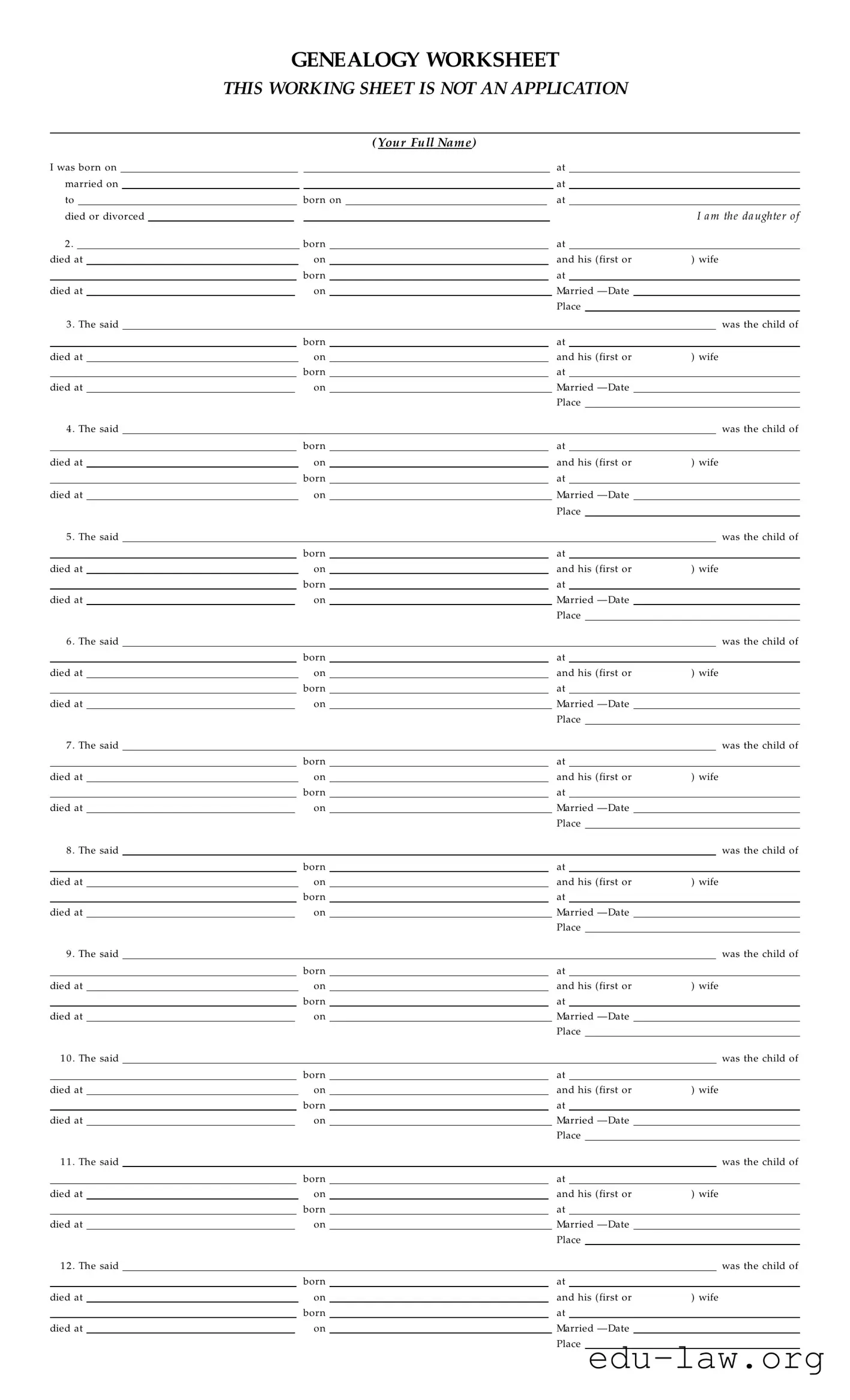
The DAR Genealogy Worksheet is an essential tool for individuals seeking to trace their lineage back to ancestors who served during the American Revolution. This form is designed to assist in gathering vital information about your family history, including names, birth and death dates, and marriage details. It prompts users to document their direct lineage, starting from themselves and working backward through multiple generations. Each section of the worksheet requires specific details about ancestors, including their places of birth and death, as well as their marital history. Additionally, the form emphasizes the importance of providing proof for each statement made, whether it be through official records or published genealogical references. This is crucial for establishing a legitimate connection to your Revolutionary ancestor. The worksheet also requires applicants to outline the services their ancestors provided during the war, reinforcing the need for accurate documentation. As you fill out this form, remember that the information you provide will play a significant role in your application process and in honoring your family's heritage.

GENEALOGY WORKSHEET
THIS WORKING SHEET IS NOT AN APPLICATION
|
|
|
|
|
|
|
|
|
|
|
|
( YOU R FU LL NAM E ) |
|
|
|||||||
I was born on |
|
|
|
|
|
|
|
|
|
|
|
at |
|
|
|
||||||
married on |
|
|
|
|
|
|
|
|
|
|
|
at |
|
|
|
||||||
to |
|
|
|
born on |
|
|
|
|
|
at |
|
|
|
||||||||
died or divorced |
|
|
|
|
|
|
|
|
|
|
|
|
|
I a m the da ughte r o f |
|||||||
2 . |
|
|
|
|
|
|
|
|
born |
|
|
|
|
|
|
at |
|
|
|
||
died at |
|
|
|
on |
|
|
|
|
|
|
and his (first or |
) wife |
|||||||||
|
|
|
|
|
|
|
|
|
born |
|
|
|
|
|
|
at |
|
|
|
||
died at |
|
|
on |
|
|
|
|
|
Married — Date |
|
|
||||||||||
|
|
|
|
|
|
|
|
|
|
|
|
|
|
|
|
|
Place |
|
|
||
3 . The said |
|
|
|
|
|
|
|
|
|
|
|
|
|
|
was the child of |
||||||
|
|
|
|
|
|
|
|
|
born |
|
|
|
|
|
|
at |
|
|
|
||
died at |
|
|
|
on |
|
|
|
|
|
|
and his (first or |
) wife |
|||||||||
|
|
|
|
|
|
|
|
|
born |
|
|
|
|
|
|
at |
|
|
|
||
died at |
|
|
on |
|
|
|
|
|
Married — Date |
|
|
||||||||||
|
|
|
|
|
|
|
|
|
|
|
|
|
|
|
|
|
Place |
|
|
||
4 . The said |
|
|
|
|
|
|
|
|
|
|
|
|
|
|
was the child of |
||||||
|
|
|
|
|
|
|
|
|
born |
|
|
|
|
|
|
at |
|
|
|
||
died at |
|
|
|
on |
|
|
|
|
|
|
and his (first or |
) wife |
|||||||||
|
|
|
|
|
|
|
|
|
born |
|
|
|
|
|
|
at |
|
|
|
||
died at |
|
|
on |
|
|
|
|
|
Married — Date |
|
|
||||||||||
|
|
|
|
|
|
|
|
|
|
|
|
|
|
|
|
|
Place |
|
|
||
5 . The said |
|
|
|
|
|
|
|
|
|
|
|
|
|
|
was the child of |
||||||
|
|
|
|
|
|
|
|
|
born |
|
|
|
|
|
|
at |
|
|
|
||
died at |
|
|
|
on |
|
|
|
|
|
|
and his (first or |
) wife |
|||||||||
|
|
|
|
|
|
|
|
|
born |
|
|
|
|
|
|
at |
|
|
|
||
died at |
|
|
on |
|
|
|
|
|
Married — Date |
|
|
||||||||||
|
|
|
|
|
|
|
|
|
|
|
|
|
|
|
|
|
Place |
|
|
||
6 . The said |
|
|
|
|
|
|
|
|
|
|
|
|
|
|
was the child of |
||||||
|
|
|
|
|
|
|
|
|
born |
|
|
|
|
|
|
at |
|
|
|
||
died at |
|
|
|
on |
|
|
|
|
|
|
and his (first or |
) wife |
|||||||||
|
|
|
|
|
|
|
|
|
born |
|
|
|
|
|
|
at |
|
|
|
||
died at |
|
|
on |
|
|
|
|
|
Married — Date |
|
|
||||||||||
|
|
|
|
|
|
|
|
|
|
|
|
|
|
|
|
|
Place |
|
|
||
7 . The said |
|
|
|
|
|
|
|
|
|
|
|
|
|
|
was the child of |
||||||
|
|
|
|
|
|
|
|
|
born |
|
|
|
|
|
|
at |
|
|
|
||
died at |
|
|
|
on |
|
|
|
|
|
|
and his (first or |
) wife |
|||||||||
|
|
|
|
|
|
|
|
|
born |
|
|
|
|
|
|
at |
|
|
|
||
died at |
|
|
on |
|
|
|
|
|
Married — Date |
|
|
||||||||||
|
|
|
|
|
|
|
|
|
|
|
|
|
|
|
|
|
Place |
|
|
||
8 . The said |
|
|
|
|
|
|
|
|
|
|
|
|
|
|
was the child of |
||||||
|
|
|
|
|
|
|
|
|
born |
|
|
|
|
|
|
at |
|
|
|
||
died at |
|
|
|
on |
|
|
|
|
|
|
and his (first or |
) wife |
|||||||||
|
|
|
|
|
|
|
|
|
born |
|
|
|
|
|
|
at |
|
|
|
||
died at |
|
|
on |
|
|
|
|
|
Married — Date |
|
|
||||||||||
|
|
|
|
|
|
|
|
|
|
|
|
|
|
|
|
|
Place |
|
|
||
9 . The said |
|
|
|
|
|
|
|
|
|
|
|
|
|
|
was the child of |
||||||
|
|
|
|
|
|
|
|
|
born |
|
|
|
|
|
|
at |
|
|
|
||
died at |
|
|
|
on |
|
|
|
|
|
|
and his (first or |
) wife |
|||||||||
|
|
|
|
|
|
|
|
|
born |
|
|
|
|
|
|
at |
|
|
|
||
died at |
|
|
on |
|
|
|
|
|
Married — Date |
|
|
||||||||||
|
|
|
|
|
|
|
|
|
|
|
|
|
|
|
|
|
Place |
|
|
||
1 0 . The said |
|
|
|
|
|
|
|
|
|
|
|
|
|
|
was the child of |
||||||
|
|
|
|
|
|
|
|
|
born |
|
|
|
|
|
|
at |
|
|
|
||
died at |
|
|
|
on |
|
|
|
|
|
|
and his (first or |
) wife |
|||||||||
|
|
|
|
|
|
|
|
|
born |
|
|
|
|
|
|
at |
|
|
|
||
died at |
|
|
on |
|
|
|
|
|
Married — Date |
|
|
||||||||||
|
|
|
|
|
|
|
|
|
|
|
|
|
|
|
|
|
Place |
|
|
||
1 1 . The said |
|
|
|
|
|
|
|
|
|
|
|
|
|
|
was the child of |
||||||
|
|
|
|
|
|
|
|
|
born |
|
|
|
|
|
|
at |
|
|
|
||
died at |
|
|
|
on |
|
|
|
|
|
|
and his (first or |
) wife |
|||||||||
|
|
|
|
|
|
|
|
|
born |
|
|
|
|
|
|
at |
|
|
|
||
died at |
|
|
on |
|
|
|
|
|
Married — Date |
|
|
||||||||||
|
|
|
|
|
|
|
|
|
|
|
|
|
|
|
|
|
Place |
|
|
||
1 2 . The said |
|
|
|
|
|
|
|
|
|
|
|
|
|
|
was the child of |
||||||
|
|
|
|
|
|
|
|
|
born |
|
|
|
|
|
|
at |
|
|
|
||
died at |
|
|
|
on |
|
|
|
|
|
|
and his (first or |
) wife |
|||||||||
|
|
|
|
|
|
|
|
|
born |
|
|
|
|
|
|
at |
|
|
|
||
died at |
|
|
on |
|
|
|
|
|
Married — Date |
|
|
||||||||||
|
|
|
|
|
|
|
|
|
|
|
|
|
|
|
|
|
Place |
|
|
|
|

|
|
|
ANCESTOR’S SERVICES |
||
The said |
|
|
who resided during the American |
||
Revolution at |
|
|
|
assisted in establishing |
|
American Independence, while acting in the capacity of |
|
|
|
||
|
|
|
|
|
|
My Ancestor’s services during the Revolutionary War were as follows:
Give source for ancestor’s service above. For published records give author, title, volume and page: applicant shall file a photocopy of official unpublished record.
REFERENCES FOR LINEAGE
Give below proof for EACH statement of Birth, marriage, death dates and places and connections between generations from the applicant through the generation of the Revolutionary ancestor. Published authorities should be cited by title, author, date of publication, volume and page. Send one certified, attested copy or photocopy of each unpublished data. Proofs of line of descent comprise wills, administrations, deeds, church, town and court records, Bible, census and pension records, tombstone inscriptions, genealogies and such other records. TRADITION is not acceptable. Give National Numbers and relationships of any close relatives credited with this ancestor.
1 st. Gen.
2 nd Gen.
3 rd Gen.
4 th Gen.
5 th Gen.
6 th Gen.
7 th Gen.
8 th Gen.
9 th Gen.
1 0 th Gen.
1 1 th Gen.
CHILDREN OF REVOLUTIONARY ANCESTOR
( By e a ch m a rria ge , if m a rrie d m o re tha n o nce .)
TO WHOM MARRIED, NOTING IF
NAMES |
|
DATES OF BIRTH |
MARRIED MORE THAN ONCE |
|
|
|
|
|
|
|
|
|
|
|
|
|
|
|
|
|
|
|
|
|
|
|
|
|
|
|
|
|
|
|
|
|
|
|
|
|
|
|
|
|
|
|
|
|
|
|
|
|
|
|
|
|
|
|
|
|
|
|
|
|
|
|
|
|
|
|
|
|
|
|
Do cum e nt No . |
( |
| Fact Name | Details |
|---|---|
| Form Purpose | The Dar Genealogy Worksheet is a tool for documenting lineage and ancestry, specifically for those applying for membership in the Daughters of the American Revolution (DAR). |
| Not an Application | This worksheet is not an official application. It serves as a preliminary step to gather necessary information before submitting a formal application. |
| Generational Tracking | The form allows for the documentation of up to twelve generations of ancestry, detailing birth, marriage, and death information for each ancestor. |
| Required Documentation | Applicants must provide proof of birth, marriage, and death dates for each ancestor listed. Acceptable documents include wills, census records, and tombstone inscriptions. |
| References for Lineage | References must be cited for each statement regarding dates and connections. This includes published authorities and unpublished records. |
| Governing Law | The use of this form is governed by the rules and regulations of the Daughters of the American Revolution, which are subject to change. |
Filling out the DAR Genealogy Worksheet form is an important step in documenting your family history. This worksheet will help you organize your information about your ancestors and their connections to the Revolutionary War. After completing the form, you will be able to gather the necessary proof and references to support your lineage claims.
What is the purpose of the DAR Genealogy Worksheet?
The DAR Genealogy Worksheet is a tool designed to help individuals organize and document their family history. It is not an application for membership but serves as a working sheet to gather necessary information about ancestors, particularly those who served during the American Revolution.
Who should use the DAR Genealogy Worksheet?
This worksheet is intended for anyone interested in tracing their lineage, especially those seeking to establish a connection to an ancestor who participated in the American Revolution. It can be beneficial for both new researchers and those who have gathered some information already.
What information is required on the worksheet?
The worksheet asks for personal details such as your full name, birth date, marriage information, and details about your parents and grandparents. It also requires information about the ancestor’s service during the American Revolution, including the capacity in which they served and the location of their residence during that time.
How do I document my ancestor's Revolutionary War service?
What types of proof are acceptable for lineage verification?
Acceptable proof includes official documents like birth, marriage, and death certificates, wills, census records, and tombstone inscriptions. You may also use published genealogies or other historical records. It is important to provide certified copies or photocopies of these documents to support your claims.
Can I use family traditions as proof of lineage?
Family traditions alone are not considered acceptable proof for lineage verification. It is necessary to provide documented evidence to establish connections between generations, particularly when tracing back to a Revolutionary ancestor.
What should I do if I have relatives who also claim the same ancestor?
If you have relatives who also claim the same ancestor, you should include their National Numbers and relationships on the worksheet. This information can help clarify connections and strengthen your application.
Is there a limit to how many generations I can document?
While the worksheet provides space for up to 12 generations, you can document more if needed. It is important to ensure that each generation is clearly connected to the next and that you provide appropriate documentation for each link.
What if I have questions while filling out the worksheet?
If you have questions while completing the worksheet, it is advisable to seek assistance from local genealogy groups or the DAR chapter in your area. They can provide guidance and resources to help you accurately fill out the form.
How should I submit the completed worksheet?
Once you have completed the worksheet and gathered all necessary documentation, you should follow the submission guidelines provided by the DAR. Ensure that all documents are organized and clearly labeled to facilitate the review process.
Failing to provide full names for all ancestors. It's crucial to include complete names, as initials or nicknames may lead to confusion.
Not including accurate dates for births, marriages, and deaths. Missing or incorrect dates can disrupt the lineage and make it difficult to verify connections.
Neglecting to specify places where events occurred. Providing locations is essential for establishing historical context and validating claims.
Overlooking the need for source citations. Each claim about an ancestor's service or life events should be backed by proper documentation. This adds credibility to the application.
Using unverified information. Relying on family traditions without documentation is a common mistake. Only documented evidence should be included.
Not listing all children of the Revolutionary ancestor. If the ancestor had multiple children, it's important to document each one, especially if they were married more than once.
The DAR Genealogy Worksheet is an essential tool for individuals tracing their lineage, particularly those seeking to establish their connection to Revolutionary War ancestors. However, several other documents often accompany this form to provide a comprehensive view of one’s ancestry. Each document serves a specific purpose in the genealogical process, helping to substantiate claims and ensure accuracy in family history research.
By gathering these various documents alongside the DAR Genealogy Worksheet, individuals can create a robust and well-supported family history. Each piece of information plays a significant role in piecing together the story of one's ancestry, ensuring that the journey into the past is both accurate and meaningful.
The DAR Genealogy Worksheet is a valuable tool for tracing lineage, particularly for those seeking to establish a connection to ancestors who served during the American Revolution. A similar document is the National Society of the Daughters of the American Revolution (NSDAR) Application Form. This form serves a similar purpose, allowing applicants to provide detailed information about their ancestry. Both documents require proof of lineage and emphasize the importance of providing accurate dates and locations for births, marriages, and deaths. However, the application form is used for formal membership requests, while the worksheet is more of a preparatory tool.
Another related document is the Genealogical Record Form used by the Sons of the American Revolution (SAR). Like the DAR worksheet, this form collects essential family history details, focusing on the applicant's lineage to Revolutionary War ancestors. Both forms require similar documentation to verify claims, including birth and marriage certificates, but the SAR form is specifically tailored for male descendants, reflecting the organization's membership criteria.
The Family Group Sheet is another document that shares similarities with the DAR Genealogy Worksheet. This sheet organizes family information in a clear format, detailing relationships among family members, including parents and children. While the DAR worksheet emphasizes Revolutionary War connections, the Family Group Sheet is broader in scope, making it useful for any genealogical research. Both documents aim to create a clear lineage path, but the Family Group Sheet is often used for general genealogy rather than specific membership applications.
The Pedigree Chart is another relevant document. It visually represents a person's ancestry, showing direct lines of descent from ancestors. While the DAR worksheet focuses on collecting detailed information about each ancestor's life, the Pedigree Chart provides a snapshot of family lineage. Both tools are essential for genealogical research, but they serve different purposes: one is more narrative, while the other is graphical.
Additionally, the Ancestry.com Family Tree is an online tool that functions similarly to the DAR worksheet. It allows users to build and document their family history digitally. Users can input information about their ancestors, including dates and places of birth, marriage, and death, just like in the DAR worksheet. The main difference lies in the digital format, which can offer more interactive features, such as connecting with other family members and accessing historical records directly.
The Census Records are another important resource for genealogical research, akin to the DAR worksheet. These records provide detailed information about individuals and families at specific points in time, including names, ages, and relationships. While the DAR worksheet requires individuals to compile their lineage, census records serve as external verification of family connections, helping to substantiate claims made in the worksheet.
Vital Records, such as birth, marriage, and death certificates, also share similarities with the DAR Genealogy Worksheet. These documents are crucial for proving lineage and establishing connections to ancestors. Like the worksheet, vital records require accurate details about dates and locations. They serve as primary sources of evidence for genealogical claims, making them essential for anyone completing the DAR worksheet.
The Probate Records are another relevant document type. These records provide information about the distribution of a deceased person's estate, often detailing family relationships. Similar to the DAR worksheet, probate records can offer insights into lineage and connections between generations. They are particularly useful for proving descent from a Revolutionary War ancestor, as they often include names of heirs and their relationships to the deceased.
Lastly, the Church Records can be compared to the DAR worksheet. These records often contain vital information about births, marriages, and deaths within a community. Like the worksheet, church records require meticulous documentation of family events and can serve as evidence for lineage claims. Both documents emphasize the importance of accurate record-keeping in tracing ancestry.
When filling out the DAR Genealogy Worksheet, attention to detail is crucial. Here are five important dos and don'ts to consider:
Following these guidelines will help ensure that your submission is as complete and accurate as possible, facilitating a smoother review process.
Understanding the DAR Genealogy Worksheet can be challenging due to several misconceptions. Here are ten common misunderstandings clarified:
Clarifying these misconceptions can help individuals better navigate the process of documenting their genealogy and understanding the requirements for the DAR.
Filling out the DAR Genealogy Worksheet is a crucial step for those seeking to trace their lineage back to ancestors who served during the American Revolution. Here are some key takeaways to keep in mind:
By keeping these points in mind, you can fill out the DAR Genealogy Worksheet more effectively and strengthen your application for membership.