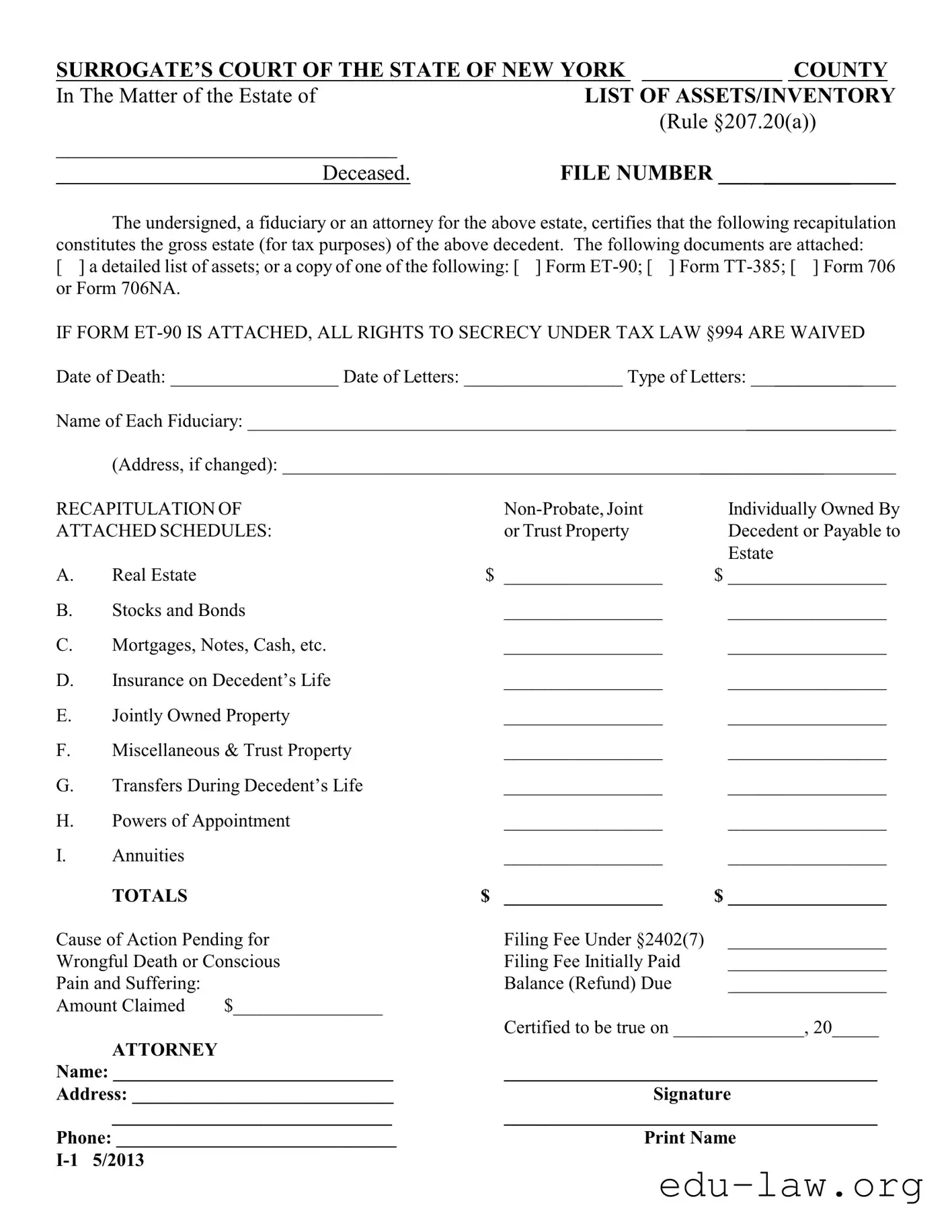
The Court Inventory form is an essential document used in the Surrogate’s Court of New York to outline the assets of a deceased person's estate. This form serves multiple purposes, primarily to provide a comprehensive list of the decedent's gross estate for tax purposes. It requires the fiduciary or attorney to certify the accuracy of the information presented. Key components include a detailed inventory of assets, which can consist of real estate, stocks, bonds, and insurance policies, among others. The form also captures the date of death and the type of letters issued, which are necessary for legal proceedings. Additionally, it allows for the inclusion of various schedules that categorize assets as non-probate, jointly owned, or held in trust. Attachments such as a detailed list of assets or specific tax forms may also be required, ensuring compliance with tax laws. By clearly delineating the estate's assets, this form plays a critical role in the administration of the estate and any potential tax obligations that may arise.
SURROGATE’S COURT OF THE STATE OF NEW YORK |
|
COUNTY |
|
In The Matter of the Estate of |
LIST OF ASSETS/INVENTORY |
||
|
|
(Rule §207.20(a)) |
|
_______________________________ |
|
|
|
Deceased. |
FILE NUMBER ________________________ |
||
The undersigned, a fiduciary or an attorney for the above estate, certifies that the following recapitulation constitutes the gross estate (for tax purposes) of the above decedent. The following documents are attached:
[ ] a detailed list of assets; or a copy of one of the following: [ ] Form
IF FORM
Date of Death: __________________ Date of Letters: _________________ Type of Letters: _________________________
Name of Each Fiduciary: _____________________________________________________________________________________
(Address, if changed): _______________________________________________________________________________
RECAPITULATION OF |
|
Individually Owned By |
|||
ATTACHED SCHEDULES: |
|
or Trust Property |
Decedent or Payable to |
||
|
|
|
|
|
Estate |
A. |
Real Estate |
|
$ |
_________________ |
$ _________________ |
B. |
Stocks and Bonds |
|
_________________ |
_________________ |
|
C. |
Mortgages, Notes, Cash, etc. |
|
_________________ |
_________________ |
|
D. |
Insurance on Decedent’s Life |
|
_________________ |
_________________ |
|
E. |
Jointly Owned Property |
|
_________________ |
_________________ |
|
F. |
Miscellaneous & Trust Property |
|
_________________ |
_________________ |
|
G. |
Transfers During Decedent’s Life |
|
_________________ |
_________________ |
|
H. |
Powers of Appointment |
|
_________________ |
_________________ |
|
I. |
Annuities |
|
|
_________________ |
_________________ |
|
TOTALS |
|
$ |
_________________ |
$ _________________ |
Cause of Action Pending for |
|
Filing Fee Under §2402(7) |
_________________ |
||
Wrongful Death or Conscious |
|
Filing Fee Initially Paid |
_________________ |
||
Pain and Suffering: |
|
|
Balance (Refund) Due |
_________________ |
|
Amount Claimed |
$________________ |
|
|
|
|
|
|
|
|
Certified to be true on ______________, 20_____ |
|
|
ATTORNEY |
|
|
|
|
Name: ______________________________ |
|
________________________________________ |
|||
Address: ____________________________ |
|
Signature |
|||
|
______________________________ |
|
________________________________________ |
||
Phone: ______________________________ |
|
Print Name |
|||
5/2013 |
|
|
|
|
|
GROSS ASSETS
(Attach Additional Page If Necessary)
A. |
REAL ESTATE (Individually owned property) |
|
|
Description |
Date of Death Value |
____________________________________________ |
_______________________________ |
|
____________________________________________ |
_______________________________ |
|
____________________________________________ |
_______________________________ |
|
B. |
STOCKS AND BONDS (Individually Owned) |
|
|
|
Description, Including Face Amount of Bonds |
|
|
|
and Number of Shares |
|
Date of Death Value |
____________________________________________ |
___________________________________ |
____________________________________________ |
___________________________________ |
____________________________________________ |
___________________________________ |
C. MORTGAGES, NOTES AND CASH (Including Bank Deposits) (Jointly owned property should be reported at E and trust property at F)
Description |
Date of Death Value |
____________________________________________ |
____________________________________ |
____________________________________________ |
____________________________________ |
____________________________________________ |
____________________________________ |
D. INSURANCE ON DECEDENT’S LIFE
(1)Payable to Estate
Description |
Date of Death Value |
|
_________________________________________ |
_________________________________ |
|
_________________________________________ |
_________________________________ |
|
(2) |
Payable to Named Beneficiary |
|
Description |
Date of Death Value |
|
_________________________________________ |
__________________________________ |
|
_________________________________________ |
__________________________________ |
|
E.JOINTLY OWNED PROPERTY (Real and Personal Property)
(1)Real Estate
|
|
Joint |
|
Description |
Tenant |
Date of Death Value |
|
________________________________ |
_________________ |
_______________________ |
|
________________________________ |
_________________ |
_______________________ |
|
(2) |
Stocks and Bonds |
|
|
|
|
Joint |
|
Description |
Tenant |
Date of Death Value |
|
________________________________ |
_________________ |
________________________ |
|
________________________________ |
_________________ |
________________________ |
|
(3)Mortgages, Notes and Cash
|
Joint |
|
Description |
Tenant |
Date of Death Value |
________________________________ |
_________________ |
_________________________ |
________________________________ |
_________________ |
_________________________ |
F.OTHER MISCELLANEOUS PROPERTY
(1)Individually Owned
Description |
|
Date of Death Value |
________________________________ |
__________________ |
_________________________ |
________________________________ |
__________________ |
_________________________ |
(2)Firearms (Check appropriate box)
[ |
] Yes, see attached Firearms Inventory Form |
Date of Death Value |
[ |
] None |
___________________________________ |
(3)Assets Passing to the Estate from Employment
|
Description |
Date of Death Value |
|
____________________________________________ |
___________________________________ |
||
____________________________________________ |
___________________________________ |
||
|
(4) |
Trust Property |
|
|
Description |
Date of Death Value |
|
____________________________________________ |
___________________________________ |
||
____________________________________________ |
___________________________________ |
||
G. |
TRANSFERS DURING DECEDENT’S LIFE |
|
|
|
Description |
Date of Death Value |
|
_____________________________________________ |
___________________________________ |
||
_____________________________________________ |
___________________________________ |
||
H. |
POWERS OF APPOINTMENT |
|
|
|
Description |
Date of Death Value |
|
_____________________________________________ |
___________________________________ |
||
_____________________________________________ |
___________________________________ |
||
I. |
ANNUITIES |
|
|
|
Description |
Date of Death Value |
|
_____________________________________________ |
___________________________________ |
||
_____________________________________________ |
___________________________________ |
||
CAUSE OF ACTION for decedent’s wrongful death and for conscious pain and suffering, as well as any other type of action.
|
Court in which |
Index |
Amount |
Description |
Action Pending |
Number |
Demanded |
__________________ |
____________________ |
_______________ |
_________________ |
__________________ |
____________________ |
_______________ |
_________________ |
| Fact Name | Description |
|---|---|
| Governing Law | This form is governed by New York Surrogate's Court Rule §207.20(a). |
| Purpose | The form is used to list the assets of a deceased person's estate for tax purposes. |
| Fiduciary Certification | A fiduciary or attorney must certify the accuracy of the information provided. |
| Attachments Required | It may require attachments like a detailed list of assets or specific tax forms. |
| Date of Death | The form requires the date of death of the decedent to be filled in. |
| Asset Categories | Assets are categorized into real estate, stocks, bonds, and more. |
| Jointly Owned Property | Jointly owned property must be reported separately from individually owned assets. |
| Cause of Action | The form allows for the listing of any pending legal actions related to the estate. |
Completing the Court Inventory form is an essential step in the estate administration process. After filling out this form, you will submit it to the Surrogate’s Court along with any required documentation. This helps ensure that the estate is properly accounted for and that all necessary information is provided to the court.
What is the purpose of the Court Inventory form?
The Court Inventory form serves to provide a comprehensive list of the assets belonging to a deceased individual. It is essential for the estate administration process, particularly for tax purposes. This form helps ensure that all assets are accounted for and reported to the Surrogate’s Court in New York.
Who is responsible for completing the Court Inventory form?
The form must be completed by a fiduciary, which could be an executor or administrator of the estate, or an attorney representing the estate. This individual is tasked with accurately reporting the assets of the deceased to the court.
What information is required on the Court Inventory form?
The form requires various details, including the decedent's name, date of death, and a detailed list of assets. It also includes sections for real estate, stocks, bonds, insurance, and any jointly owned property. Additionally, the form asks for a recapitulation of the gross estate, which summarizes the total value of the assets.
What documents need to be attached to the Court Inventory form?
Along with the form, you must attach a detailed list of assets or one of several specific tax forms, such as Form ET-90, Form TT-385, or Form 706. If Form ET-90 is included, it indicates that the rights to secrecy under tax law are waived.
What are the different categories of assets listed on the form?
The form categorizes assets into several sections: Real Estate, Stocks and Bonds, Mortgages and Cash, Insurance on the decedent’s life, Jointly Owned Property, Miscellaneous and Trust Property, Transfers During Life, Powers of Appointment, and Annuities. Each category requires specific details about the assets, including their value at the time of the decedent's death.
How is the total value of the estate calculated?
The total value of the estate is calculated by summing the values listed in each asset category. This total is crucial for tax assessments and for the court's understanding of the estate's worth.
What happens if there are assets not listed on the form?
If there are additional assets not included in the initial submission, it is important to report them as soon as possible. This may require submitting an amended form or additional documentation to ensure the court has a complete picture of the estate.
What is the significance of the date of death on the form?
The date of death is critical because it establishes the valuation date for the assets. The value of the estate is determined based on what the assets were worth on this date, which is essential for accurate tax reporting and estate distribution.
How does the Court Inventory form affect the estate settlement process?
The information provided in the Court Inventory form directly influences the estate settlement process. It helps the court determine the validity of claims against the estate, assesses taxes owed, and facilitates the distribution of assets to beneficiaries. A complete and accurate form can help expedite the overall process.
Failing to provide a detailed list of assets as required. This list is crucial for accurately assessing the estate's value.
Not including all necessary documentation. Attachments like Form ET-90 or Form 706 are essential for completeness.
Omitting the date of death. This date is vital for determining the value of assets at the time of the decedent's passing.
Incorrectly reporting the value of assets. Ensure that the values reflect the fair market value as of the date of death.
Neglecting to sign the form. The signature certifies the accuracy of the information provided.
Failing to list jointly owned property correctly. Jointly owned assets should be reported separately from individually owned assets.
Not specifying the type of letters issued. This information is necessary to clarify the fiduciary's authority.
Leaving out transfers during the decedent’s life. All relevant transfers must be documented to provide a complete picture of the estate.
Inaccurately reporting insurance policies. Both policies payable to the estate and those payable to beneficiaries must be listed.
Not updating the address of the fiduciary if it has changed. Keeping this information current is essential for communication.
When navigating the complexities of estate management, several documents accompany the Court Inventory form to ensure a comprehensive understanding of the estate's assets and obligations. Each of these forms serves a unique purpose, providing clarity and structure to the process. Below is a list of commonly used documents that are often required alongside the Court Inventory form.
Each of these documents plays a pivotal role in the estate administration process. Understanding their purposes and ensuring they are accurately completed can significantly ease the burden of managing an estate during a challenging time. It is advisable to consult with a knowledgeable professional to navigate these requirements effectively.
The Court Inventory form shares similarities with the Affidavit of Heirship. Both documents are used in the context of estate management, providing a comprehensive overview of an individual’s assets after their death. The Affidavit of Heirship is often filed to establish the rightful heirs of an estate, detailing the relationship of each heir to the deceased. Like the Court Inventory, it requires accurate reporting of assets and can include property, financial accounts, and other holdings. Both forms aim to clarify the estate's composition, ensuring that all parties involved understand what is at stake and who stands to inherit.
Another document that resembles the Court Inventory form is the Estate Tax Return, specifically Form 706. This form is used to report the value of a deceased person's estate for tax purposes. Similar to the Court Inventory, it requires a detailed listing of all assets, including real estate, stocks, and other financial instruments. Both documents serve to provide a clear financial picture of the estate, ensuring compliance with tax laws and facilitating the proper distribution of assets. The information contained in both forms can be crucial for settling debts and distributing the estate according to the deceased's wishes.
The Will also shares some characteristics with the Court Inventory form. While the Will outlines the deceased’s wishes regarding the distribution of their assets, the Court Inventory serves as a factual representation of what those assets are. Both documents play a vital role in the probate process, as they help guide the executor in managing the estate. The Will typically specifies beneficiaries and their entitlements, while the Court Inventory provides a detailed account of what is available for distribution. Together, they ensure that the estate is handled according to the deceased’s intentions.
Lastly, the Petition for Letters Testamentary is similar to the Court Inventory form in that both are essential components of the probate process. The Petition for Letters Testamentary is filed to request the court's permission for an executor to manage the estate. Like the Court Inventory, this petition requires detailed information about the deceased’s assets and debts. Both documents work in tandem to facilitate the administration of the estate, ensuring that the executor has the legal authority to act on behalf of the deceased and that all assets are accounted for in the probate proceedings.
When filling out the Court Inventory form, it is essential to follow specific guidelines to ensure accuracy and compliance. Here are five important dos and don'ts:
Understanding the Court Inventory form can be challenging, and several misconceptions often arise. Here are five common misunderstandings about this important document:
Many people believe that only estates with significant assets need to file this form. In reality, the form is required for all estates, regardless of size, to ensure a complete accounting of the decedent's assets.
Some individuals think the Court Inventory form only pertains to probate assets. However, it also includes non-probate assets, such as jointly owned property and trust assets, which must be reported for a comprehensive estate evaluation.
It’s a common belief that once the Court Inventory form is filed, no further action is needed. In fact, the inventory may need updates or amendments as new information comes to light or as additional assets are discovered.
Some people assume they can complete the form without help. While it is possible to fill out the form independently, seeking professional guidance can help avoid errors and ensure compliance with all legal requirements.
Many believe that the details provided in the Court Inventory form remain confidential. However, this information is generally public and can be accessed by interested parties, which is important to consider when preparing the document.
Filling out and using the Court Inventory form is a crucial step in managing an estate. Here are key takeaways to ensure accuracy and compliance:
Completing the Court Inventory form accurately is vital. It ensures compliance with legal requirements and aids in the efficient management of the estate.